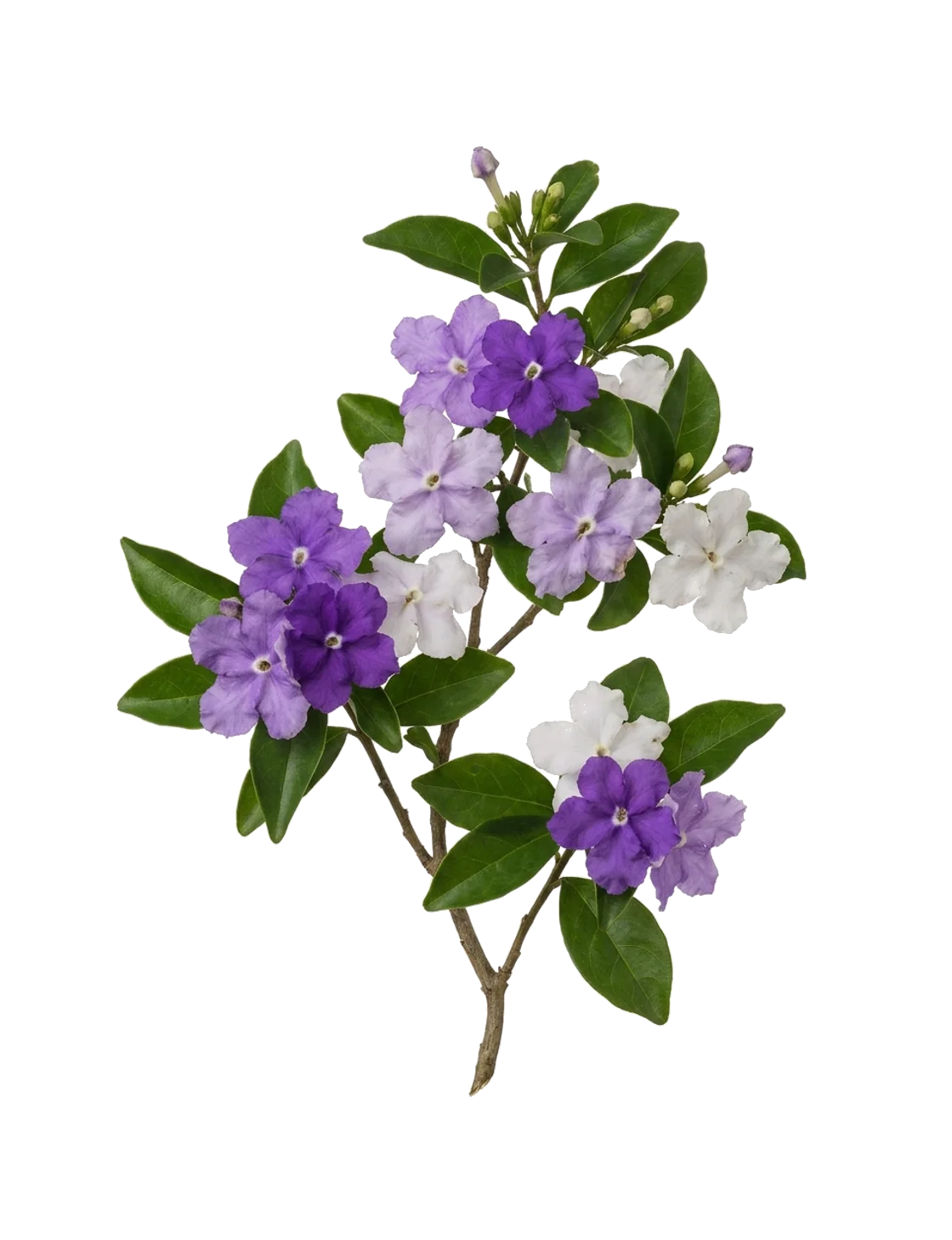
Brunfelsia pauciflora, widely known as yesterday-today-and-tomorrow, is an evergreen shrub native to the rainforests of Brazil. It is famous for its unique floral display: trumpet-shaped flowers open a rich violet-purple, fade to pale lavender on the second day, and turn crisp white on the third. Because fresh blossoms open over an extended period, the shrub displays all three colors at once.
Its foliage consists of leathery, glossy dark green leaves that maintain an attractive, dense appearance year-round. While it can reach significant sizes in warm outdoor gardens, it adapts exceptionally well to container life on shaded patios, sheltered terraces, or bright interior rooms with elevated humidity.
Successful cultivation requires well-draining, slightly acidic soil and protection from strong midday sun and freezing winds. Meeting these fundamental requirements ensures vigorous growth and an abundant blooming season filled with rich color transitions and a delicate, pleasant fragrance.
Did you know?Its unusual name comes from its blossoms, which transition daily from purple (yesterday) to lavender (today) and finally white (tomorrow).
Care. What it needs, point by point.
- Watering
- 2–3× a weekWater 2 to 3 times a week during the warm growing season and reduce to roughly once a week in winter. Check that the top inch of soil feels dry before watering again, and never leave standing water in the saucer.
- Light
- IndirectThrives in bright indirect light or gentle morning sun. Protect the foliage from harsh, direct afternoon rays, which can scorch the leaves and dry out blooms prematurely.
- Temperature
- 18–25 °C ideal temperaturePrefers warm temperatures between 18 °C and 25 °C. It cannot handle frost and should be brought indoors or sheltered whenever conditions drop below 10 °C.
- Soil
- Requires a rich, well-draining potting mix with a slightly acidic pH, such as an ericaceous mix amended with perlite.
- Fertilizer
- 2 weeks between feedsFeed every two weeks during spring and summer with a balanced fertilizer formulated for acid-loving or flowering shrubs.
- Pruning
- Prune lightly right after the main flowering flush to maintain a bushy shape and remove old or weak stems.
- Propagation
- Propagate by taking semi-hardwood cuttings during late spring or summer. Maintain high humidity and gentle bottom heat to encourage successful rooting.
Where it grows. In the wild and in homes.
In the wild it grows in Brazil, in a wet tropical climate.
People have also taken it to 3 more regions where it now grows on its own: the Indian subcontinent, west-central tropical Africa, and Indochina.
Range: Plants of the World Online, Royal Botanic Gardens, Kew
Is Yesterday-today-and-tomorrow toxic to cats and dogs?
Toxic to cats and dogs.

Cats
Toxic

Dogs
Toxic
Usual signs
Tremors, seizures lasting several days, diarrhea, vomiting, hypersalivation, lethargy, incoordination, and coughing.
If your pet has chewed it and shows symptoms, call your vet or the nearest emergency vet.
Source · ASPCA Animal Poison Control
Gallery As the community sees it.
Photo · Carl E Lewis · CC BY 2.0
Common problems What tends to go wrong.
- Iron chlorosis
- Root rot
- Mealybugs and scale
- Spider mites
- Cold damage




Frequently asked questions What people ask most.
Why do the flowers change color over time?
The color shift occurs as purple anthocyanin pigments degrade naturally as the blossom ages. Within three days, the bloom transitions smoothly from deep violet to soft lavender and ultimately white.
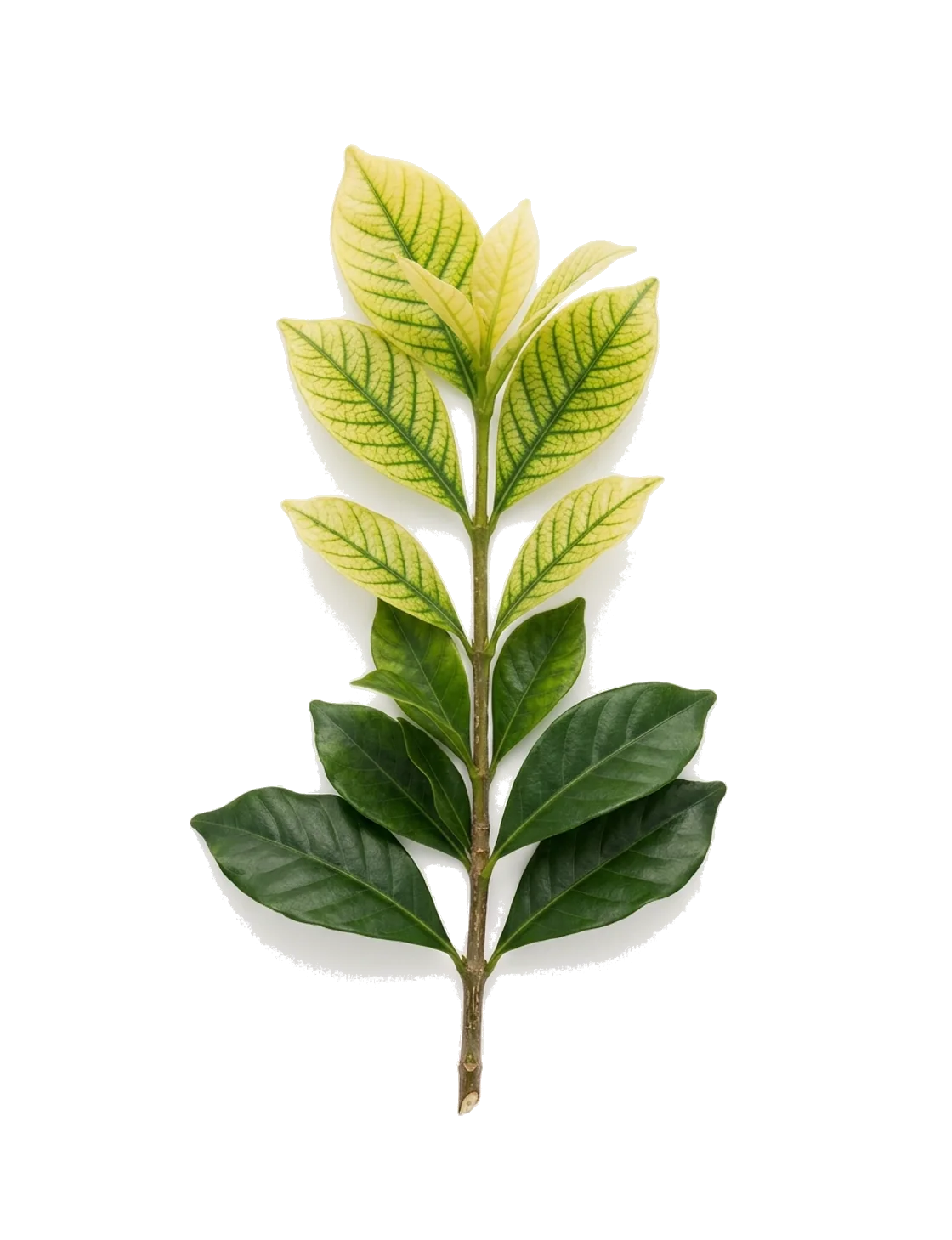
Why are the leaves turning yellow with green veins?
This is a classic sign of iron chlorosis, often triggered by hard tap water or alkaline soil locking out iron absorption. Treat the plant with chelated iron and adjust the potting mix to maintain an acidic pH.
Why is my Brunfelsia not blooming?
A lack of flowers usually points to insufficient light or an excess of nitrogen fertilizer over phosphorus and potassium. Move the shrub to a brighter spot with morning sun and use a bloom-boosting fertilizer.
Can this plant be grown indoors year-round?
Yes, provided it receives abundant indirect light and steady humidity. Keep it away from dry heating vents and cold drafts to avoid premature leaf drop.