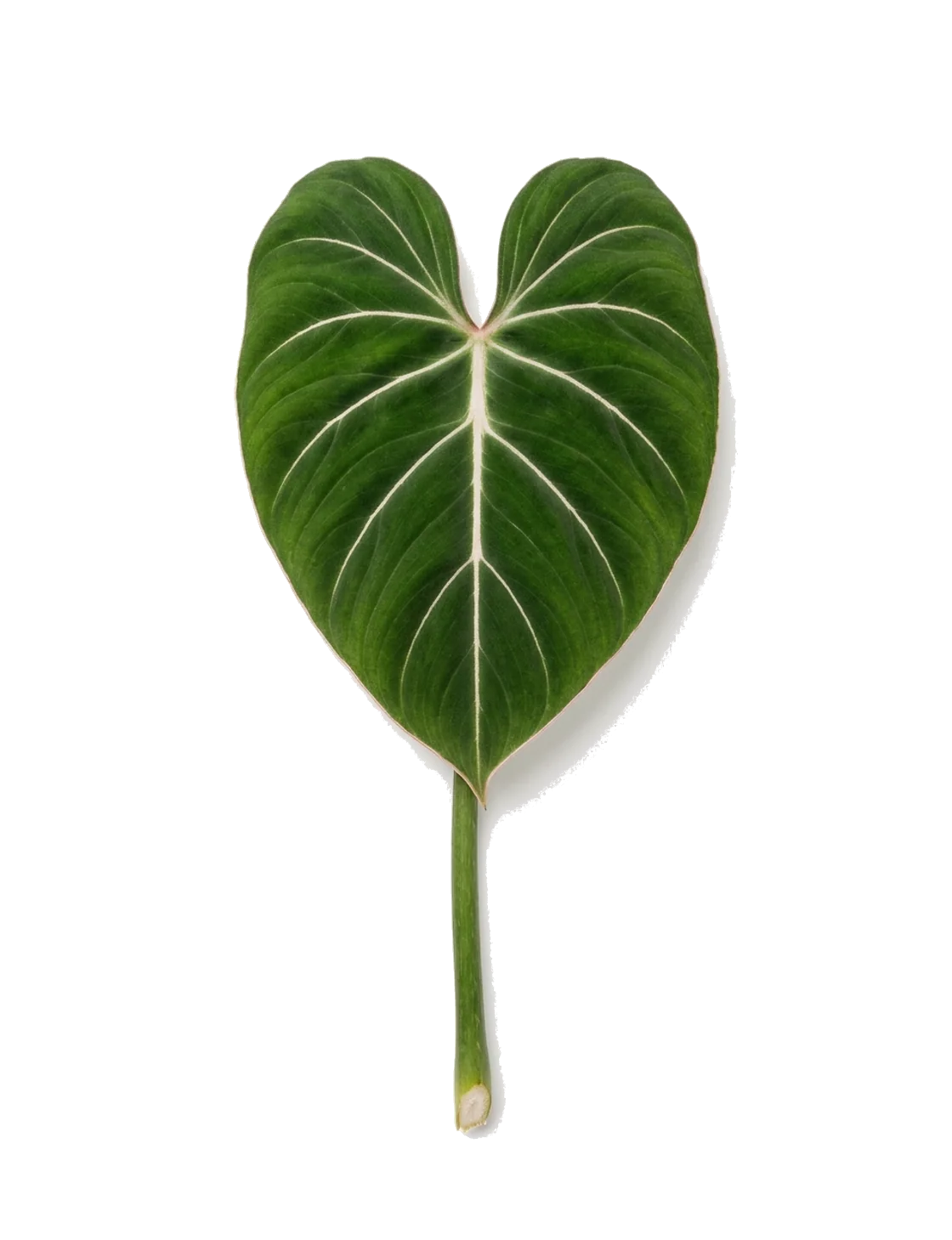
The velvet philodendron (Philodendron gloriosum) is a terrestrial plant in the Araceae family, famous for its large, heart-shaped leaves with a velvety texture and crisp white veins. Native to the humid forests of northwestern South America, it does not climb like most philodendrons but creeps along the forest floor on a thick horizontal rhizome. Each new leaf unfurls from a pale sheath and slowly hardens into a deep green blade that can exceed half a metre in good conditions.
Indoors it asks for bright light without direct sun, steady warmth between 18 and 27 °C and generous humidity, ideally above 60 %. It suits wide, shallow pots where the rhizome can advance horizontally, filled with a chunky, well-drained mix. Watering should be regular but cautious, because the fleshy rhizome stores reserves and rots quickly in soggy soil.
It is a slow grower that rewards patience: a well-settled plant produces a few spectacular leaves per year rather than a mass of foliage. Collectors value the contrast between the dark blade and the pale veins, which shows best with proper light and clean leaves. Once its basic needs are met, it is a steady, long-lived plant that tolerates ordinary homes better than its reputation suggests.
Did you know?Unlike most philodendrons, it crawls along the ground on a thick rhizome instead of climbing trees.
Care. What it needs, point by point.
- Watering
- Water when the top 3 cm of the mix feel dry, soaking evenly until water drains below. In winter, when growth slows, let the mix dry a little deeper between waterings. Always empty the saucer so the rhizome never sits in water.
- Light
- IndirectIt needs bright, indirect light, for example near a window with a sheer curtain. Direct sun scorches the velvet leaves, while dim corners slow growth and dull the veins.
- Temperature
- 18–27 °C ideal temperatureIt grows best between 18 and 27 °C and dislikes cold below about 15 °C. Keep it away from cold drafts and sudden temperature swings near doors and windows.
- Soil
- Use a very airy mix of coco coir or peat, pine bark and perlite in roughly equal parts. The thick rhizome needs oxygen around it and rots in dense, soggy soil.
- Fertilizer
- Feed with a half-strength balanced liquid fertilizer once a month from spring to early autumn. Do not fertilize freshly repotted plants or the creeping rhizome for the first weeks.
- Pruning
- It needs almost no pruning: just remove old yellow leaves by cutting the petiole near the rhizome. Never cut or wound the thick horizontal rhizome unless you are dividing it.
- Propagation
- Propagate by dividing the rhizome so each section keeps roots and at least one growth point. Let the cut dry for a few hours and plant it horizontally, half-buried in an airy mix.
Where it grows. In the wild and in homes.
In the wild it grows in western South America, in a wet tropical climate.
People have also taken it to one more region where it now grows on its own: the north-central Pacific.
Range: Plants of the World Online, Royal Botanic Gardens, Kew
Is Velvet philodendron toxic to cats and dogs?
Toxic to cats and dogs.

Cats
Toxic

Dogs
Toxic
Usual signs
Oral irritation with pain and swelling of the mouth, tongue and lips, excessive drooling, vomiting and difficulty swallowing.
If your pet has chewed it and shows symptoms, call your vet or the nearest emergency vet.
Source · ASPCA Animal Poison Control
Common problems What tends to go wrong.
- Root rot
- Overwatering
- Dry air
- Spider mites




Frequently asked questions What people ask most.
How often should I water a gloriosum?
Water thoroughly when the top 3 cm of the mix are dry, which is often weekly in summer and every 10 to 14 days in winter. The rhizome holds reserves, so it forgives a late watering better than a soggy pot. Yellow, soft lower leaves usually point to excess water.
Why are the new leaves small or dull?
Small new leaves usually mean too little light or a plant that is still settling after repotting. Move it to a brighter spot without direct sun and be patient, since this species grows slowly. Dull veins with dusty leaves improve simply by wiping the blades gently.
Should I use a moss pole?
No, this species does not climb and a vertical pole does not help it. It needs horizontal room, so choose a wide, shallow pot and lay the rhizome on the surface. Turn the pot occasionally so growth advances evenly.
How do I propagate it?
Divide the thick rhizome with a clean knife so each piece keeps roots and a growth point. Let the cuts air-dry for a few hours to seal them. Plant each section horizontally, barely covered, and water sparingly until new growth appears.
Why are the leaf edges turning brown?
Dry air and irregular watering are the usual causes, sometimes combined with fertilizer buildup. Raise humidity, keep watering steady and flush the pot occasionally with soft water. Trim only the dry margins with clean scissors.