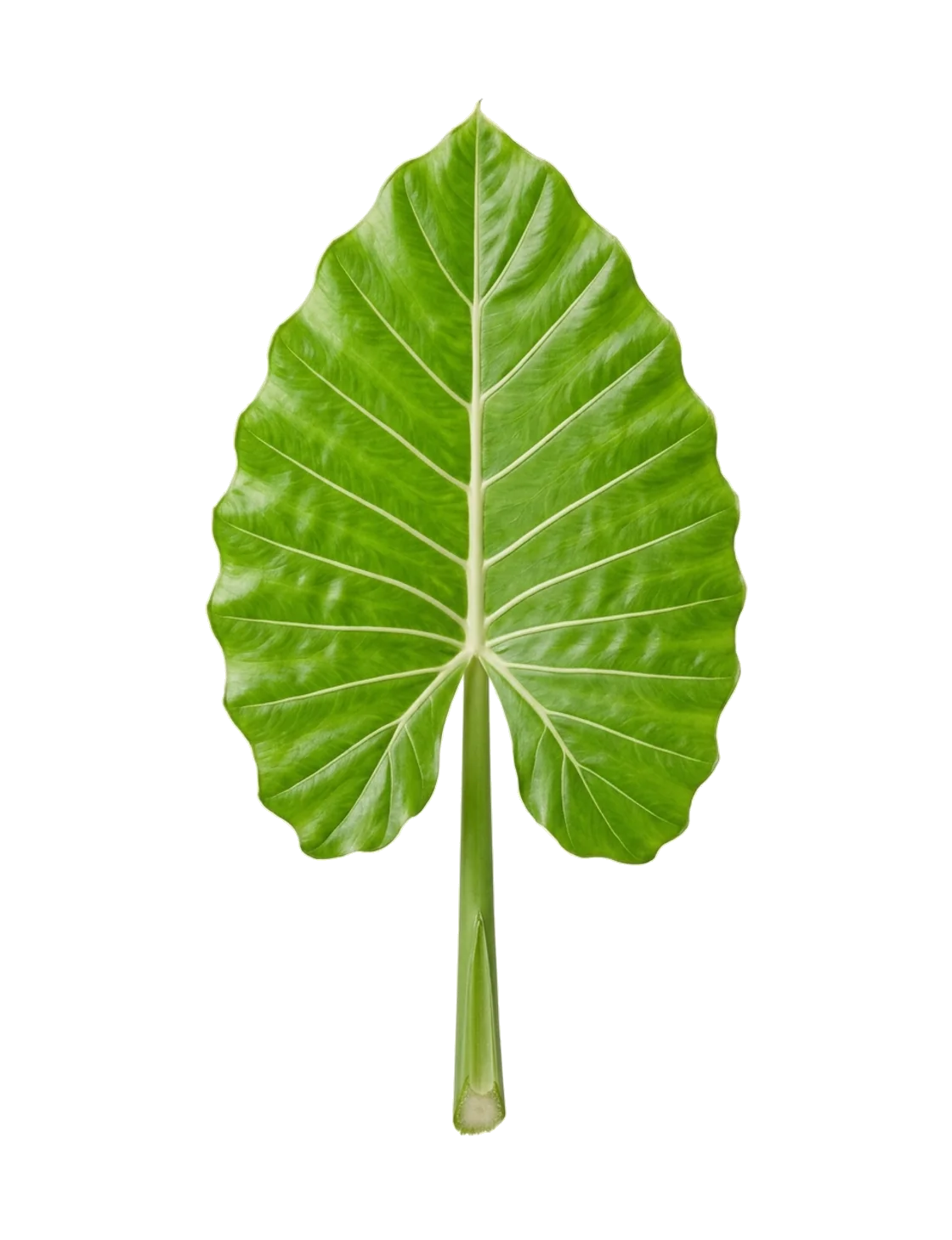
The giant taro (Alocasia macrorrhizos) is a large herbaceous plant in the Araceae family, grown for its enormous upright leaves that can exceed one metre in warm gardens. Native to tropical Asia and the western Pacific, it rises from a thick rhizome on stout stalks and forms an imposing clump within a few seasons. Indoors it stays smaller, but even young plants bring a bold jungle presence to bright rooms.
It is vigorous when warmth, light and water meet: temperatures between 18 and 30 °C, very bright light with some gentle sun, and evenly moist, fertile soil. As a fast grower it consumes plenty of nutrients, so regular feeding in spring and summer shows in leaf size. In cool winters it slows down or rests, and watering must drop accordingly to protect the rhizome.
Outdoors in frost-free climates it works as a bedding plant or beside ponds; indoors it needs the brightest spot and room for its spread. Old leaves yellow as new ones emerge, a normal cycle in such a fast species. Given space, food and drainage, it is one of the most spectacular foliage plants a home can host.
Did you know?In warm countries it is grown as a vegetable: its huge rhizomes and leaf stalks are cooked thoroughly before eating.
Care. What it needs, point by point.
- Watering
- Water generously in spring and summer so the soil stays evenly moist, more often in heat. In autumn and winter, reduce watering clearly and let the top layer dry. Potted plants need perfect drainage, because the rhizome rots in stagnant water.
- Light
- Direct sunIt wants very bright light with some gentle direct sun to grow large leaves. Indoors, place it at the brightest window; outdoors in warm climates, light shade or morning sun suits it.
- Temperature
- 18–30 °C ideal temperatureIt grows strongly between 18 and 30 °C and stops below about 12 °C. Outdoors it suits only frost-free climates; indoors, winter it above 15 °C with restrained watering.
- Soil
- Use deep, fertile, loose soil rich in organic matter that holds water without puddling. In pots, mix universal soil with coco coir, compost and perlite for drainage.
- Fertilizer
- 2 weeks between feedsIt is a heavy feeder in the growing season: give balanced liquid fertilizer every 2 weeks in spring and summer. In rich garden soil, a spring layer of compost can replace part of the liquid feeding.
- Pruning
- Cut old yellow leaves at the base of the petiole to keep the clump tidy. Remove spent flower spathes if they appear, since they add little ornamentally and cost energy.
- Propagation
- Propagate by separating offsets with roots from the mother plant in spring. Plant each offset at the same depth in rich, loose soil. It also grows from rhizome sections, but division is faster and safer.
Where it grows. In the wild and in homes.
In the wild it grows in Malesia, Papuasia, and Australia, in a wet tropical climate.
People have also taken it to 62 more regions where it now grows on its own: the Pacific, South and Central America and the Caribbean, tropical Asia, and Africa.
Range: Plants of the World Online, Royal Botanic Gardens, Kew
Is Giant taro toxic to cats and dogs?
Toxic to cats and dogs.

Cats
Toxic

Dogs
Toxic
Usual signs
Oral irritation with pain and swelling of the mouth, tongue and lips, excessive drooling, vomiting and difficulty swallowing.
If your pet has chewed it and shows symptoms, call your vet or the nearest emergency vet.
Source · ASPCA Animal Poison Control
Common problems What tends to go wrong.
- Spider mites
- Aphids
- Overwatering
- Cold damage




Frequently asked questions What people ask most.
How often should I water giant taro?
In the warm months, water often so the soil stays evenly moist, even daily in heat for pots. When temperatures drop and growth stops, water sparingly and let the top layer dry. The rule is simple: lots of water with warmth, little water with cold.
Why are the leaves turning yellow?
Old outer leaves yellowing as large new ones emerge is part of its fast cycle. If young leaves yellow too, check for excess cold, waterlogged soil or lack of nutrients. Adjust watering, improve drainage and feed in the growing season.
Can it stay outdoors in winter?
Only where winters stay above roughly 10 to 12 °C without frost. In colder regions, grow it in a large pot and bring it inside before the first cold nights. Keep the wintering plant bright, above 15 °C and barely watered.
How do I propagate it?
Separate the offsets that sprout beside the mother plant in spring, each with its own roots. Plant them at the same depth in fertile, loose soil and water steadily. Divisions usually establish within weeks in warm weather.
Why is my indoor plant small with modest leaves?
Small leaves usually reflect limited light, a tight pot or modest feeding. Move it to the brightest window, repot if roots fill the pot and feed regularly in spring and summer. With warmth and food, leaf size increases with each new leaf.