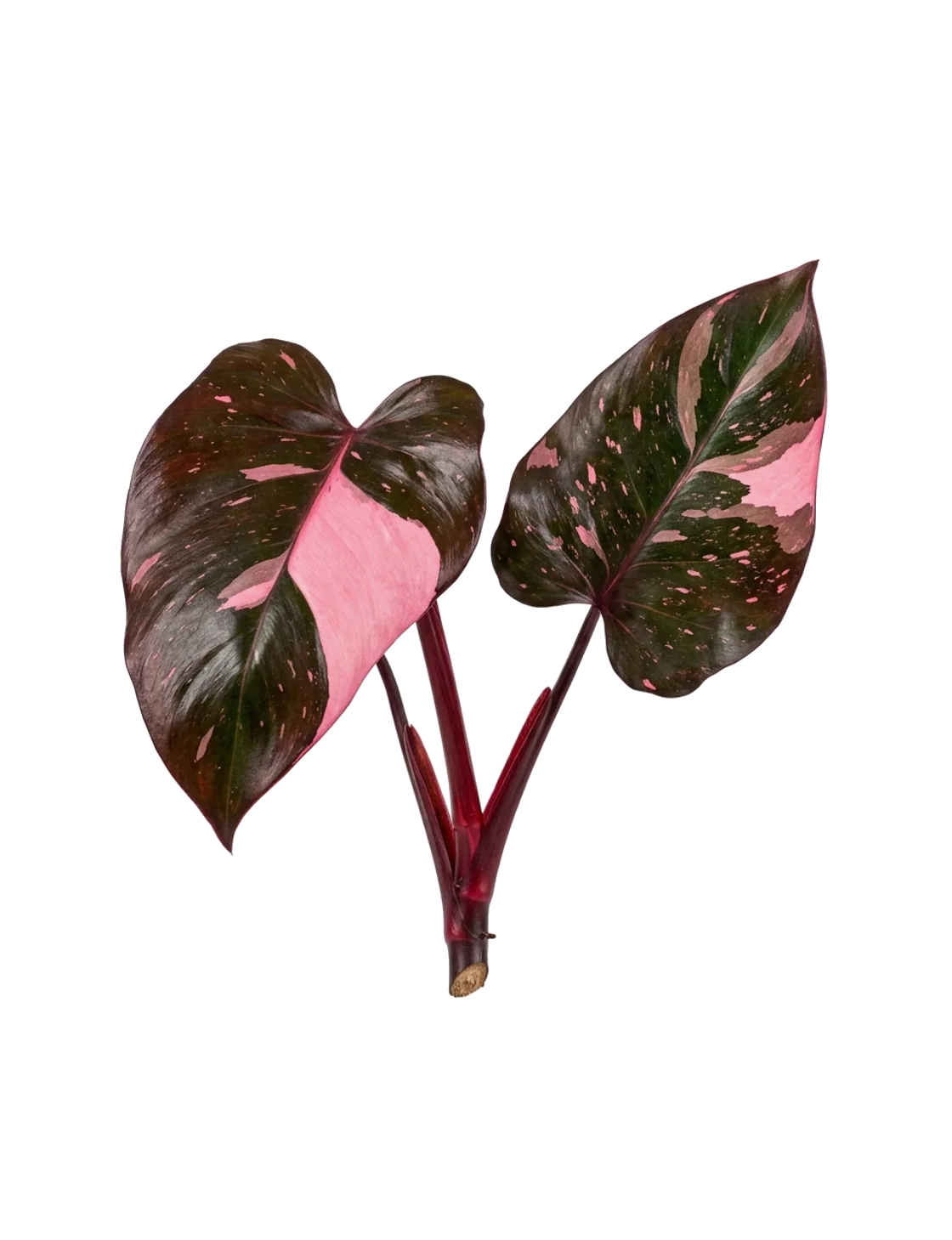
The Pink Princess philodendron (Philodendron erubescens) is a climbing tropical plant in the Araceae family, prized for its dark green, heart-shaped leaves splashed with pink patches and sectors. It is a cultivated selection of Philodendron erubescens, a species from the humid forests of Colombia and Central America that climbs tree trunks with aerial roots in the wild. Its reddish stems, referenced by the epithet erubescens, and its climbing habit give it an elegant look even when the variegation is faint.
Indoors it grows best in very bright light without direct sun, which keeps the pink contrast strong without scorching the pale areas. It appreciates high humidity and steady temperatures between 18 and 27 °C, away from cold drafts and heaters. Given a moss or fibre pole to climb, new leaves emerge larger and the plant keeps the climbing habit it shows in the forest.
It grows at a moderate pace and can reach several metres when given support, although it is easy to keep compact in a pot with light pruning. The amount of pink varies from leaf to leaf, and some leaves emerge almost green, which is normal in variegated forms. With enough light, regular watering without waterlogging and occasional leaf cleaning, it is a rewarding and long-lived climber.
Did you know?The reddish stems explain the name erubescens, which means reddish, and no two pink-patterned leaves are ever alike.
Care. What it needs, point by point.
- Watering
- 1× a weekWater when the top 2 to 3 cm of the mix feel dry, usually once a week in spring and summer and less often in winter. Check the moisture with your finger or a wooden skewer before watering. Never leave the pot standing in water, since soggy soil rots the roots.
- Light
- IndirectGive it bright, indirect light near an east-facing window or behind a sheer curtain. In low light the new leaves grow smaller and show less pink.
- Temperature
- 18–27 °C ideal temperatureIt grows well between 18 and 27 °C and suffers below about 13 °C. Keep it away from cold drafts, chilly windows at night and heating vents.
- Soil
- Use an airy aroid mix with pine bark, perlite and coco coir. It should drain quickly yet hold some moisture.
- Fertilizer
- 3–4 weeks between feedsFeed with a half-strength balanced liquid fertilizer every 3 to 4 weeks from spring to autumn. Stop feeding in winter if the plant stops growing.
- Pruning
- Trim long stems just above a node to control size and encourage side shoots. Remove dry or damaged leaves at the base of the petiole.
- Propagation
- Propagate by stem cuttings with at least one node and one leaf, rooted in water or damp moss. Once the roots reach about 5 cm, pot them into an airy aroid mix.
Where it grows. In the wild and in homes.
In the wild it grows in western South America, in a wet tropical climate.
Range: Plants of the World Online, Royal Botanic Gardens, Kew
Is Pink Princess philodendron toxic to cats and dogs?
Toxic to cats and dogs.

Cats
Toxic

Dogs
Toxic
Usual signs
Oral irritation with pain and swelling of the mouth, tongue and lips, excessive drooling, vomiting and difficulty swallowing.
If your pet has chewed it and shows symptoms, call your vet or the nearest emergency vet.
Source · ASPCA Animal Poison Control
Common problems What tends to go wrong.
- Overwatering
- Too little light
- Dry air
- Spider mites




Frequently asked questions What people ask most.
How often should I water a Pink Princess philodendron?
Roughly once a week during the growing season, letting the top layer of the mix dry between waterings. In winter, with less light and lower temperatures, watering every 10 to 14 days is usually enough. If the leaves curl or the soil pulls away from the pot, the plant is thirsty.
Why is my Pink Princess losing its pink color?
New leaves emerge greener when light is low, so move the plant to a brighter spot without direct sun. Variegation is naturally unstable, and some leaves will always emerge almost green. Avoid cutting off every green stem at once, since the plant needs green surface to keep growing.
How do I propagate it?
Take stem cuttings below a node, each with one or two leaves. They root in water or damp sphagnum moss within 3 to 6 weeks in gentle warmth. Pot them up once the new roots are a few centimetres long.
Why are the leaf edges turning brown?
Brown edges usually come from dry air, direct sun on the pale areas or irregular watering. Raise humidity with a humidifier or by grouping plants, and check it never catches midday sun. Trim only the dry tissue with clean scissors if it bothers you.
Does it need a moss pole?
It is not compulsory, but on a moss pole the leaves grow larger and the plant climbs neatly. Tie the stems loosely without squeezing the nodes. If you prefer a trailing look, let it cascade from a high shelf and prune to encourage branching.