Triostar stromanthe
Stromanthe sanguinea
Triostar stromanthe: care guide with humidity, bright indirect light and soft water for healthy pink-variegated leaves indoors all year.
- Light
- Indirect
- Temperature
- 18–27 °Cideal temperature
- Toxicity
- Non-toxic
- Difficulty
- Medium
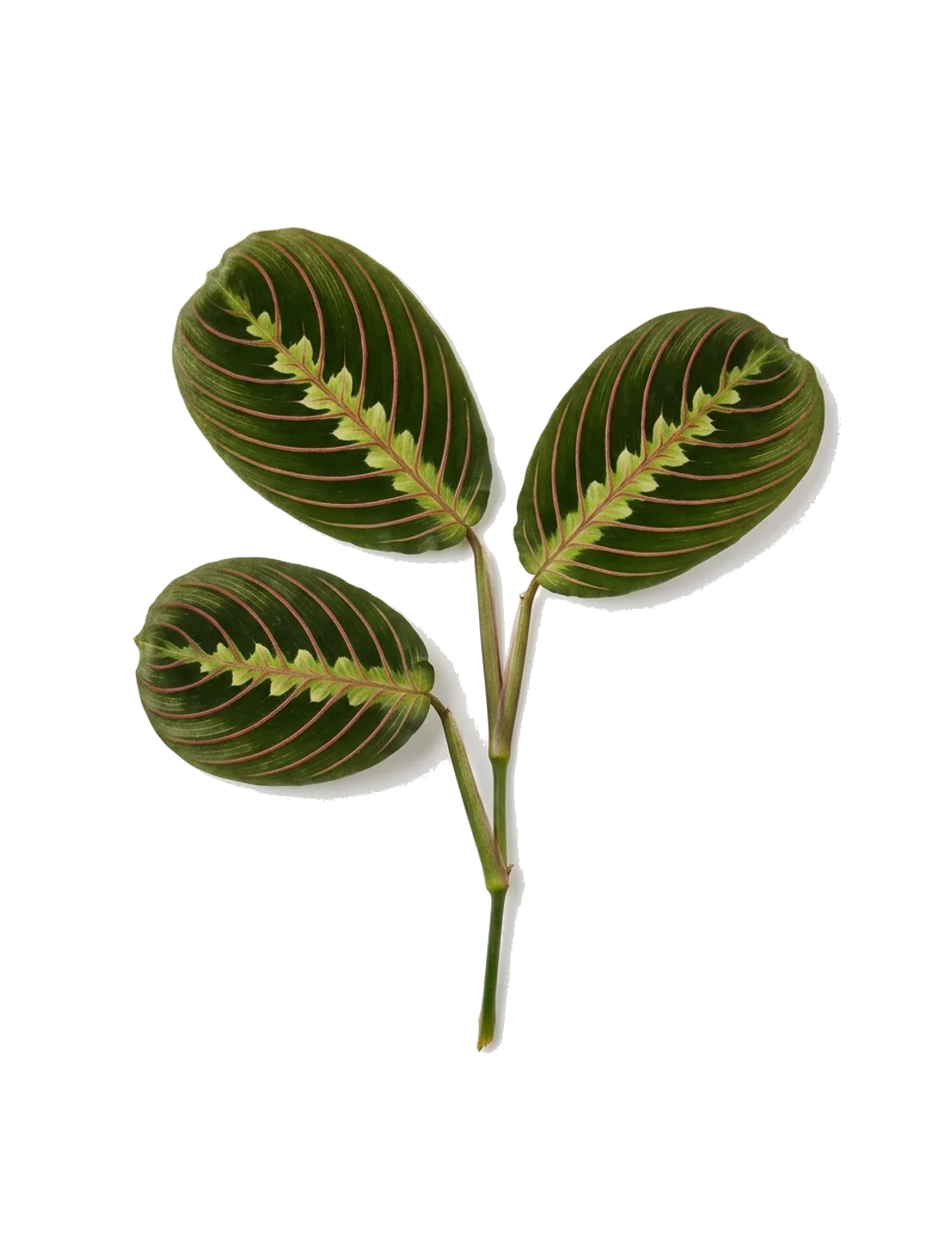
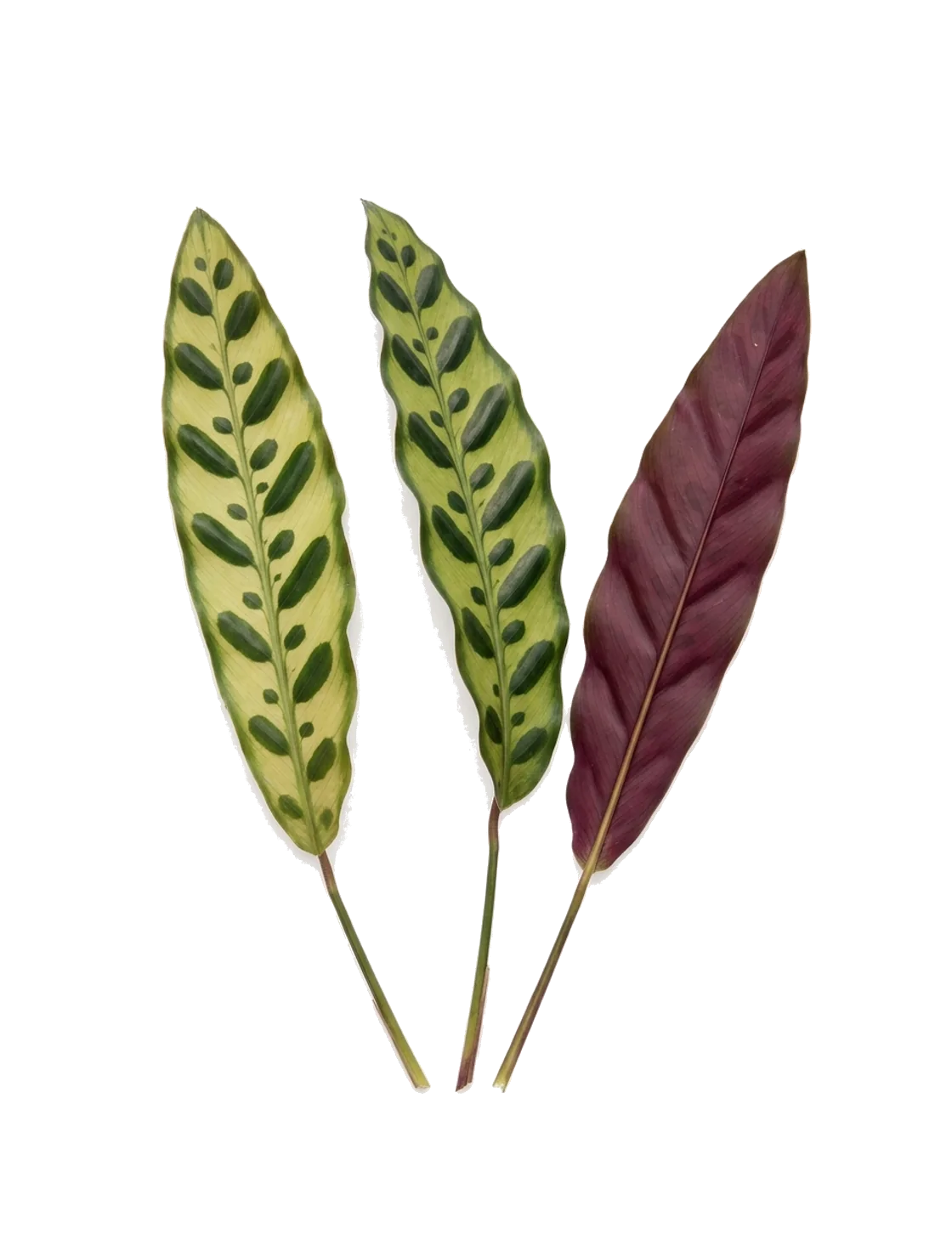
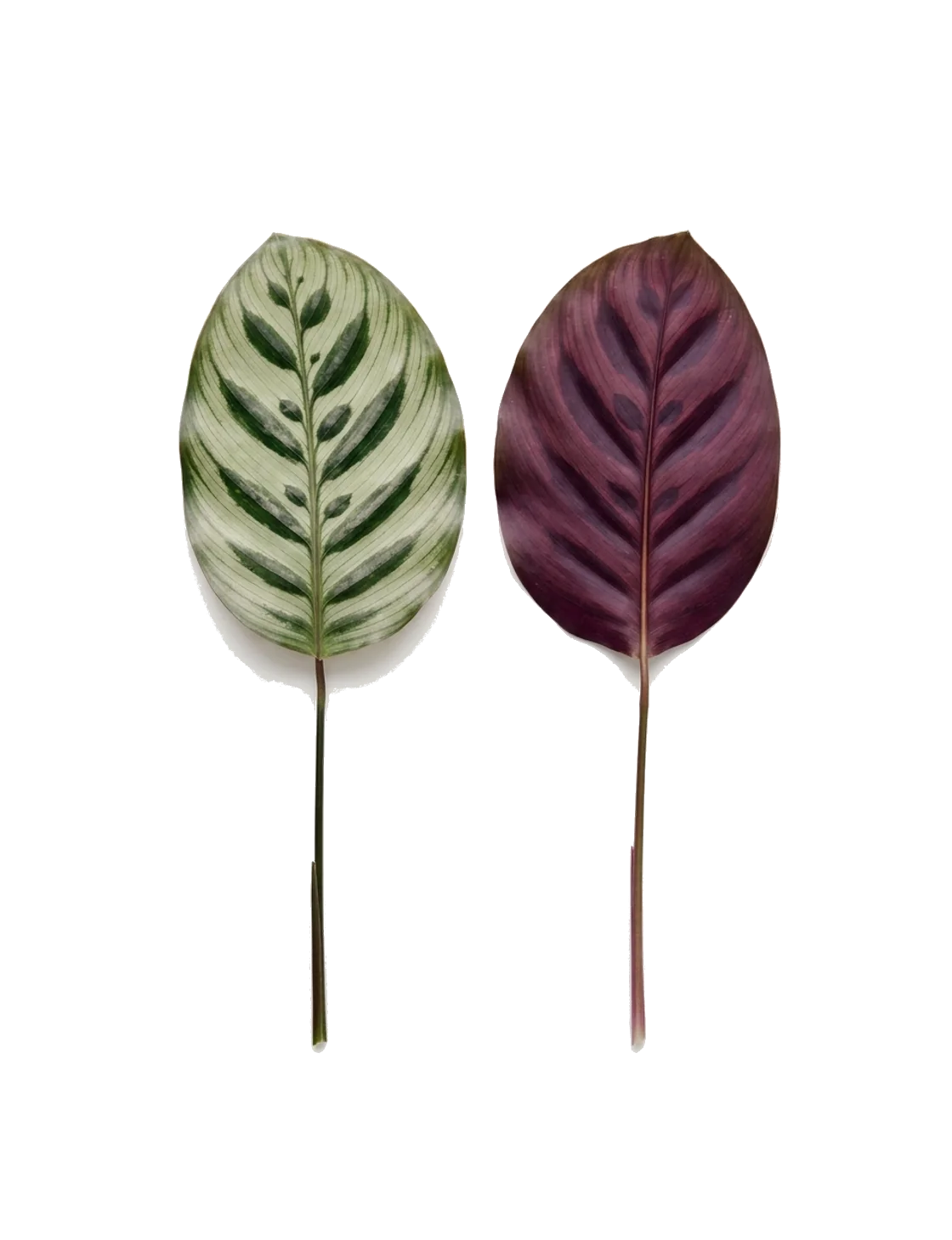
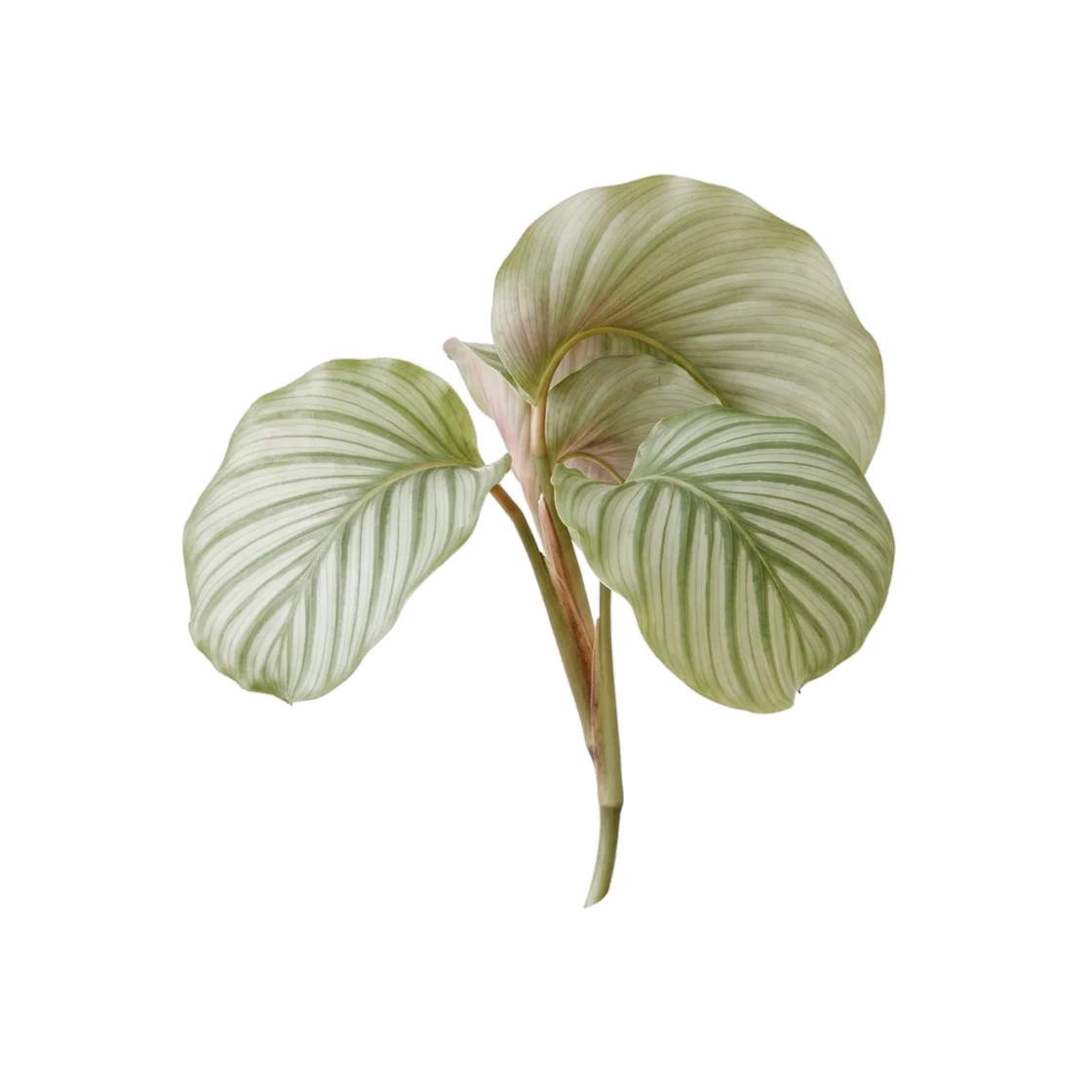
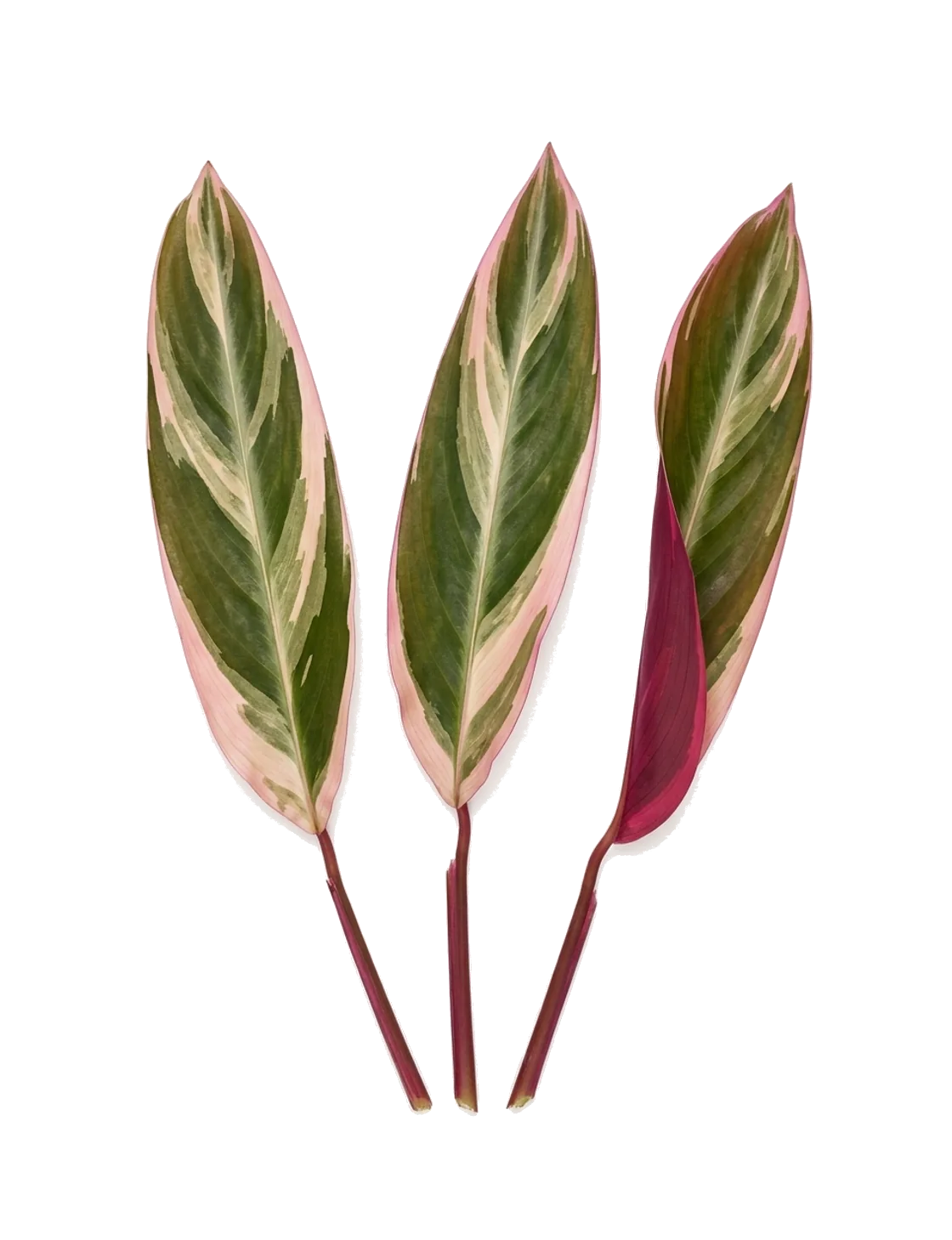
The Triostar stromanthe (Stromanthe sanguinea) is an herbaceous plant in the Marantaceae family, grown for its spectacular variegated leaves in green, cream and pink with a glowing red underside. Native to the humid forests of eastern Brazil, it forms upright clumps of long stalks that arch gracefully as they mature. The cultivated Triostar selection keeps the variegation that makes each leaf a little different from the next.
Indoors it asks for bright light without direct sun, steady warmth between 18 and 27 °C and high humidity to protect the pale margins. Watering uses soft water at room temperature, keeping the soil lightly moist through the growing season and drier in winter. Dry air and hard water are its main enemies and appear quickly as brown edges on the most variegated leaves.
Growth is moderate: a settled plant produces new rolled leaves through spring and summer that unfurl into full color. Like its relatives, it lifts its foliage at night and lowers it by day. With generous humidity, gentle watering and shelter from harsh sun, Triostar stays one of the showiest foliage plants for bright interiors.
Did you know?The undersides glow deep red, and the leaves rise at night and lower by day like the rest of the prayer-plant family.
Care. What it needs, point by point.
- Watering
- Keep the soil lightly moist, watering when the top 2 cm start to dry. Use soft water at room temperature, because hard water leaves marks and harms the roots. Reduce watering in winter without letting the root ball dry out completely.
- Light
- IndirectIt needs bright, indirect light to keep the white and pink variegation vivid. Too little light turns new leaves greener; direct midday sun scorches the pale areas.
- Temperature
- 18–27 °C ideal temperatureIt grows best between 18 and 27 °C and suffers below about 15 °C. Avoid cold drafts and heaters that dry the air, both of which brown the variegated margins.
- Soil
- Use a light mix with coco coir, perlite and a little pine bark that holds moisture while draining freely. Compacted soil quickly shows in curled, unhappy leaves.
- Fertilizer
- 3–4 weeks between feedsFeed with a half-strength balanced fertilizer every 3 to 4 weeks in spring and summer. Stop feeding in autumn and winter, when growth nearly pauses.
- Pruning
- Remove fully dry or damaged leaves at the base of the stem. Do not cut half-dry leaves aggressively, since the plant reabsorbs nutrients from them before shedding.
- Propagation
- Divide the rhizome clump in spring so each section keeps shoots and roots. Pot at the same depth in a light mix and keep warm and humid until new leaves unfold.
Where it grows. In the wild and in homes.
In the wild it grows in Brazil, in a wet tropical climate.
Range: Plants of the World Online, Royal Botanic Gardens, Kew
Is Triostar stromanthe toxic to cats and dogs?
The ASPCA doesn't list this species. If your pet has chewed it and seems unwell, call your vet.
Common problems What tends to go wrong.
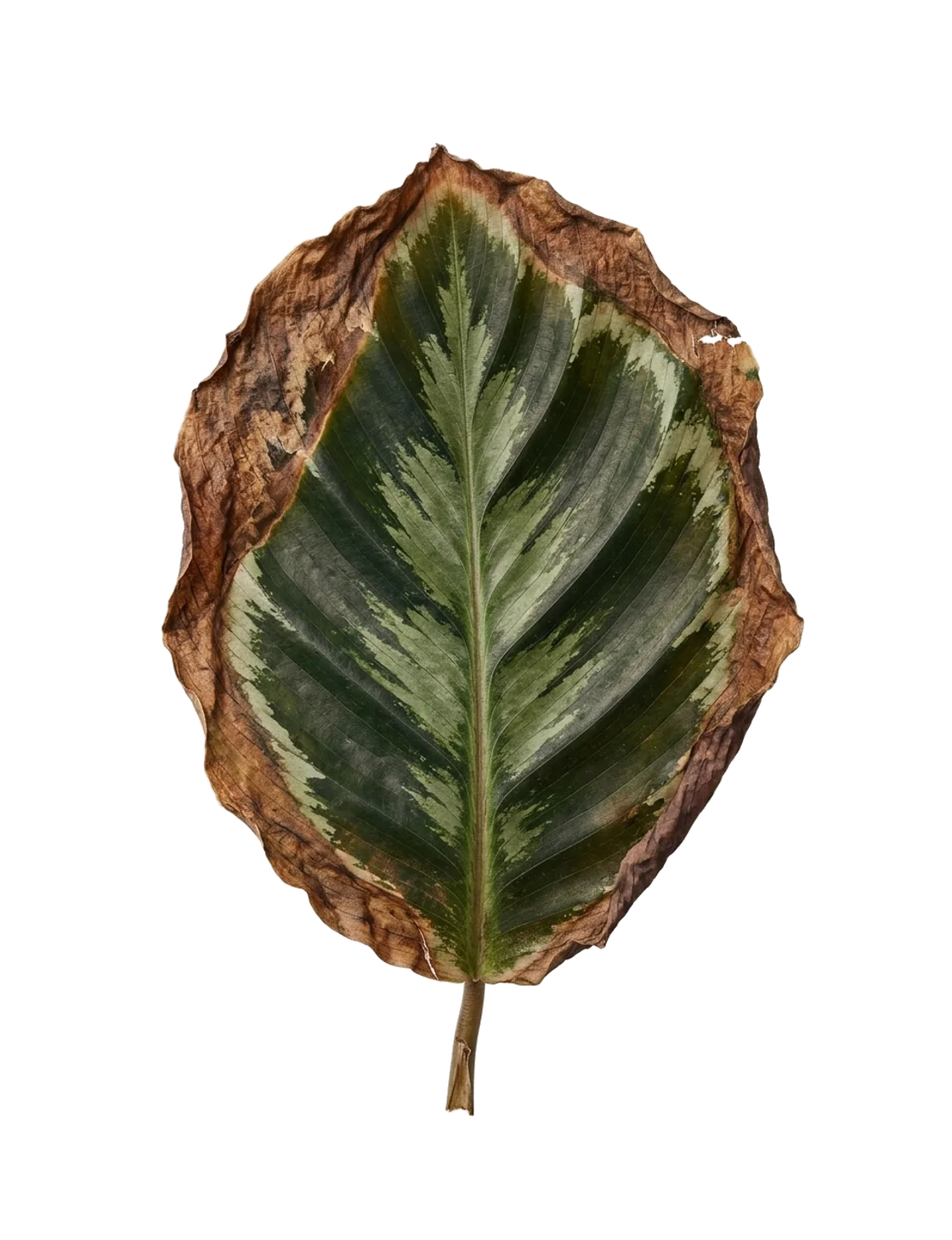
- Dry air
- Spider mites
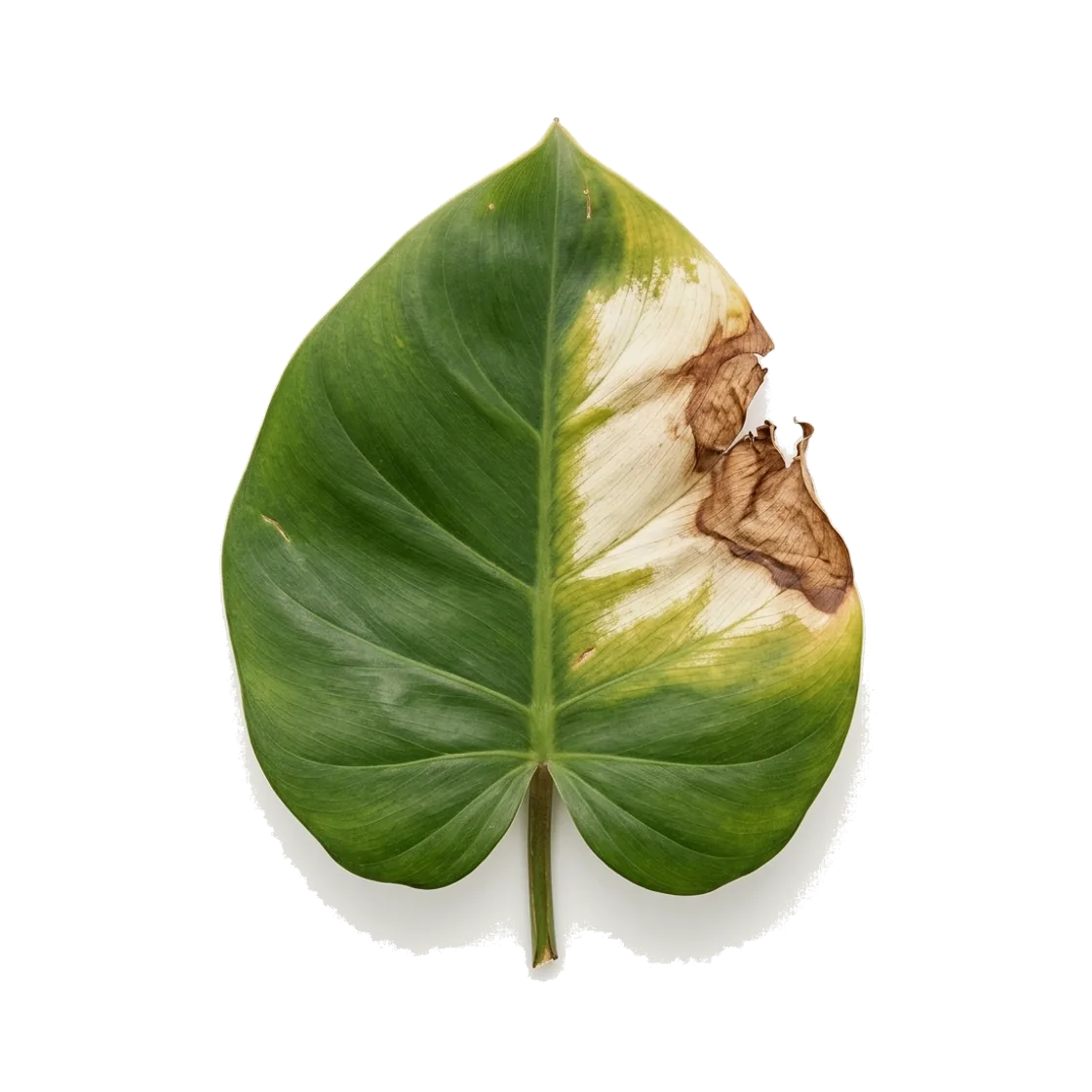
- Sunburn
- Overwatering


Frequently asked questions What people ask most.
How often should I water Triostar?
Water when the top 2 cm of the soil start to dry, usually once or twice a week in summer. In winter, watering every 10 days is often enough if the room stays cool. Leaves that curl or droop by day usually point to thirst or very dry air.
Why are the leaf edges turning brown?
Brown edges almost always mean dry air, sometimes combined with hard water or excess fertilizer. Raise humidity above 50 %, water with soft water and feed modestly. Trim only the dry tissue, since the brown areas do not recover.
Why is my plant losing its pink and white tones?
New leaves emerge greener when light is scarce, so move the plant closer to a bright window without direct sun. Variegation also varies naturally from leaf to leaf. Stable bright light keeps the contrast strongest.
How do I propagate it?
By dividing the clump in spring, separating a section with several stalks and its own roots. Plant at the same depth and keep the division warm, shaded and humid until it roots. Stem cuttings without roots do not work in this genus.
Can it tolerate full sun?
No, direct midday sun burns the variegated areas and bleaches the colors. It tolerates only soft morning sun behind glass or light shade outdoors in summer. Bright indirect light gives the best color without risk.