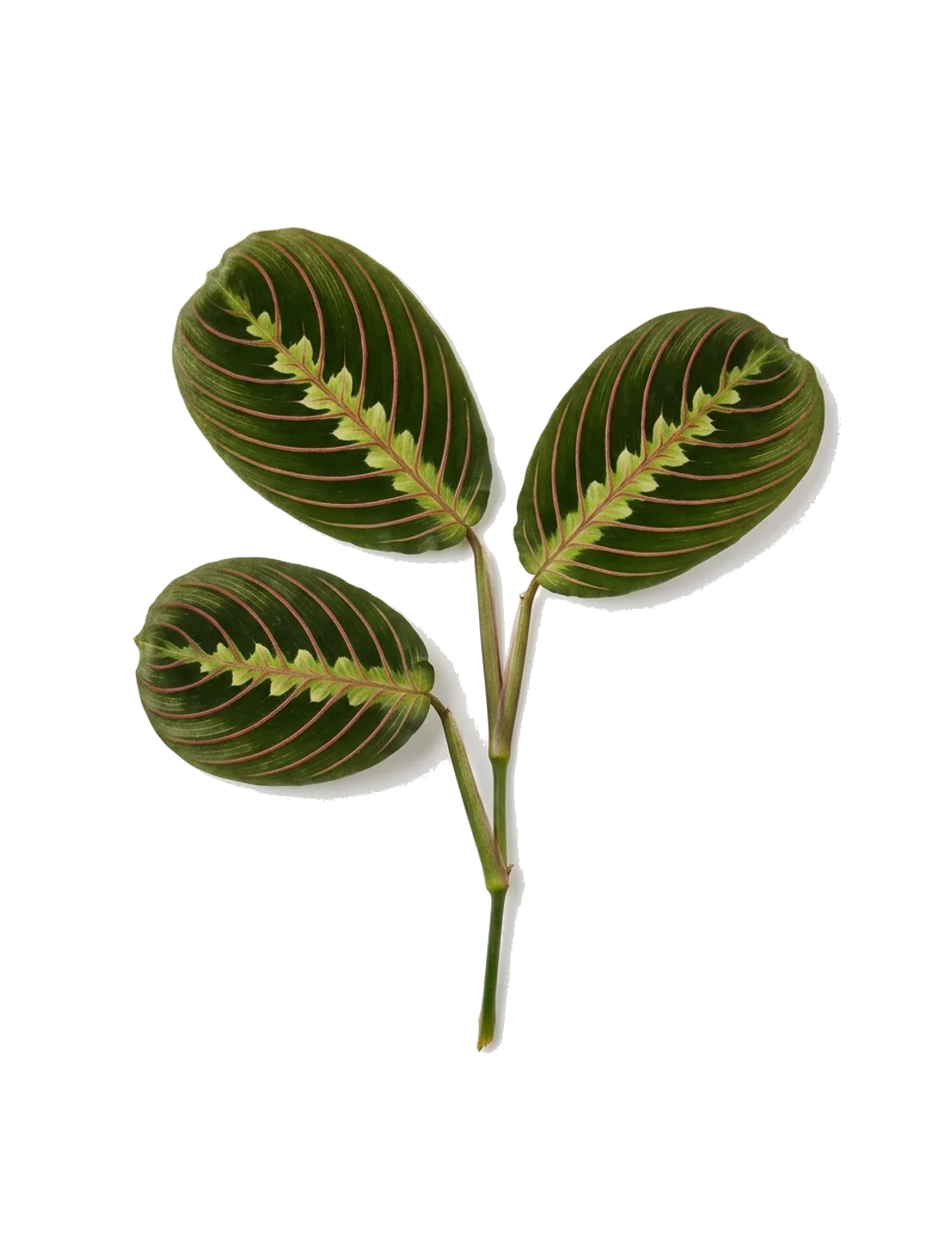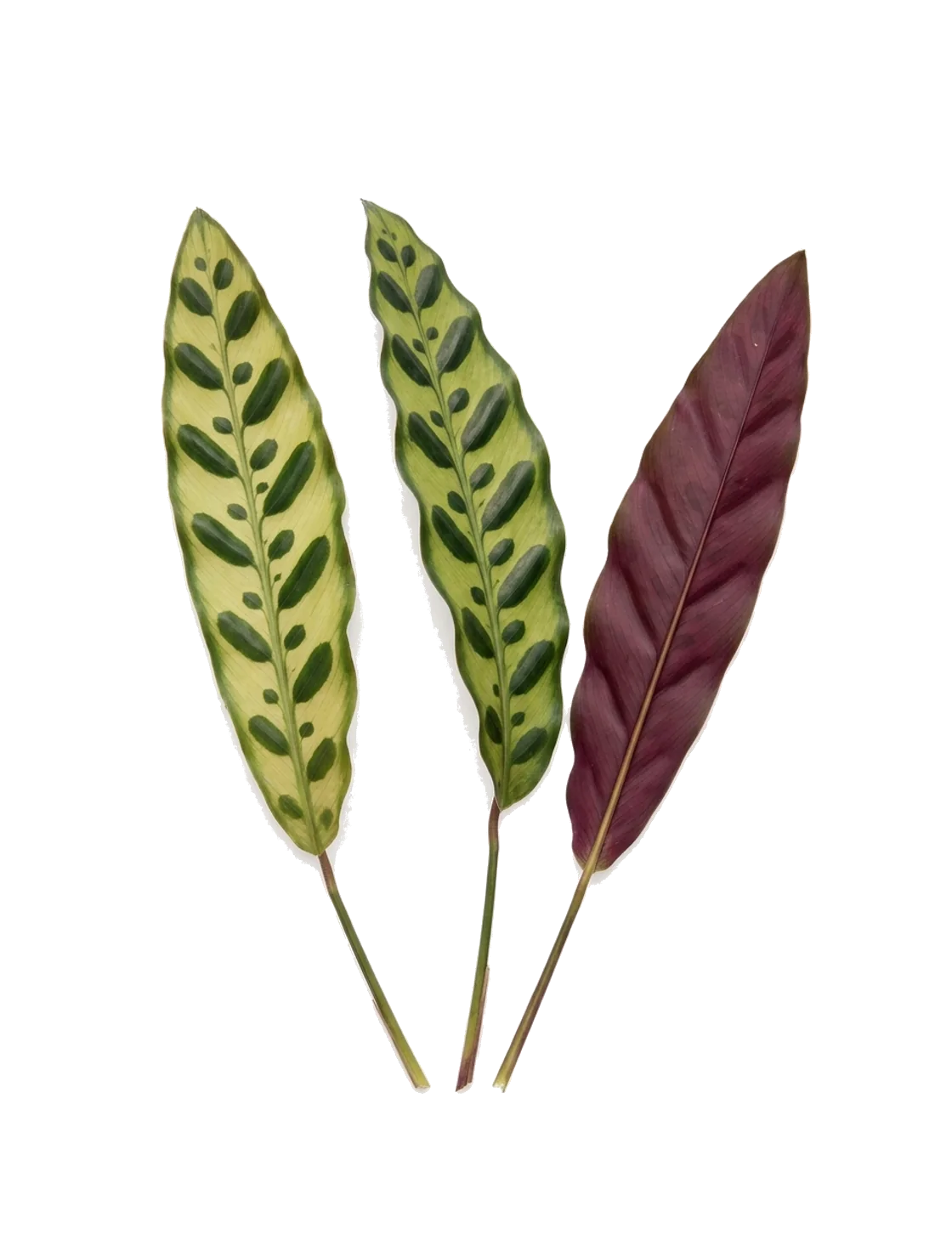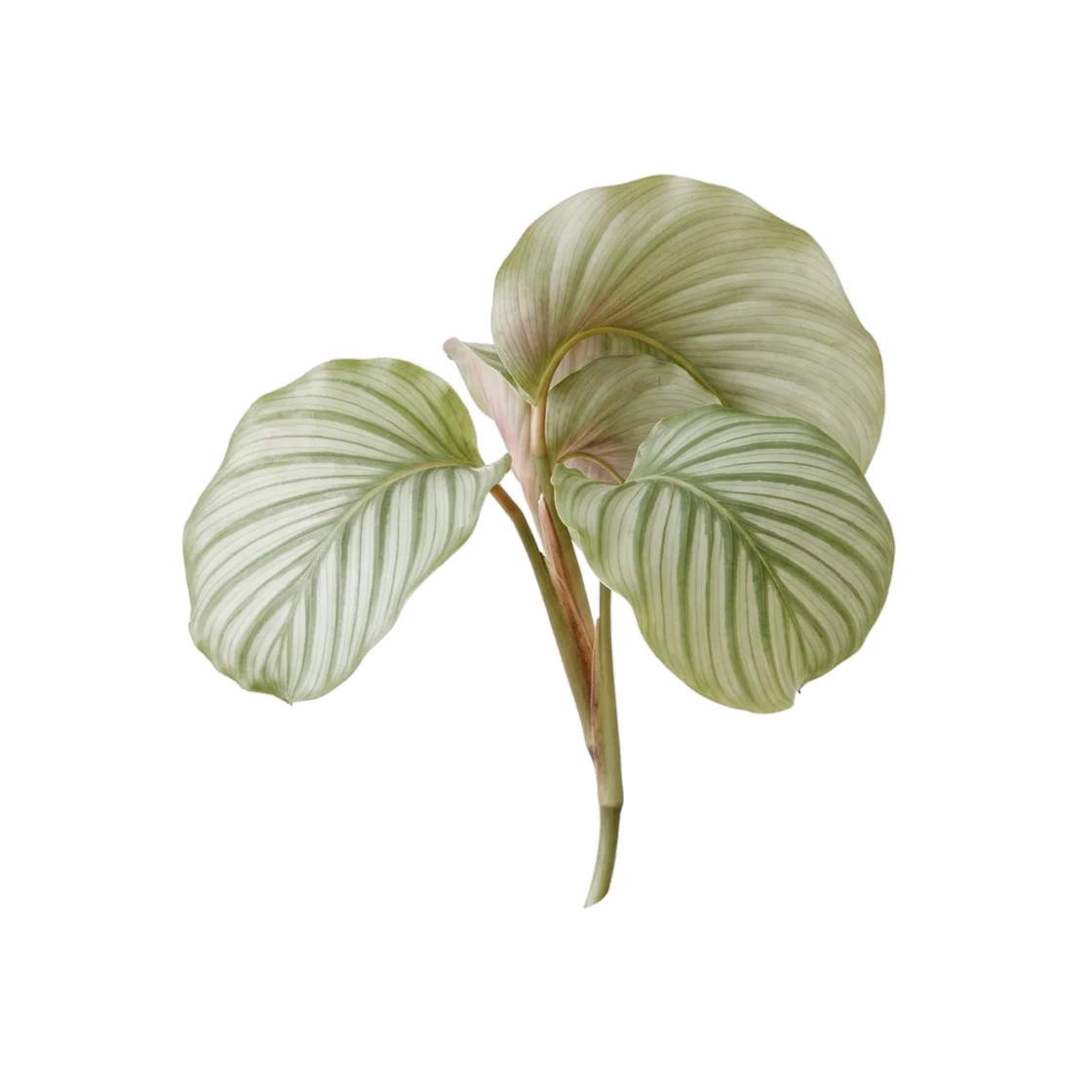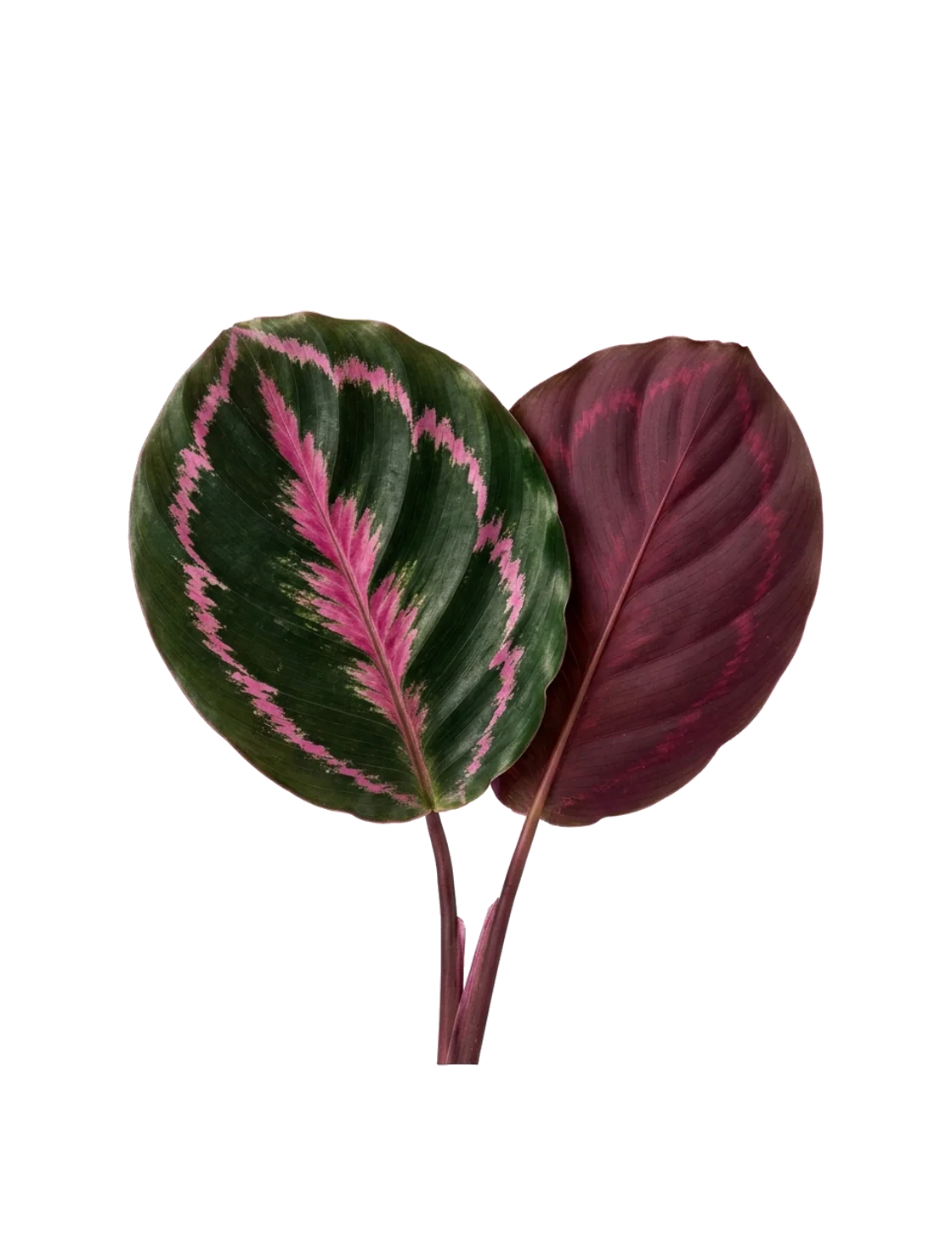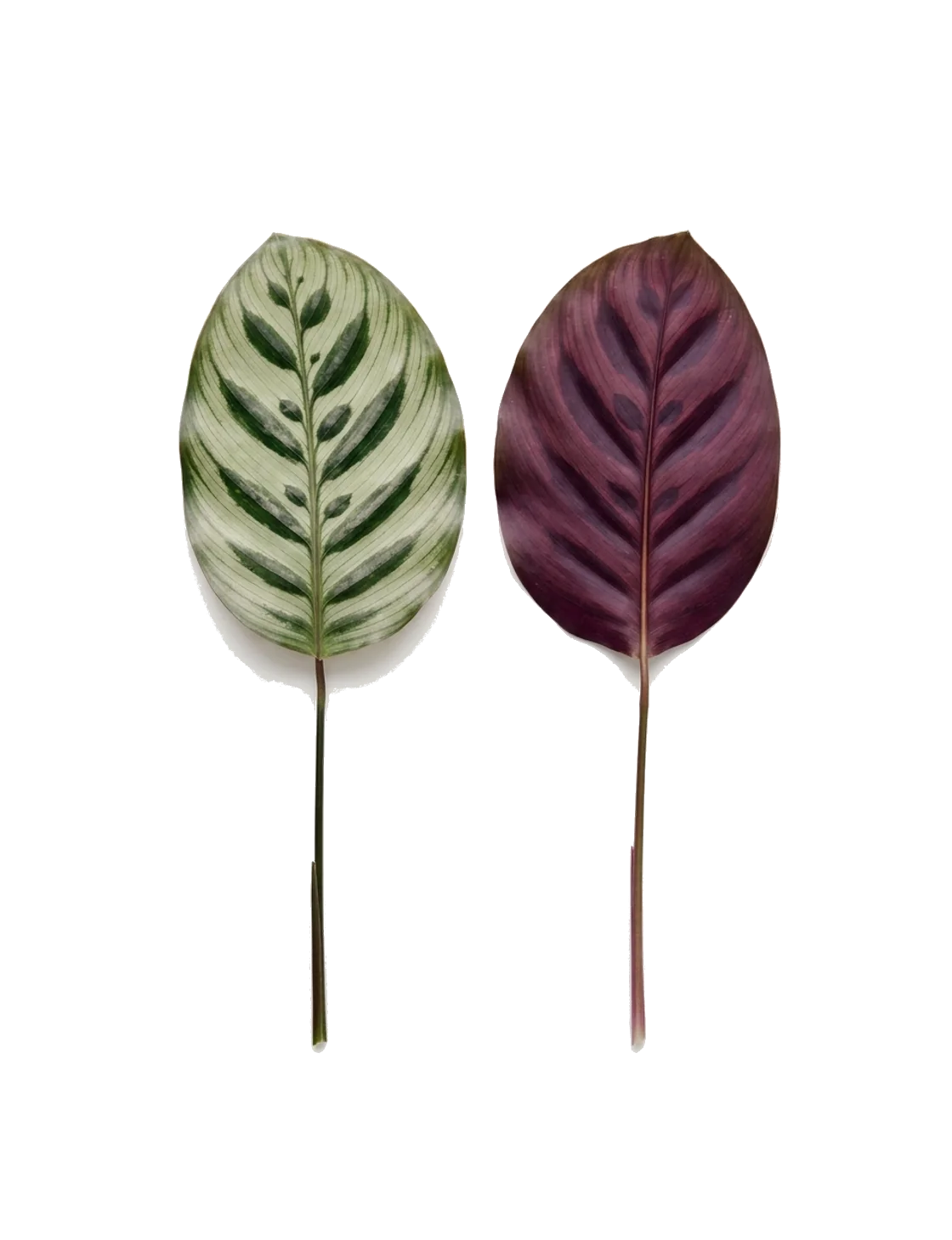
The peacock plant (Calathea makoyana, also classified as Goeppertia makoyana) is widely cherished as one of the most decorative tropical houseplants. Its thin, rounded-oval leaves feature a detailed pattern of dark green feathered markings radiating from the central vein against a pale green, semi-translucent background. The underside mirrors this exact design in deep burgundy tones, giving the foliage exceptional depth and color.
Hailing from the sheltered forest floors of eastern Brazil, this evergreen perennial thrives naturally under warm, shaded canopies with high humidity. Belonging to the Marantaceae family, it is renowned for its nyctinastic leaf movement, folding its leaves upward at nightfall like hands in prayer and lowering them again at daybreak. This subtle daily routine makes it a captivating plant to observe indoors.
While often considered moderately fussy, its core needs center around stable conditions and good water quality. The peacock plant dislikes dry indoor air, cold drafts, and heavy tap water laden with fluoride or chlorine. Positioned in bright, filtered light with an evenly moist substrate, it forms dense clusters that remain stunning year-round.
Did you know?The underside of each leaf mirrors the exact markings found on the top surface, but rendered in deep purple and burgundy. In response to changes in light, the leaves actively fold upward every evening and reopen each morning.
Care. What it needs, point by point.
- Watering
- 1–2× a weekWater whenever the top inch of soil feels slightly dry to the touch, roughly once or twice a week during summer and every ten days in winter. Never let the root ball dry out completely or sit in waterlogged soil, and ideally use filtered or distilled water.
- Light
- IndirectProvide bright, indirect sunlight or gentle partial shade to protect the delicate foliage. Keep it away from harsh direct sun, which quickly scorches the leaves and washes out their distinct patterns.
- Temperature
- 18–24 °C ideal temperatureMaintain temperatures between 18 °C and 24 °C (65 °F to 75 °F) throughout the year. Protect the plant from cold drafts, air conditioning vents, and temperatures dropping below 15 °C.
- Soil
- Use a loose, peat- or coco-coir-based potting mix amended with perlite and orchid bark to retain moisture while ensuring excellent aeration.
- Fertilizer
- Feed with a balanced liquid houseplant fertilizer diluted to half strength once a month through spring and summer, pausing feeding in autumn and winter.
- Pruning
- Trim away older yellowing leaves or dried foliage at the base of the stem using clean, sharp pruning shears.
- Propagation
- Propagate by dividing the root clump during spring repotting. Gently separate natural divisions, ensuring each new section has healthy roots and several foliage stems attached.
Where it grows. In the wild and in homes.
In the wild it grows in Brazil, in a wet tropical climate.
Range: Plants of the World Online, Royal Botanic Gardens, Kew
Is Peacock plant toxic to cats and dogs?
Non-toxic to cats and dogs.

Cats
Non-toxic

Dogs
Non-toxic
Source · ASPCA Animal Poison Control
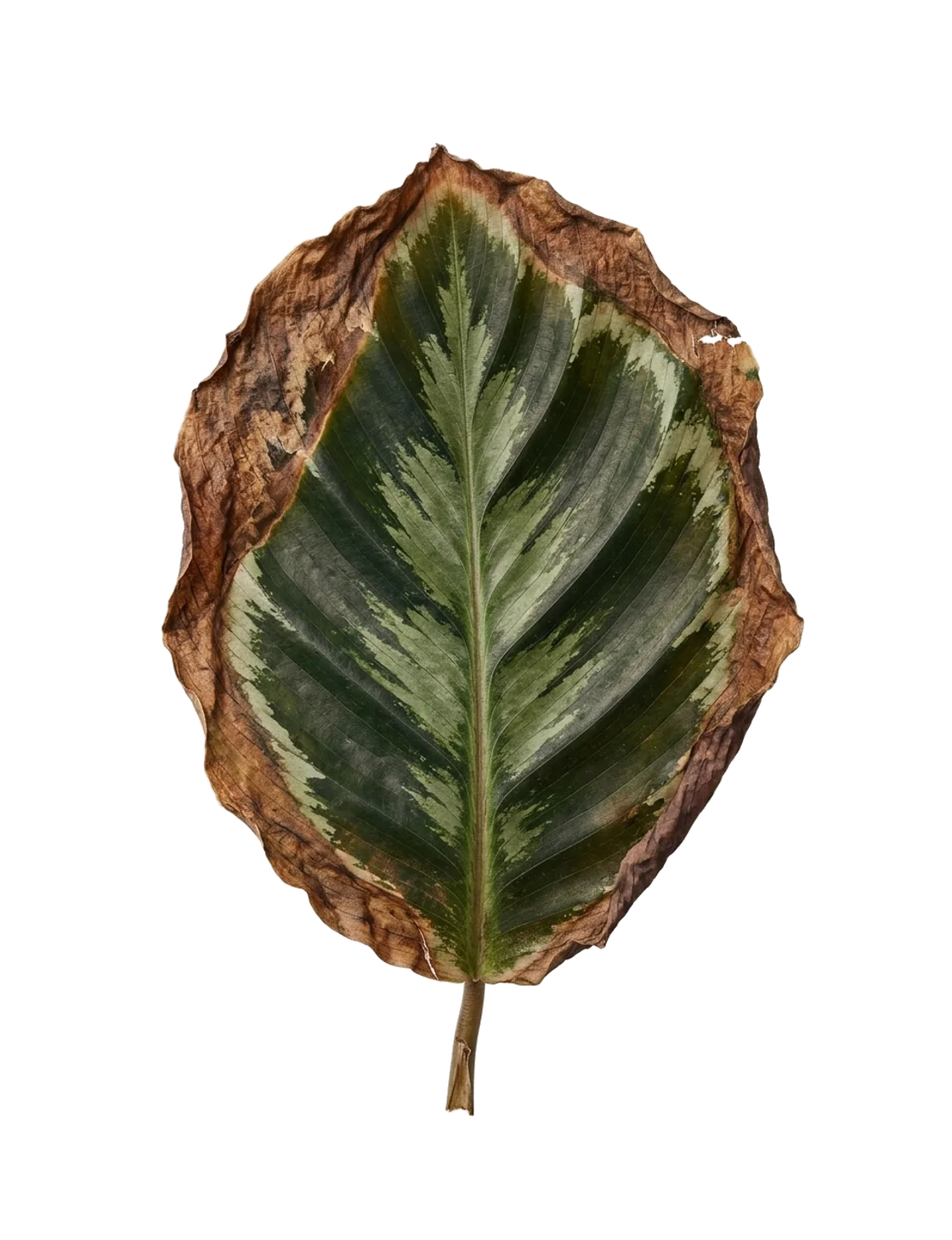
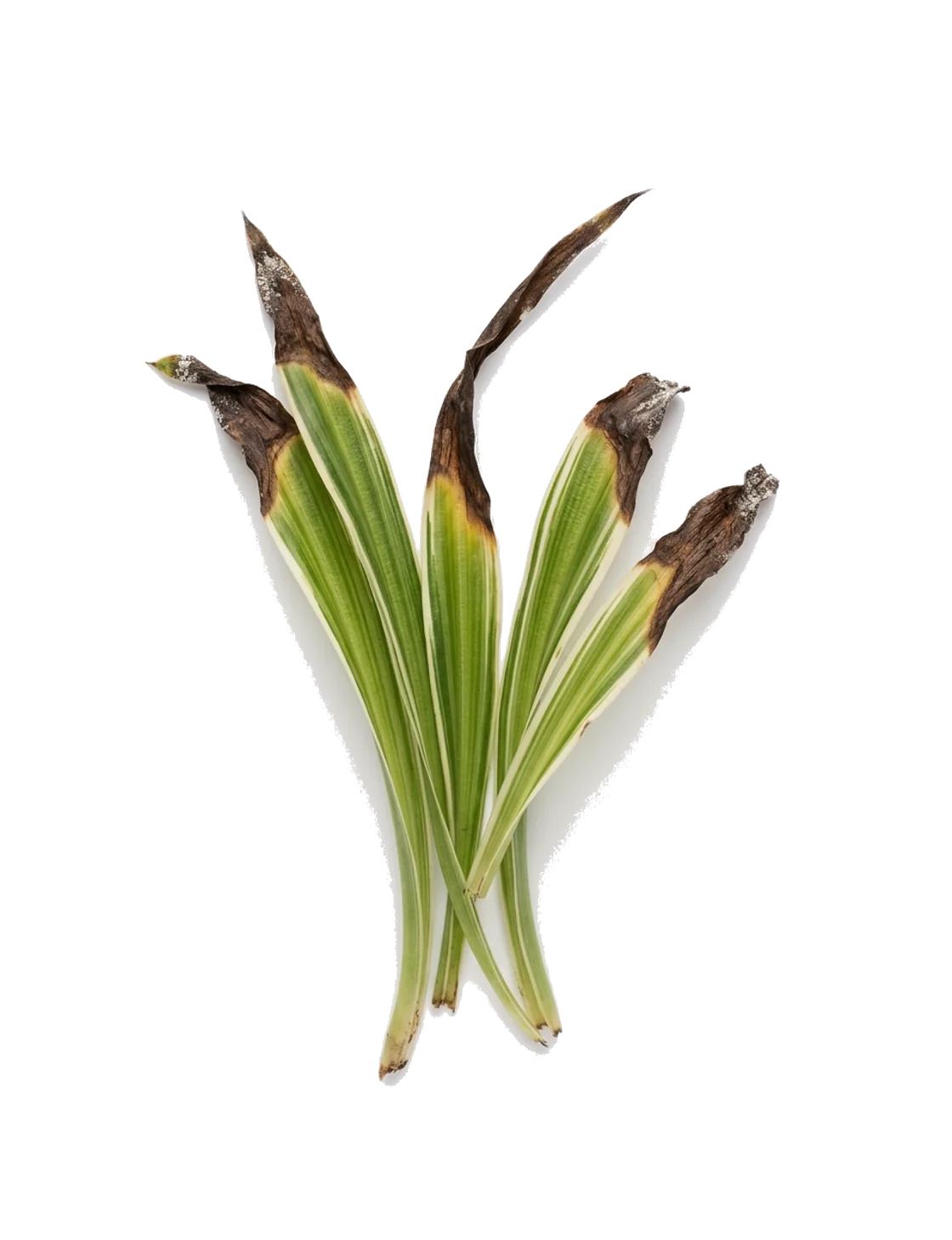
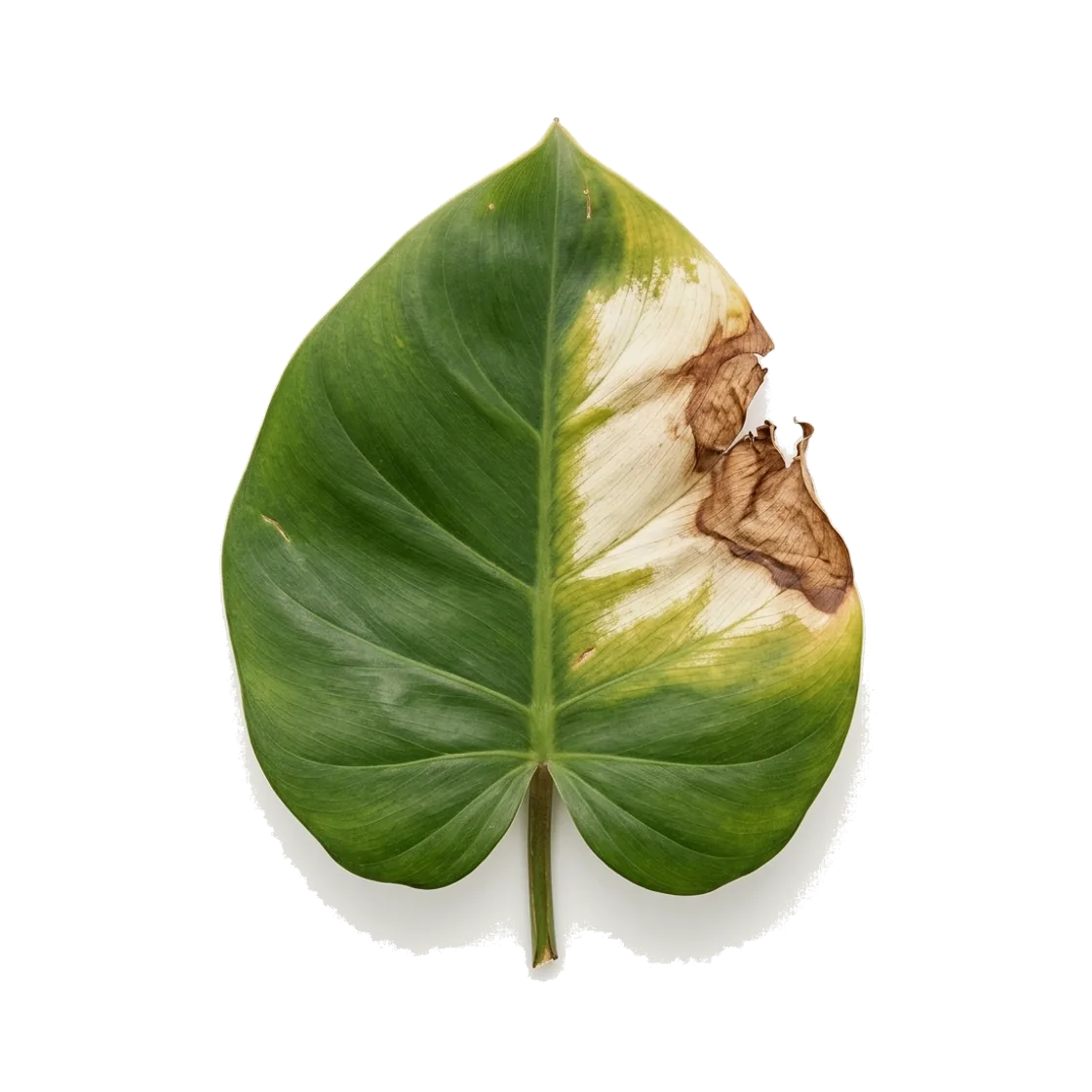
Common problems What tends to go wrong.
- Dry air
- Salt or fertiliser build-up
- Spider mites
- Root rot
- Sunburn


Frequently asked questions What people ask most.
Why are the leaf tips turning brown and crispy?
Brown, crunchy tips are typically caused by low air humidity or mineral buildup from hard tap water containing fluoride and chlorine. Increase humidity with a humidifier and switch to filtered, distilled, or rainwater for routine watering.
Why do the leaves stop folding up at night?
A lack of leaf movement often indicates that the plant is either not receiving enough light during the day or is experiencing drought stress. Move the plant to a brighter spot with filtered light and check that the potting mix remains evenly moist.
How can I raise the humidity around my peacock plant?
Using an evaporative or ultrasonic humidifier nearby is the most reliable way to maintain adequate humidity levels. Alternatively, group multiple plants together or set the container on a tray filled with pebbles and water, keeping the pot base above the waterline.
Why are the leaves curling inward?
Leaf curling is a natural defense mechanism against dehydration, dry air, excessive heat, or intense direct light. Check the soil moisture immediately, shield the plant from direct sunlight, and raise ambient humidity if the air feels dry.