String of hearts
Ceropegia woodii
Learn how to care for string of hearts (Ceropegia woodii): watering tips, bright light needs, and easy propagation methods for healthy vines.
- Light
- Indirect
- Watering
- 10–14days between waterings
- Temperature
- 18–25 °Cideal temperature
- Toxicity
- Non-toxic
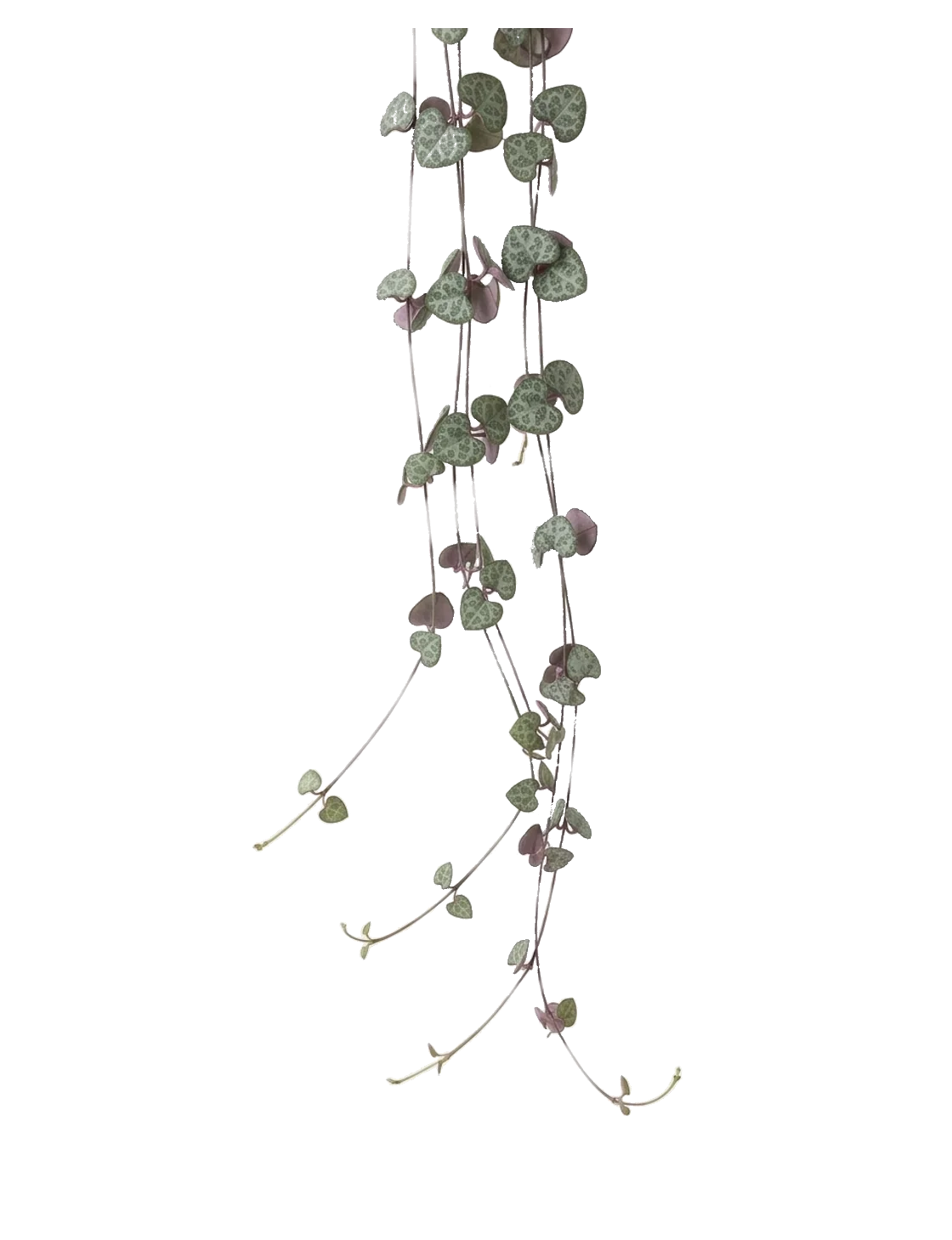
String of hearts (Ceropegia woodii) is an evergreen trailing semi-succulent native to southern Africa, famous for its thread-like purple stems and charming heart-shaped foliage. The small leaves display an intricate silver-green marbling on top with a delicate rose-purple tint underneath, making it a favorite for decorative hanging pots and bright shelves.
As a drought-adapted plant, it stores moisture efficiently in its fleshy leaves as well as in bead-like tubers that develop along the vines and below the soil surface. This structure allows the plant to handle periods of neglect quite well, though it makes the root system particularly vulnerable to sitting in soggy, poorly aerated potting compost.
When provided with ample indirect sunlight, string of hearts grows rapidly during the warm months, cascading several feet below its container. It is a rewarding and resilient houseplant that adds vertical elegance to bright indoor spaces without demanding complicated maintenance or frequent feeding.
Did you know?Its unusual lantern-shaped flowers evolved to temporarily trap tiny pollinator flies until pollination is complete. Along the trailing vines, mature plants produce bead-like aerial tubers that can grow into new plants.
Care. What it needs, point by point.
- Watering
- 10–14 days between wateringsAllow the potting mix to dry out completely before watering thoroughly, discarding any runoff collected in the saucer. Water roughly every ten to fourteen days during warm months, reducing this to once a month or less in winter.
- Light
- IndirectProvide plenty of bright, indirect sunlight throughout the day to keep the leaf patterning vivid and growth compact. Gentle morning sun is beneficial, but harsh direct afternoon sun can scorch the delicate foliage.
- Temperature
- 18–25 °C ideal temperatureThis plant thrives in temperatures between 18 °C and 25 °C throughout the growing season. Protect it from sudden cold drafts and never expose it to temperatures falling below 10 °C.
- Soil
- Use an airy, quick-draining mix composed of cactus potting soil amended with perlite or coarse pumice. Always choose a pot with functional drainage holes to prevent standing water around the tubers.
- Fertilizer
- Feed once a month from spring to late summer using a balanced succulent fertilizer diluted to half strength. Discontinue fertilizing during the autumn and winter dormant period.
- Pruning
- Trim back trailing vines in spring if they become overly leggy or outgrow your available space. Regular trimming encourages lateral branching and results in a fuller, denser appearance.
- Propagation
- Propagate easily by taking stem cuttings rooted in water or by pinning the aerial tubers directly onto moist potting mix. The cuttings establish roots within a few weeks when kept in warm, bright conditions.
Where it grows. In the wild and in homes.
In the wild it grows in southern Africa and south tropical Africa, in a subtropical climate.
People have also taken it to 2 more regions where it now grows on its own: Papuasia and the south-central Pacific.
Range: Plants of the World Online, Royal Botanic Gardens, Kew
Is String of hearts toxic to cats and dogs?
The ASPCA doesn't list this species. If your pet has chewed it and seems unwell, call your vet.
Common problems What tends to go wrong.
- Root rot
- Overwatering
- Underwatering
- Too little light
- Mealybugs and scale




Frequently asked questions What people ask most.
Why are the leaves on my string of hearts falling off?
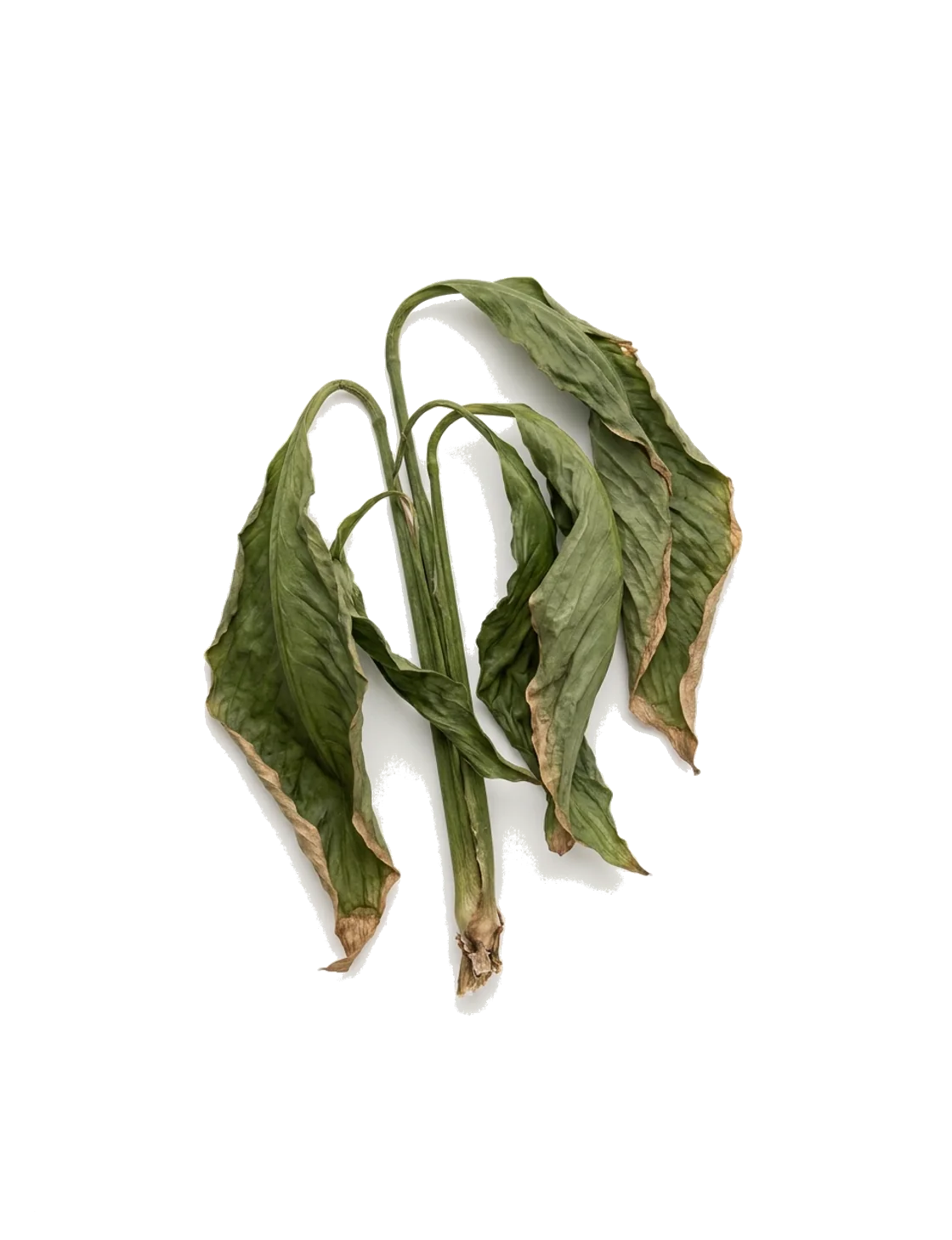
Leaf drop is most commonly triggered by overwatering, which rots the delicate root tubers and stems. Check the soil moisture before watering and ensure your pot provides proper drainage.
How do I make my string of hearts look fuller on top?
Loop long, healthy vines across the soil surface inside the pot and pin the nodes down gently with bent paperclips. The tubers and nodes will root and sprout new shoots, filling out the crown.
Why are the vines stretched out with large spaces between leaves?
Large gaps between leaves indicate that the plant is not receiving sufficient light and is stretching to find it. Relocate the pot closer to a bright window with filtered light to encourage tight, bushy leaf growth.
How often should I repot my string of hearts?
Repotting is only necessary every two to three years because the plant has a compact root system and prefers being slightly snug. Move up only one pot size in early spring using a fast-draining succulent mix.