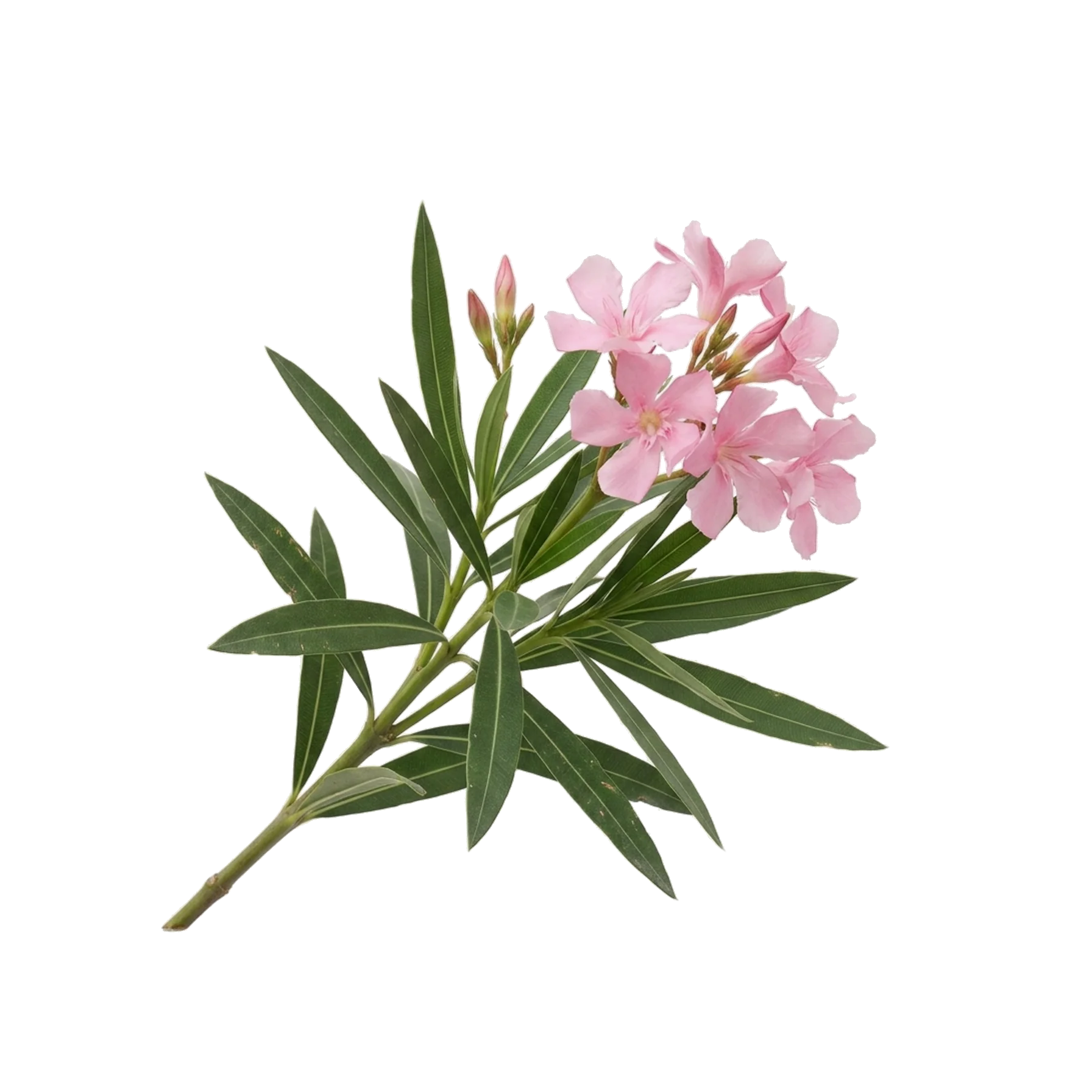
Oleander (Nerium oleander) is a robust evergreen shrub celebrated across the world for its abundant, long-lasting blooms and resilient nature. It features slender, lance-shaped leathery leaves of deep green and produces clusters of flowers in vibrant shades of pink, red, white, or peach throughout the warmest months of the year.
Native to the Mediterranean Basin and southwestern Asia, this plant thrives effortlessly in harsh conditions, displaying remarkable tolerance to drought, intense heat, wind, and coastal salinity. It makes a versatile landscape feature, excelling as an informal hedge, an ornamental screen, or a potted patio specimen in sunny courtyards.
Cultivating oleander requires minimal effort once established, as it adapts well to lean soils and prolonged dry spells. Providing ample direct sunlight and good drainage is essential to encourage continuous blossoming and keep root systems healthy season after season. Occasional pruning after flowering helps maintain a compact, well-branched shape.
Did you know?Oleander is widely planted along highway medians due to its remarkable ability to withstand heavy traffic pollution, poor soil, and intense summer heat.
Care. What it needs, point by point.
- Watering
- 1–2× a weekWater once or twice a week during hot summer periods, checking that the top layer of soil has dried out beforehand. In winter, reduce watering drastically as established plants withstand prolonged dry spells easily.
- Light
- 6 h of direct sunIt requires full direct sunlight for at least six hours daily to produce generous flowers. Shaded conditions lead to sparse blooms and weak, leggy stems.
- Temperature
- 15–35 °C ideal temperatureOleander performs best between 15 °C and 35 °C, taking extreme summer heat in stride. It can tolerate brief light frosts down to -5 °C, though prolonged freezing damages tender branches.
- Soil
- It adapts to almost any garden soil, including alkaline or sandy ground, provided it has excellent drainage.
- Fertilizer
- 3–4 weeks between feedsFeed with a balanced flowering plant fertilizer every three to four weeks from spring through late summer.
- Pruning
- Prune in late winter or early spring to clear away dead wood and cut back older stems to encourage fresh growth.
- Propagation
- Easily propagated through semi-hardwood cuttings taken in early summer and rooted in water or moist soil. It can also be grown from seeds sown in warm spring conditions.
Where it grows. In the wild and in homes.
In the wild it grows in Europe, temperate Asia, Africa, and tropical Asia, in a subtropical climate.
People have also taken it to 69 more regions where it now grows on its own: Africa, North America, the Pacific, and South and Central America and the Caribbean.
The Florami community has photographed it in España.
Range: Plants of the World Online, Royal Botanic Gardens, Kew
Is Oleander toxic to cats and dogs?
Toxic to cats and dogs.

Cats
Toxic

Dogs
Toxic
Usual signs
Drooling, abdominal pain, diarrhea, colic, depression, and death.
If your pet has chewed it and shows symptoms, call your vet or the nearest emergency vet.
Source · ASPCA Animal Poison Control
Gallery As the community sees it.
Photo · Alvesgaspar · CC BY 2.5
Common problems What tends to go wrong.
- Mealybugs and scale
- Aphids
- Sooty mould
- Root rot
- Cold damage





Frequently asked questions What people ask most.
Why is my oleander not blooming?
Lack of direct sunlight is the most common reason, as this plant needs several hours of full sun to form buds. Inappropriate pruning that removed budding branches or excessive nitrogen fertilizer can also suppress flowering.
Why are the leaves on my oleander turning yellow?
Yellowing foliage is usually a sign of overwatering or soil that retains too much moisture around the roots. Allow the ground to dry out between waterings and make sure container plants drain freely.
When and how should I prune oleander?
Late winter or early spring before new growth starts is the best time for pruning. Cut back spent flowering stems by about a third and thin out older branches to open up the canopy.
What pests commonly attack oleander?
Oleander aphids and scale insects frequently congregate on tender new shoots during warm weather. Spray the affected stems with insecticidal soap or horticultural oil to keep infestations in check.