Snake plant
Dracaena trifasciata
Learn how to care for the snake plant: watering tips, light needs, and easy maintenance advice to keep this hardy indoor houseplant thriving.
- Light
- Indirect
- Watering
- 2–3weeks between waterings
- Temperature
- 18–27 °Cideal temperature
- Pets
- Toxic
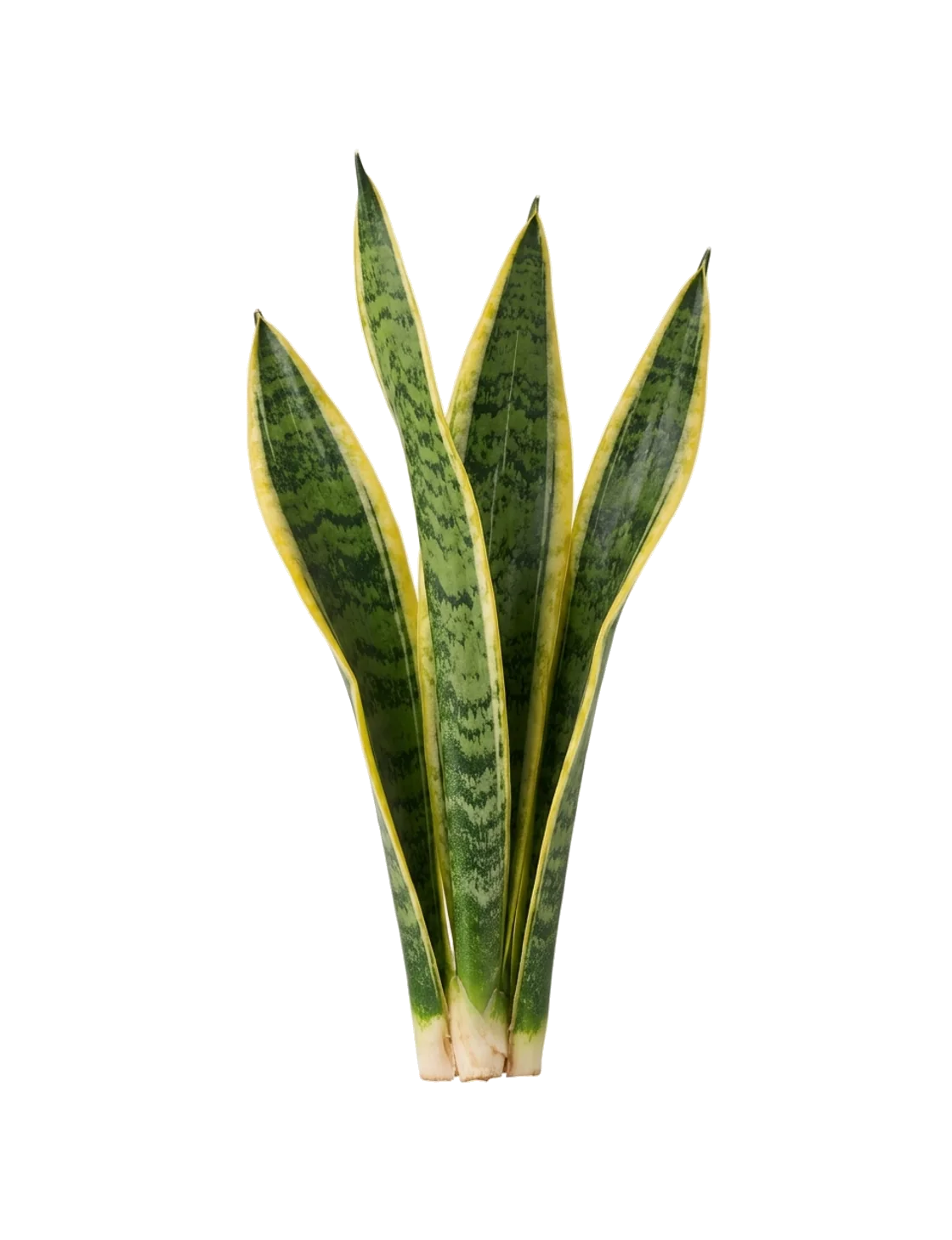
The snake plant, also widely called mother-in-law's tongue or Saint George's sword, is one of the most durable and architecturally striking houseplants available. Native to the tropical regions of West Africa, it features upright, sword-shaped leaves that emerge from a dense underground rhizome. The foliage displays distinctive dark green banding interspersed with lighter grayish-green patterns.
Much of its enduring popularity comes from an exceptional ability to thrive on minimal care. It handles dry indoor air, missed waterings, and dimly lit interior corners far better than most tropical plants. Thanks to its succulent nature, the plant stores water reserves inside its thick leaves, allowing it to withstand long periods without regular attention.
Proper culture primarily depends on avoiding excess moisture, as overwatering in poorly draining pots remains its main vulnerability. Whether positioned in a dim hallway or bathed in bright, filtered daylight, the snake plant delivers clean, modern lines that enhance any room with minimal effort. It is an ideal companion for beginners and seasoned growers alike.
Did you know?It earned the nickname mother-in-law's tongue due to its pointed, sword-like leaf tips. Though long classified under Sansevieria, botanists now place it within the Dracaena genus.
Care. What it needs, point by point.
- Watering
- 2–3 weeks between wateringsAllow the potting soil to dry out completely between waterings, typically every two to three weeks in spring and summer, and monthly in winter. Check that the soil is dry all the way to the bottom before pouring water.
- Light
- IndirectIt adapts easily to low light conditions, although it grows fastest in bright, indirect sunlight. Direct midday sun should be avoided to prevent scorched foliage.
- Temperature
- 18–27 °C ideal temperatureIt thrives in standard room temperatures between 18 °C and 27 °C. Keep the plant away from drafty windows and avoid exposing it to temperatures below 10 °C.
- Soil
- Use a fast-draining potting mix formulated for succulents and cacti, enriched with perlite or coarse sand. Good aeration around the root ball prevents lingering moisture.
- Fertilizer
- Feed with a diluted balanced houseplant fertilizer once a month during spring and summer. Stop fertilizing entirely through the autumn and winter dormant period.
- Pruning
- No routine pruning is required beyond removing any old or damaged leaves. Cut spent outer leaves at the soil line using a clean, sharp pair of shears.
- Propagation
- Propagate easily by separating offsets and rhizomes during routine repotting in spring. You can also root leaf cuttings in water or soil, though variegated cultivars may revert to all-green foliage.
Where it grows. In the wild and in homes.
In the wild it grows in west-central tropical Africa, tropical West Africa, and tropical East Africa, in a seasonally dry tropical climate.
People have also taken it to 45 more regions where it now grows on its own: South and Central America and the Caribbean, Africa, the Pacific, and tropical Asia.
Range: Plants of the World Online, Royal Botanic Gardens, Kew
Is Snake plant toxic to cats and dogs?
Toxic to cats and dogs.

Cats
Toxic

Dogs
Toxic
Usual signs
Nausea, vomiting, and diarrhea.
If your pet has chewed it and shows symptoms, call your vet or the nearest emergency vet.
Source · ASPCA Animal Poison Control
Common problems What tends to go wrong.
- Root rot
- Overwatering
- Too little light
- Cold damage
- Mealybugs and scale





Frequently asked questions What people ask most.
Why are my snake plant leaves turning soft and yellow?
Mushy, yellowing leaves are almost always caused by overwatering or poorly draining soil. Wet soil rots the underground rhizomes, preventing the plant from supporting its upright foliage. Let the soil dry out thoroughly and trim off damaged leaves at the base.
How often should I water a snake plant?
Water only when the potting mix has completely dried out from top to bottom. In most homes, this means watering every two to three weeks during warm seasons and roughly once a month during winter.
Can a snake plant survive in a room with low light?
Yes, it is celebrated for its tolerance of dim rooms and windowless office settings. While it survives low light well, its growth will slow down noticeably and it will consume very little water.
What is the best way to propagate a snake plant?
Division is the most reliable method, done by slicing the underground rhizome to separate mature offsets with their own roots. Leaf cuttings also root easily in water or moist soil, although they take several months to establish.