Century plant
Agave americana
Learn how to care for the century plant (Agave americana): watering guidelines, full sun requirements, well-draining soil mix, and outdoor tips.
- Light
- 6–8 hof direct sun
- Watering
- 2–3weeks between waterings
- Temperature
- 20–35 °Cideal temperature
- Toxicity
- Non-toxic
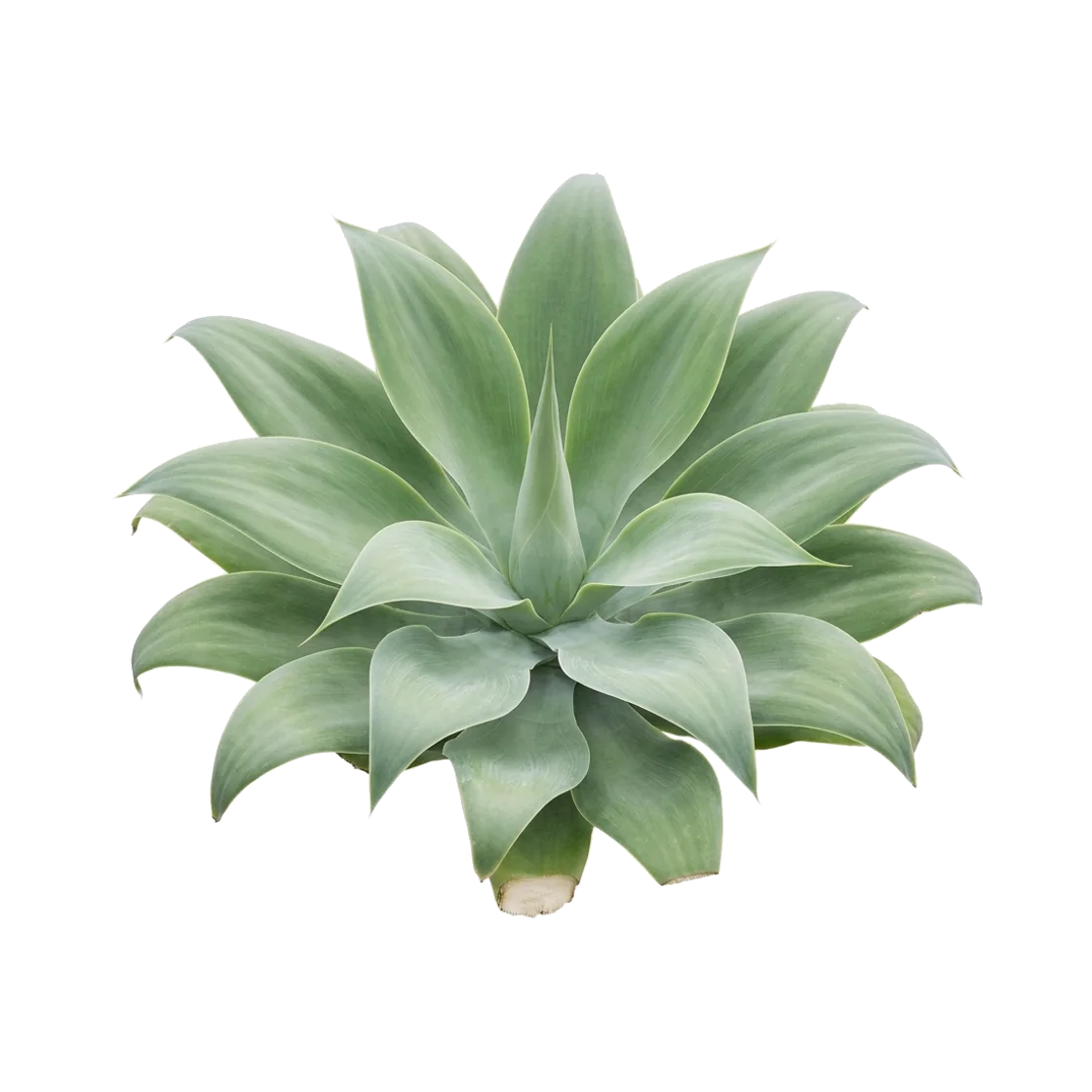
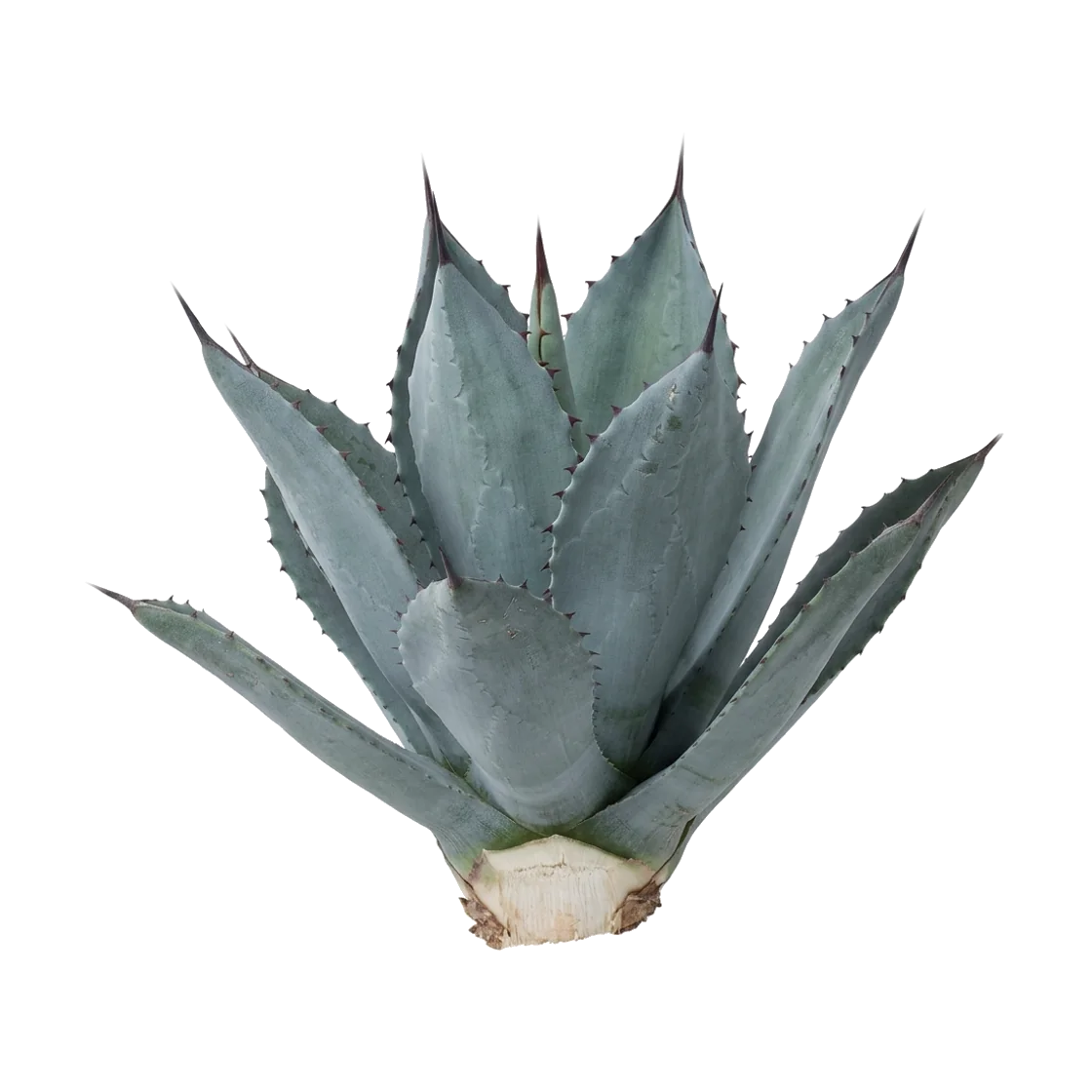
Agave americana, commonly known as the century plant or American aloe, is a bold, drought-tolerant succulent native to Mexico and the southwestern United States. It forms a massive, architectural rosette of fleshy, blue-green leaves lined with sharp recurved marginal spines and tipped with a formidable terminal needle.
Renowned for its toughness, this perennial thrives in nutrient-poor, rocky ground under blistering heat where few other species can survive. It is a monocarpic plant, spending decades building up vital energy reserves before sending up a towering branched flower spike that can reach upwards of eight meters in height, after which the mother rosette naturally dies.
Because of its impressive scale and aggressive spines, century plant is ideal for xeriscaping, rock gardens, and open borders situated safely away from foot traffic. While young plants can adapt to large containers on sunny patios for several years, their full sculptural beauty is best displayed when planted directly in well-drained outdoor ground.
Did you know?Despite its common name suggesting a hundred years, it typically blooms once after 10 to 30 years, producing a massive flower stalk before dying.
Care. What it needs, point by point.
- Watering
- 2–3 weeks between wateringsWater thoroughly only when the soil has completely dried out, which generally means once every two to three weeks in summer and minimally or not at all during winter. In-ground specimens rarely need supplemental watering once established, relying almost entirely on natural rainfall.
- Light
- 6–8 h of direct sunThis succulent requires full direct sunlight for at least six to eight hours each day to retain its compact shape and rigid leaves. Shaded conditions cause the foliage to stretch weakly and lose its distinctive powder-blue hue.
- Temperature
- 20–35 °C ideal temperatureIt thrives best in warm climates with temperatures between 20 °C and 35 °C during the growing season. Mature, dry specimens can tolerate short dips down to -7 °C, but persistent frost combined with wet soil easily rots the crown.
- Soil
- Plant in an extremely porous, gritty substrate with high amounts of sand, pumice, or gravel to guarantee immediate water drainage. Heavy clay or moisture-retentive soils will inevitably lead to root suffocation.
- Fertilizer
- Feed lightly once a year in mid-spring using a diluted low-nitrogen cactus and succulent fertilizer. Excessive fertilization encourages weak, overly soft tissue that makes the plant vulnerable to pests and disease.
- Pruning
- No routine pruning is necessary other than trimming away dried or damaged lower leaves using heavy-duty, sanitized shears. Wear thick protective gloves and eye protection when working near the dangerous terminal spines.
- Propagation
- Propagate effortlessly by detaching the offshoots, known as pups, that sprout abundantly around the base of the parent rosette. Allow the separated suckers to callous over in a dry spot for a few days before planting them in gritty soil.
Where it grows. In the wild and in homes.
In the wild it grows in Mexico, the southwestern U.S., and the south-central U.S., in a seasonally dry tropical climate.
People have also taken it to 81 more regions where it now grows on its own: Africa, South and Central America and the Caribbean, Europe, and tropical Asia.
The Florami community has photographed it in España.
Range: Plants of the World Online, Royal Botanic Gardens, Kew
Is Century plant toxic to cats and dogs?
The ASPCA doesn't list this species. If your pet has chewed it and seems unwell, call your vet.
Gallery As the community sees it.
Photo · Zeynel Cebeci · CC BY-SA 4.0
Common problems What tends to go wrong.
- Root rot
- Overwatering
- Mealybugs and scale
- Cold damage




Frequently asked questions What people ask most.
Why are the lower leaves turning yellow or soft?
Soft, discolored leaves are almost always a sign of overwatering or poor soil drainage, which rapidly causes root rot. Stop watering immediately, remove any mushy foliage, and ensure the soil dries out completely between waterings.
Does it really take a century to flower?
No, the plant rarely takes a hundred years and usually flowers between 10 and 30 years depending on the climate and energy stored. Once the impressive flower stalk blooms, the mother plant will die, leaving behind numerous healthy offsets.
Can it be grown as an indoor houseplant?
It is generally unsuited for indoor living because it demands intense direct sunlight and plenty of airflow to stay healthy. Only juvenile specimens in pots should be kept near exceptionally bright, south-facing windows before being moved outside.
How do I remove and replant the pups?
Carefully dig around the baby offset to sever its connecting runner with a clean, sharp knife, preserving as many of its own roots as possible. Let the cut callous in the shade for two to three days before potting it in dry, fast-draining cactus mix.