Satin pothos
Scindapsus pictus
Satin pothos (Scindapsus pictus): complete guide to watering, light and propagation of the silver-marked climbing houseplant. Home growing tips.
- Light
- Indirect
- Watering
- 10–14days between waterings
- Temperature
- 18–29 °Cideal temperature
- Pets
- Toxic
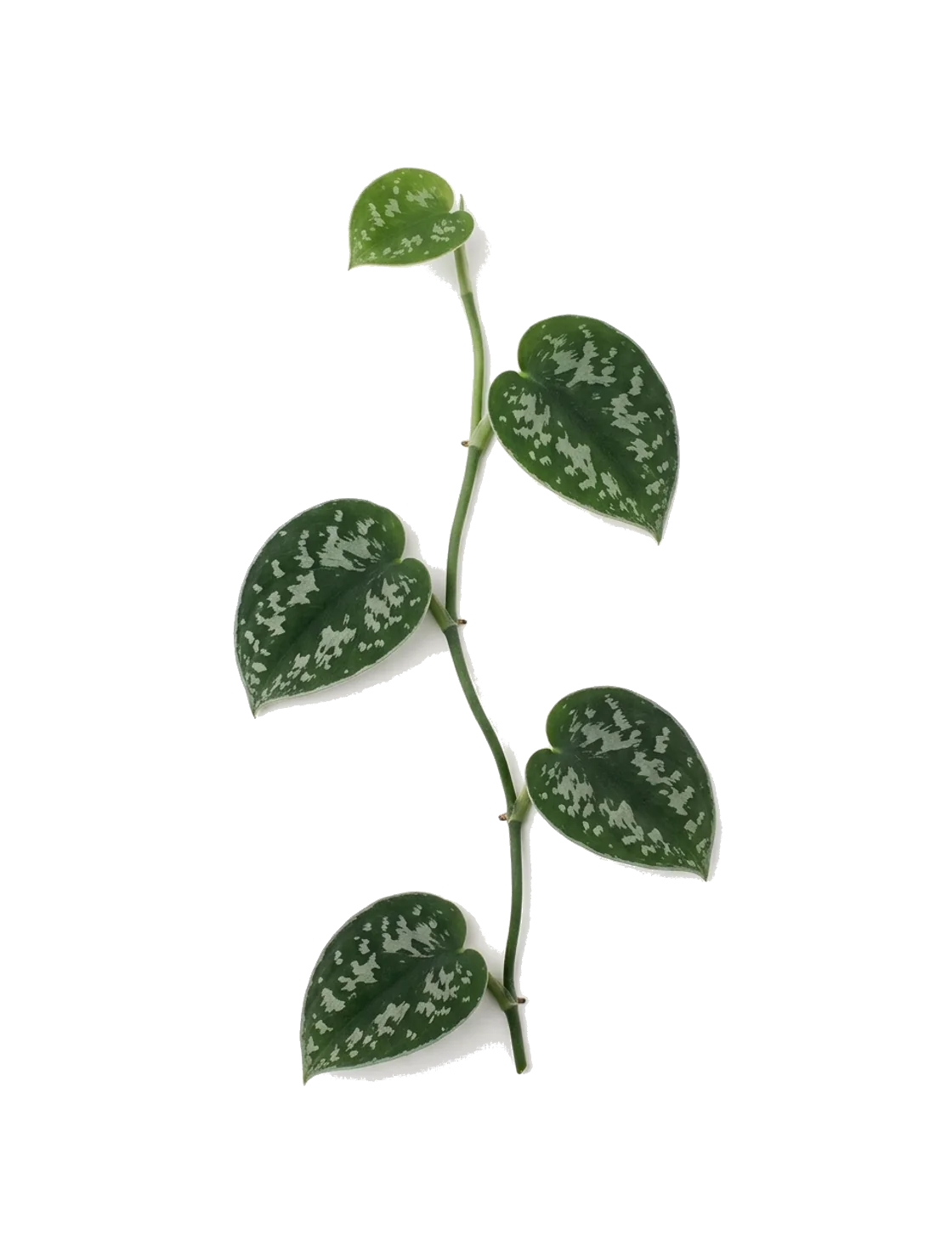
The satin pothos (Scindapsus pictus) is a climbing plant from the tropical forests of Southeast Asia, prized for its heart-shaped leaves dusted with silvery-white markings. Despite the nickname, it is no pothos at all but a close relative, with thicker, almost velvety foliage and a graceful trailing or climbing habit. Trained up a support it climbs eagerly; left loose, it spills into long curtains.
It is one of the most forgiving foliage plants, asking only for bright indirect light and watering when the top of the mix dries out. The silver variegation is the best guide to light levels: crisp and bright in a good spot, fading toward plain green where light is scarce. Its somewhat fleshy stems and leaves tolerate an occasional forgotten watering far better than constantly soggy soil.
With that simple routine it grows steadily for years, needing only an annual spring trim to stay bushy and a regular wipe of the leaves. It enjoys normal household humidity, though very dry air can invite spider mites, so grouping plants helps. Repot in spring when roots fill the pot, and take cuttings freely: few plants multiply as willingly as this one.
Did you know?Its leaves feel slightly thick and velvety, and the silvery blotches differ on every leaf.
Care. What it needs, point by point.
- Watering
- 10–14 days between wateringsWater when the top 2 or 3 centimetres of mix feel dry, roughly weekly in summer and every 10 to 14 days in winter indoors. The leaves curl slightly when the plant is thirsty.
- Light
- IndirectIt prefers bright, indirect light, which keeps the silver markings crisp. It tolerates medium light but loses variegation and vigour in dark corners; keep it out of direct midday sun.
- Temperature
- 18–29 °C ideal temperatureIt thrives between 18 and 29 °C and dislikes cold: keep it above 15 °C. Protect it from cold draughts and from hot, dry air near heaters.
- Soil
- Use a loose, well-drained universal mix with bark or perlite added, in a pot with drainage holes. It also grows well trained up a moss pole.
- Fertilizer
- 2–4 weeks between feedsFeed with a balanced liquid fertiliser at half strength every two to four weeks in spring and summer. Skip feeding in autumn and winter.
- Pruning
- Trim back long or bare vines in spring to keep the plant full, cutting just above a leaf node. The trimmings make excellent cuttings.
- Propagation
- Root stem cuttings with one or two nodes in water or moist mix in spring; roots appear within a few weeks. Pot up several cuttings together for a bushy plant.
Where it grows. In the wild and in homes.
In the wild it grows in Malesia, the Indian subcontinent, and Indochina, in a wet tropical climate.
Range: Plants of the World Online, Royal Botanic Gardens, Kew
Is Satin pothos toxic to cats and dogs?
Toxic to cats and dogs.

Cats
Toxic

Dogs
Toxic
Usual signs
Oral irritation with pain and swelling of the mouth, tongue and lips, excessive drooling, vomiting and difficulty swallowing.
If your pet has chewed it and shows symptoms, call your vet or the nearest emergency vet.
Source · ASPCA Animal Poison Control
Common problems What tends to go wrong.
- Overwatering
- Root rot
- Spider mites
- Mealybugs and scale




Frequently asked questions What people ask most.
How often should I water a satin pothos?
Water when the top 2 or 3 centimetres are dry, about weekly in summer and every 10 to 14 days in winter. Leaves that curl inward are asking for water, while yellow leaves usually mean too much of it.
Why is it losing its silver markings?
Fading variegation is almost always a light problem: the plant greens up to catch more light in dim spots. Move it to brighter indirect light and the new leaves will show their silver pattern again.
Why are the leaves yellowing?
Yellow leaves most often come from overwatering or soil that stays wet too long. Let the mix dry between waterings, empty the saucer, and check that the pot drains freely.
How do I propagate Scindapsus pictus?
Cut stem sections with one or two nodes in spring and root them in water or moist mix. Roots form within weeks; plant several rooted cuttings together for a full basket from the start.
Can it climb a moss pole?
Yes, and it climbs beautifully: the aerial roots grip the support and the leaves grow larger as it rises. Tie young stems loosely to the pole and mist it occasionally to encourage attachment.