Red tip photinia
Photinia × fraseri
Red tip photinia (Photinia × fraseri): evergreen shrub with scarlet young leaves, plus complete care, pruning, watering and leaf-spot control.
- Light
- Full sun
- Watering
- 1–2×a week
- Temperature
- 15–24 °Cideal temperature
- Toxicity
- Non-toxic
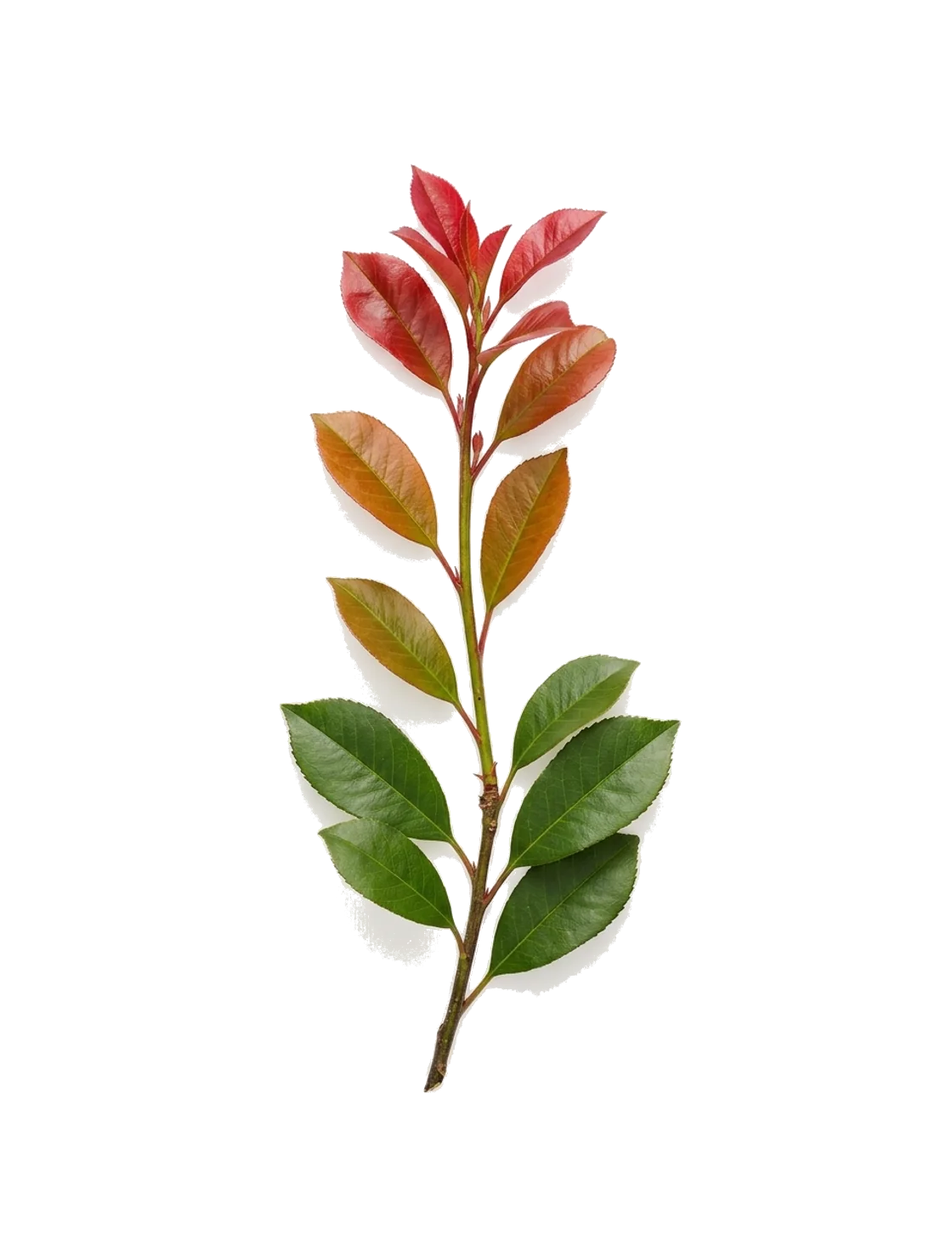
Red tip photinia (Photinia × fraseri) is an evergreen shrub grown for its spectacular spring foliage: the young leaves unfold a glossy scarlet red before maturing to dark green. It is a garden hybrid of two eastern Asian species, selected in the United States, and the cultivar 'Red Robin' is the most widely planted. It forms vigorous upright bushes two to four metres tall, ideal for hedges and screens with seasonal colour.
The leathery oval leaves keep the plant looking full through winter, and in mid-spring clusters of small white flowers appear, similar to those of hawthorn, its close relative. The flowers are followed by small red pomes that birds eat in autumn. Few shrubs combine so much winter structure with such a striking spring display.
It is an easy, fast-growing plant for temperate gardens, happiest in sun with fertile soil and good air circulation. Its weak point is a fungal leaf spot that disfigures the foliage in damp, crowded plantings. With space between plants, watering at the base and a yearly prune, a photinia hedge stays dense, healthy and brilliantly coloured.
Did you know?Each shearing is followed by a new flush of scarlet leaves, which is why formal red-tip hedges are trimmed up to three times a year.
Care. What it needs, point by point.
- Watering
- 1–2× a weekWater deeply once or twice a week during the first two summers so the root system establishes. Afterwards it copes with normal dry spells, and the soil should dry slightly between waterings.
- Light
- Full sunIt needs full sun for the young leaves to turn their brightest red. In shade the new growth stays greenish and the bush grows leggier.
- Temperature
- 15–24 °C ideal temperatureIt grows best between 15 and 24 °C and withstands frosts down to about -12 °C once established. Late frosts can nip the red young leaves, though the plant reshoots without trouble.
- Soil
- It prefers fertile, well-drained soil, neutral to slightly acid. It tolerates chalk moderately, but stagnant water quickly brings root and leaf trouble.
- Fertilizer
- Apply compost or a balanced fertilizer in early spring to support the spring flush. Avoid heavy late-summer feeding, which produces tender growth more vulnerable to leaf spot and frost.
- Pruning
- Prune in late winter or just after the spring growth hardens to shape the plant. Light shearing during the season encourages fresh red flushes, but always leave air circulating to limit leaf spot.
- Propagation
- Cultivars such as 'Red Robin' are multiplied by semi-ripe cuttings taken in late summer, rooted in a humid propagator. Seed-grown plants do not keep the selected red colour.
Where it grows. In the wild and in homes.
In the wild it grows in China, in a temperate climate.
Range: Plants of the World Online, Royal Botanic Gardens, Kew
Is Red tip photinia toxic to cats and dogs?
The ASPCA doesn't list this species. If your pet has chewed it and seems unwell, call your vet.
Common problems What tends to go wrong.
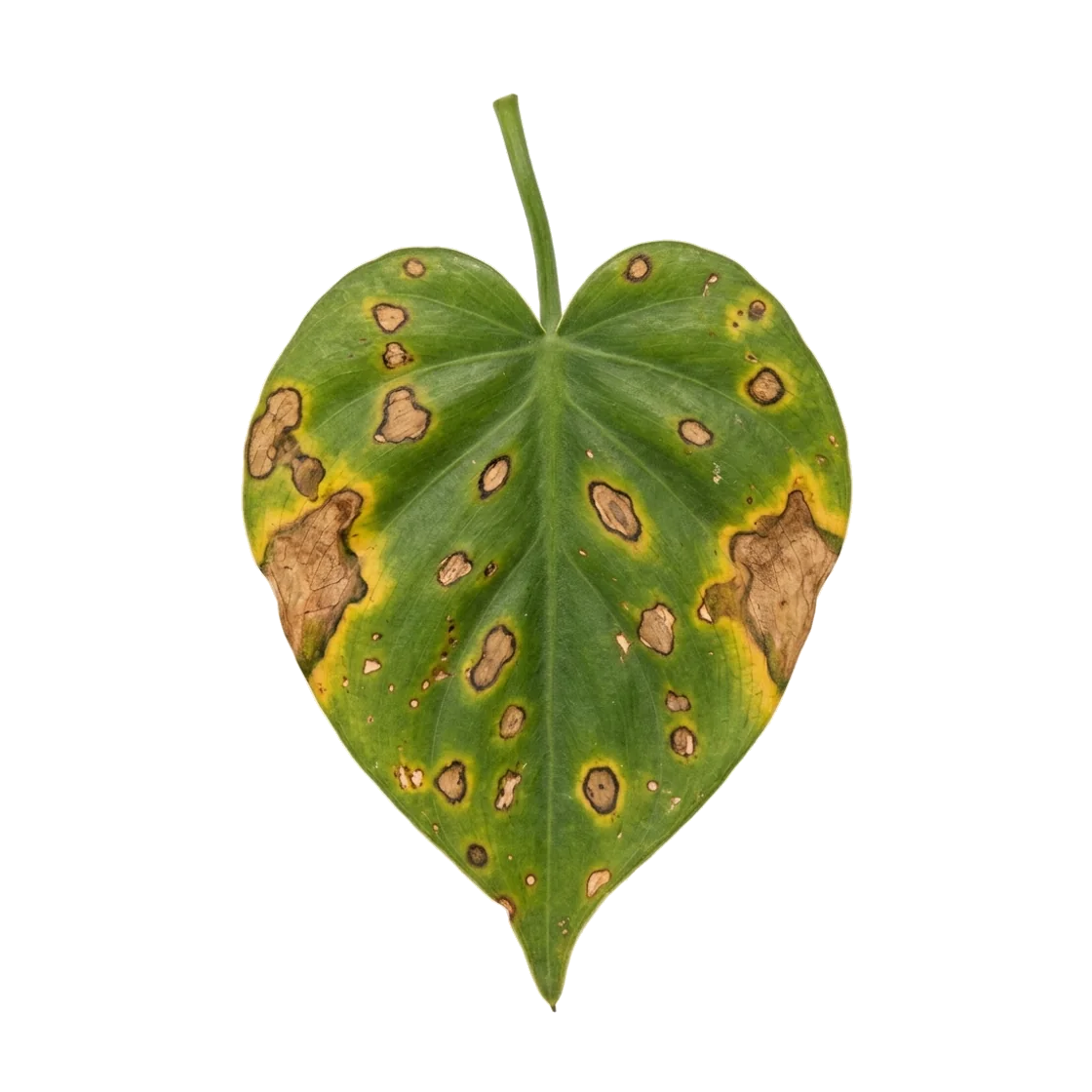
- Fungal or bacterial leaf spots
- Powdery mildew
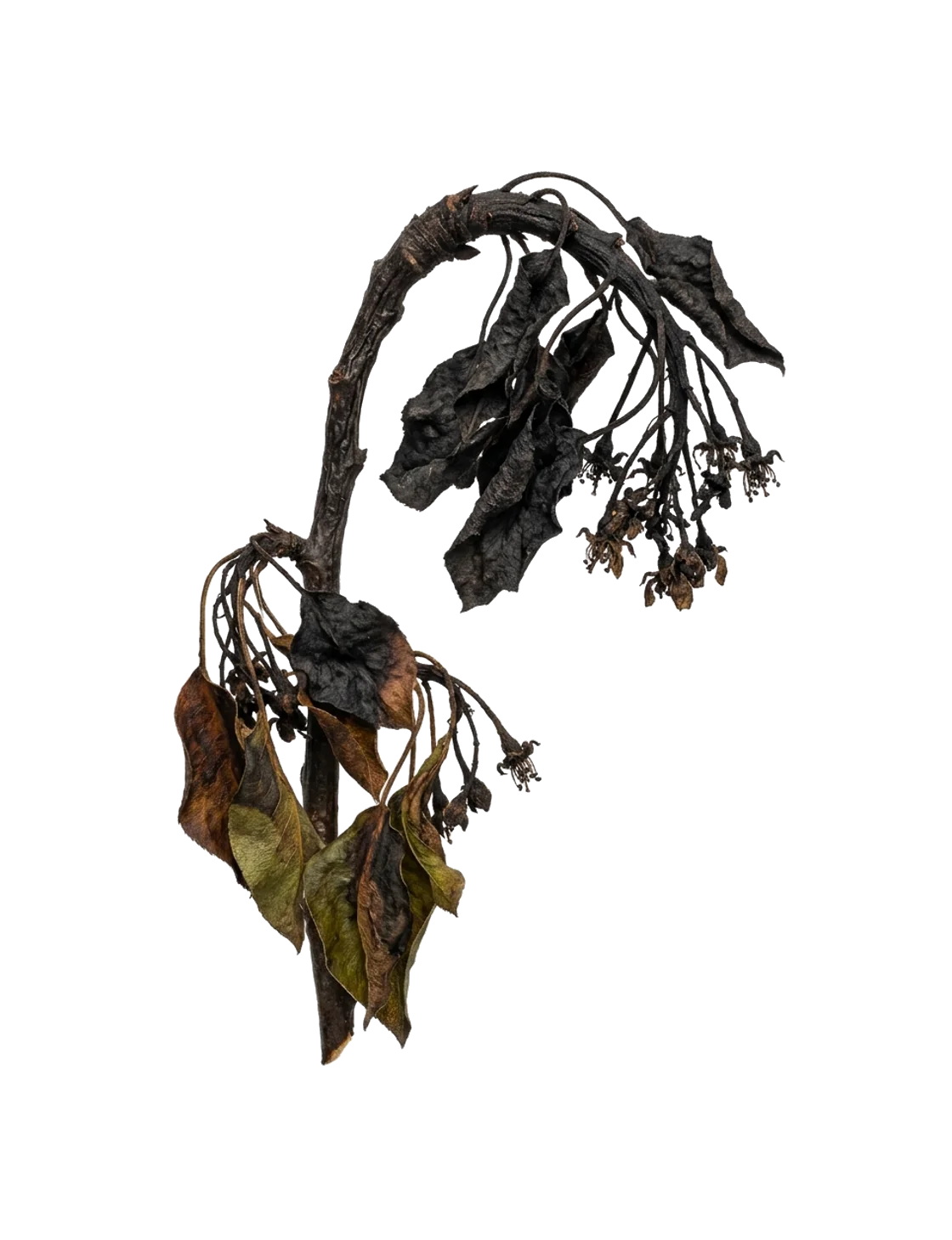
- Fire blight
- Aphids


Frequently asked questions What people ask most.
Why do photinia leaves get red and black spots?
It is leaf spot caused by the fungus Entomosporium, the classic disease of this shrub in damp springs. It shows as red or purple blotches that darken in the centre and can defoliate weak shoots. Improve air circulation, water at the base, and remove and bin the fallen leaves.
How do I keep the red colour on the leaves?
Red appears only on young growth in good light, so the trick is full sun plus regular trimming. Shear lightly after each flush hardens to force a new scarlet shoot. Plants in shade, or never pruned, turn plain green.
How often should I water it?
Water deeply once or twice a week for the first two summers until the roots settle. Established shrubs manage with rainfall plus support watering in heatwaves. Avoid wetting the foliage every day, because constant leaf wetness favours spotting.
When should I prune my photinia?
The main prune happens in late winter, before growth restarts, to set the shape. After the spring shoots mature you can shear lightly once or twice more for extra red flushes. Never leave a pile of dense, unventilated regrowth going into a wet autumn.
Can I grow it in a pot?
Yes, young plants grow well in large containers with rich, well-drained compost. Choose a sunny spot and water more often than in the ground, letting the surface dry between waterings. Repot or top-dress with fresh compost every two years to keep the red flushes coming.