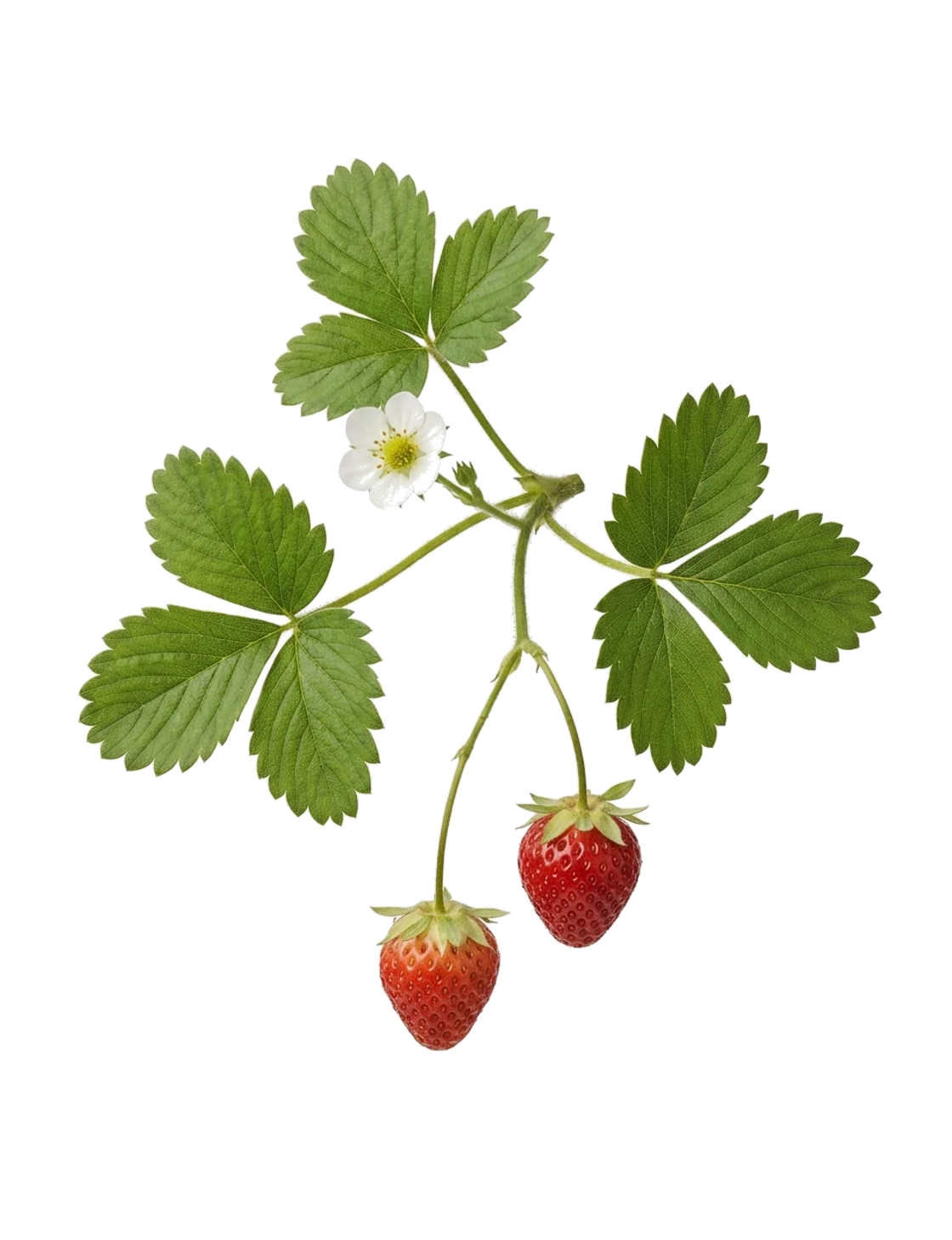
The garden strawberry is a low-growing, stoloniferous herbaceous perennial belonging to the rose family (Rosaceae). It develops from a compact central basal crown resting right at soil level, sending out bright green trifoliate leaves with sharply scalloped edges along with thin creeping runners called stolons that readily root upon contacting moist ground.
Widely celebrated for its sweet, highly aromatic scarlet fruits and delicate five-petaled white flowers, this plant serves both productive and ornamental roles in home gardens. It adapts effortlessly to diverse growing setups, thriving equally well in garden rows, raised beds, compact terracotta pots, hanging baskets, and vertical planters on sunny urban balconies.
Achieving a plentiful harvest of plump berries requires abundant direct sunlight, rich organic soil, and steady moisture without waterlogging the shallow root system. Applying a protective layer of straw or pine needles beneath the foliage protects developing fruit from damp dirt, significantly reducing fungal decay and keeping berries clean for harvesting throughout the summer.
Did you know?Botanically speaking, the strawberry is an aggregate accessory fruit, meaning the fleshy red part is swollen receptacle tissue while the small seeds are the actual fruits.
Care. What it needs, point by point.
- Watering
- 2–4× a weekWater 2 to 4 times a week during blooming and fruiting to keep the root zone consistently moist without becoming waterlogged. Check soil moisture with a finger: water when the top layer starts to feel dry. Always direct water to the base to avoid wetting the foliage and fruit, which invites mold.
- Light
- 6–8 h of direct sunRequires full sun, needing at least 6 to 8 hours of direct sunlight each day to produce abundant blooms and sweet berries. In extremely hot summer climates, light afternoon shade helps shield plants from heat stress.
- Temperature
- 15–25 °C ideal temperatureOptimal growing temperatures range between 15 °C and 25 °C during active vegetative growth and fruit ripening. Dormant plants can easily survive winter chills down to -5 °C, but late spring frosts will damage open blossoms.
- Soil
- pH 5.5–6.5Grows best in loose, fertile, slightly acidic soil (pH 5.5 to 6.5) rich in organic compost and amended with perlite for rapid drainage.
- Fertilizer
- 2 weeks between feedsFeed every two weeks with an organic fertilizer high in potassium and phosphorus from early flowering until harvest ends. Avoid excessive nitrogen, which prompts lush leaf growth at the direct expense of berry production.
- Pruning
- Regularly remove dead, damaged, or yellowing leaves around the base to maintain good airflow through the crown. Trim back unwanted runners throughout the fruiting season so the plant channels its energy into swelling berries.
- Propagation
- Easily propagated by pinning runners into small starter pots filled with potting mix while they remain attached to the mother plant. Once the runner develops strong roots of its own, snip the connecting stem to separate it.
Where it grows. In the wild and in homes.
In the wild it grows in the northwestern U.S., western Canada, and the southwestern U.S., in a temperate climate.
People have also taken it to 34 more regions where it now grows on its own: Europe, temperate Asia, South and Central America and the Caribbean, and North America.
Range: Plants of the World Online, Royal Botanic Gardens, Kew
Is Strawberry toxic to cats and dogs?
Non-toxic to cats and dogs.

Cats
Non-toxic

Dogs
Non-toxic
Source · ASPCA Animal Poison Control
Common problems What tends to go wrong.
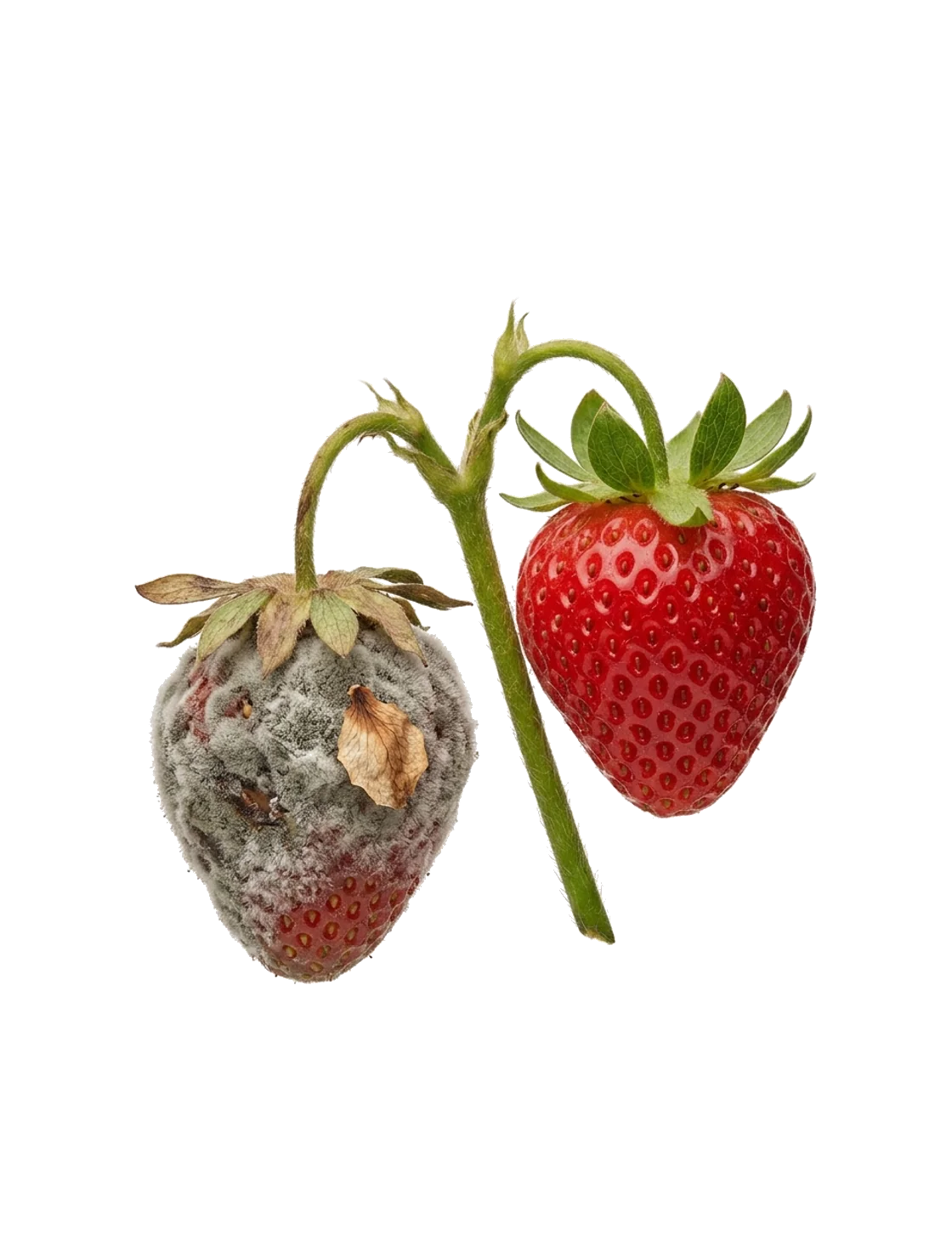
- Botrytis (grey mould)
- Aphids
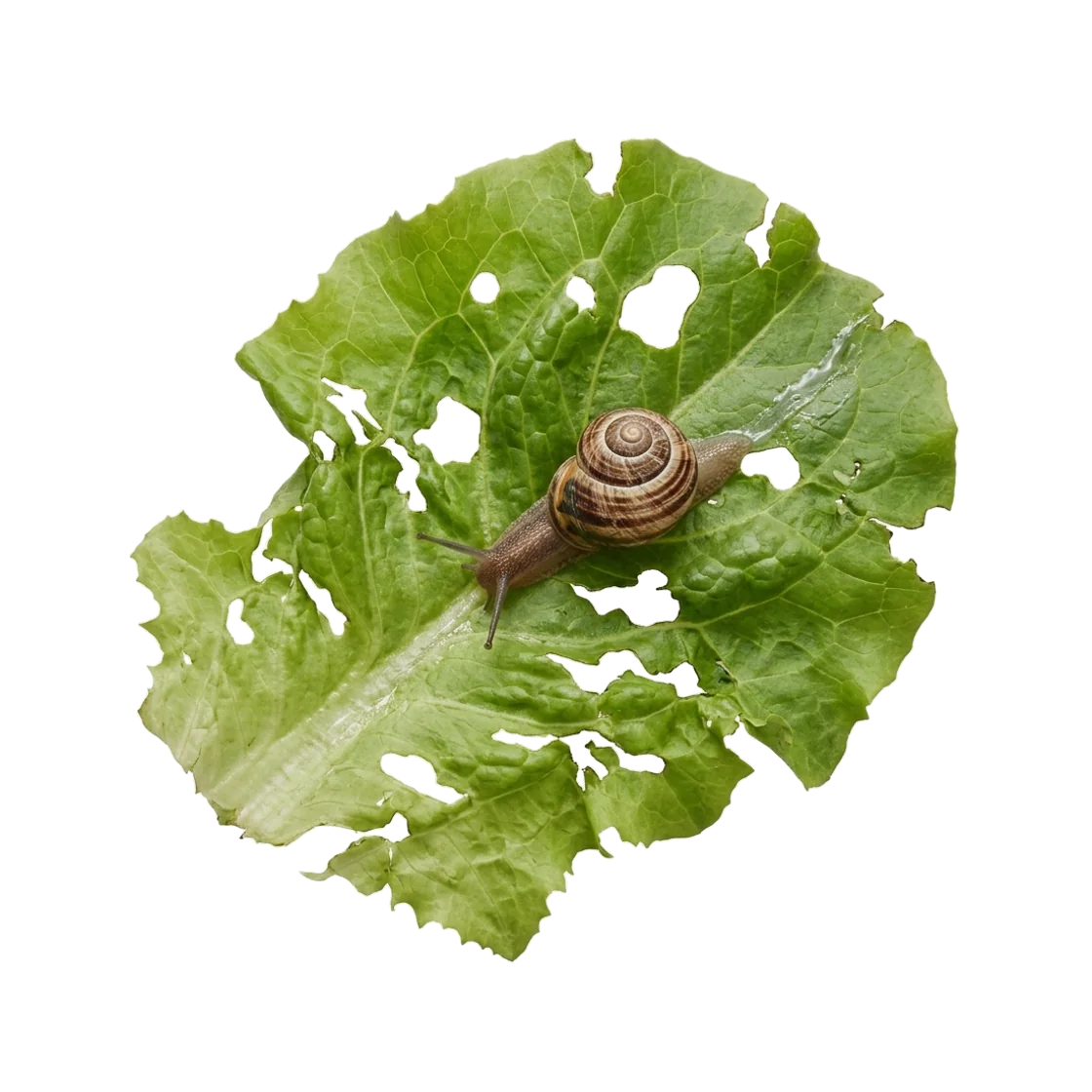
- Snails and slugs
- Powdery mildew
- Root rot



Frequently asked questions What people ask most.
Why are my strawberries rotting before they ripen?
This is typically gray mold (Botrytis), caused by overly wet conditions or berries resting directly on damp soil. Adding a layer of clean straw mulch underneath the foliage keeps the fruit dry and significantly reduces rotting.
Why is my strawberry plant not producing fruit?
A lack of fruit usually stems from insufficient direct sunlight or fertilizers with too much nitrogen, which promotes leaves instead of flowers. Ensure your plant receives at least six hours of sun daily and apply a bloom-boosting fertilizer.
How often should strawberry plants be replaced?
While strawberries are perennial, their production peaks during their first two to three years and drops sharply afterward. It is best practice to replace older plants every three years using newly rooted runners from your healthiest stock.
Should I cut off strawberry runners?
Yes, trim runners off during the flowering and fruiting period to keep the plant focused entirely on producing large, sweet berries. You should only let them grow if your goal is propagating replacement plants for subsequent seasons.