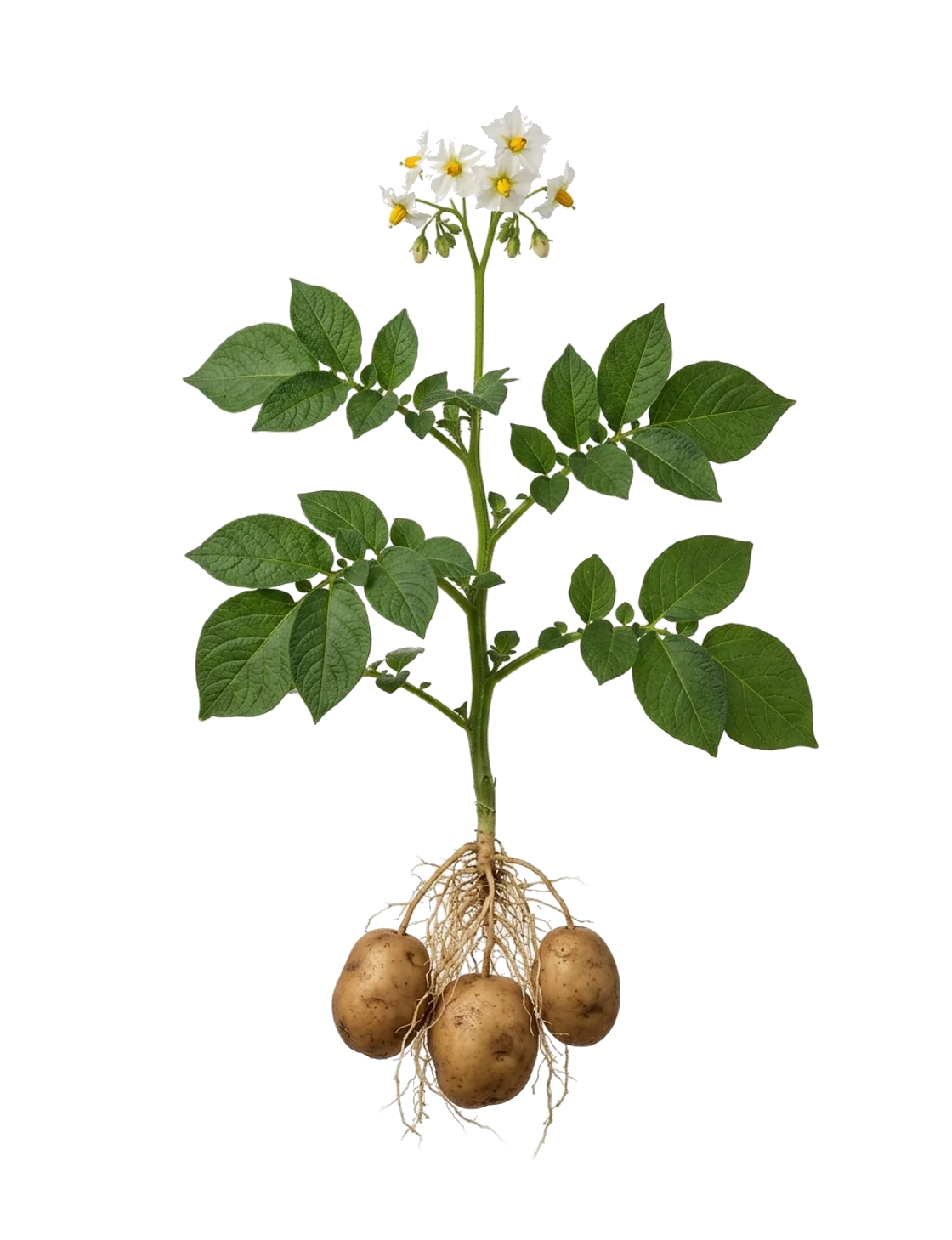
The potato (Solanum tuberosum) is the most widely grown tuber crop in the world, cultivated for its underground stems that store starch and feed millions of households. It belongs to the Solanaceae family and forms leafy stems with white or lilac flowers followed by tubers of highly variable skin and flesh. In home gardens it is a generous and simple crop, since a few seed tubers fill a bed or several sacks.
It comes from the high Andes of Peru and Bolivia, where it was domesticated thousands of years ago and diversified into countless local types. From there it spread worldwide and today includes early, mid-season and late varieties for fresh eating or storing. The key technique is hilling: covering the base of the stems with soil so tubers grow in darkness and do not turn green.
The cycle runs from two and a half to five months depending on the variety, with harvest starting once flowers fade and foliage begins to yellow. New potatoes are dug as needed, while storage tubers are lifted when the foliage is dry and left to cure a few days in shade. With rotation, clean seed and even watering, home harvests are large and flavorful.
Did you know?One planted tuber can yield a dozen new ones, and there are thousands of Andean landraces in colors from yellow to deep purple.
Care. What it needs, point by point.
- Watering
- 1–2× a weekWater regularly to keep the soil evenly moist from emergence until flowering, usually once or twice a week in depth. Reduce watering when foliage yellows so skins set and tubers keep better. Never flood the ridges, which rots tubers and favors blight.
- Light
- Full sunThey need full sun for most of the day to bulk up tubers. Shade gives tall leafy plants with a poor harvest.
- Temperature
- 15–20 °C ideal temperaturePotatoes tuberize best between 15 and 20 °C, with foliage growth up to about 25 °C. Frost kills the foliage and heat above 30 °C stops tuber formation.
- Soil
- pH 5.0–6.5They want loose, deep, well-drained soil, slightly acid with pH 5.0 to 6.5. In containers, use large sacks or pots with loose mix and add layers as stems grow.
- Fertilizer
- Potatoes are hungry but sensitive to excess nitrogen. Work mature compost into the planting trench and side-dress lightly at hilling, avoiding fresh manure.
- Pruning
- No pruning is needed. Hilling replaces it: mound soil around stems two or three times so developing tubers stay covered and green-free.
- Propagation
- Potatoes are grown from seed tubers, whole or cut pieces each with at least two eyes. Pre-sprout them in light for two weeks and plant 8 to 10 cm deep.
Where it grows. In the wild and in homes.
In the wild it grows in southern South America, western South America, and northern South America, in a subtropical climate.
People have also taken it to 24 more regions where it now grows on its own: Europe, tropical Asia, North America, and South and Central America and the Caribbean.
Range: Plants of the World Online, Royal Botanic Gardens, Kew
Is Potato toxic to cats and dogs?
Toxic to cats and dogs.

Cats
Toxic

Dogs
Toxic
Usual signs
Hypersalivation, loss of appetite, severe digestive upset with diarrhea, drowsiness, CNS depression, confusion, behavioral changes, weakness, dilated pupils and slow heart rate.
If your pet has chewed it and shows symptoms, call your vet or the nearest emergency vet.
Source · ASPCA Animal Poison Control
Common problems What tends to go wrong.
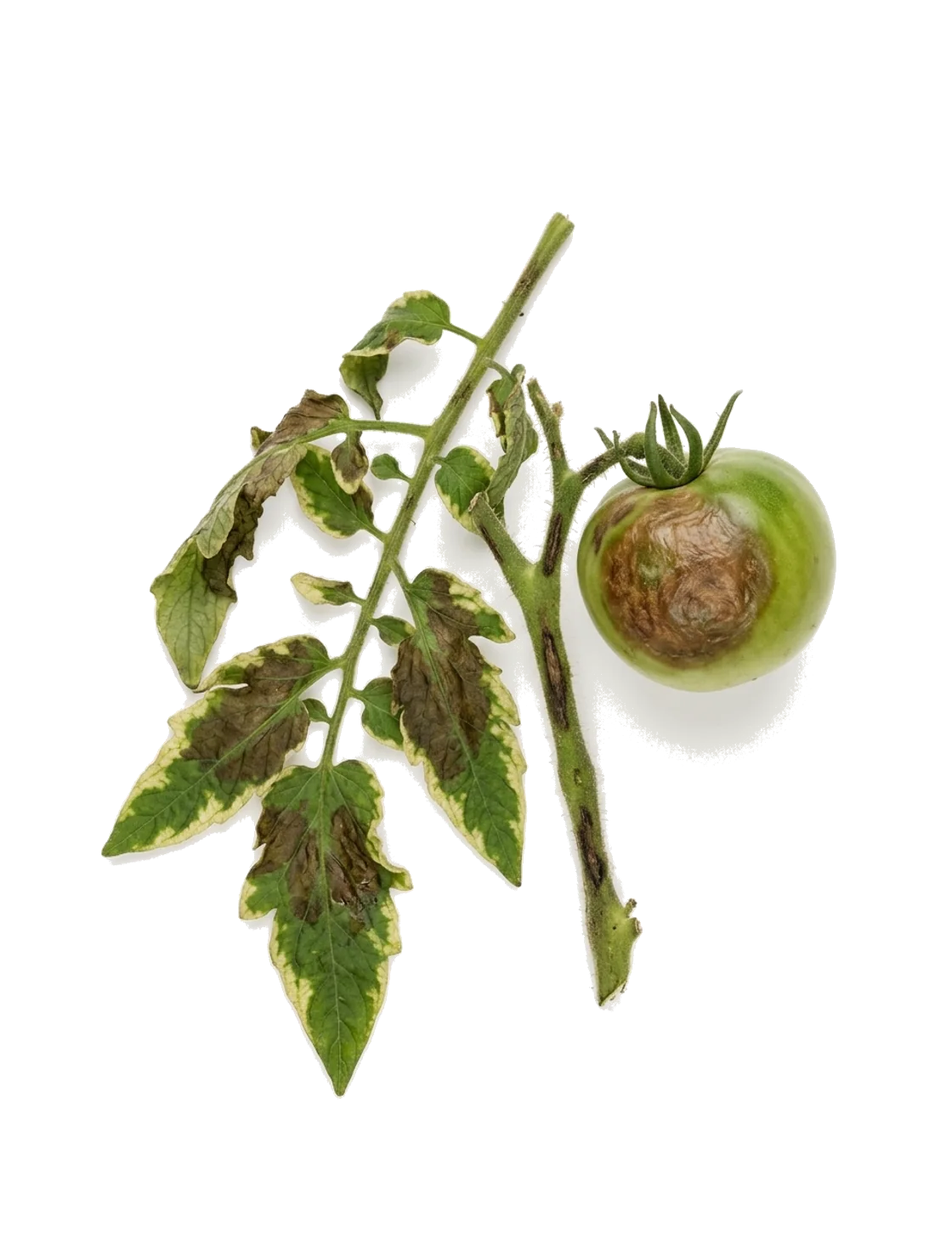
- Late blight
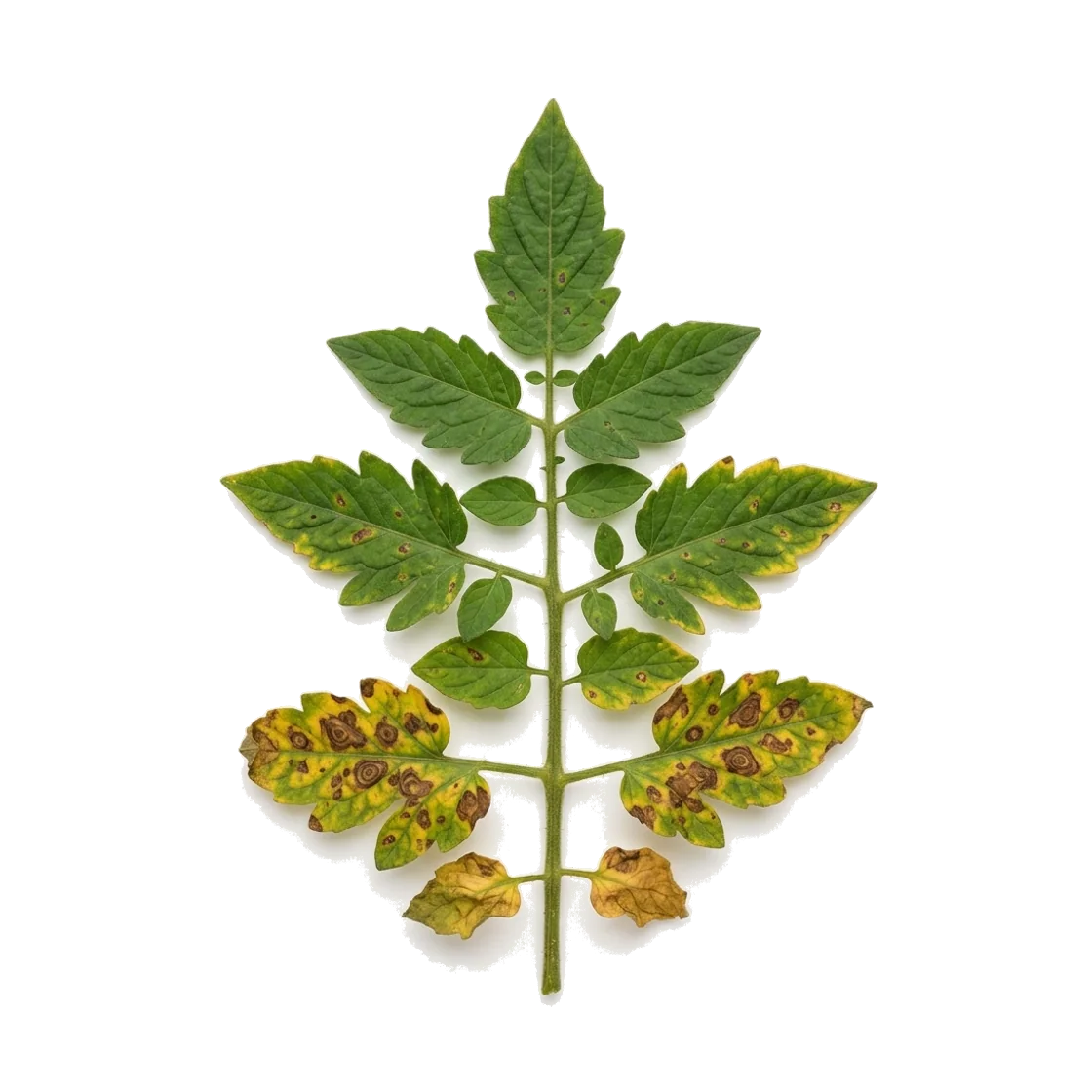
- Early blight
- Aphids
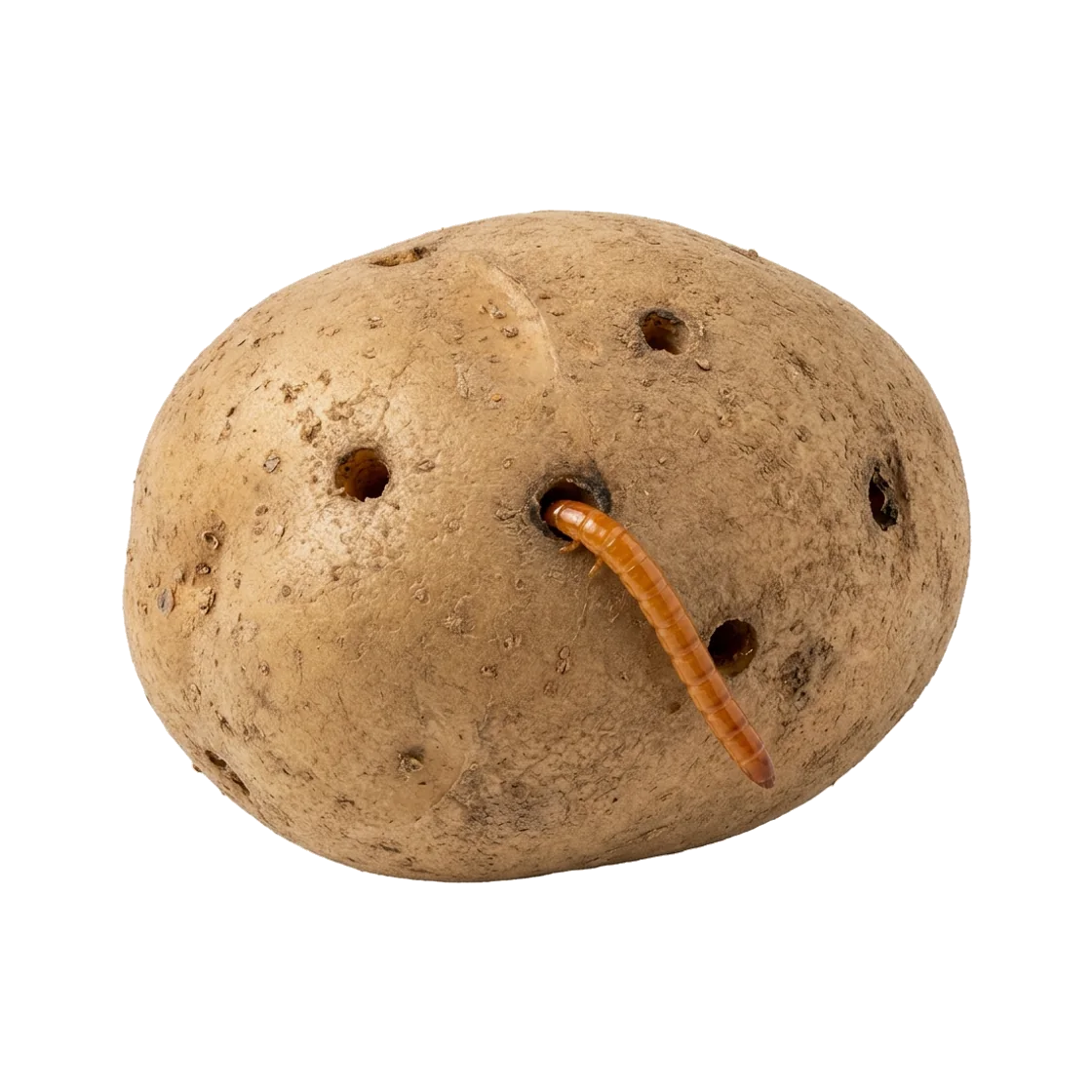
- Wireworms

Frequently asked questions What people ask most.
How often should I water potatoes?
Water deeply once or twice a week, keeping ridges evenly moist from emergence to flowering. When foliage starts to yellow, space waterings out so skins harden and tubers store better.
Why do potato leaves get dark spots?
Dark concentric or water-soaked spots often point to early or late blight, favored by wet foliage. Water at the base, space plants well, rotate beds, and remove affected leaves promptly.
Why do my potatoes come out green?
Tubers turn green when light reaches them through cracks or shallow covering. Hill soil around stems two or three times and mulch thickly so no tuber sees the light.
When are potatoes harvested?
New potatoes are dug from flowering onward, and storage potatoes when the foliage has dried completely. Let storage tubers dry a few hours in shade before keeping them in a cool dark place.
Can I grow potatoes in sacks or pots?
Yes, in large sacks or pots with drainage, starting with little mix and adding layers as stems grow. Keep watering steady and harvest by tipping the container over at the end.