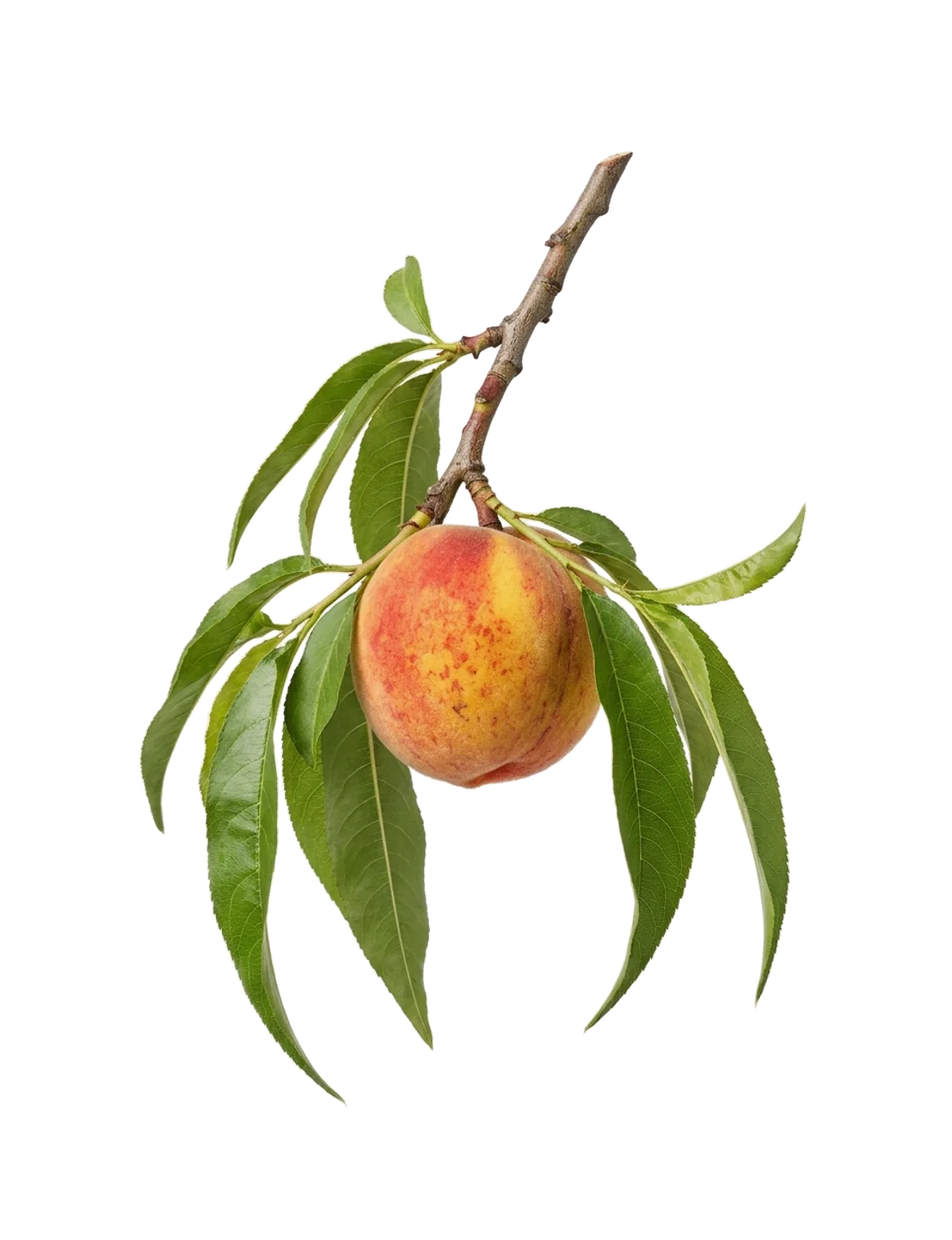
The peach tree (Prunus persica) is a small deciduous fruit tree prized for its fragrant spring bloom and its juicy summer fruits with velvety skin. It belongs to the Rosaceae family and forms an open crown with reddish young shoots and narrow leaves that turn golden in autumn. It is one of the most rewarding trees for home gardens where winters bring some chill and summers are warm.
It comes from northwestern China, where it was domesticated thousands of years ago before traveling the Silk Road to Persia and the Mediterranean. Today's varieties span yellow and white flesh, melting and firm types, and low-chill selections for mild climates. Most are self-fertile, so a single tree in a sunny spot can crop well.
Its cycle moves fast: bloom in late winter or early spring, fruit thinning in late spring, and harvest from early to late summer depending on the cultivar. Thinning, open pruning and steady watering decide fruit size and flavor far more than anything else. With a sunny wall, good drainage and yearly pruning, a home peach tree produces fragrant crops for decades.
Did you know?Peach flowers open before the leaves, and low-chill varieties bred for mild winters now fruit where winters are short.
Care. What it needs, point by point.
- Watering
- Water deeply from bloom to harvest, keeping the root zone evenly moist without flooding the trunk. Reduce watering slightly as fruits ripen to concentrate flavor. Young trees need steadier watering during their first two summers.
- Light
- Full sunIt needs full sun all day to ripen sweet fruits and hardy buds. Shade gives few flowers and pale, late peaches.
- Temperature
- 15–28 °C ideal temperatureIt grows between 15 and 28 °C in the season and needs 300 to 900 chill hours below 7 °C in winter depending on the variety. Late frosts below -2 °C during bloom can wipe out the crop.
- Soil
- pH 6.0–7.0It wants deep, loose, well-drained loam with pH between 6.0 and 7.0. It dislikes waterlogged or very chalky soils, where it develops pale leaves.
- Fertilizer
- Peach feeds moderately. Apply compost in late winter and a balanced organic feed after fruit set, avoiding late nitrogen that softens wood before winter.
- Pruning
- Prune in late winter into an open vase with three or four main branches. Thin fruitlets to 10 to 15 cm apart so remaining peaches size up.
- Propagation
- Peach is propagated by grafting selected varieties onto seedling or dwarfing rootstocks. Home sowing from stones gives variable trees, useful only as rootstocks.
Where it grows. In the wild and in homes.
In the wild it grows in China, in a temperate climate.
People have also taken it to 105 more regions where it now grows on its own: North America, Europe, temperate Asia, and Africa.
Range: Plants of the World Online, Royal Botanic Gardens, Kew
Is Peach toxic to cats and dogs?
Toxic to cats and dogs.

Cats
Toxic

Dogs
Toxic
Usual signs
Stems, leaves and seeds contain cyanide, particularly dangerous while wilting: brick-red mucous membranes, dilated pupils, difficulty breathing, panting and shock.
If your pet has chewed it and shows symptoms, call your vet or the nearest emergency vet.
Source · ASPCA Animal Poison Control
Common problems What tends to go wrong.
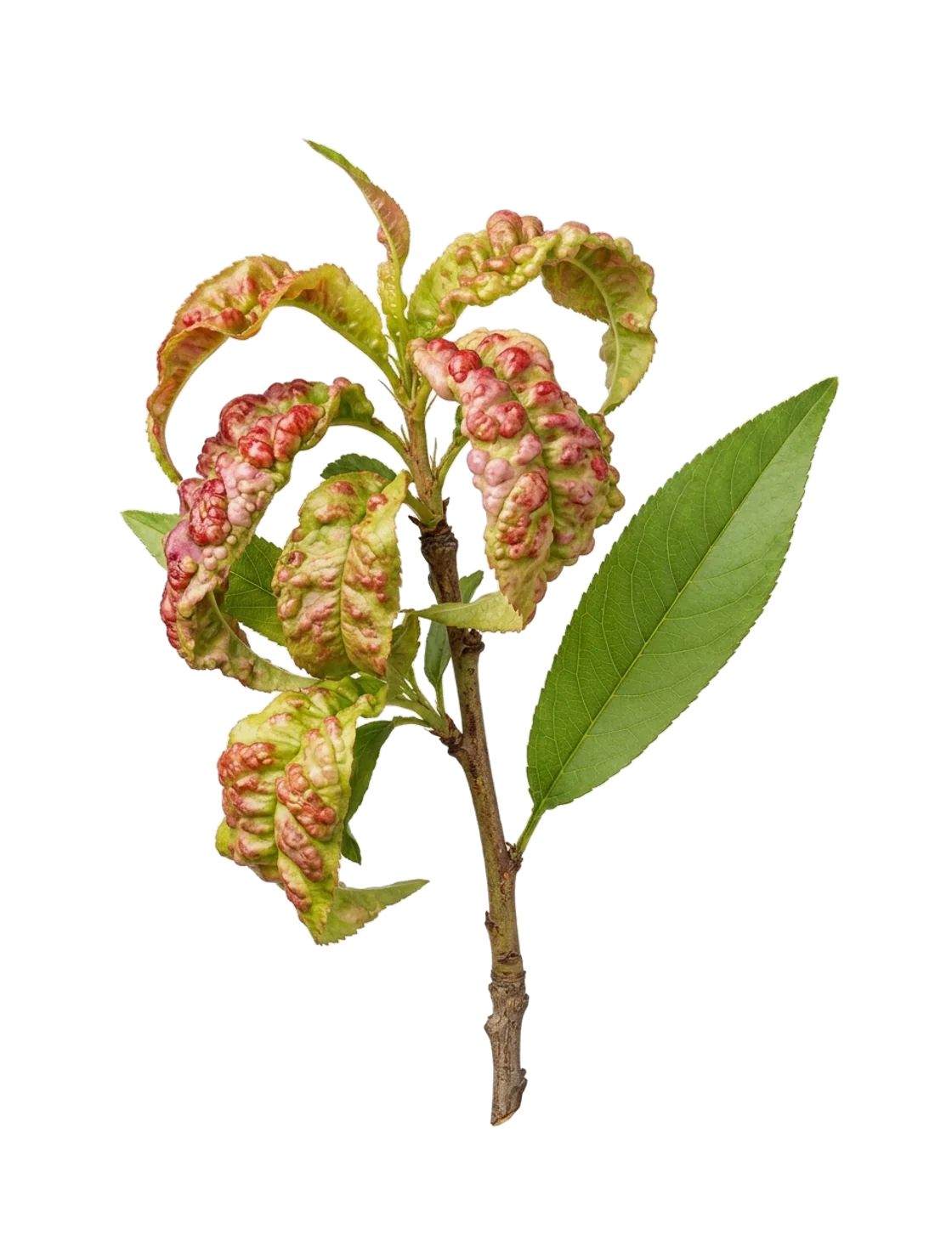
- Peach leaf curl
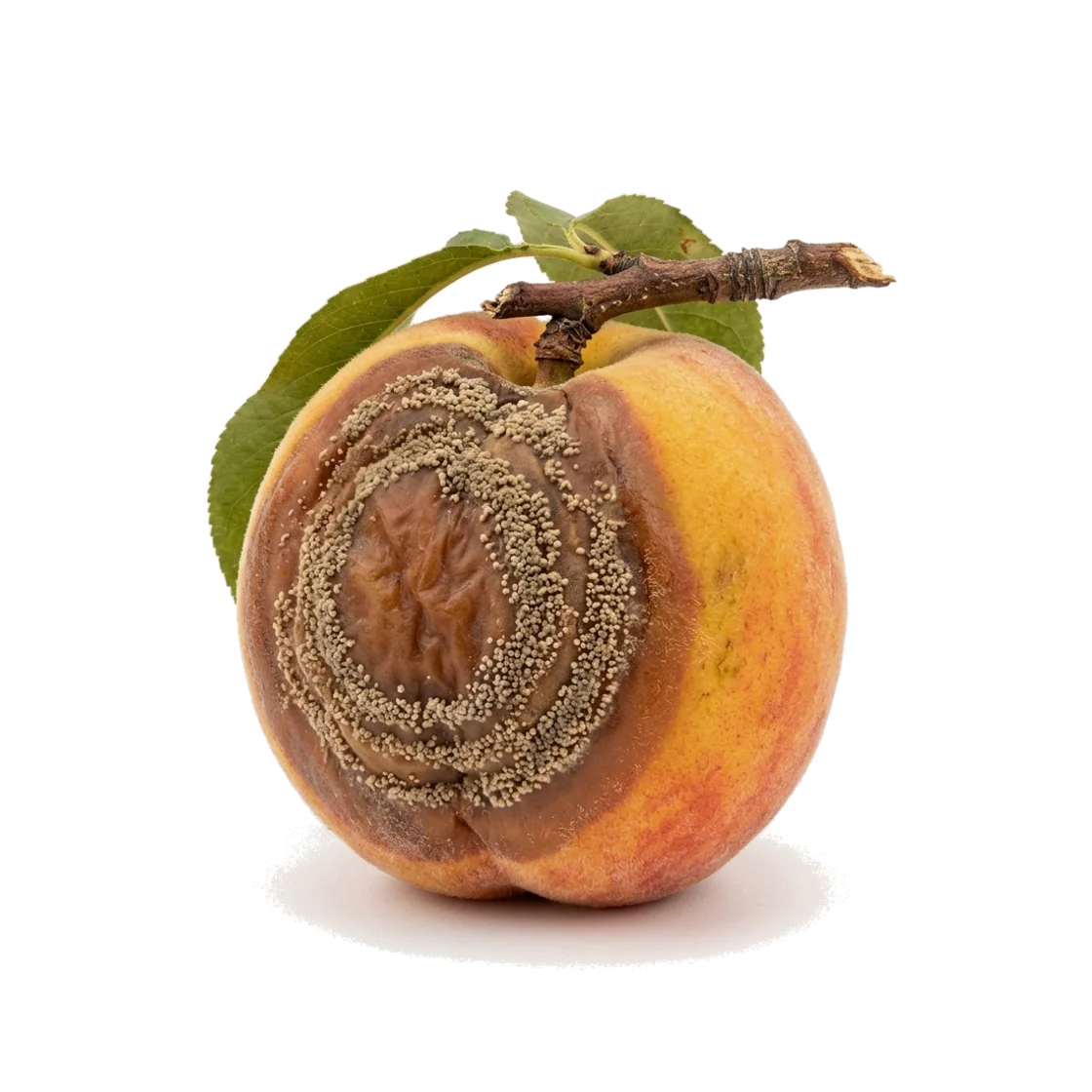
- Brown rot
- Aphids
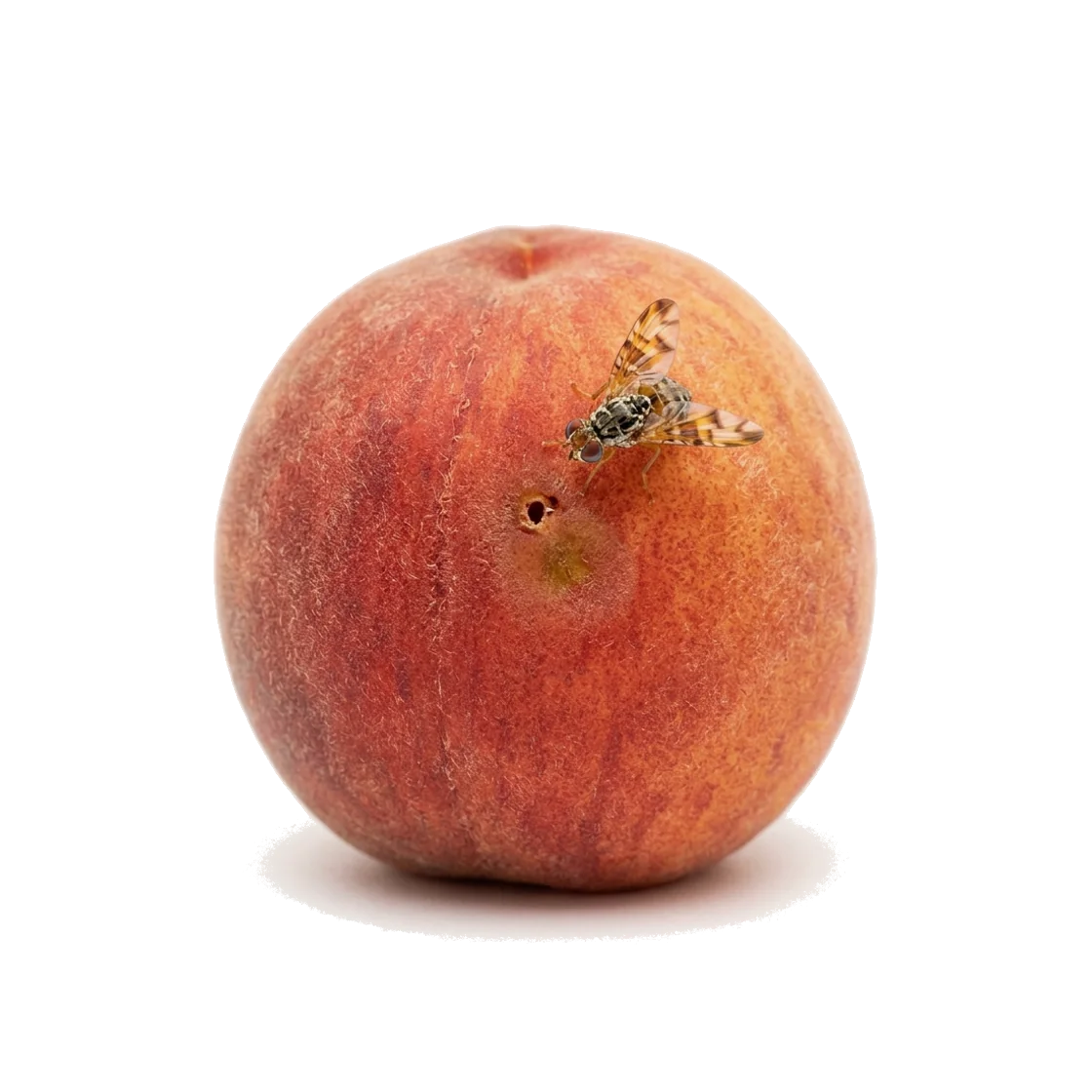
- Fruit fly

Frequently asked questions What people ask most.
How often should I water a peach tree?
Water deeply once or twice a week from bloom to harvest, soaking the root zone without flooding the trunk. Reduce watering as fruits ripen and keep young trees steadier in their first summers.
Why do peach leaves curl and redden in spring?
Curled reddish blistered leaves point to peach leaf curl, a spring fungus favored by wet cool weather. Prune for air flow, remove affected leaves, and apply preventive copper at leaf fall where permitted.
Why do my peaches fall before ripening?
Early drop usually comes from poor pollination, drought during fruit growth, or too many fruits on young branches. Water steadily, thin fruitlets to 10 to 15 cm apart, and protect bloom from late frost.
When and how do I prune a peach tree?
Prune in late winter before bud break, keeping an open vase with three or four main branches. Remove crossing, inward and exhausted wood each year to keep fruiting shoots young.
Can I grow a peach tree in a pot?
Yes, with dwarf or patio varieties grafted on low-vigor rootstocks in containers of at least 50 liters. Water and feed more attentively than in open ground, and repot or top-dress every two years.