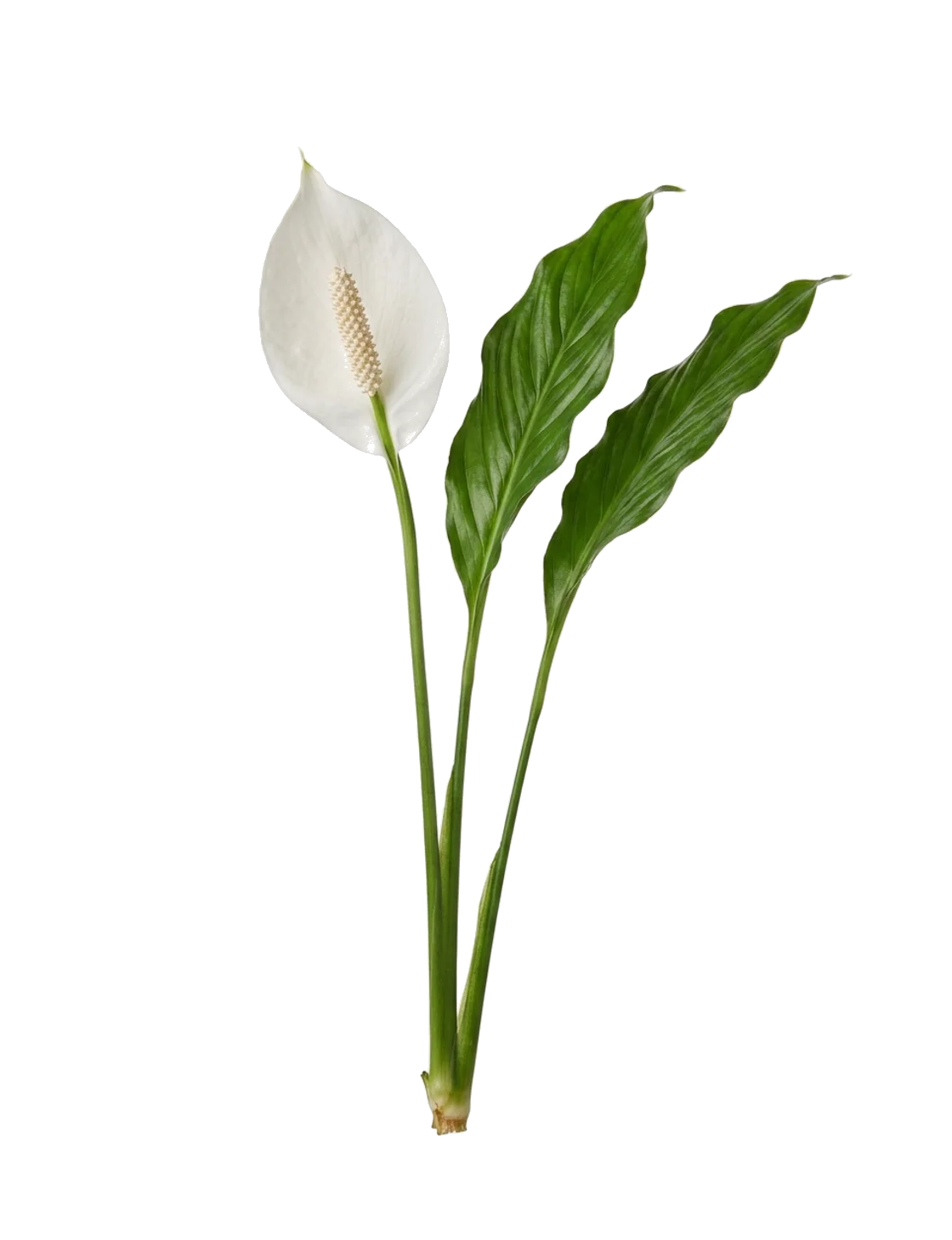
The peace lily (Spathiphyllum wallisii) is one of the most beloved houseplants worldwide thanks to its graceful form and remarkable adaptability. Native to the humid forest floors of Central and South America, it features dense clusters of glossy, dark green lanceolate leaves and distinctive white spathes that rise elegantly above the foliage.
It has earned a reputation as an exceptionally communicative plant because it wilts dramatically whenever it gets thirsty, only to perk right back up within hours of being watered. Its capacity to thrive in medium to low indirect light makes it a staple for homes and offices where many other flowering houseplants struggle to survive.
To keep your peace lily healthy over the years, provide consistent warmth and protect it from cold drafts and direct afternoon sun. With steady moisture in a well-draining potting mix, this resilient perennial will regularly produce its serene white blooms and bring lush greenery to your indoor spaces.
Did you know?The white parts commonly mistaken for flowers are actually modified leaves called spathes, which shield the central flower spike.
Care. What it needs, point by point.
- Watering
- 1× a weekWater when the top inch of soil feels dry or when the leaves just begin to droop slightly, typically once a week in spring and summer and less often in winter. Ensure excess water drains away freely to prevent saturated soil and root rot.
- Light
- IndirectProvide bright to medium indirect light to encourage consistent blooming throughout the growing season. Keep it away from direct sunlight, which quickly scorches and bleaches the tender foliage.
- Temperature
- 18–25 °C ideal temperatureMaintain temperatures between 18 °C and 25 °C (65 °F to 77 °F) for steady growth. Keep the plant away from drafty windows and cold air conditioners, as temperatures below 13 °C can damage the foliage.
- Soil
- Use a loose, well-aerated potting mix enriched with organic matter, perlite, and peat moss or coco coir.
- Fertilizer
- Feed with a balanced liquid houseplant fertilizer diluted to half strength once a month during spring and summer.
- Pruning
- Trim spent flower stems down to the base and cut away any yellowing or dried leaves with sterile shears.
- Propagation
- Propagate by root division when repotting in early spring. Gently separate the plant crowns so that each division has healthy roots and several leaves.
Where it grows. In the wild and in homes.
In the wild it grows in western South America and northern South America, in a wet tropical climate.
People have also taken it to 9 more regions where it now grows on its own: South and Central America and the Caribbean, tropical Asia, Africa, and the Pacific.
Range: Plants of the World Online, Royal Botanic Gardens, Kew
Is Peace lily toxic to cats and dogs?
Toxic to cats and dogs.

Cats
Toxic

Dogs
Toxic
Usual signs
Oral irritation, pain and swelling of the mouth, tongue, and lips, excessive drooling, vomiting, and difficulty swallowing.
If your pet has chewed it and shows symptoms, call your vet or the nearest emergency vet.
Source · ASPCA Animal Poison Control
Common problems What tends to go wrong.
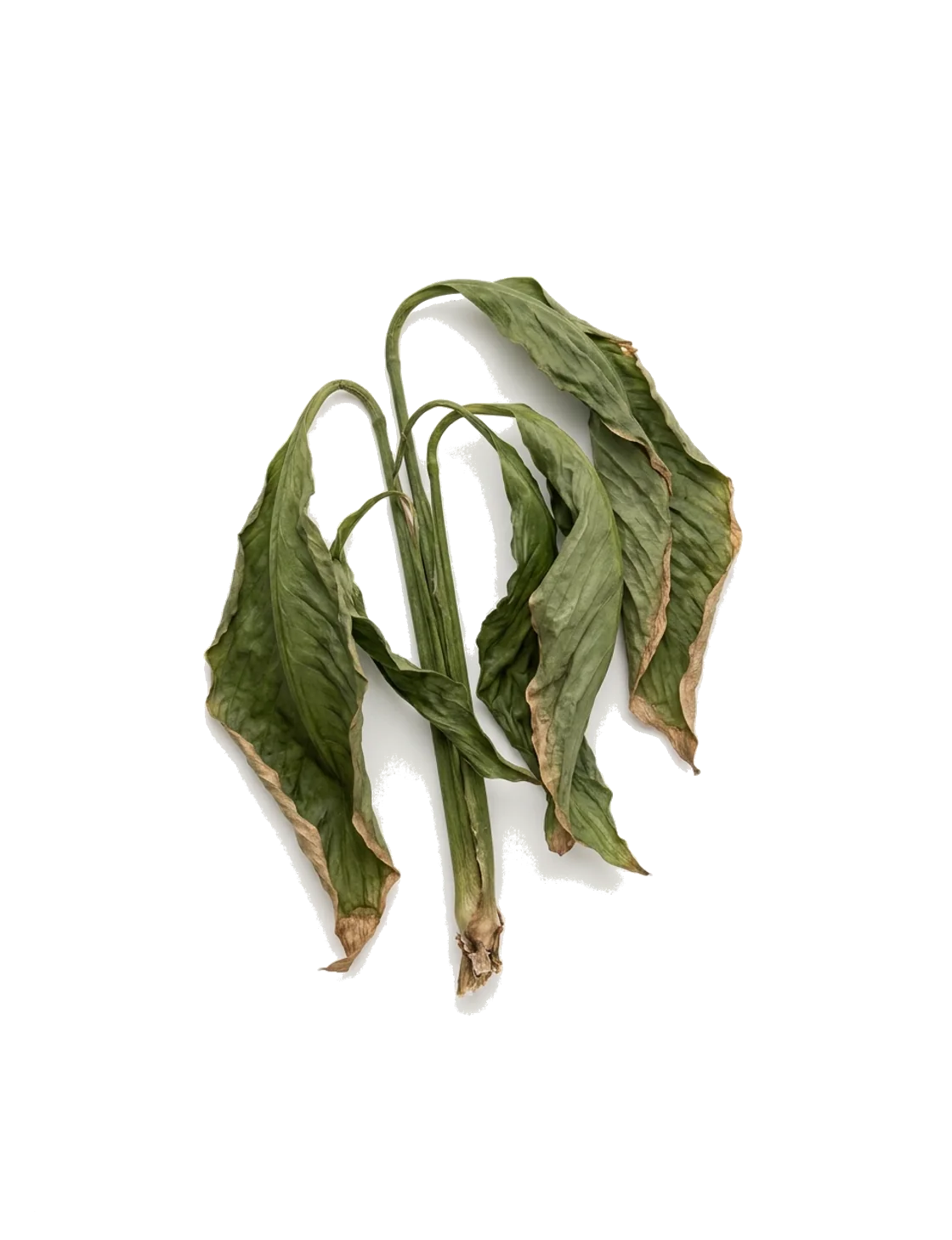
- Overwatering
- Underwatering
- Dry air
- Root rot
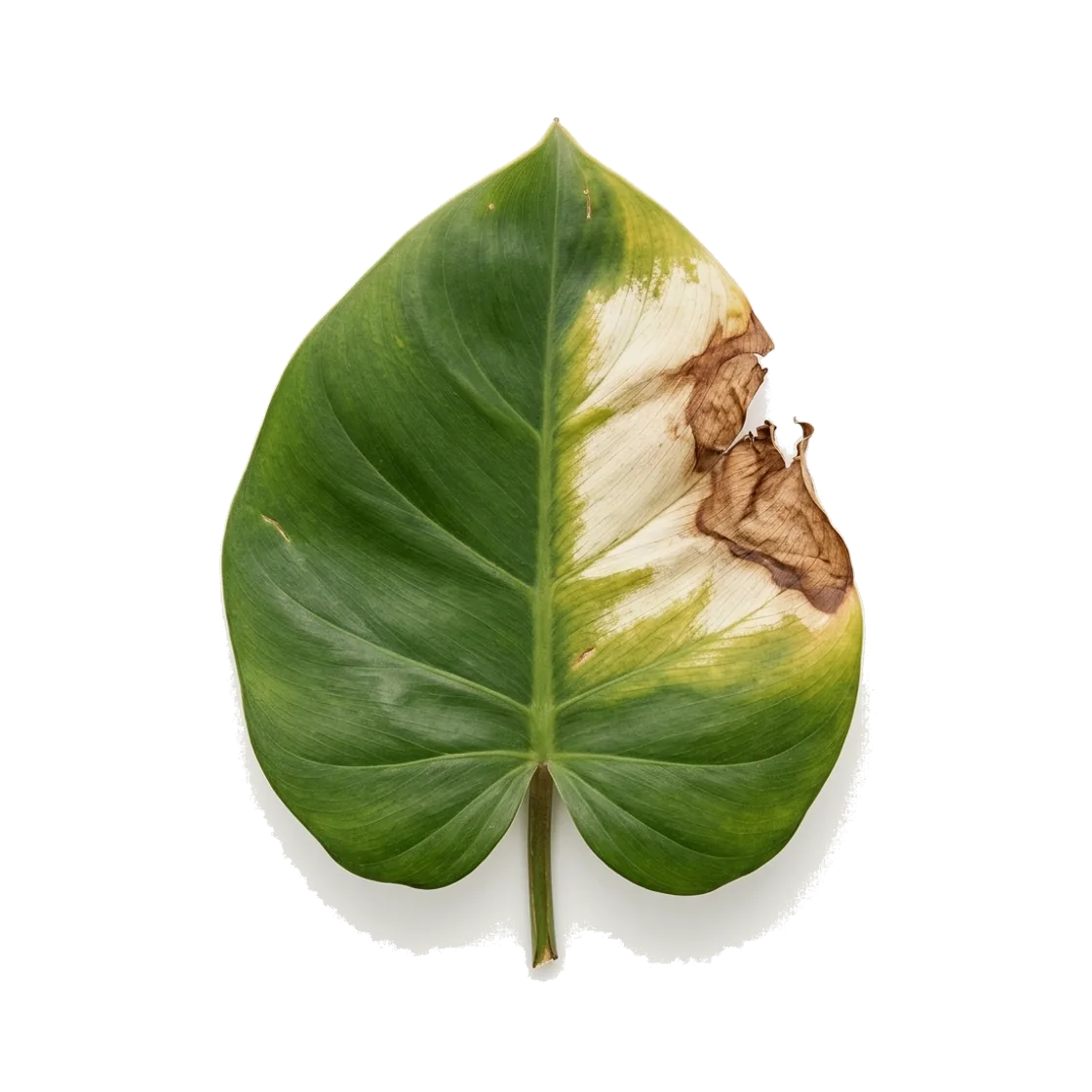
- Sunburn



Frequently asked questions What people ask most.
Why is my peace lily drooping suddenly?
Severe drooping is usually the plant's natural signal that it urgently needs water, and it will quickly recover after a thorough soak. However, if the soil is already soggy, drooping points to root rot from overwatering.
Why are the tips of the leaves turning brown?
Brown tips are usually caused by dry indoor air, mineral accumulation from hard tap water, or excessive fertilizing. Increasing ambient humidity and using filtered or rested water will help prevent further browning.
Why won't my peace lily produce flowers?
The most common reason for a lack of blooms is insufficient light, as the plant needs moderate indirect brightness to trigger bud formation. Moving it closer to a bright window and providing light fertilizer during spring will stimulate flowering.
Why are the white flowers turning green?
Green spathes are typically a normal sign that the bloom is aging and nearing the end of its natural life cycle. It can also occur if the plant receives too much light or an excess of nitrogen fertilizer.