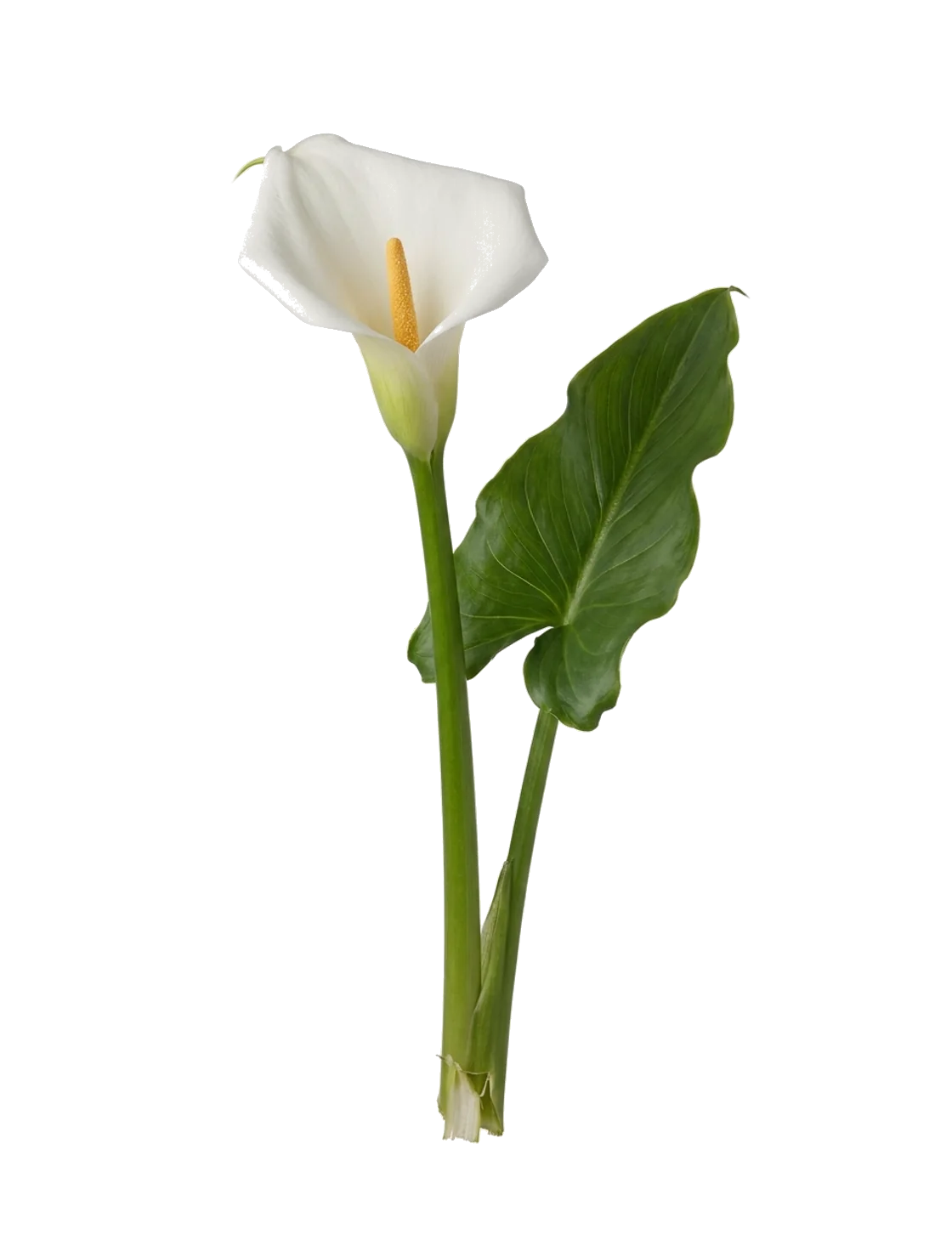
The calla lily (Zantedeschia aethiopica) is a rhizomatous perennial grown for its elegant white spathes rising above lush, arrow-shaped green leaves. Native to southern Africa, where it grows in marshes and along streams, it brings a bold, architectural presence to pond margins, damp borders and bright patios. Established clumps flower generously in late spring and early summer.
The showy trumpet is actually a modified leaf that wraps the true flowers, tiny and crowded on the central yellow spike. It loves moisture during growth and rewards rich soil with vigorous leaves and repeated blooms. In mild climates clumps stay green all year; where frosts bite, the foliage dies back and resprouts in spring.
Give it sun or light shade with constantly moist, fertile soil, and feed through the growing season for the biggest spathes. After flowering, let the soil dry so rhizomes rest, and lift them where winters are harsh. In pots it makes a striking plant for terraces if the compost never dries out fully.
Did you know?The showy white trumpet is not a petal but a bract, while the true flowers crowd the yellow central spike.
Care. What it needs, point by point.
- Watering
- Keep the soil evenly moist from spring to the end of flowering; it tolerates even boggy ground in growth. Reduce watering after bloom so the rhizome dries and rests.
- Light
- Full sunIt blooms best in full sun or light shade, with morning sun and some shelter at midday. Deep shade gives lush leaves but few spathes.
- Temperature
- 16–26 °C ideal temperatureIt grows best between 16 °C and 26 °C and dislikes hard frost on the rhizomes. Where winters drop below about -5 °C, lift and store rhizomes in a cool, dry place.
- Soil
- It wants rich, moisture-retentive soil with plenty of organic matter. In pots use a fertile mix that holds water without staying airless.
- Fertilizer
- 2–3 weeks between feedsFeed every two or three weeks in spring and summer with a balanced liquid fertilizer. Stop feeding once leaves yellow so the rhizome rests.
- Pruning
- Remove spent flowers and yellowing leaves at the base to keep the clump tidy and ventilated. In cold areas, cut back foliage after the first frosts and lift rhizomes.
- Propagation
- Divide rhizome clumps in spring, keeping buds on each piece and planting shallowly. Sow fresh seeds in warmth for new plants, which take two or three years to bloom.
Where it grows. In the wild and in homes.
In the wild it grows in southern Africa, in a seasonally dry tropical climate.
People have also taken it to 49 more regions where it now grows on its own: Europe, Africa, South and Central America and the Caribbean, and Australasia.
Range: Plants of the World Online, Royal Botanic Gardens, Kew
Is Calla lily toxic to cats and dogs?
Toxic to cats and dogs.

Cats
Toxic

Dogs
Toxic
Usual signs
It causes oral irritation with pain and swelling of the mouth, tongue and lips, excessive drooling, vomiting and difficulty swallowing.
If your pet has chewed it and shows symptoms, call your vet or the nearest emergency vet.
Source · ASPCA Animal Poison Control
Common problems What tends to go wrong.
- Root rot
- Overwatering
- Botrytis (grey mould)
- Aphids




Frequently asked questions What people ask most.
Why does my calla lily not flower?
The usual causes are too much shade, a young rhizome or no rest period after the previous season. Grow it in bright light with rich, moist soil and let it rest dry after blooming. Crowded pots that never get repotted also bloom less each year.
How often should I water a calla lily?
Keep the soil evenly moist from spring until flowering ends, watering whenever the surface starts to dry. It copes with very wet soil while growing, unlike most bulbs. Once leaves yellow, cut back water so the rhizome rests through dormancy.
Why do the leaves turn yellow?
Yellowing after flowering is the natural rest of the plant, so reduce watering and let it sleep. Yellow leaves during growth usually mean waterlogged, airless compost or a cold draught. Check drainage and move pots to a brighter, sheltered spot.
Can I grow calla lilies in a pond?
Yes, they thrive at pond margins with roots in shallow water during the growing season. Plant rhizomes in baskets of heavy soil set just below the surface. Lift them before hard frosts unless your winters stay mild.
How do I store the rhizomes in winter?
After the first frosts blacken the leaves, cut them back and lift the rhizomes gently. Dry them for a few days, then store in paper bags with dry peat in a cool, frost-free place. Replant in spring once nights stay above 10 °C.