Zebra haworthia
Haworthiopsis attenuata
Learn how to care for your zebra haworthia: expert advice on watering frequency, indirect lighting, gritty soil, and simple propagation methods.
- Light
- Indirect
- Watering
- 10–14days between waterings
- Temperature
- 15–26 °Cideal temperature
- Toxicity
- Non-toxic
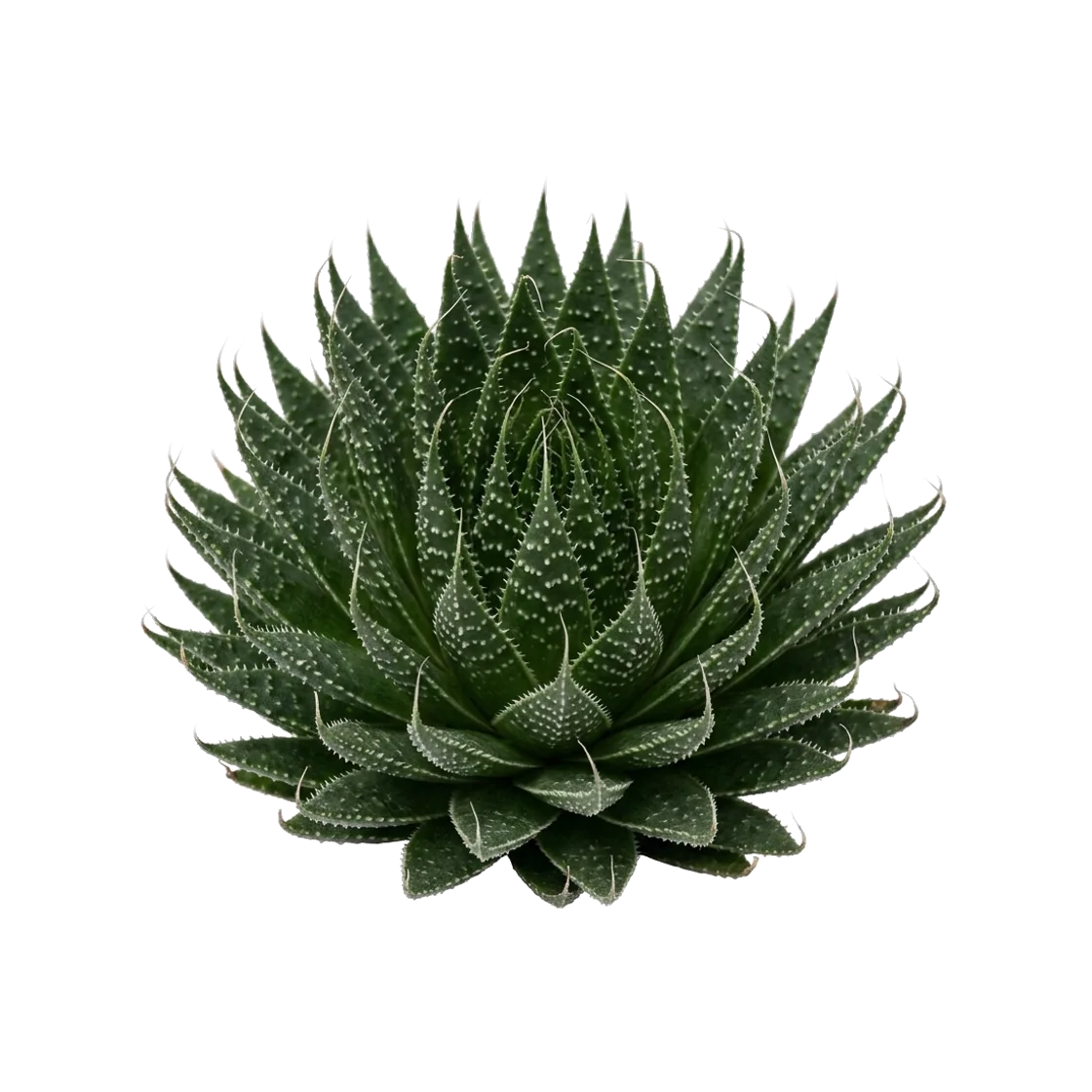
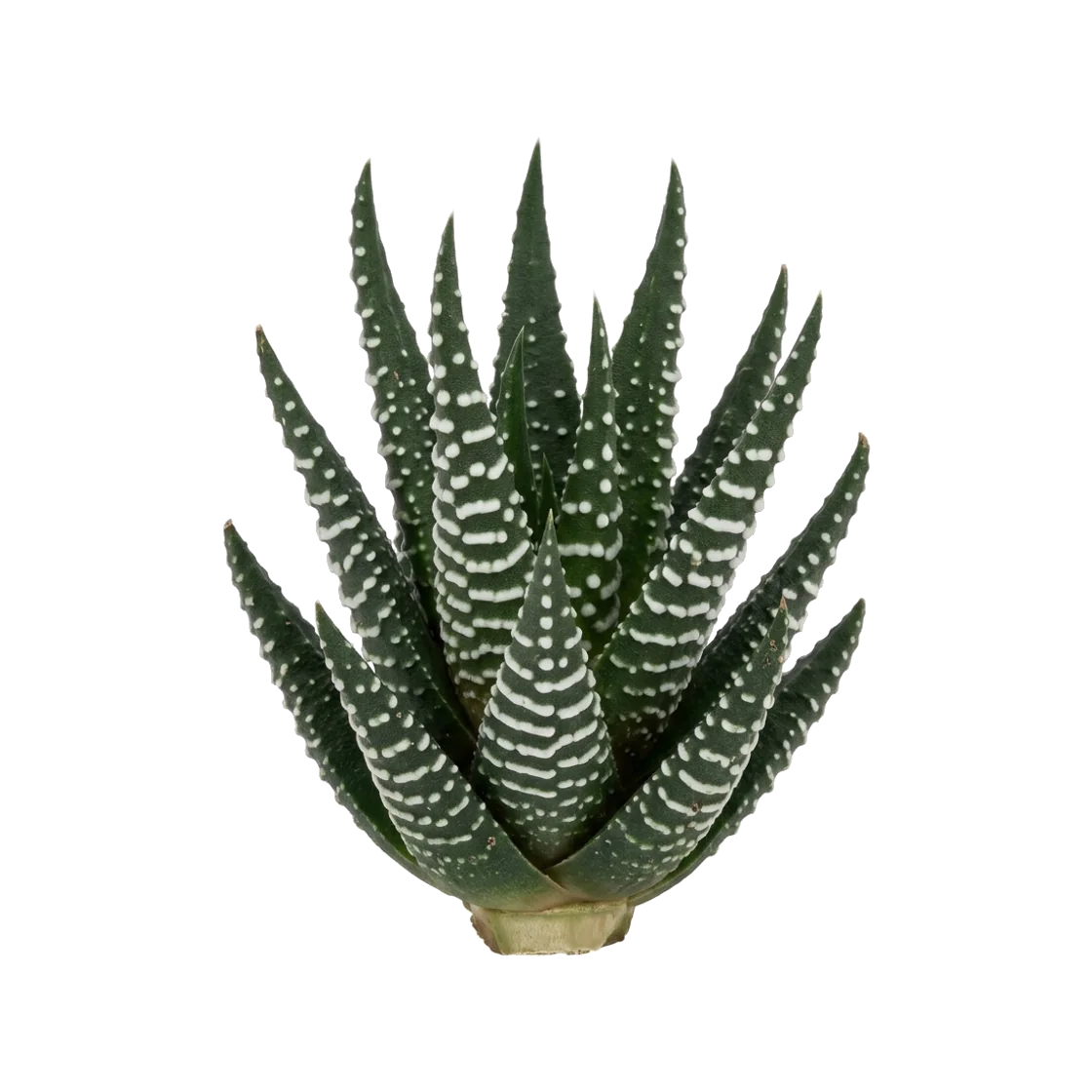
Zebra haworthia (Haworthiopsis attenuata) is a small, clump-forming succulent perennial native to South Africa's Eastern Cape province. It forms stemless, compact rosettes of rigid, dark green, lance-shaped leaves that point upwards and outwards. Its striking geometric silhouette makes it one of the most recognizable and beloved compact indoor plants worldwide.
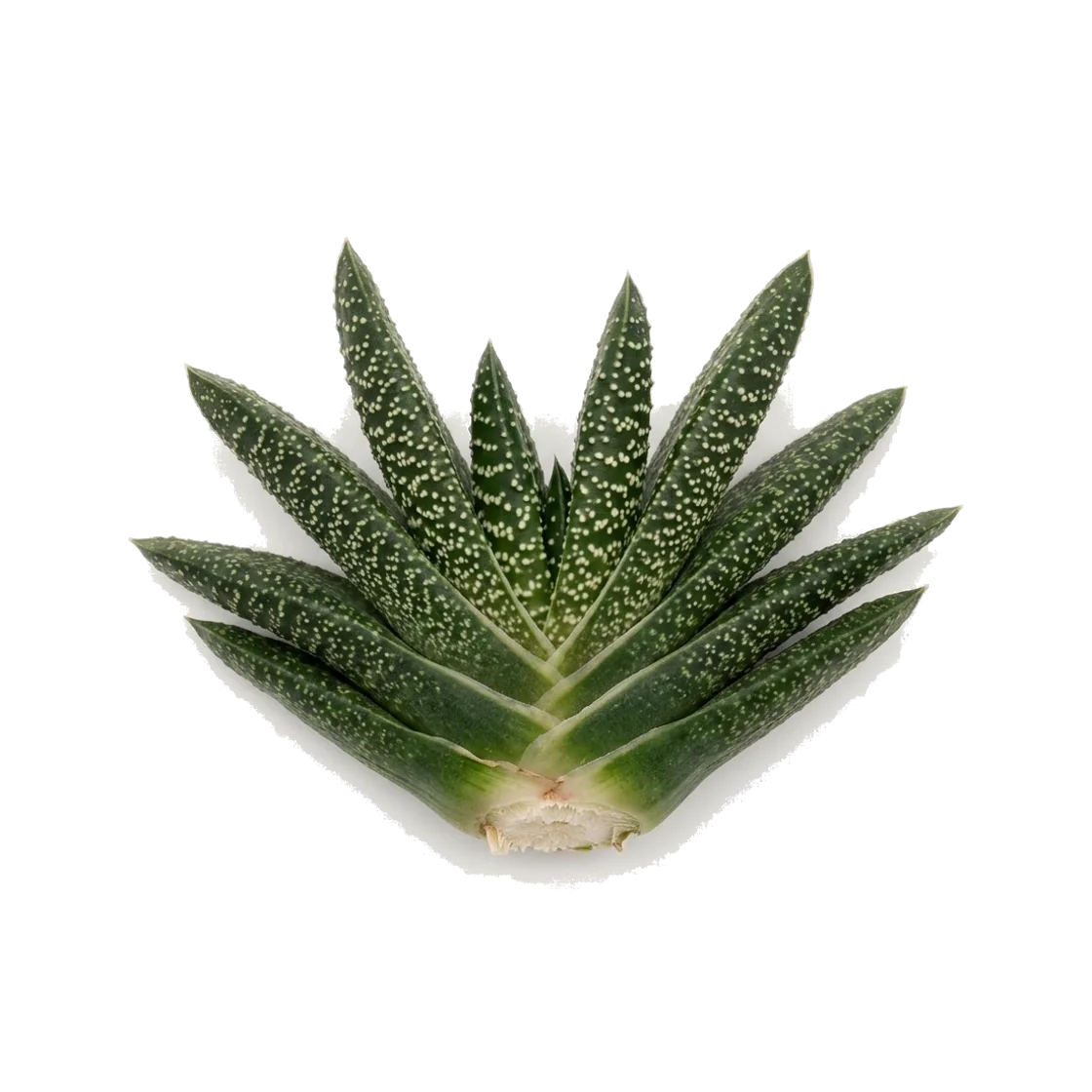
The defining feature of this species is the bold pattern of raised white tubercles banding horizontally across the foliage, strongly resembling zebra stripes. Unlike the similar Haworthiopsis fasciata, these distinctive pearly bumps cover both the outer and inner surfaces of every leaf, giving the plant a fascinating tactile and visual texture.
Exceptionally drought-tolerant and slow-growing, zebra haworthia thrives on modest attention and adapts seamlessly to indoor environments. Its modest root system and compact proportions make it ideal for shallow containers, sunny windowsills, and decorative desk arrangements where larger houseplants would quickly outgrow their space.
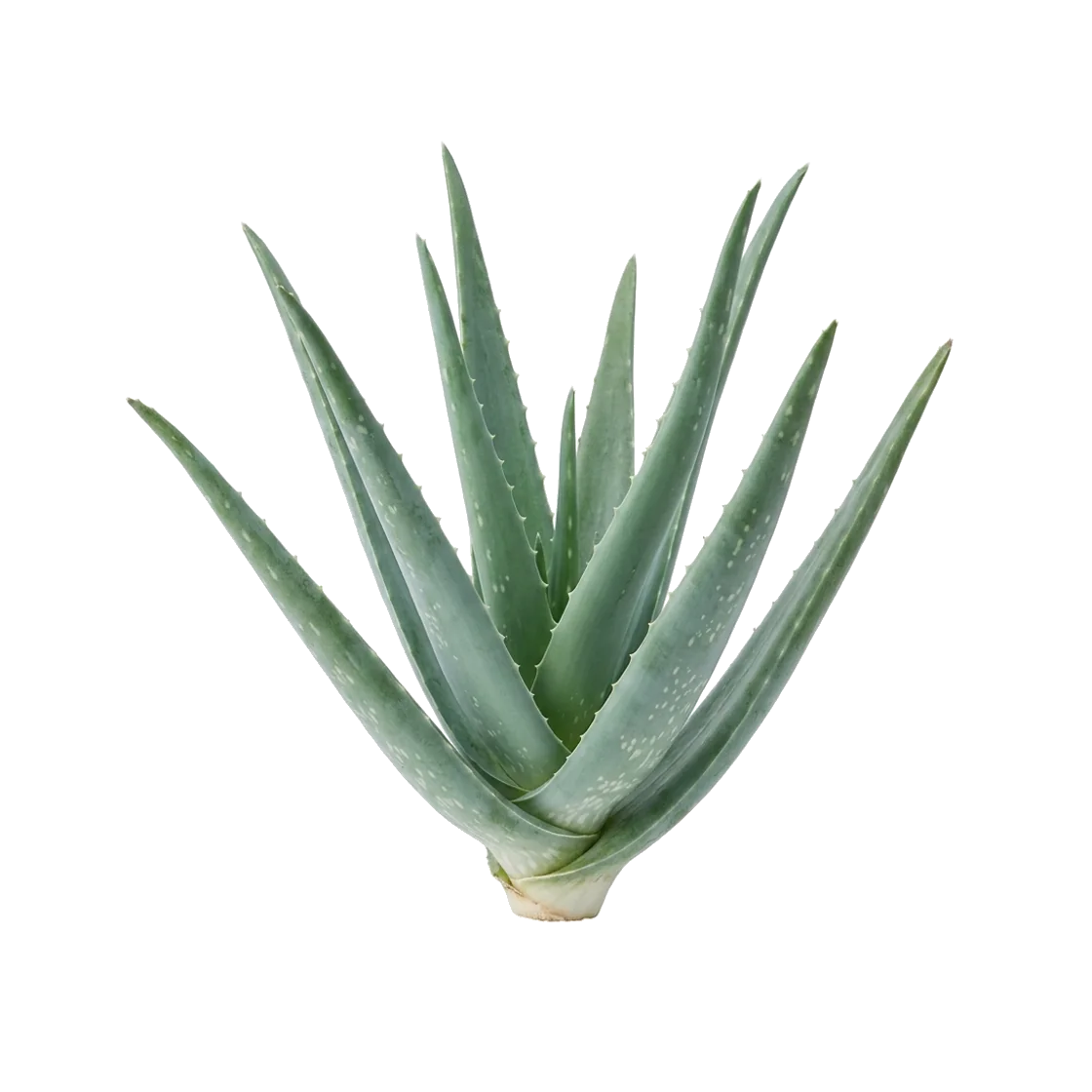
Did you know?Although often mistaken for a miniature aloe, it belongs to its own separate genus. The raised white tubercles help deflect intense heat and retain precious moisture in its native rocky habitat.
Care. What it needs, point by point.
- Watering
- 10–14 days between wateringsWater thoroughly only after the potting mix has dried out completely, which typically means watering every 10 to 14 days in warm months and once a month in winter. Check moisture by inserting a wooden skewer to the bottom of the pot to ensure no moisture remains.
- Light
- IndirectPosition the plant in bright, indirect sunlight or mild morning sun. Shield it from scorching midday summer rays, which can burn leaf tips and cause unsightly discoloration.
- Temperature
- 15–26 °C ideal temperatureIt thrives in standard indoor temperatures between 15 °C and 26 °C throughout the year. It can tolerate brief drops down to 5 °C as long as the soil remains bone dry.
- Soil
- Use a gritty, fast-draining cactus and succulent mix amended with pumice, perlite, or coarse sand. Excellent drainage is vital to prevent moisture from lingering around the roots.
- Fertilizer
- Feed once a month during spring and early summer using a balanced succulent fertilizer diluted to half strength. Suspend feeding entirely during late autumn and winter dormancy.
- Pruning
- No routine pruning is required for this plant. Simply snip off spent flower stems near the base and peel away dried bottom leaves as they age naturally.
- Propagation
- Propagate by gently separating offset pups from the parent plant during repotting in spring. Allow the cut ends to callus over for two days before potting them in dry, gritty substrate.
Where it grows. In the wild and in homes.
In the wild it grows in southern Africa, in a subtropical climate.
People have also taken it to 3 more regions where it now grows on its own: Mexico and southwestern Europe.
Range: Plants of the World Online, Royal Botanic Gardens, Kew
Is Zebra haworthia toxic to cats and dogs?
The ASPCA doesn't list this species. If your pet has chewed it and seems unwell, call your vet.
Common problems What tends to go wrong.
- Root rot
- Overwatering
- Too little light
- Sunburn
- Mealybugs and scale




Frequently asked questions What people ask most.
Why are the leaves on my zebra haworthia turning brown or reddish?
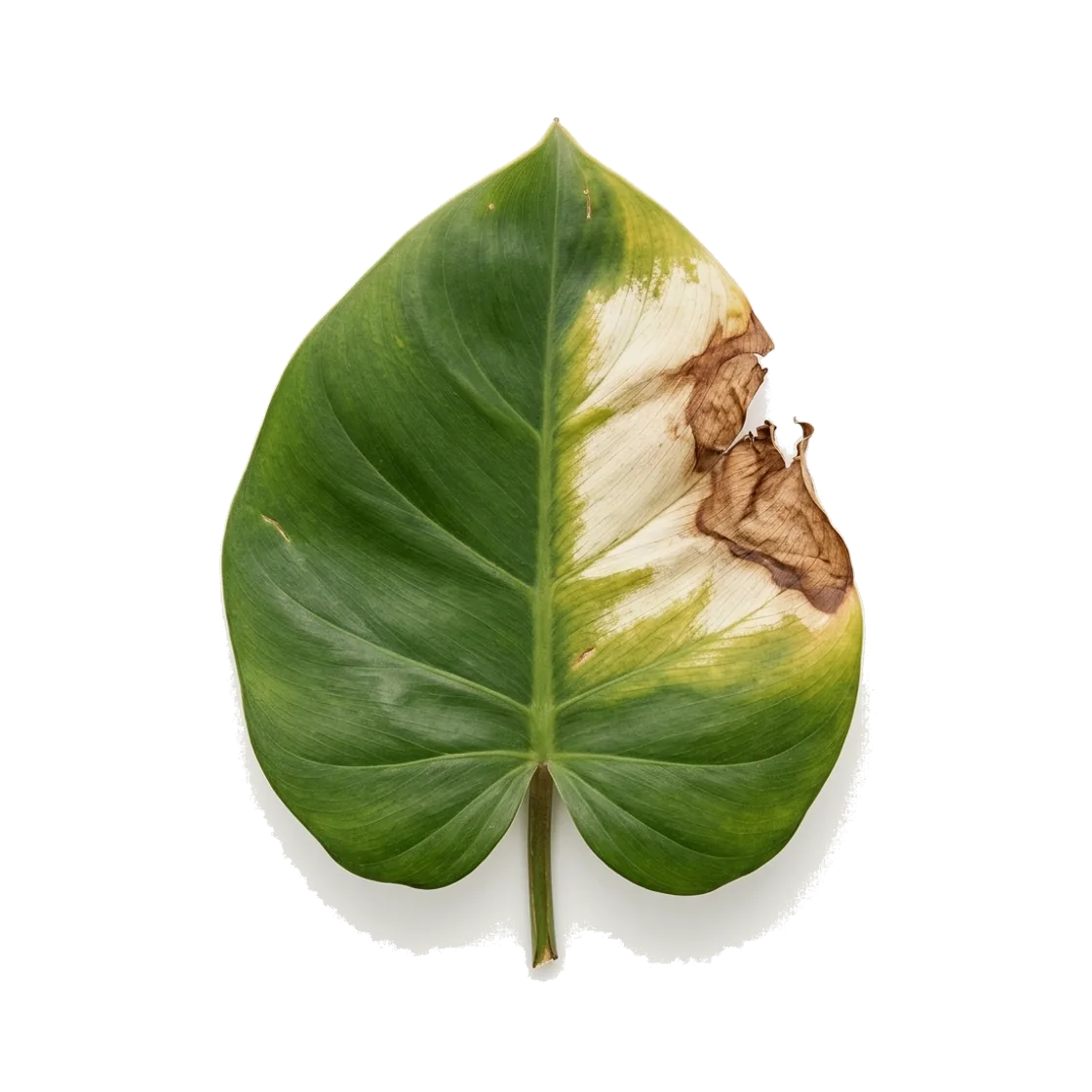
Browning or red pigmentation is usually a natural stress reaction to harsh direct sunlight or prolonged drought. Moving the pot into bright, filtered light and providing a thorough drink will help the foliage regain its deep green hue over time.
Why do the leaves feel mushy and translucent?
Soft, translucent leaves are a classic warning sign of overwatering and root rot. Discontinue watering immediately, inspect the root system, and repot the succulent into fresh, dry, free-draining soil mix.
How often does zebra haworthia flower?
Mature plants bloom once a year in late spring or summer by sending up a slender, tall flower stalk. The small blossoms are tubular, white to off-white, and feature subtle greenish or brownish veins.
How do I know if my zebra haworthia is not getting enough light?
Insufficient light causes the tight rosette to splay outward, while new growth in the center turns pale and elongated as it stretches for brightness. Gradually relocate the plant to a brighter spot near an unobstructed window to maintain its compact form.