Lace aloe
Aloe aristata
Lace aloe (Aloe aristata) guide: full sun, spaced watering and very gritty soil for compact rosettes with white edges and orange-red flowers.
- Light
- Full sun
- Temperature
- 15–27 °Cideal temperature
- Toxicity
- Non-toxic
- Difficulty
- Easy
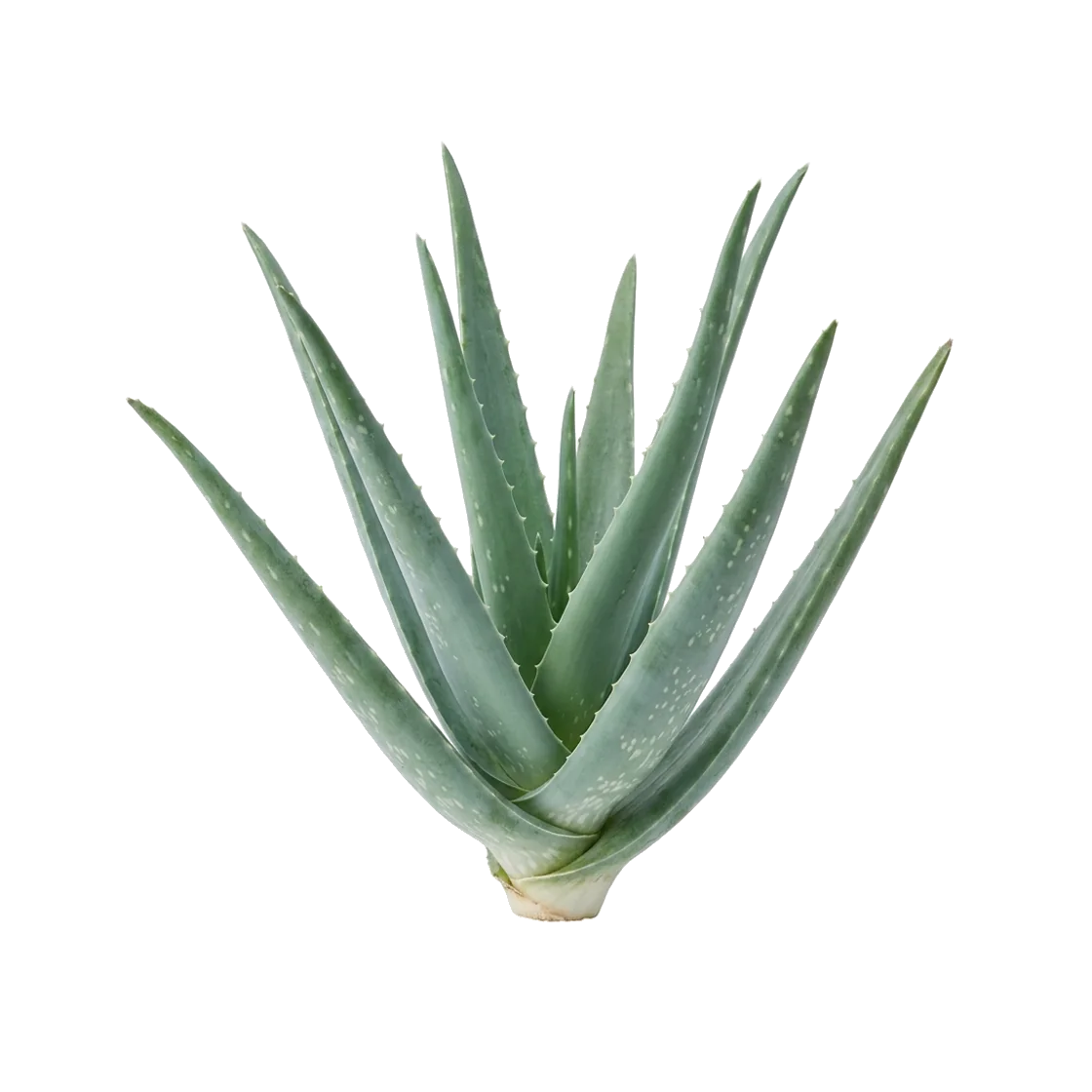
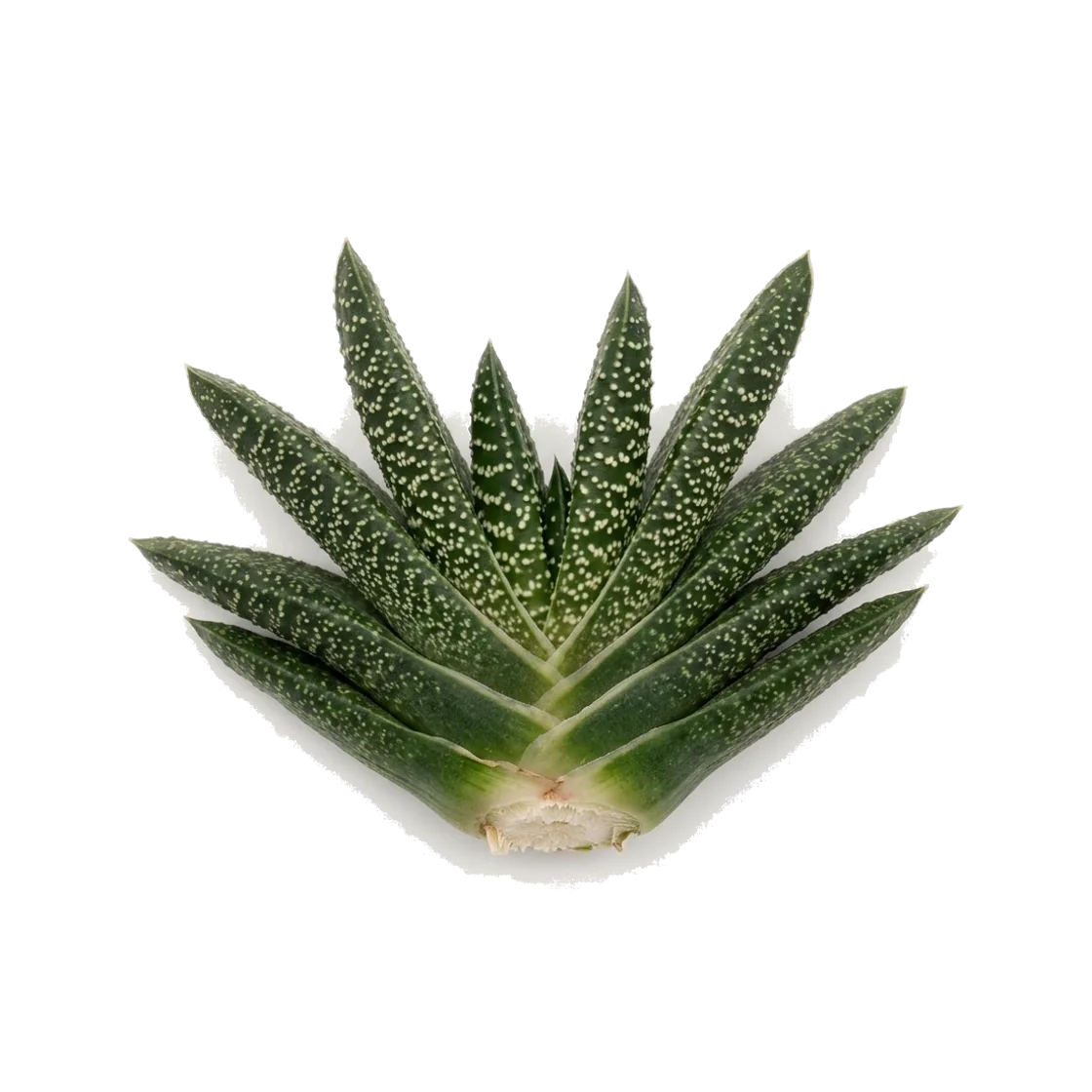
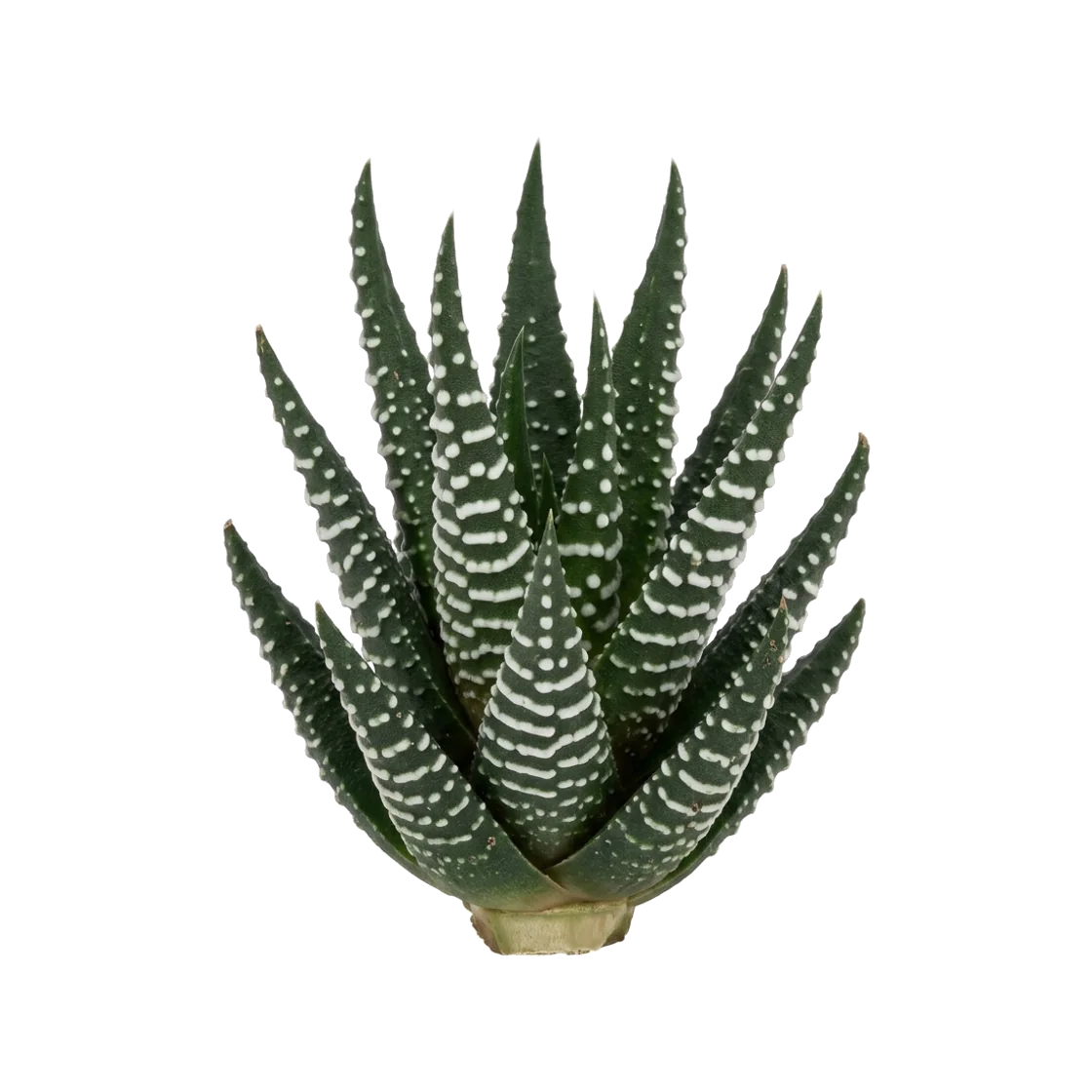
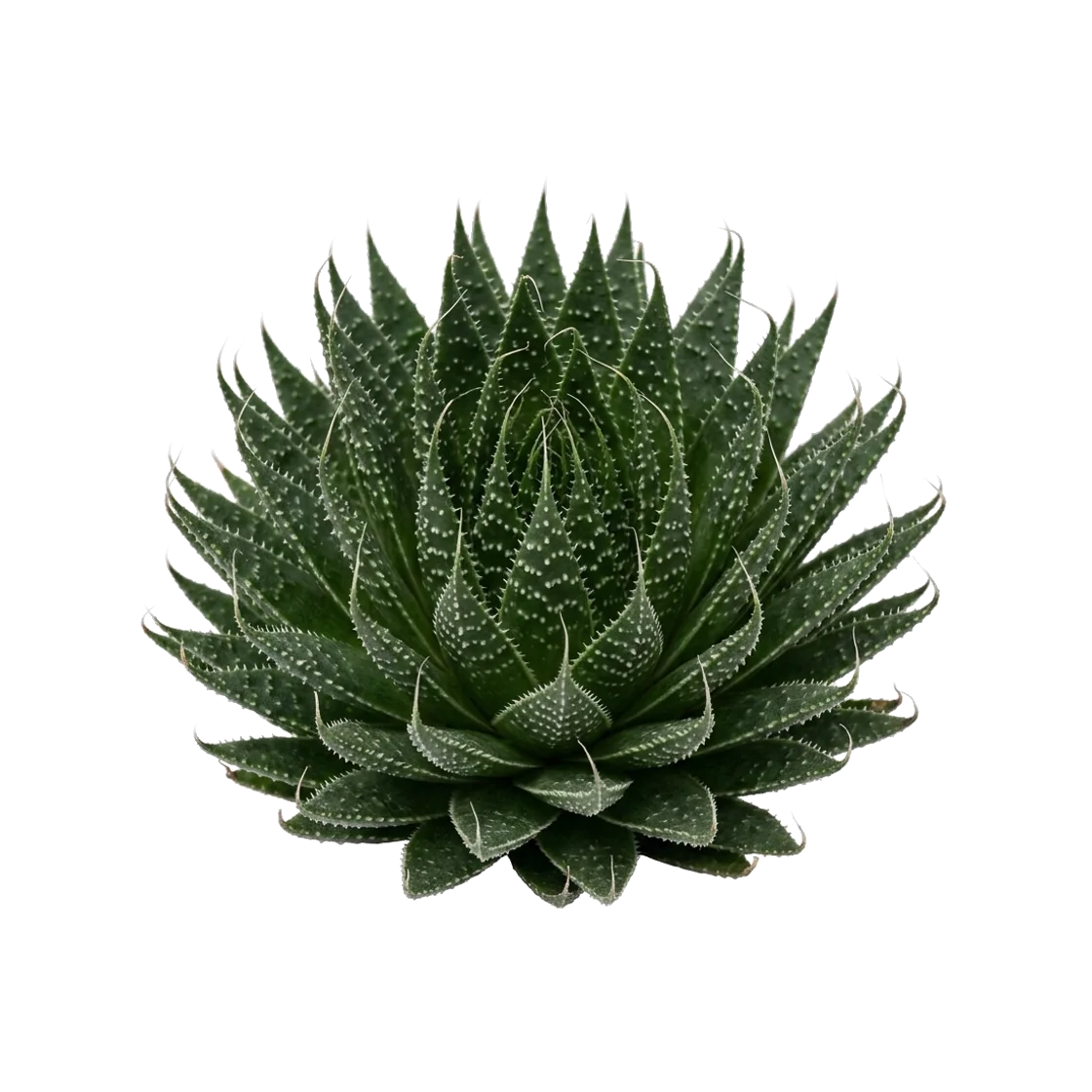
The lace aloe (Aloe aristata) is a stemless succulent from the mountains of southern Africa, where it grows among rocks and grassland in Lesotho and eastern South Africa. It forms dense rosettes of triangular, dark green leaves dotted with small white tubercles and edged with pale teeth that end in a fine bristle. In late spring and summer it sends up slender stalks bearing tubular, reddish-orange flowers.
At home it grows both in very bright rooms and outdoors in mild climates, since established plants take light frost. It wants full sun or bright partial shade plus a very free-draining cactus mix, best in a clay pot with a drainage hole. Water only when the soil is completely dry and keep it almost dry through winter.
Its weak point is excess water: in soggy soil the lower leaves soften and the rosette rots from the base. Respect a dry winter rest and protect outdoor plants from continuous rain. Given that minimal care, it forms colonies of offsets around the mother rosette, which detach easily to raise new plants identical to the parent.
Did you know?Its species name, aristata, refers to the fine bristle at the tip of each leaf; in habitat it survives cold mountain nights that would kill most aloes.
Care. What it needs, point by point.
- Watering
- Water deeply only when the soil is completely dry, spacing waterings well apart in spring and summer. In autumn and winter cut watering back to almost nothing, especially if the plant stays cool. Check moisture with a finger or a wooden stick pushed to the bottom of the pot.
- Light
- Full sunGive it full sun or very bright partial shade so the rosette stays compact and the white tubercles stay marked. Indoors, place it by a south- or east-facing window. Acclimatise it gradually to strong summer sun to prevent scorch.
- Temperature
- 15–27 °C ideal temperatureIt grows well between 15 and 27 °C and, once established and kept dry, tolerates light frosts down to about -7 °C. Prolonged cold combined with wet soil harms it more than dry cold, so shelter it from winter rain.
- Soil
- Use a cactus and succulent mix with plenty of coarse sand or grit, in a pot with drainage holes. The mix should dry out quickly after each watering.
- Fertilizer
- Feed once or twice in spring with cactus fertiliser diluted to half strength. Do not feed in autumn or winter, when the plant rests.
- Pruning
- It needs no pruning: just pull away the dry leaves at the base with a gentle tug. Cut the spent flower stalk once it has withered.
- Propagation
- It propagates easily from the offsets that appear around the mother rosette. Detach them in spring, let the wound dry for a couple of days and pot them into dry soil.
Where it grows. In the wild and in homes.
In the wild it grows in southern Africa, in a subtropical climate.
People have also taken it to 2 more regions where it now grows on its own: southwestern Europe and northern Europe.
Range: Plants of the World Online, Royal Botanic Gardens, Kew
Is Lace aloe toxic to cats and dogs?
The ASPCA doesn't list this species. If your pet has chewed it and seems unwell, call your vet.
Common problems What tends to go wrong.
- Overwatering
- Root rot
- Mealybugs and scale
- Too little light




Frequently asked questions What people ask most.
Why are the lower leaves going soft?
Soft, translucent lower leaves usually mean too much water or a mix that stays damp. Let the soil dry out fully and check that the pot drains freely. If the base is brown and mushy, unpot the plant, remove the rotted parts and replant the healthy crown in dry soil.
How often should I water it?
There is no fixed schedule: water only when the soil is dry all the way through, which may be every week or two in summer and once a month or less in winter. When in doubt, wait a few more days. Cold, damp soil in winter is the main cause of losses.
Can it stay outside in winter?
Established plants tolerate light frosts to about -7 °C as long as the soil stays dry, so it can live outdoors year-round in mild regions. Keep it under cover where winters are wet, and bring potted plants indoors if hard frosts are forecast.
How do I separate an offset?
Wait until the offset is a few centimetres wide, then unpot the cluster and pull it away with some roots attached. Let the wound dry for two or three days before potting it into dry, gritty soil. Wait a week before the first light watering.
Why has mine never flowered?
Young rosettes and plants short of light often skip flowering for years. Give it as much sun as possible, a dry winter rest and a little spring feed. Mature, sun-grown rosettes usually bloom each summer.