Window haworthia
Haworthia cooperi
Window haworthia (Haworthia cooperi) care: bright light without direct sun, sparse watering and gritty soil for translucent, compact rosettes.
- Light
- Indirect
- Watering
- 10–14days between waterings
- Temperature
- 18–26 °Cideal temperature
- Pets
- Non-toxic
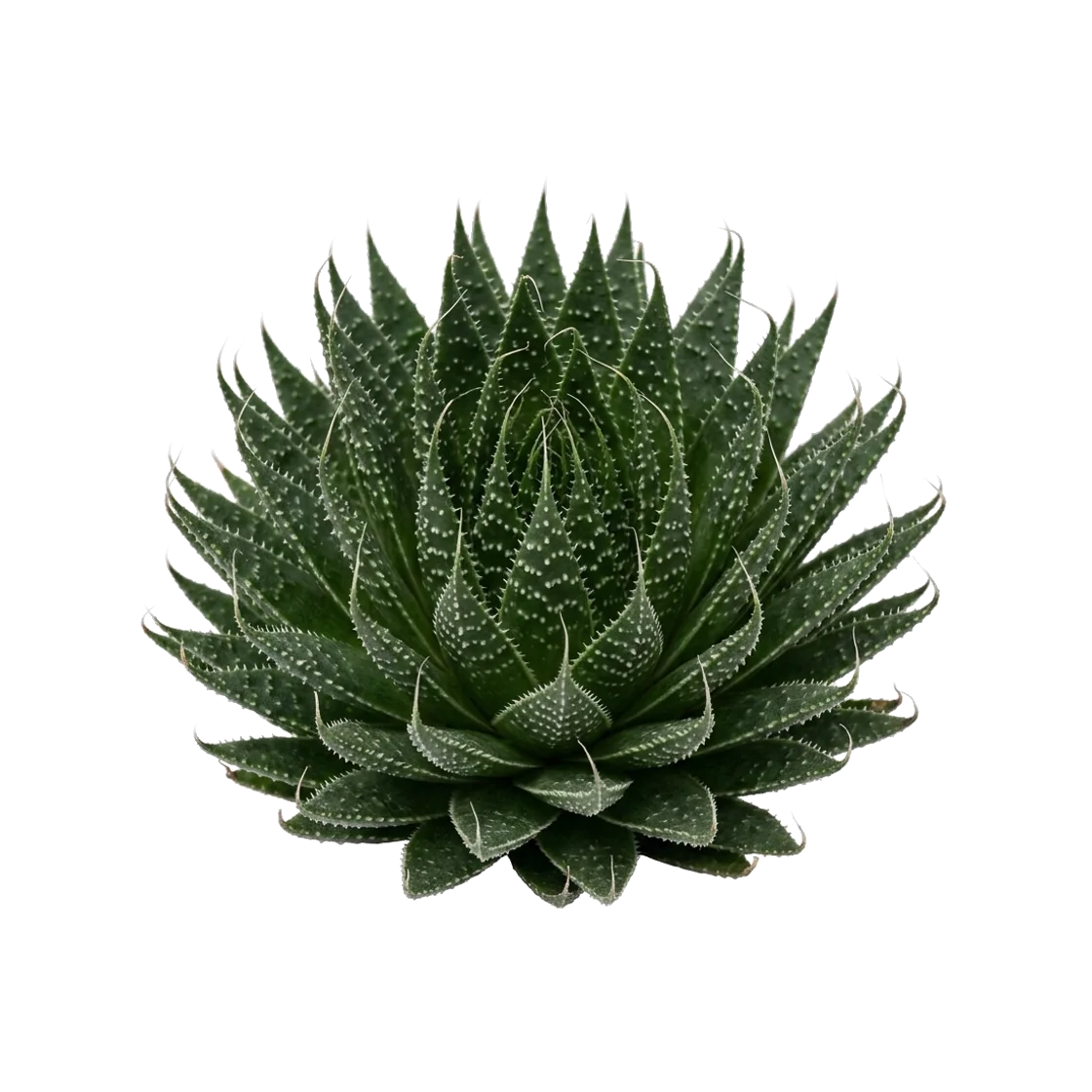
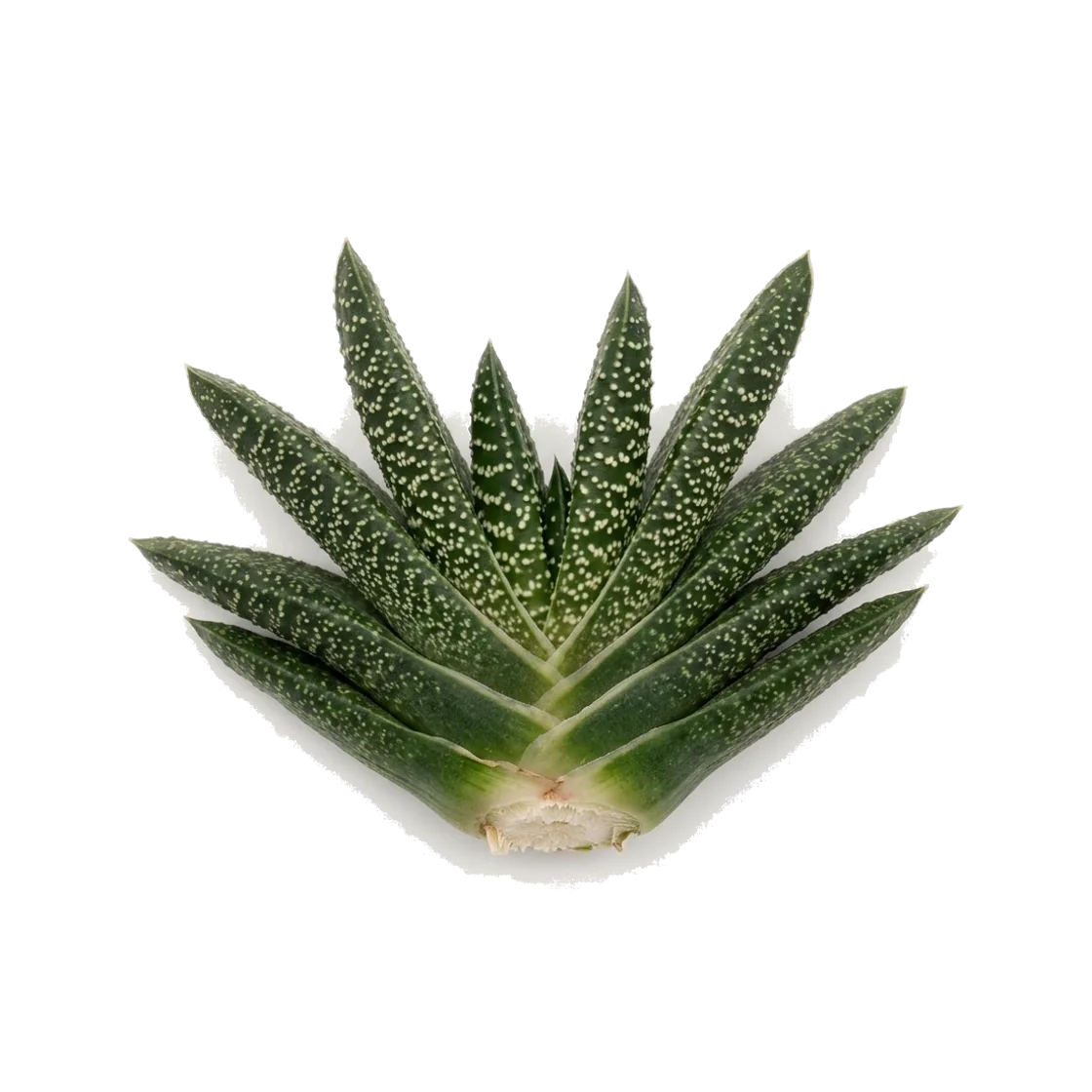
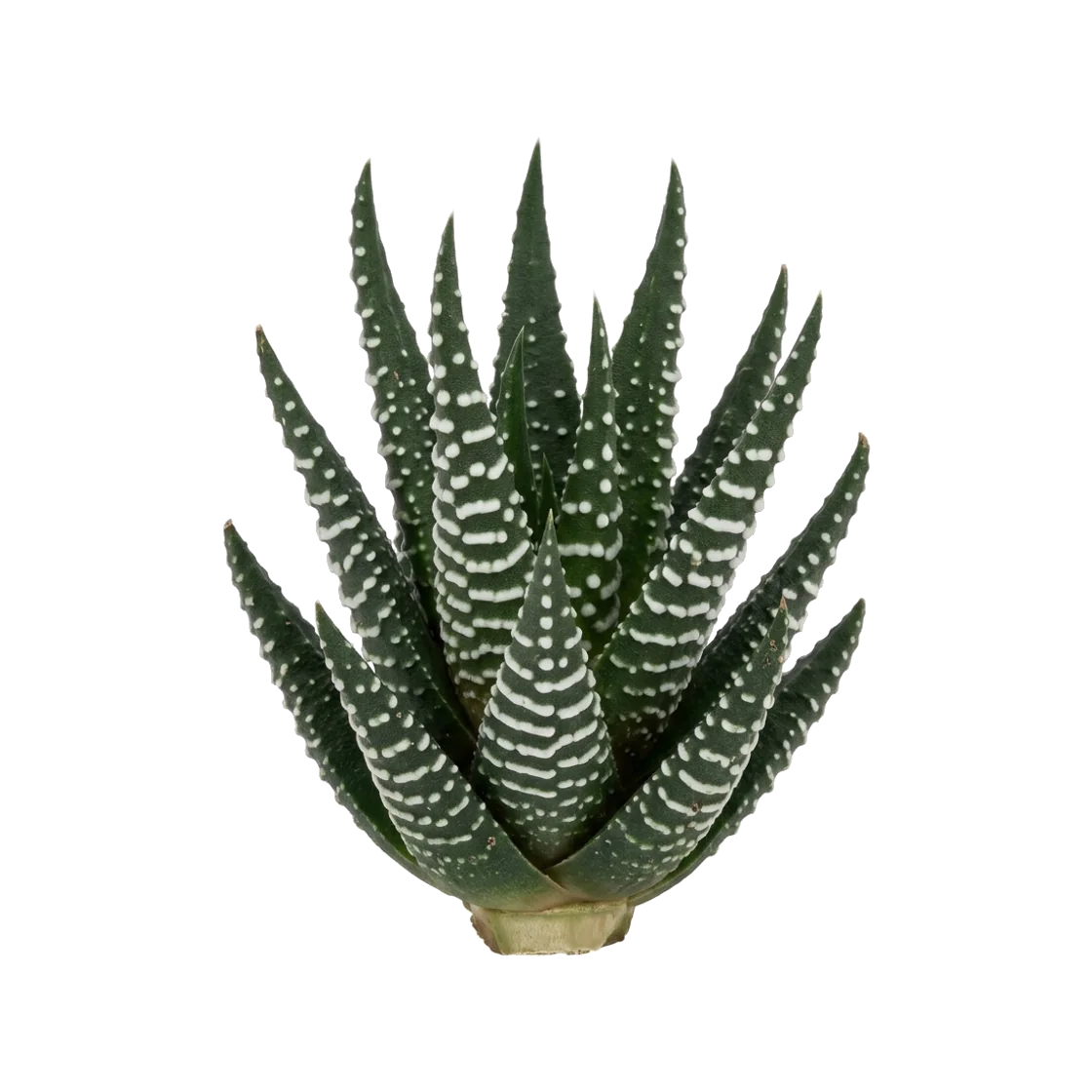
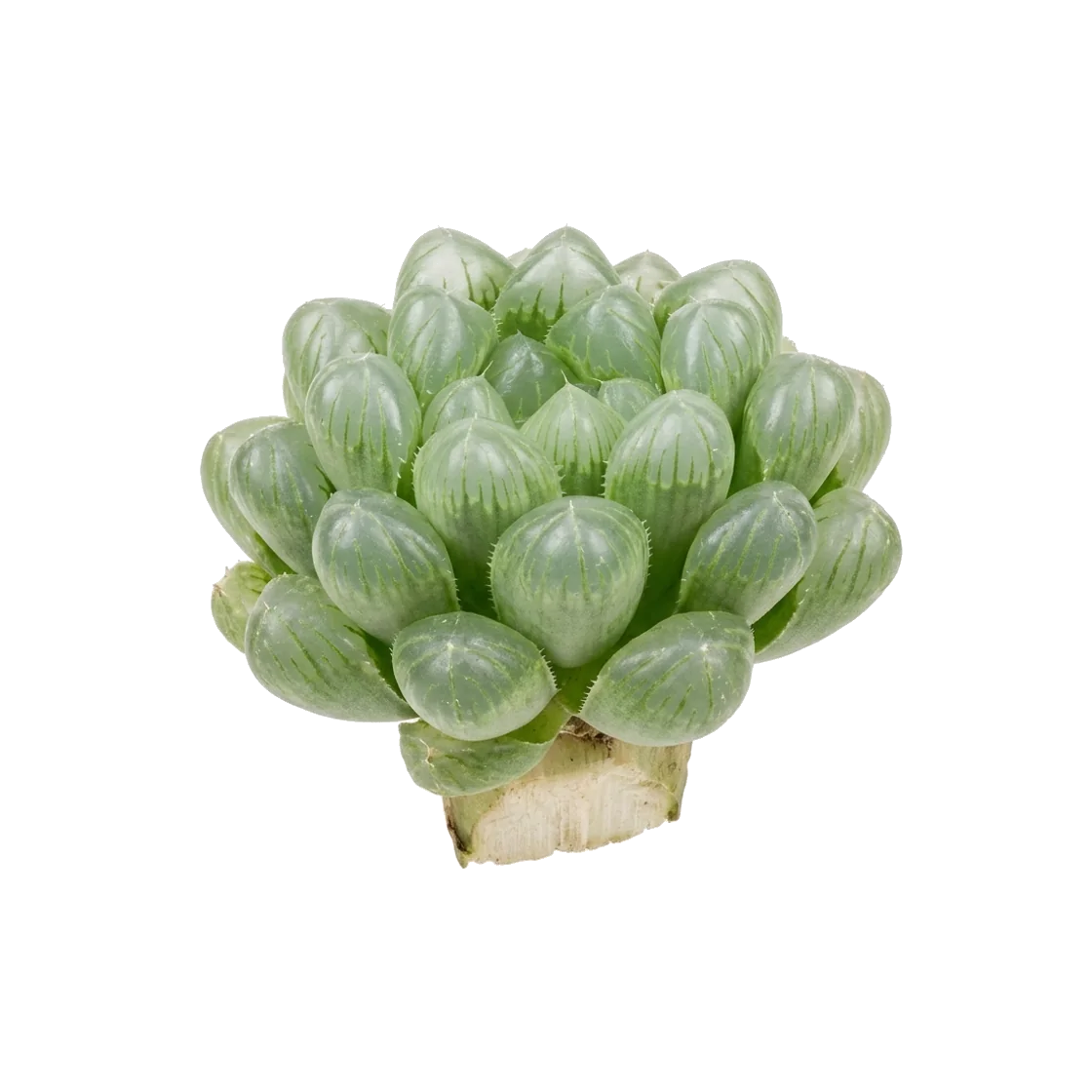
The window haworthia (Haworthia cooperi) is a small succulent from the Eastern Cape of South Africa, where it grows half buried among rocks and sandy soils. It forms tight clusters of short, plump, pale-green leaves, each tipped with a translucent window that lets light reach the inner tissues. This adaptation allows it to photosynthesise while most of the plant stays sheltered below the sand or stones.
In cultivation it is a slow grower that rarely exceeds ten centimetres in height and gradually forms dense colonies of offsets. From spring into summer it sends up slender stalks carrying small tubular flowers of greenish white, modest yet pretty up close. Its small size makes it ideal for little pots, succulent bowls and bright shelves, as long as it receives good light without harsh direct sun.
It settles well indoors when its unhurried rhythm is respected and excess water is avoided above all else. It needs a very free-draining mix, spaced-out watering and moving air to keep its leaves plump and clear. With that basic care, window haworthia stays compact for years and produces fresh rosettes each season while asking for little in return.
Did you know?The translucent leaf tips act like fibre-optic windows, channelling light deep into leaves that stay half buried in sand.
Care. What it needs, point by point.
- Watering
- 10–14 days between wateringsWater thoroughly only when the substrate is completely dry, roughly every 10 to 14 days in summer. In winter reduce watering to once a month or less.
- Light
- IndirectGive it bright, indirect light or gentle morning sun. Strong midday sun can scorch the leaf windows and turn them brown.
- Temperature
- 18–26 °C ideal temperatureIt grows best between 18 °C and 26 °C and tolerates short spells down to about 5 °C. Keep it frost-free and ventilated in hot weather.
- Soil
- Use a very gritty, fast-draining cactus mix with extra perlite or coarse sand. The crown must never sit in soggy soil.
- Fertilizer
- Feed once a month in spring and summer with a diluted cactus fertiliser. Do not feed in autumn or winter, when the plant rests.
- Pruning
- No pruning is needed; just remove dry leaves from the base with tweezers. Always keep the crown free of fallen leaves and debris.
- Propagation
- Propagate by separating offsets from the mother rosette in spring. Let each offset dry for a day and pot it in barely moist gritty mix.
Where it grows. In the wild and in homes.
In the wild it grows in southern Africa, in a subtropical climate.
Range: Plants of the World Online, Royal Botanic Gardens, Kew
Is Window haworthia toxic to cats and dogs?
Non-toxic to cats and dogs.

Cats
Non-toxic

Dogs
Non-toxic
Source · ASPCA Animal Poison Control
Common problems What tends to go wrong.
- Root rot
- Overwatering
- Too little light
- Mealybugs and scale




Frequently asked questions What people ask most.
Why are the leaves turning brown or reddish?
Usually it is a reaction to too much direct sun or to drought, and the plant tints its leaves for protection. Move it to bright indirect light and check that the roots are firm and hydrated. The green colour returns gradually once conditions improve.
How often should I water window haworthia?
Water deeply only when the soil is fully dry, about every 10 to 14 days in warm weather. In winter, watering once a month is usually enough. Always empty the saucer so the pot never stands in water.
Why do the leaves look soft or mushy?
Soft, glassy leaves normally point to overwatering and the start of rot. Stop watering, let the mix dry out completely and remove any mushy leaves. If the stem is still firm, the rosette can often recover.
How do I propagate it?
The easiest way is by offsets: gently twist or cut a daughter rosette with some roots in spring. Let the wound dry for a day, then pot it in gritty mix and water lightly after a few days.