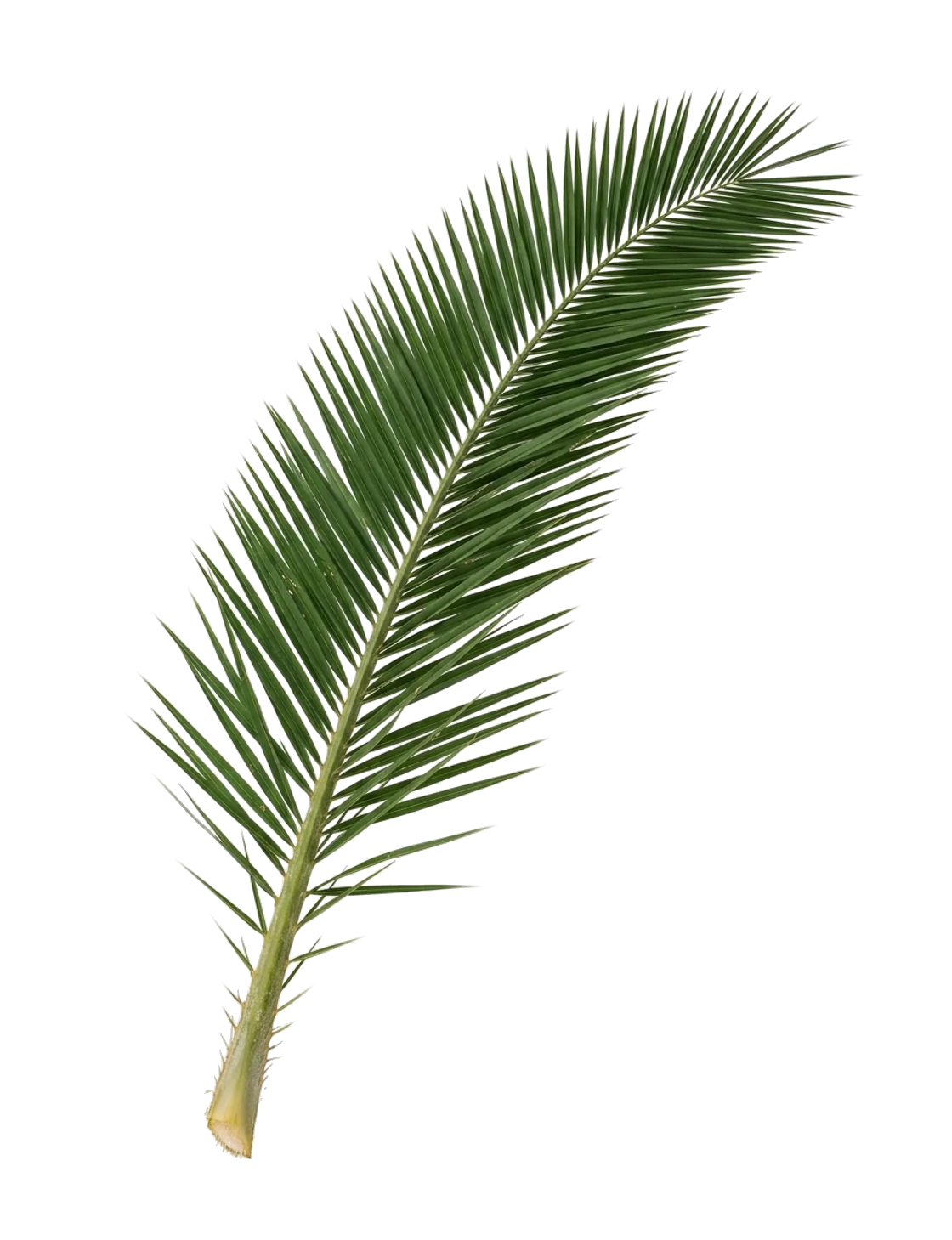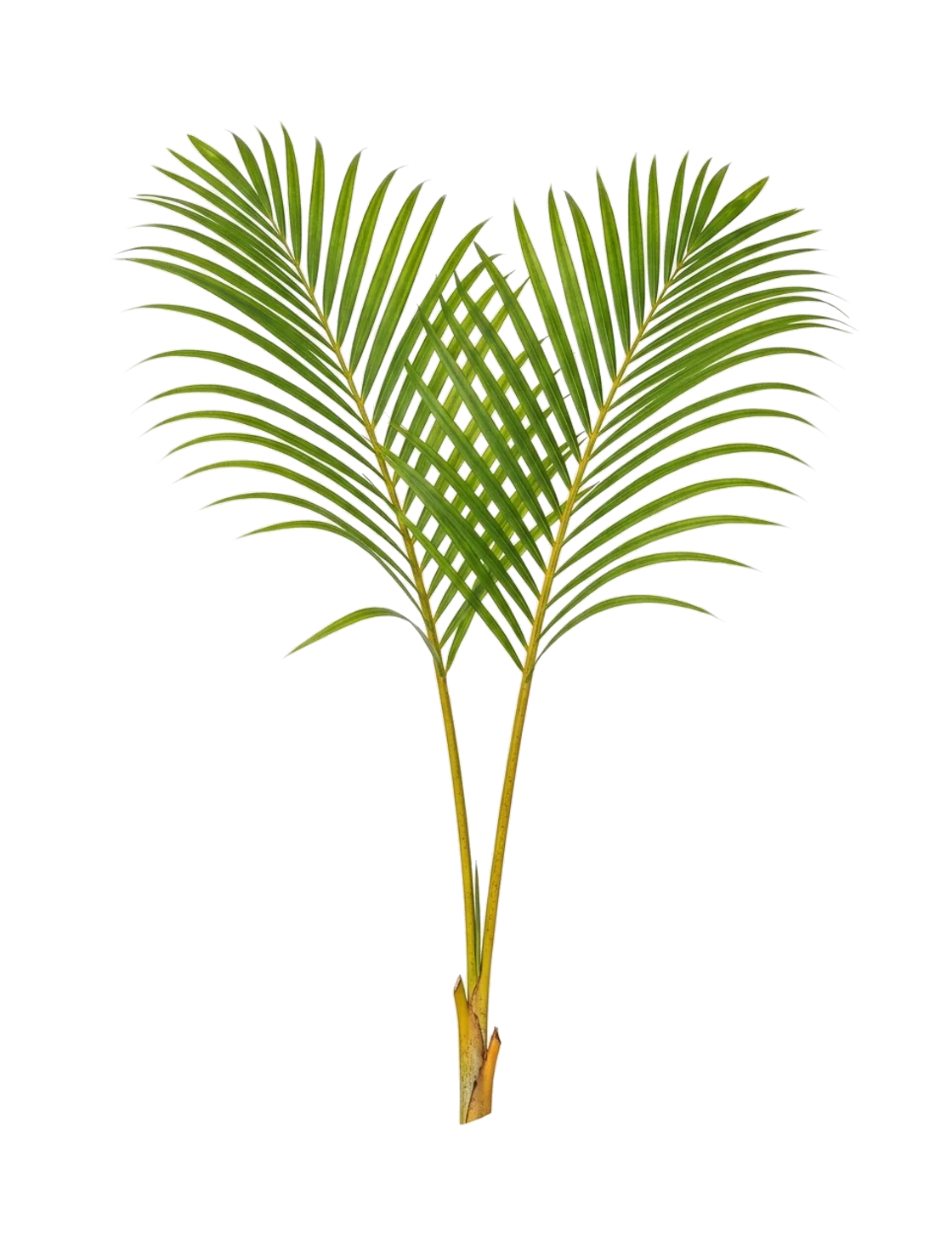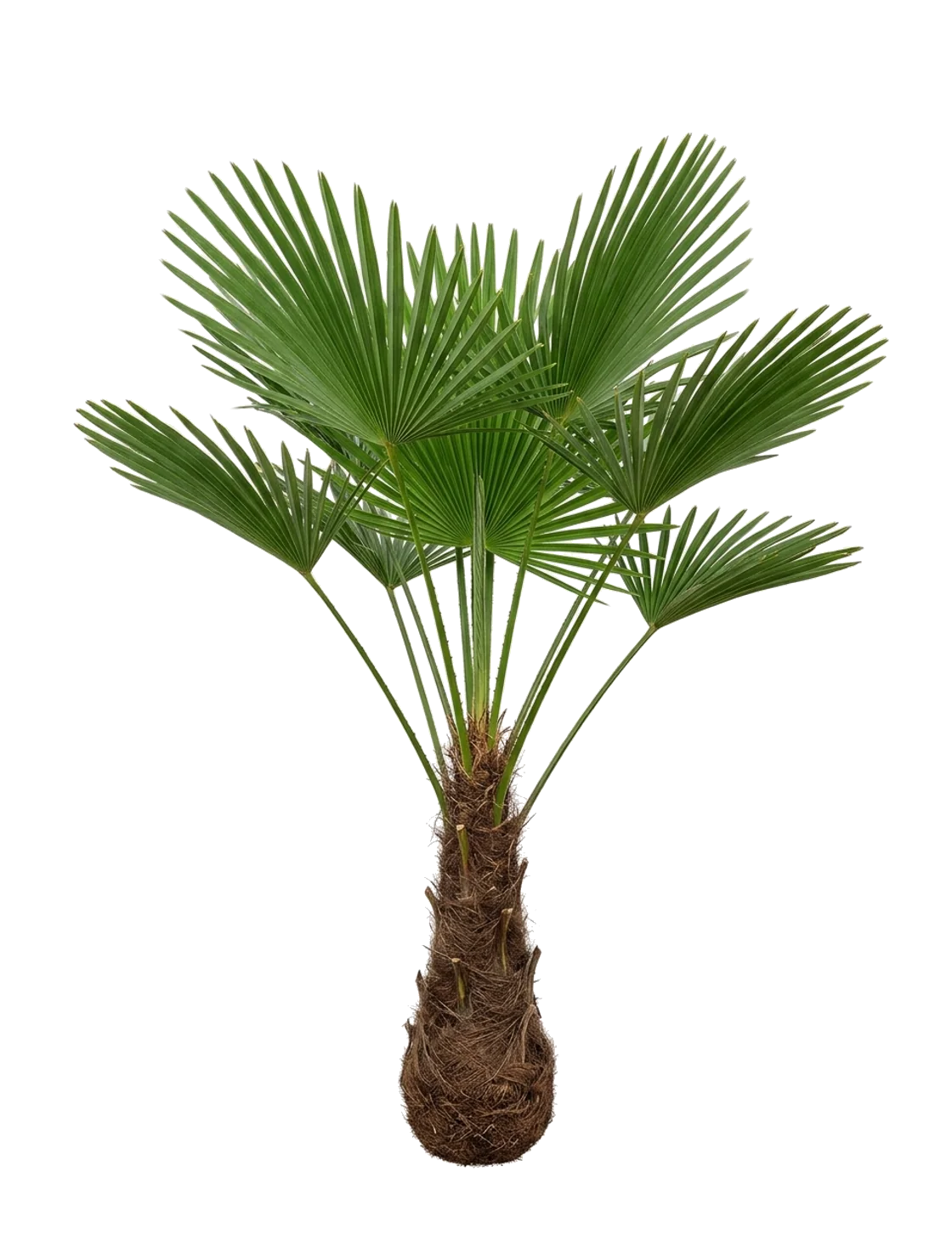
The windmill palm (Trachycarpus fortunei) is a hardy palm of the family Arecaceae, loved for bringing an exotic look to cool and temperate gardens. Native to central and eastern China, it forms a straight trunk wrapped in brown fibres and crowned by stiff fan-shaped leaves on long stalks. It grows slowly but steadily and can pass 8 metres in mild sheltered gardens after many years.
It is an outdoor palm for gardens, courtyards and terraces that tolerates cold, wind and partial shade better than most palms. Young plants suit large pots for years and are planted out in spring with the root ball intact. The palm asks for drained soil, some shelter from harsh winter wind, and patience while it builds its trunk. Male and female flowers appear on separate trees in early summer.
Windmill palms suit patios, pool surrounds and entryways where a single specimen frames the space. They combine with ferns, hostas and camellias in shaded beds that stay fresh in summer. Given light, drainage and room for its roots, a palm becomes more handsome each year and needs little care.
Did you know?Its trunk wrapped in brown fibre gives it the name windmill palm, for the circular sweep of its fan leaves.
Care. What it needs, point by point.
- Watering
- Water regularly in the first years, letting the top layer dry between waterings. Established palms handle rain and short droughts, with deep watering only in very dry summers.
- Light
- Full sunGrow in full sun or partial shade with bright light for most of the day. It is one of the few palms that keeps a good crown in cooler, less sunny gardens.
- Temperature
- 12–24 °C ideal temperatureIt grows best between 12 °C and 24 °C and withstands frosts down to about -12 °C once established. Young palms still appreciate fleece and mulch in hard winters.
- Soil
- Use fertile, well-drained soil with compost mixed into the planting hole. In pots, choose deep containers with a loam-based compost and extra grit for drainage.
- Fertilizer
- Feed in spring with compost or a palm fertilizer, once or twice in the season. Yellow older leaves often improve with a feed containing magnesium.
- Pruning
- Remove only fully brown leaves and old flower clusters, cutting close to the trunk. Leave the fibrous trunk covering in place, as it protects the palm from cold.
- Propagation
- Sow fresh seeds in spring in gentle warmth near 22 °C, where they sprout over weeks or months. Seedlings grow slowly at first and prefer shade in their first summer.
Where it grows. In the wild and in homes.
In the wild it grows in China and Indochina, in a temperate climate.
People have also taken it to 8 more regions where it now grows on its own: Europe, tropical Asia, and temperate Asia.
Range: Plants of the World Online, Royal Botanic Gardens, Kew
Is Windmill palm toxic to cats and dogs?
Non-toxic to cats and dogs.

Cats
Non-toxic

Dogs
Non-toxic
Source · ASPCA Animal Poison Control
Common problems What tends to go wrong.
- Mealybugs and scale
- Root rot
- Magnesium deficiency
- Cold damage



Frequently asked questions What people ask most.
Why does my windmill palm have yellow leaves?
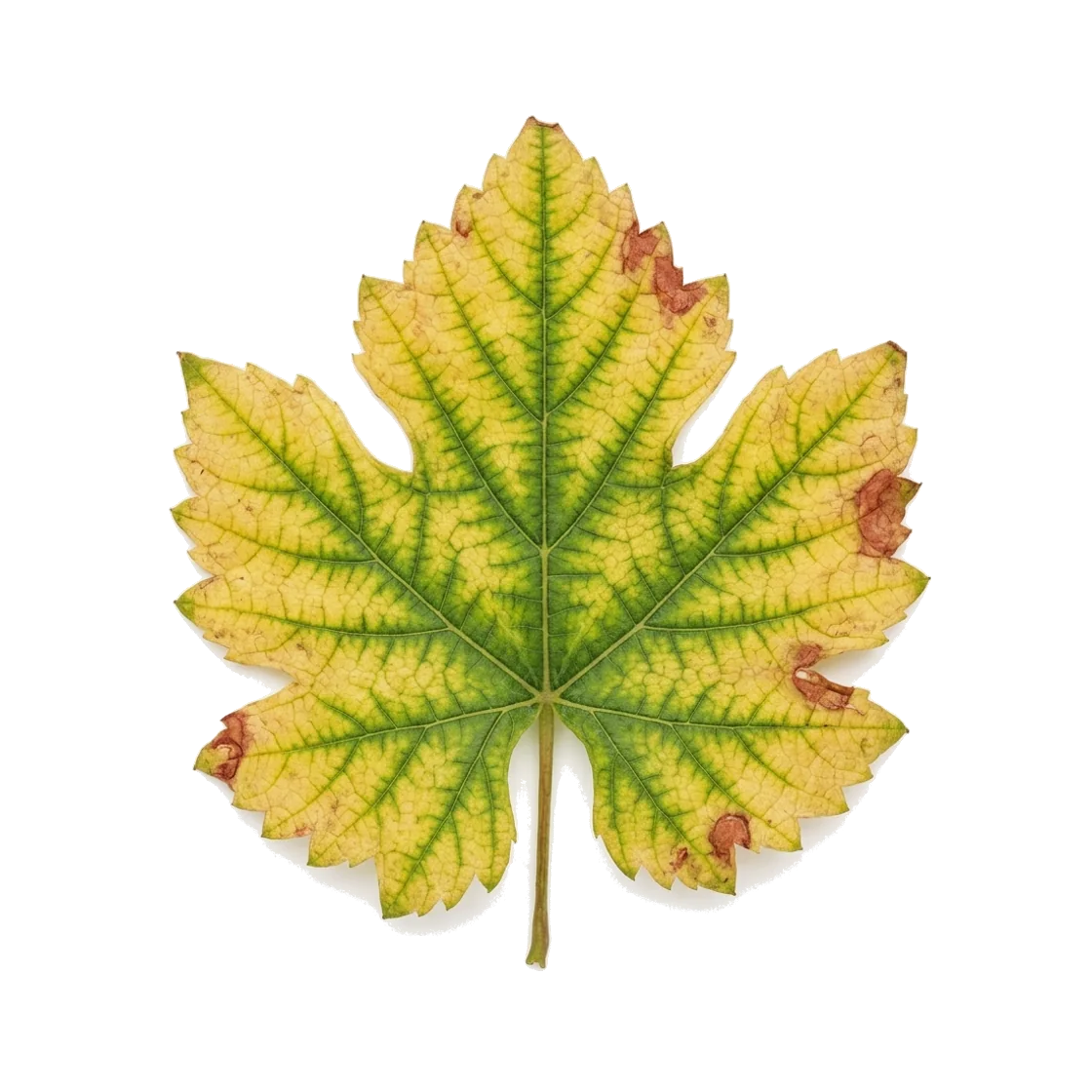
Lower leaves yellow naturally as the crown renews itself through the season. Widespread yellowing often means waterlogging, a small pot, or lack of nutrients such as magnesium. Improve drainage, repot if needed, and feed in spring.
How often should I water a windmill palm?
Water young and potted palms regularly, letting the top centimetres dry between waterings. Established garden palms usually live on rainfall, with deep watering only in long summer droughts. In winter, keep pots just moist and never soaked.
Can I grow a windmill palm in a pot?
Yes, it is one of the best palms for pots thanks to its slow growth and cold tolerance. Use a deep heavy container with drained loam compost so wind does not topple it. Repot every few years and feed lightly in spring and summer.
How do I protect it in winter?
Established palms usually need no help beyond mulch over the roots in cold areas. Wrap young or potted palms in fleece during hard frosts and move pots against a sheltered wall. Remove the wrapping on mild days so air circulates.
How do I prune a windmill palm?
Cut only leaves that are fully brown, plus old flower stalks, with clean sharp tools. Keep the brown trunk fibres, which insulate the stem against cold. Never cut the central bud, because the palm cannot regrow from the trunk.