Pencil cactus
Euphorbia tirucalli
Learn how to care for the pencil cactus (Euphorbia tirucalli): watering, bright light needs, and fast-draining soil tips for this striking succulent.
- Light
- Direct sun
- Watering
- 10–14days between waterings
- Temperature
- 18–30 °Cideal temperature
- Pets
- Toxic
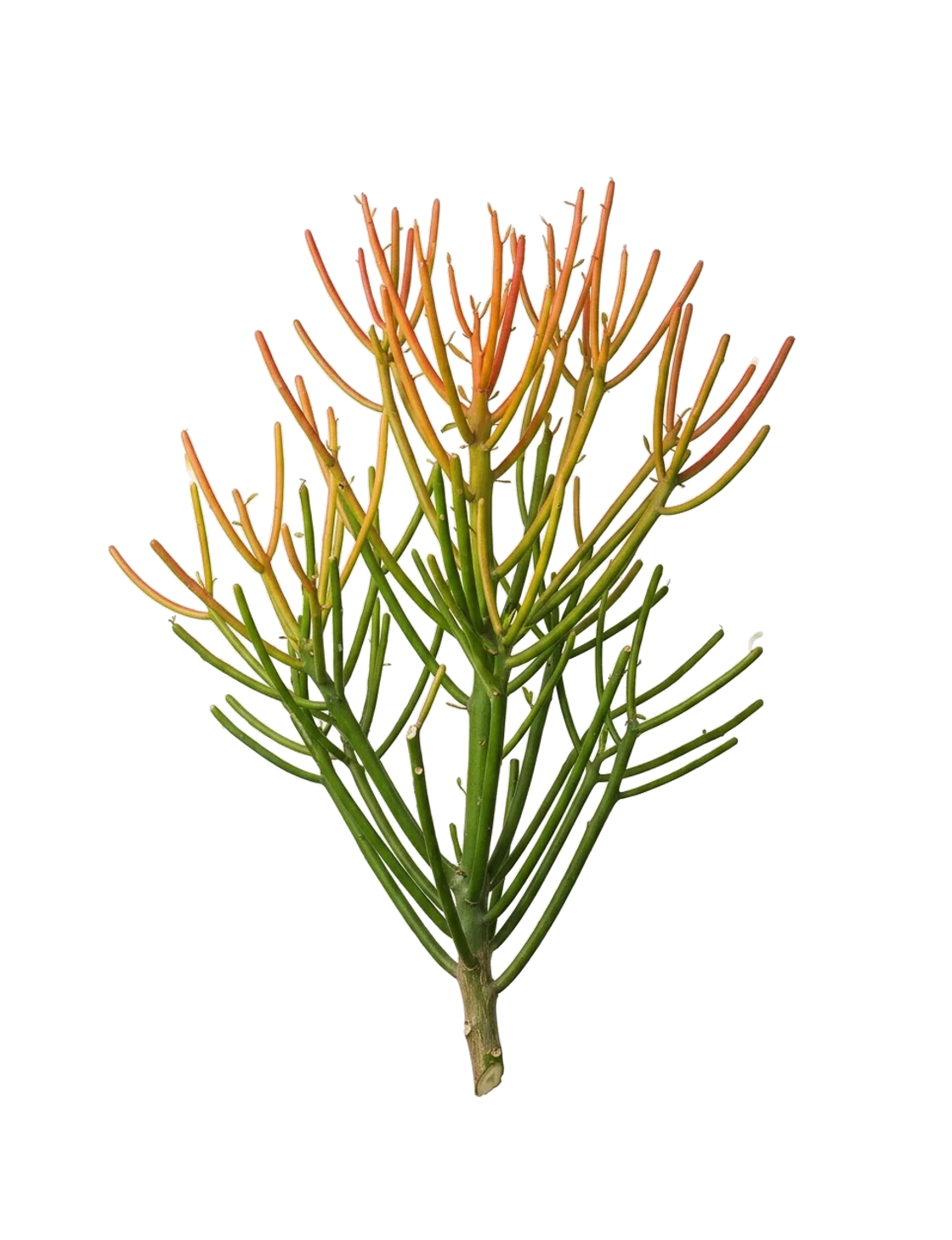
Euphorbia tirucalli, commonly known as pencil cactus or pencil tree, is an architectural succulent shrub native to eastern and southern Africa. It stands out immediately for its unique tangle of slender, smooth green branches that closely resemble sea coral. Despite its common name, it is actually a spurge rather than a true cactus, producing tiny, temporary leaves on fresh growth that drop off very early.
Highly adapted to semi-arid habitats, this rugged plant stores moisture efficiently within its photosynthetic stems, granting it remarkable resilience against drought. Its minimalist, sculptural form makes it an impressive focal point for bright indoor living spaces, as well as an ideal component for outdoor xeriscaping in frost-free regions.
Keeping it healthy is straightforward as long as you provide abundant direct sunlight and an exceptionally porous potting medium that drains water rapidly. Like most members of the spurge family, it releases a milky latex sap when trimmed or injured, so wearing sturdy gardening gloves during maintenance is always recommended.
Did you know?During the mid-20th century, scientists investigated the milky sap of this plant as a potential source for producing gasoline due to its high hydrocarbon content.
Care. What it needs, point by point.
- Watering
- 10–14 days between wateringsAllow the potting soil to dry out completely before watering thoroughly until excess moisture flows from the drainage holes. Water roughly every ten to fourteen days during warm months, and reduce frequency to once a month or less during winter dormancy.
- Light
- Direct sunThis succulent requires abundant direct sunlight to maintain thick, sturdy growth and avoid stretching. Indoors, place it right in front of an unobstructed south-facing or west-facing window.
- Temperature
- 18–30 °C ideal temperatureIt thrives in warm temperatures between 18 °C and 30 °C (65 °F to 86 °F). It cannot tolerate frost and should be brought indoors when temperatures drop below 10 °C (50 °F).
- Soil
- Use a fast-draining potting blend specifically designed for cacti and succulents, enriched with extra pumice or coarse perlite.
- Fertilizer
- Feed with a balanced, diluted succulent fertilizer once a month throughout spring and summer, pausing feeding completely over the winter.
- Pruning
- Prune back leggy or overcrowded stems in early spring using clean shears to maintain a balanced and sturdy branch canopy.
- Propagation
- Stem cuttings root easily when taken during warm weather and allowed to callous over for several days before planting. Insert the dried cutting into barely damp, gritty mix and keep it in bright indirect light until roots establish.
Where it grows. In the wild and in homes.
In the wild it grows in the western Indian Ocean islands, in a desert or dry shrubland climate.
People have also taken it to 64 more regions where it now grows on its own: Africa, tropical Asia, South and Central America and the Caribbean, and temperate Asia.
The Florami community has photographed it in España.
Range: Plants of the World Online, Royal Botanic Gardens, Kew
Is Pencil cactus toxic to cats and dogs?
Toxic to cats and dogs.

Cats
Toxic

Dogs
Toxic
Usual signs
Causes irritation to the mouth and stomach, occasionally with vomiting, though its toxicity is generally overrated.
If your pet has chewed it and shows symptoms, call your vet or the nearest emergency vet.
Source · ASPCA Animal Poison Control
Gallery As the community sees it.
Common problems What tends to go wrong.
- Root rot
- Overwatering
- Mealybugs and scale
- Cold damage
- Too little light





Frequently asked questions What people ask most.
Why are the stems of my pencil cactus becoming soft or wrinkled?
Soft, mushy stems indicate root rot caused by overwatering or compacted soil that retains excessive moisture. If the stems are wrinkled but still firm, the plant is dehydrated and needs a thorough watering.
Why is my plant stretching and losing its dense shape?
Etiolation occurs when the plant receives insufficient light, prompting it to grow pale and thin as it stretches toward a light source. Move it gradually into direct sun to encourage thicker, more compact stem clusters.
Can I grow a pencil cactus outdoors all year round?
Outdoor cultivation is possible year-round only in warm, frost-free regions corresponding to USDA hardiness zones 10 through 12. In colder climates, keep it in a container that can easily spend winters inside the house.
What precautions should I take when trimming the branches?
Always wear protective rubber gloves and eye protection when cutting stems, as the milky sap can irritate skin and eyes. Wipe your cutting tools thoroughly afterward to prevent sap buildup on the metal blades.