African milk tree
Euphorbia trigona
Learn how to care for the African milk tree (Euphorbia trigona): proper watering, bright light needs, potting mix, and expert propagation tips.
- Light
- Indirect
- Watering
- 2–3weeks between waterings
- Temperature
- 18–28 °Cideal temperature
- Toxicity
- Non-toxic
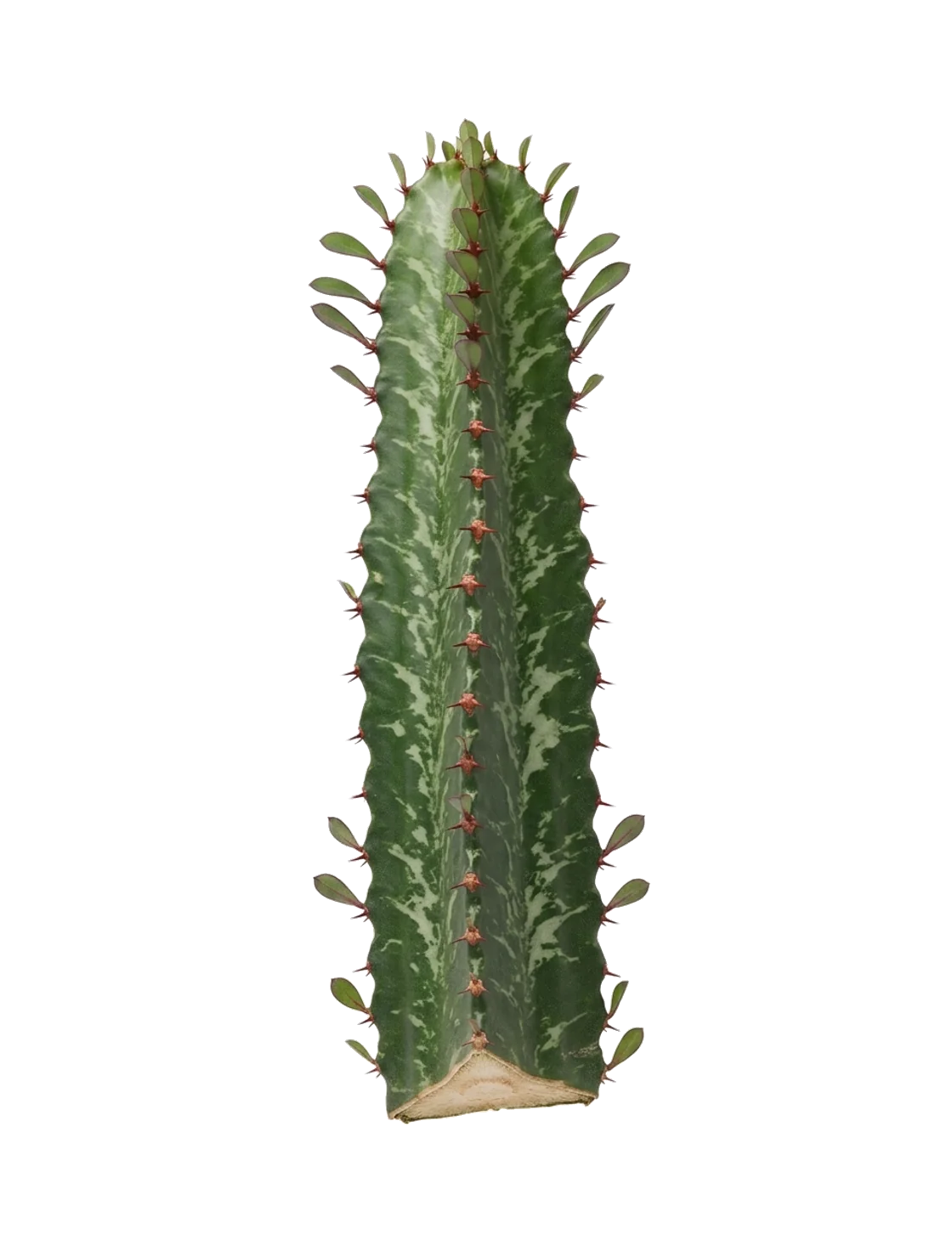
The African milk tree, scientifically named Euphorbia trigona, is an upright succulent native to the arid and tropical regions of Central and Western Africa. While it strongly resembles a desert cactus with its spiny ridges, it belongs to the spurge family and features distinctive three- or four-angled stems lined with teardrop-shaped leaves. Its deep green coloration and striking architectural silhouette make it a standout structural plant for bright interior spaces.
This species has gained widespread popularity among houseplant enthusiasts due to its robust nature and low maintenance requirements. Its fleshy stems store substantial reserves of water, enabling the plant to withstand long intervals of drought without showing stress. Growing quickly in favorable conditions, it provides dramatic vertical interest without taking up excessive floor space in living rooms or offices.
Cultivating an African milk tree is straightforward as long as you provide generous lighting and exercise restraint with the watering can. Like most succulents, its primary enemy is moisture retention around the roots, meaning a porous potting medium and good drainage are essential. When given warmth and ample brightness, it will thrive steadily for decades with minimal intervention.
Did you know?Despite looking like a typical desert cactus, it is actually a succulent that produces short-lived leaves along the ridges of its stems.
Care. What it needs, point by point.
- Watering
- 2–3 weeks between wateringsWater thoroughly only when the potting mix has completely dried out from top to bottom, which usually means every two to three weeks in summer. In winter, reduce watering significantly to once a month or less to prevent moisture buildup around dormant roots.
- Light
- IndirectPlace your plant in a spot that receives plenty of bright indirect light or several hours of direct morning sun. Insufficient light leads to weak, elongated stems that cannot support their own weight.
- Temperature
- 18–28 °C ideal temperatureMaintain room temperatures between 18 °C and 28 °C (65 °F to 82 °F) for steady growth. Keep it away from cold drafts and bring it indoors whenever temperatures drop below 10 °C (50 °F).
- Soil
- Use a loose, fast-draining cactus and succulent mix amended with perlite or coarse sand. Ensure the pot has functional drainage holes to allow excess water to escape immediately.
- Fertilizer
- Feed once a month from mid-spring through late summer using a balanced succulent fertilizer diluted to half strength. Suspend all fertilization during the fall and winter resting period.
- Pruning
- Pruning is rarely necessary except to manage height or remove offshoots that disrupt balance. Always make clean cuts at the stem junctions using sterilized shears.
- Propagation
- Propagate by taking stem cuttings during the active growing season in spring or summer. Allow the cut ends to callus over in a dry, shaded area for several days before planting them in gritty soil.
Where it grows. In the wild and in homes.
In the wild it grows in west-central tropical Africa and south tropical Africa, in a seasonally dry tropical climate.
People have also taken it to 4 more regions where it now grows on its own: the Indian subcontinent, Indochina, and northern Africa.
Range: Plants of the World Online, Royal Botanic Gardens, Kew
Is African milk tree toxic to cats and dogs?
The ASPCA doesn't list this species. If your pet has chewed it and seems unwell, call your vet.
Common problems What tends to go wrong.
- Root rot
- Overwatering
- Too little light
- Mealybugs and scale
- Cold damage





Frequently asked questions What people ask most.
Why are the leaves dropping from my African milk tree?
Leaf drop is a natural response to seasonal dormancy, reduced light levels, or slight underwatering in autumn and winter. As long as the stems remain plump and firm, new foliage will emerge when active growth resumes in spring.
How can I tell if my plant is getting too much water?
Overwatering typically manifests as soft, discolored stem bases and sudden leaf drop accompanied by a limp appearance. If you notice soft spots, stop watering immediately and repot into dry soil to inspect and trim rotted roots.
Can the African milk tree grow outdoors?
Yes, it grows well outdoors in warm, frost-free climates when positioned in bright light or partial sun. Make sure to acclimate it gradually to direct sunlight to prevent scorch marks on the stems.
How often does it need to be repotted?
Repot every two to three years in spring into a container that is only slightly larger and heavy enough to keep the tall stems stable. Because their root systems are shallow, shallow or wide pots with drainage holes work best.