Crown of thorns
Euphorbia milii
Discover how to care for the crown of thorns (Euphorbia milii): sunlight needs, careful watering, well-draining soil, and tips for year-round flowers.
- Light
- 4–6 hof direct sun
- Watering
- 7–10days between waterings
- Temperature
- 18–28 °Cideal temperature
- Toxicity
- Non-toxic
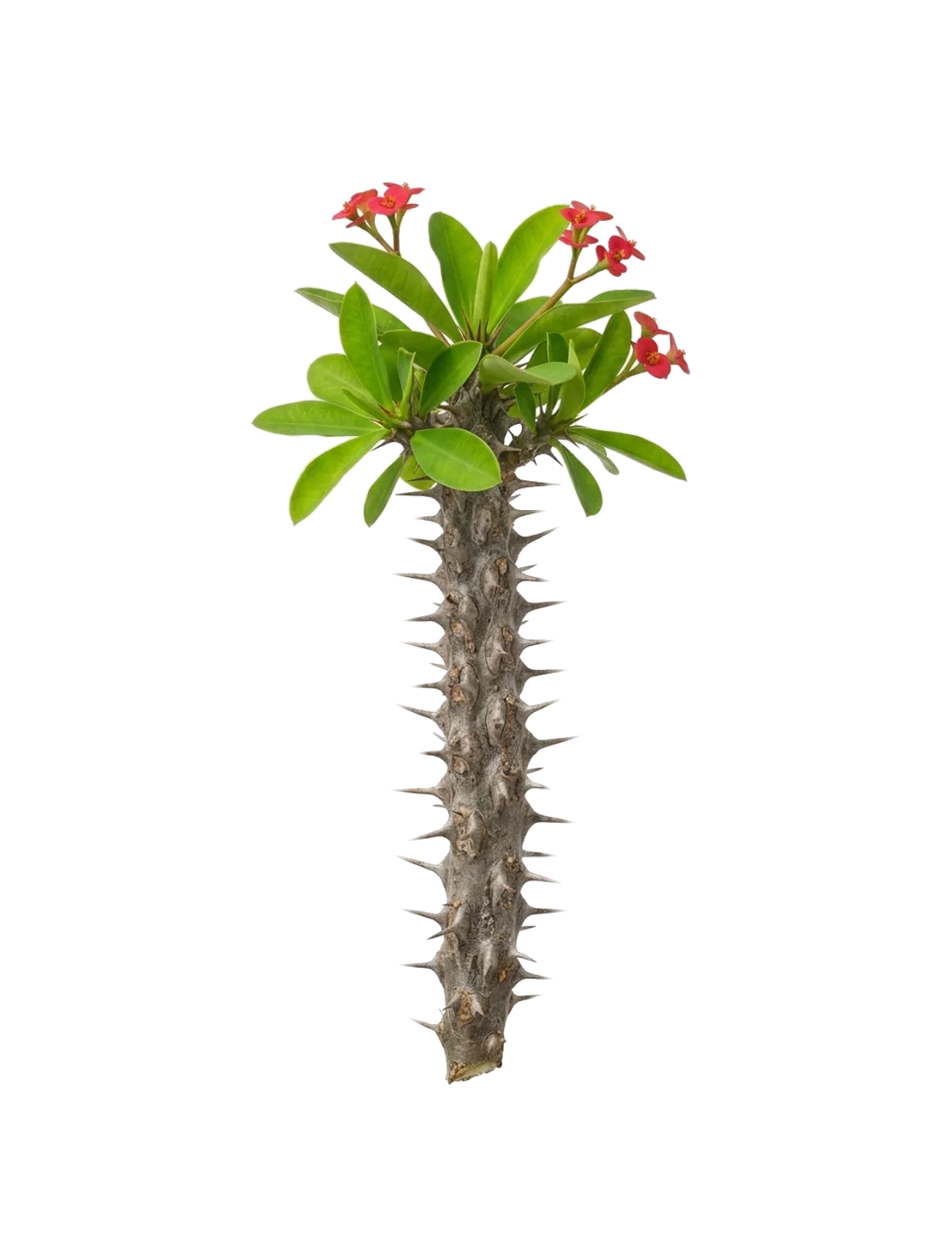
Crown of thorns (Euphorbia milii), native to Madagascar, is a hardy succulent shrub renowned for its striking appearance and long blooming season. Its thick, woody stems are densely armed with sharp thorns and produce bright green, tear-shaped leaves alongside vibrant clusters of floral bracts. While these colorful structures look like petals, they are specialized leaves surrounding the tiny true flowers.
Highly prized in both indoor spaces and warm outdoor gardens, this plant can produce colorful displays nearly all year under optimal lighting. The classic form boasts deep crimson or scarlet bracts, but modern cultivars and hybrids offer a broad palette, including pastel pink, sunny yellow, crisp white, and mottled bicolor tones with larger foliage.
Crown of thorns is exceptionally drought-tolerant because its succulent stems store moisture during dry spells, making it an ideal choice for easy-care collections. Success with this plant hinges on giving it generous direct sunlight and sharply draining soil, as excessive moisture around the roots is its greatest vulnerability.
Did you know?The colorful 'petals' are actually modified leaves called cyathophylls, which frame the tiny, inconspicuous true flowers in the center.
Care. What it needs, point by point.
- Watering
- 7–10 days between wateringsWater only when the potting mix has completely dried out, typically every 7 to 10 days during warm months and every 2 to 3 weeks in winter. Check moisture by inserting a wooden skewer to the bottom of the pot to ensure no dampness remains before watering thoroughly.
- Light
- 4–6 h of direct sunProvide full sun or at least four to six hours of direct sunlight each day to encourage prolific blooming. When grown indoors, position it right beside your brightest south- or west-facing window.
- Temperature
- 18–28 °C ideal temperatureIt thrives best in warm environments between 18°C and 28°C. Shield it from frost and temperatures falling below 10°C, as sustained cold causes sudden leaf drop and stem damage.
- Soil
- Use a cactus and succulent potting mix amended with perlite or coarse pumice to guarantee immediate drainage. Always select containers with unobstructed drainage holes to prevent standing water.
- Fertilizer
- Feed once a month throughout spring and summer using a balanced succulent fertilizer diluted to half strength. Suspend feeding entirely during late autumn and winter when growth naturally slows.
- Pruning
- Prune lightly in late winter to shape the shrub, remove dead stems, and promote denser branch growth. Always wear thick protective gloves and disinfect pruning shears before and after cuts.
- Propagation
- Propagate easily through stem cuttings taken in spring or early summer. Allow the cut ends to callus in a dry, shaded area for two to three days before inserting them into lightly moist succulent soil.
Where it grows. In the wild and in homes.
In the wild it grows in the western Indian Ocean islands, in a desert or dry shrubland climate.
People have also taken it to 21 more regions where it now grows on its own: South and Central America and the Caribbean, temperate Asia, tropical Asia, and Africa.
Range: Plants of the World Online, Royal Botanic Gardens, Kew
Is Crown of thorns toxic to cats and dogs?
The ASPCA doesn't list this species. If your pet has chewed it and seems unwell, call your vet.
Common problems What tends to go wrong.
- Root rot
- Overwatering
- Too little light
- Mealybugs and scale
- Cold damage





Frequently asked questions What people ask most.
Why is my crown of thorns losing its leaves?
Sudden leaf loss is most often caused by cold drafts, temperatures dropping below 10°C, or severe underwatering. It can also occur as a brief stress response when moving the plant to a new location.
How can I encourage my crown of thorns to bloom more?
Generous direct sunlight is the primary trigger for buds, so keep it in the brightest spot available. Allowing the soil to dry out between waterings and providing good airflow also supports continuous flowering.
How often should I water it in a pot?
During warm months, watering every 7 to 10 days is generally sufficient once the potting mix dries out completely. In winter, reduce the schedule to every 15 to 20 days depending on your home's indoor humidity and temperature.
How do I handle the plant safely during pruning or repotting?
Wear thick gardening gloves or wrap folded newspapers around the stems to protect your hands from sharp thorns. Use sharp, sanitized bypass pruners to make clean cuts without tearing the outer bark.