Panda plant
Kalanchoe tomentosa
Panda plant (Kalanchoe tomentosa) care: gentle sun, careful watering and leaf cuttings for a compact shrub with silvery, velvety thick leaves.
- Light
- Direct sun
- Watering
- 10days between waterings
- Temperature
- 18–27 °Cideal temperature
- Pets
- Toxic
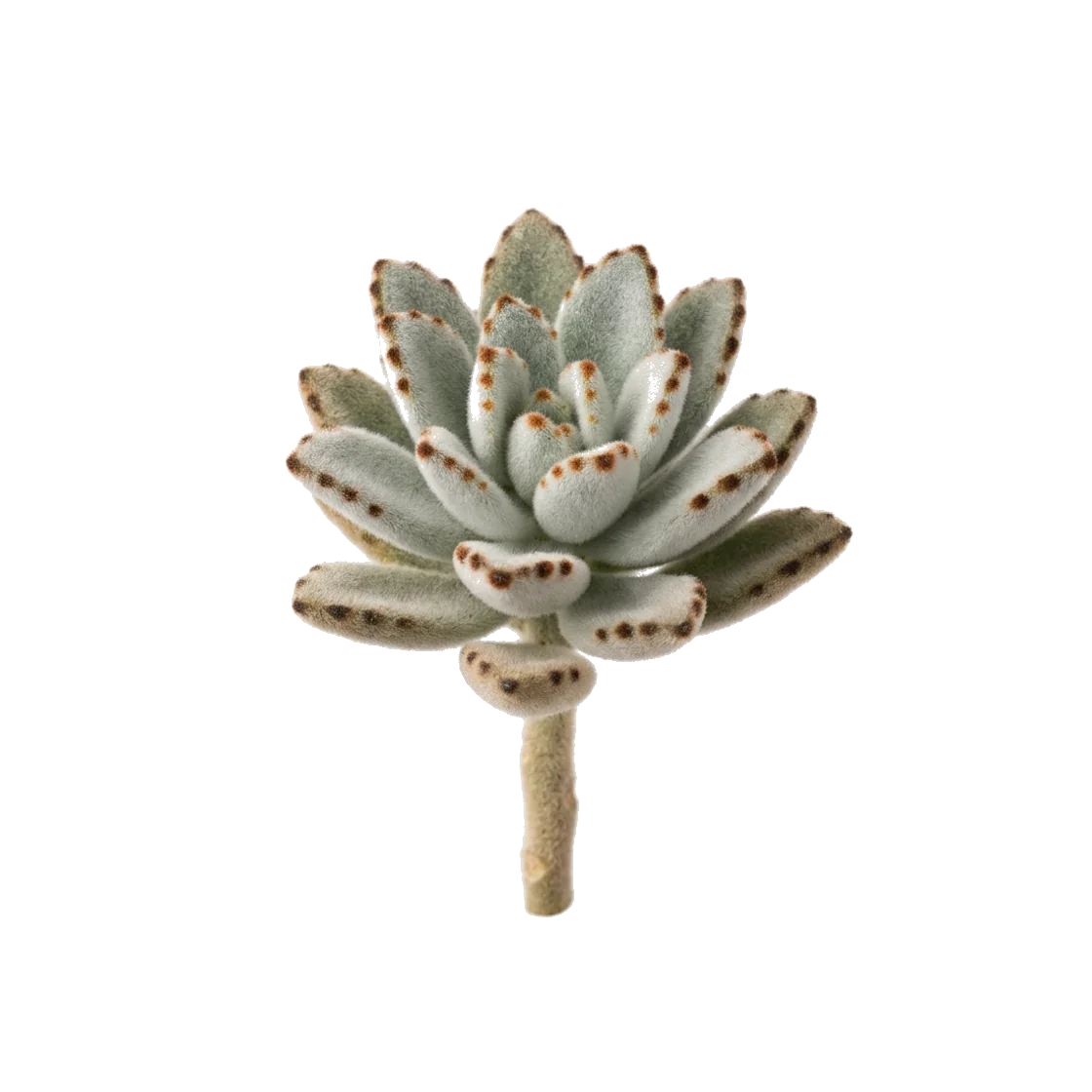
The panda plant (Kalanchoe tomentosa) is a velvety succulent shrub from the granite hills of central Madagascar, loved for its soft, furry foliage. Its oval leaves wear a dense coat of silvery hairs edged with chocolate-brown spots along the scalloped margins, like stitching. Slowly branching stems form a small silvery bush about half a metre tall, felted from base to tip.
It is a natural collector plant: compact in a pot for years, yet capable of becoming a handsome shrublet on a sunny terrace where frosts never come. In late winter mature plants may send up tall spikes of small bell-shaped flowers in muted green and brown, curious rather than showy. The felted leaves also make it one of the most touchable succulents, though handling is best kept gentle so the hairs stay intact.
In cultivation it asks for what its rocky homeland gives: fierce light, lean soil and rain that drains away at once. The watering rule is simple, soak and then forget until the pot is dry right through. With sun, grit and restraint, this kalanchoe keeps its silver coat dense, its edges dark and its habit neat for many years.
Did you know?The dense silver hairs are a sunshade and a water trap at once: they reflect harsh light and catch dew for the leaves below.
Care. What it needs, point by point.
- Watering
- 10 days between wateringsWater thoroughly only when the soil is dry, about every 10 days in summer. In winter water roughly once a month and keep water off the furry leaves.
- Light
- Direct sunIt loves bright light and several hours of direct sun, which thicken the felt and edge the leaves in rusty brown. Deep shade leaves it green and floppy.
- Temperature
- 18–27 °C ideal temperatureIt grows best between 18 °C and 27 °C and enjoys warmth with moving air. Keep it above 8 °C in winter and fully dry during cold spells.
- Soil
- Plant in a very porous, sandy cactus mix that dries within days. A clay pot helps wick away the extra moisture this species hates.
- Fertilizer
- A modest spring feed of diluted cactus fertiliser is enough for the whole year. Too much nitrogen softens the leaves and dulls the silver felt.
- Pruning
- Pinch the tips of young plants to encourage branching into a bushy shrublet. Remove spent flower stalks and any scorched leaves at the base.
- Propagation
- Leaf cuttings root readily: lay a healthy leaf on gritty mix and wait for plantlets at its base. Stem cuttings taken in spring root even faster.
Where it grows. In the wild and in homes.
In the wild it grows in the western Indian Ocean islands, in a seasonally dry tropical climate.
Range: Plants of the World Online, Royal Botanic Gardens, Kew
Is Panda plant toxic to cats and dogs?
Toxic to cats and dogs.

Cats
Toxic

Dogs
Toxic
Usual signs
Vomiting, diarrhea and, in rare cases, abnormal heart rhythm.
If your pet has chewed it and shows symptoms, call your vet or the nearest emergency vet.
Source · ASPCA Animal Poison Control
Common problems What tends to go wrong.
- Root rot
- Overwatering
- Powdery mildew
- Mealybugs and scale




Frequently asked questions What people ask most.
Why is my panda plant losing its silver colour?
New leaves emerge greener when light is weak, and the brown edge spots fade too. Move the plant step by step into several hours of direct sun. The fresh growth will return felted and silver, while older leaves keep their tone.
How often should I water it?
Drench the soil only when it is completely dry, roughly every 10 days in hot weather. In winter once a month is plenty. Pour at the base and avoid wetting the furry leaves, which spot easily.
Can I grow it from a single leaf?
Yes, choose a firm healthy leaf, twist it cleanly from the stem and lay it on dry gritty mix. Tiny plantlets sprout from the base within weeks in warmth and bright light. Mist sparingly only once roots appear.
Why are the lower leaves soft and dropping?
A few dry leaves at the base are normal, but widespread softness usually means too much water. Let the pot dry out fully and check that drainage holes run free. If the stem is still firm, ease off watering and the plant should stabilise.