Jade plant
Crassula ovata
Learn how to care for your jade plant (Crassula ovata): sunlight needs, careful watering, potting soil, pruning tips, and easy stem propagation.
- Light
- 4–6 hof direct sun
- Watering
- 10–14days between waterings
- Temperature
- 18–24 °Cideal temperature
- Pets
- Toxic
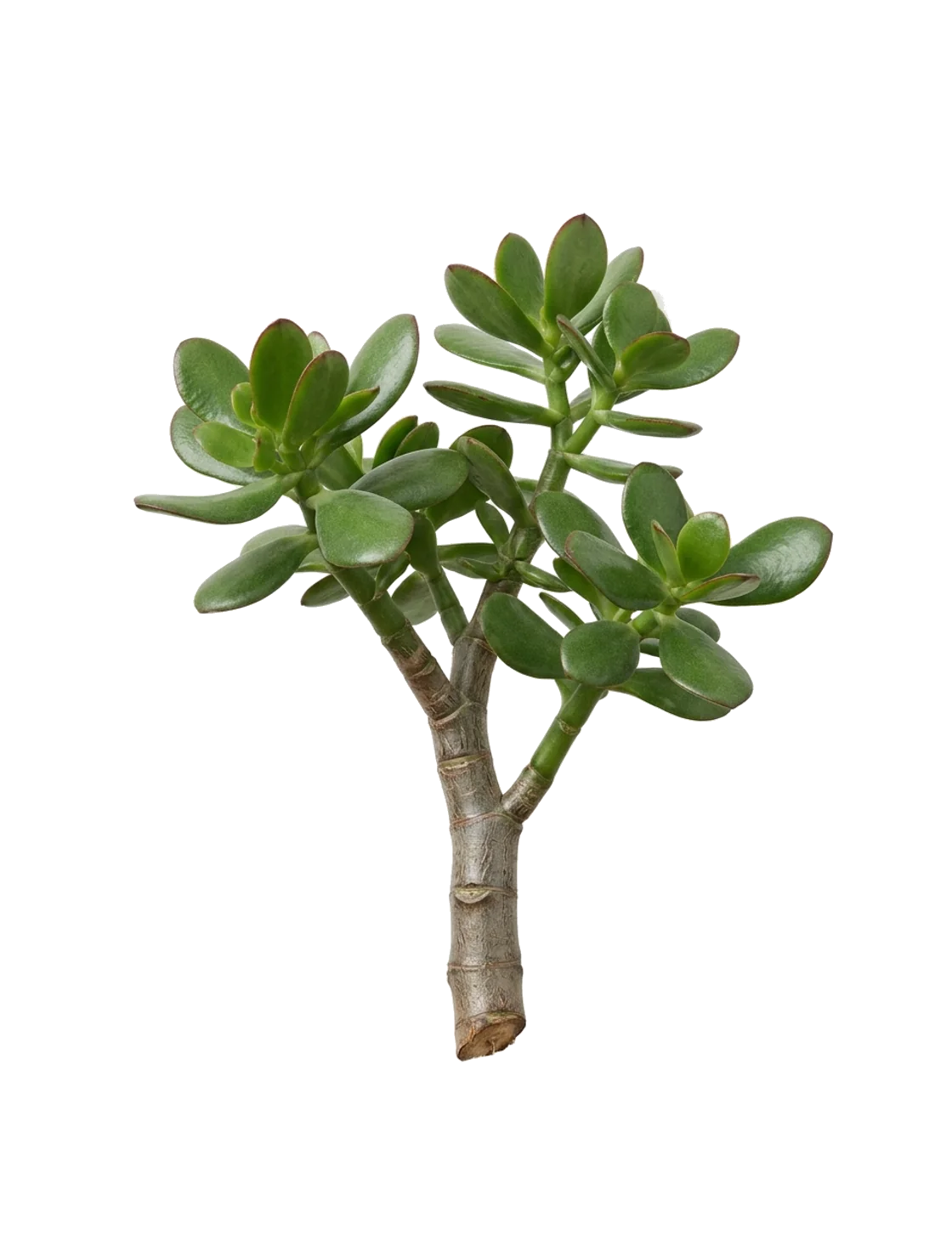
Crassula ovata, widely known as the jade plant, is an evergreen succulent native to South Africa. It features thick, woody stems and glossy, teardrop-shaped leaves that often develop attractive red margins when exposed to bright sunlight. Over time, it naturally adopts a small tree-like or bonsai silhouette that can thrive for decades with very modest attention.
Celebrated for its remarkable resilience, this classic succulent makes a dependable houseplant as well as an elegant outdoor container specimen in frost-free regions. Mature plants grown in cool, bright conditions during late autumn or winter frequently produce charming clusters of star-shaped white or pale pink flowers that add seasonal interest.
Like most succulents, the jade plant stores ample moisture within its plump foliage and fleshy branches, making overwatering its primary hazard. It demands a fast-draining potting mix and long intervals between waterings to allow the root ball to dry out completely. Provided it receives ample natural light, it remains vigorous and durable throughout the year.
Did you know?Frequently referred to as the money tree or friendship plant, it is traditionally gifted as a symbol of prosperity and good fortune.
Care. What it needs, point by point.
- Watering
- 10–14 days between wateringsWater deeply only after the potting mix has dried out completely from top to bottom. During spring and summer, every 10 to 14 days is typical, reducing to once a month or less during winter dormancy. Always verify moisture by feeling the lower leaves or checking soil dryness with a wooden skewer.
- Light
- 4–6 h of direct sunProvide at least 4 to 6 hours of bright, direct sunlight each day to maintain dense growth and vivid red leaf margins. If grown indoors, position it on an unobstructed south- or west-facing windowsill.
- Temperature
- 18–24 °C ideal temperatureThe plant flourishes in daytime temperatures between 18°C and 24°C, tolerating cooler nights. It has no frost resistance and must be sheltered indoors whenever temperatures drop below 7°C.
- Soil
- Plant in a gritty cactus and succulent mix containing perlite, pumice, or coarse sand for rapid drainage. Always ensure the pot has unobstructed drainage holes to prevent standing water.
- Fertilizer
- Feed with a balanced succulent liquid fertilizer diluted to half strength once monthly during the active growing season in spring and summer. Withhold fertilizer completely during autumn and winter.
- Pruning
- Prune in early spring to shape the canopy, remove leggy branches, and encourage sturdier trunk development. Always use clean, sharp bypass pruners cutting right above a leaf node.
- Propagation
- Propagate by taking stem cuttings or healthy individual leaves during spring or summer. Allow cuttings to callus over for two to three days before inserting them into barely moist, gritty soil.
Where it grows. In the wild and in homes.
In the wild it grows in southern Africa and south tropical Africa, in a subtropical climate.
People have also taken it to 6 more regions where it now grows on its own: Africa, Europe, and North America.
Range: Plants of the World Online, Royal Botanic Gardens, Kew
Is Jade plant toxic to cats and dogs?
Toxic to cats and dogs.

Cats
Toxic

Dogs
Toxic
Usual signs
Vomiting, depression, and incoordination.
If your pet has chewed it and shows symptoms, call your vet or the nearest emergency vet.
Source · ASPCA Animal Poison Control
Common problems What tends to go wrong.
- Root rot
- Overwatering
- Too little light
- Mealybugs and scale
- Cold damage





Frequently asked questions What people ask most.
Why are leaves dropping from my jade plant?
Overwatering is the most frequent reason, leading to root rot and premature leaf drop. Insufficient sunlight or sudden cold drafts can also prompt the plant to shed lower foliage.
How can I tell if my jade plant is overwatered or underwatered?
Underwatered leaves become soft, dull, and visibly wrinkled, firming up quickly once watered. Overwatered leaves turn translucent, squishy, and drop at the slightest touch, often accompanied by damp soil.
How often should a jade plant be repotted?
Repot every two to three years in early spring into a container only slightly larger than the root mass. Heavy ceramic or terracotta pots are ideal because they provide counterweight against top-heavy branches.
Why is my jade plant growing tall and leggy?
Legginess is caused by insufficient light, prompting the stems to stretch awkwardly toward the nearest light source. Move the plant gradually into a brighter location with direct sun and prune leggy stems to stimulate branching.