Paddle plant
Kalanchoe thyrsiflora
Paddle plant (Kalanchoe thyrsiflora) care: strong sun, very spaced watering and offsets for big round paddles with red edges on the terrace.
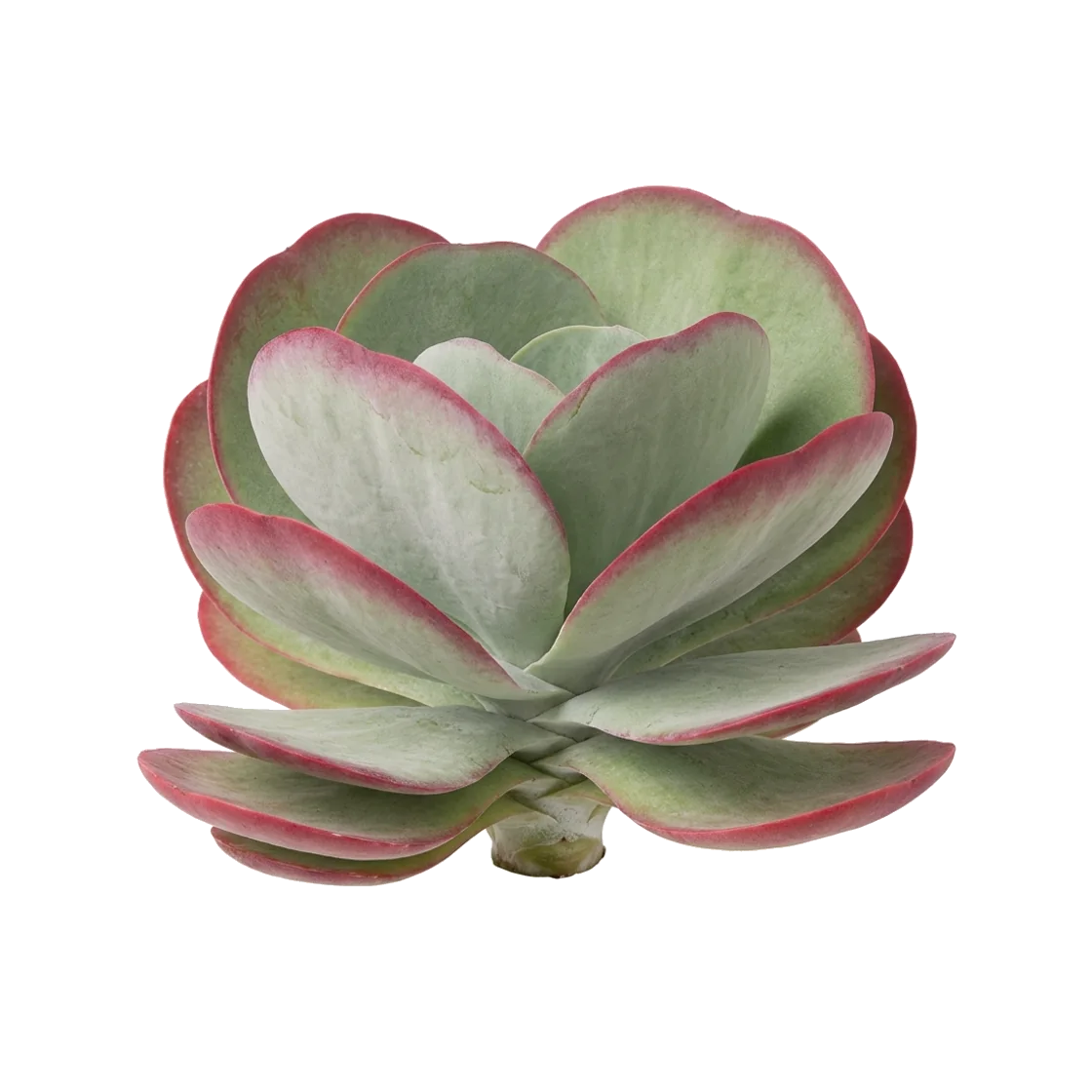
- Light
- Direct sun
- Watering
- 10–14days between waterings
- Temperature
- 18–28 °Cideal temperature
- Pets
- Toxic
The paddle plant (Kalanchoe thyrsiflora) is a sculptural succulent from the rocky grasslands of South Africa and Botswana, built from broad, rounded paddles. Its blue-green leaves wear a powdery waxy coating and flush crimson along the margins in sun and drought, stacking into rosettes up to half a metre wide. Mature rosettes may crown themselves with a tall spike of fragrant yellow flowers, after which that crown usually fades while offsets carry on.
Few succulents give such a bold graphic effect with so little work, which is why it stars in dry borders, gravel gardens and big minimalist pots. Outdoors it loves heat, sun and lean soil wherever winters stay mild and dry. Indoors it needs the brightest window available plus a summer holiday outside whenever possible.
Care follows the familiar succulent script: maximum light, sharp drainage and water only when dry. The waxy coating should be admired but not rubbed, since it protects the leaves from sun and dehydration. Given those basics, paddle plant grows fast, colours vividly and multiplies into a generous clump within a few seasons.
Did you know?The leaves are coated in a natural waxy flour that works as sunscreen, so fingerprints left on the surface never quite fade.
Care. What it needs, point by point.
- Watering
- 10–14 days between wateringsWater deeply when the soil is fully dry, about every 10 to 14 days in summer. In winter water once a month, keeping the leaf coating dry.
- Light
- Direct sunIt needs strong light with direct sun to keep the paddles upright and red-edged. In shade the leaves turn plain green and the plant stretches.
- Temperature
- 18–28 °C ideal temperatureIt thrives between 18 °C and 28 °C with warm days and mild nights. Move it indoors before frost, as it suffers below about 5 °C.
- Soil
- Use a coarse, fast-draining succulent mix with plenty of grit. Good airflow around the crown prevents rot in the leaf axils.
- Fertilizer
- One light spring feed of diluted cactus fertiliser covers the year. Overfeeding produces oversized, pale leaves prone to flopping.
- Pruning
- Remove spent flower stalks at the base after blooming, since the crown that flowers often declines. Keep offsets to renew the clump.
- Propagation
- Detach offsets with roots in spring and pot them in gritty mix. Healthy leaves laid on dry mix also root and form new rosettes.
Where it grows. In the wild and in homes.
In the wild it grows in southern Africa, in a desert or dry shrubland climate.
People have also taken it to 2 more regions where it now grows on its own: tropical East Africa and tropical West Africa.
Range: Plants of the World Online, Royal Botanic Gardens, Kew
Is Paddle plant toxic to cats and dogs?
Toxic to cats and dogs.

Cats
Toxic

Dogs
Toxic
Usual signs
Vomiting, diarrhea and, in rare cases, abnormal heart rhythm.
If your pet has chewed it and shows symptoms, call your vet or the nearest emergency vet.
Source · ASPCA Animal Poison Control
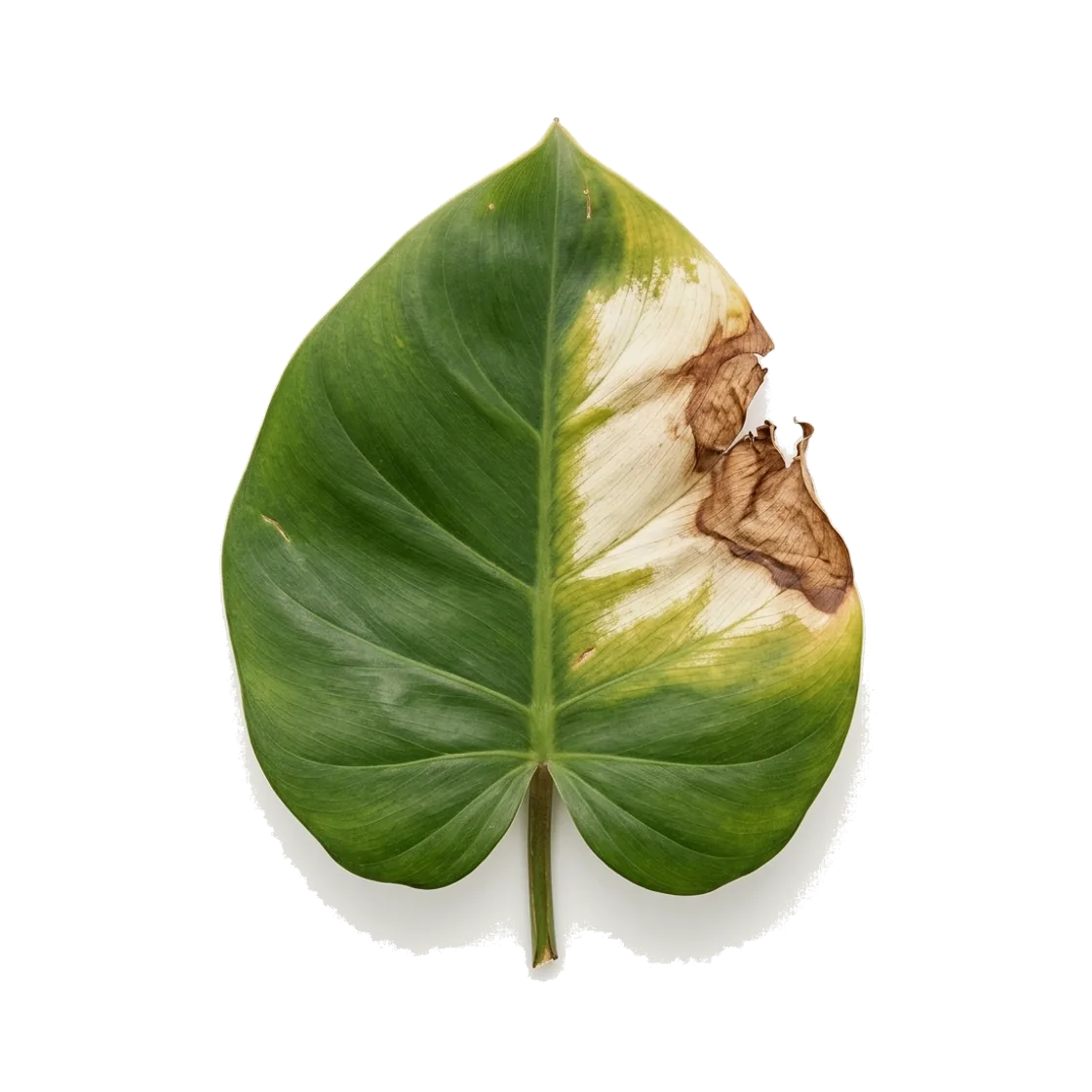
Common problems What tends to go wrong.
- Root rot
- Overwatering
- Mealybugs and scale
- Sunburn



Frequently asked questions What people ask most.
Why are the leaves flat green without red edges?
The red margins only appear with direct sun and a little drought stress. Shift the plant gradually into full sun and lengthen the intervals between waterings. New leaves will colour up; old ones usually keep their green tone.
My plant flowered and now looks tired: what now?
The rosette that flowers often declines afterwards, which is completely normal in this species. Cut the spent stalk at the base and keep watering the offsets around it. They will quickly fill the gap left behind.
How often should I water paddle plant?
Soak the pot only when the mix is bone dry, roughly every 10 to 14 days in summer. In winter once a month suffices. Always water the soil, never the rosette, and empty the saucer.
How do I propagate it?
The fastest way is by offsets: separate a daughter rosette with roots in spring and pot it in gritty mix. Single healthy leaves also root when laid on dry soil, though they need patience. Keep new cuttings shaded for the first week.