Mother of thousands
Kalanchoe daigremontiana
Care guide for Mother of Thousands (Kalanchoe daigremontiana): bright light, minimal watering, gritty soil, and how to manage its rapid growth.
- Light
- 5–6 hof light a day
- Watering
- 10–14days between waterings
- Temperature
- 16–26 °Cideal temperature
- Pets
- Toxic
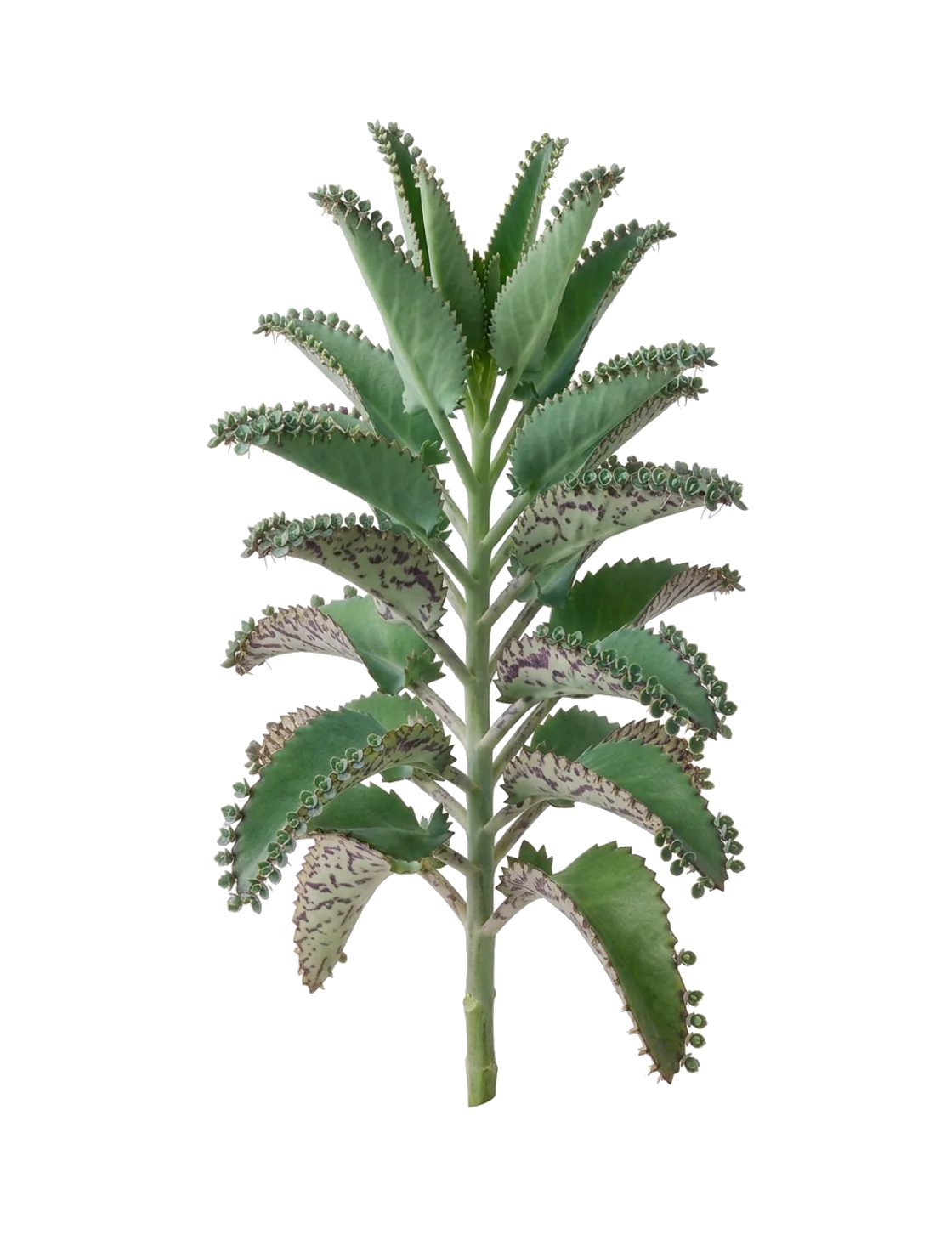
Mother of thousands (Kalanchoe daigremontiana), also widely known as Mexican hat plant or devil's backbone, is an intriguing succulent perennial native to southwestern Madagascar. It develops sturdy, upright stems that can reach over three feet in height when grown in optimal conditions. Its thick, fleshy foliage features an elongated, boat-like shape colored in soft blue-green tones, frequently patterned with striking purple-brown mottling on the undersides.
The plant is famous across the botanical world for its prolific asexual reproduction through vegetative bulbils. Scores of miniature plantlets develop along the serrated notches of every mature leaf, each forming tiny root systems while still attached to the mother leaf. Once these plantlets mature, they fall off easily and take root in any bare potting mix or crevice nearby, making container cultivation the best way to keep them tidy.
As a houseplant, it proves remarkably tough, resilient, and forgiving of casual neglect, making it an excellent choice for beginners and succulent collectors alike. It demands little more than generous sunlight to preserve its architectural form and an infrequent watering routine that allows the potting soil to dry out thoroughly. Provided it stays protected from frost, it flourishes readily on bright windowsills, sunny balconies, and dry patios.
Did you know?It develops hundreds of fully formed plantlets along the serrated edges of its leaves, which take root almost instantly upon falling.
Care. What it needs, point by point.
- Watering
- 10–14 days between wateringsAllow the soil to dry out completely before watering thoroughly. Water once every ten to fourteen days during spring and summer, reducing to once a month or less during winter dormancy.
- Light
- 5–6 h of light a dayProvide bright, direct or filtered sunlight for at least five to six hours each day. Insufficient light causes the stems to stretch awkwardly and weaken, losing their distinctive compact shape.
- Temperature
- 16–26 °C ideal temperatureThe ideal temperature range is between 16 °C and 26 °C. It is tender to frost and suffers severe tissue damage below 8 °C, requiring indoor shelter in cold climates.
- Soil
- Plant in a fast-draining cactus and succulent mix amended with coarse sand, pumice, or perlite. Excellent drainage is essential to safeguard the shallow root system from moisture buildup.
- Fertilizer
- Feed with a balanced succulent fertilizer diluted to half strength once a month throughout the active growing season. Do not fertilize during the fall and winter rest period.
- Pruning
- Prune back leggy or overgrown top growth to encourage bushier side branching and maintain an attractive size. Regularly remove shriveled lower leaves to keep the container clean and tidy.
- Propagation
- Propagation is virtually effortless by gathering the fallen leaf plantlets and setting them on top of dry or slightly damp soil. You can also root stem cuttings easily in spring or early summer.
Where it grows. In the wild and in homes.
In the wild it grows in the western Indian Ocean islands, in a desert or dry shrubland climate.
People have also taken it to 36 more regions where it now grows on its own: South and Central America and the Caribbean, Africa, Europe, and North America.
Range: Plants of the World Online, Royal Botanic Gardens, Kew
Is Mother of thousands toxic to cats and dogs?
Toxic to cats and dogs.

Cats
Toxic

Dogs
Toxic
Usual signs
Vomiting, diarrhea, and rarely, abnormal heart rhythm.
If your pet has chewed it and shows symptoms, call your vet or the nearest emergency vet.
Source · ASPCA Animal Poison Control
Common problems What tends to go wrong.
- Root rot
- Overwatering
- Too little light
- Mealybugs and scale
- Cold damage





Frequently asked questions What people ask most.
Why is my plant becoming tall and leggy?
Leggy growth is caused by etiolation when the plant does not receive enough direct sunlight. Gradually move your succulent to a brighter window or under a grow light to promote compact new leaves.
How do I prevent it from taking over other pots?
The tiny plantlets dislodge very easily and establish roots wherever they land in nearby containers. Keep the pot isolated from other houseplants and routinely pick up loose plantlets from surrounding surfaces.
Why are the lower leaves turning yellow and soft?
Soft, translucent yellow leaves are almost always a sign of overwatering and soggy potting mix. Inspect the roots immediately, reduce watering frequency, and ensure the pot drains freely.
Can it bloom when kept indoors?
Indoor flowering is relatively uncommon because the plant needs strict light cycles and intense sun exposure to set buds. When it does bloom, it produces a tall central cluster of pendulous, bell-shaped pinkish-orange blossoms.