Moon cactus
Gymnocalycium mihanovichii
Moon cactus (Gymnocalycium mihanovichii) care: bright filtered light, sparse watering and steady warmth to keep its vivid colours in the home.
- Watering
- 10–15days between waterings
- Temperature
- 18–28 °Cideal temperature
- Toxicity
- Non-toxic
- Difficulty
- Easy
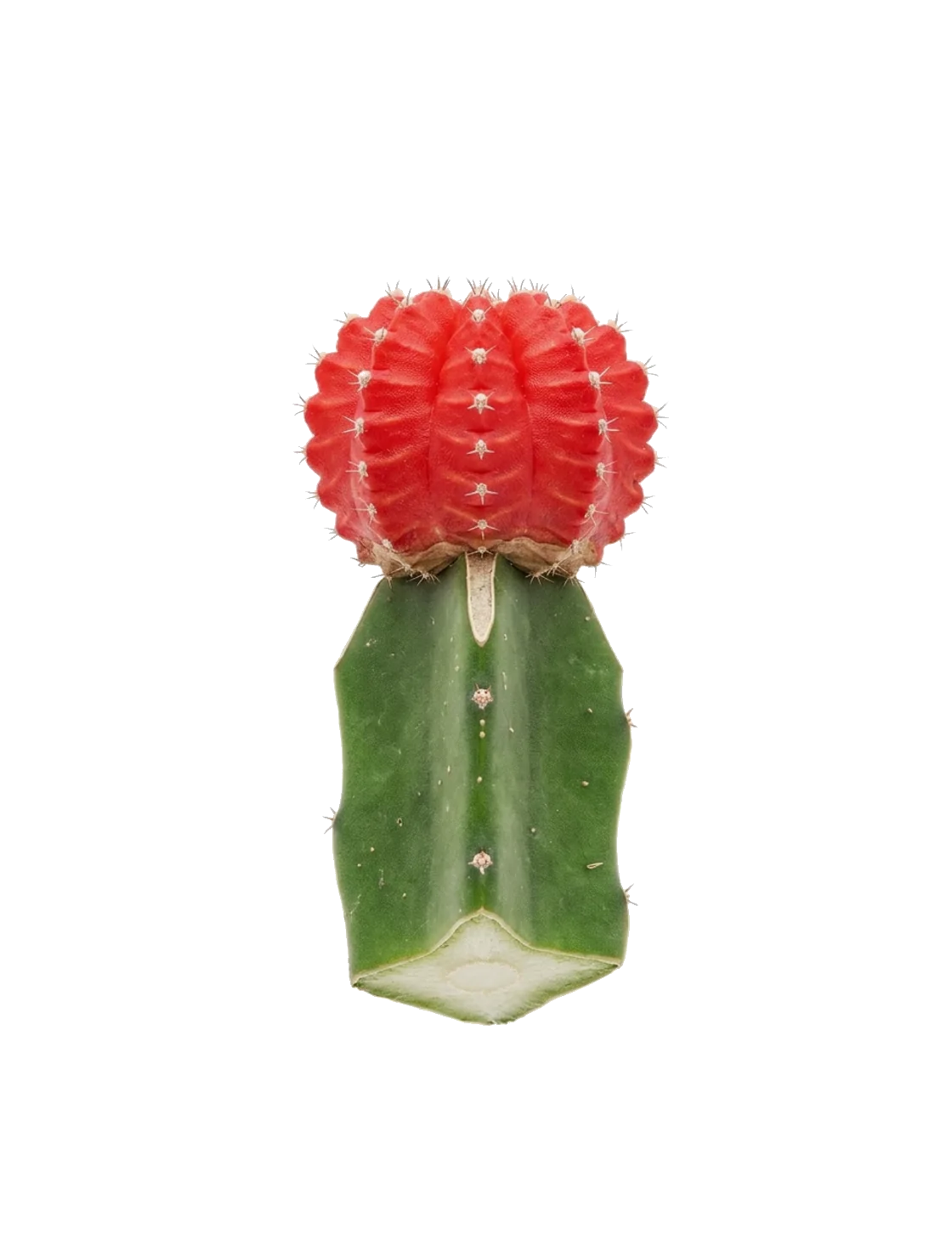
The plant sold as Gymnocalycium mihanovichii, commonly called the moon cactus, is a grafted plant: a bright red, pink, orange or yellow ball with almost no chlorophyll sits on top of a green, fast-growing Hylocereus stock. The wild species comes from northeastern Argentina and Paraguay, where it grows low among grasses and shrubs. The vivid colours are nursery selections that could never survive on their own roots, since the colourful head depends entirely on the stock plant for food.
Indoors it is a compact, bright windowsill plant that keeps its colour best with plenty of filtered light. Strong midday sun can scorch both the coloured head and the green stock, so a sheer curtain or a slightly shaded spot works well. Water sparingly and let the mix dry out fully between waterings, keeping it almost dry through winter. Grafted plants usually live for a few years rather than decades, because the graft union ages faster than a cactus on its own roots.
Flowering on grafted specimens is rare and modest, so the plant is grown for the permanent colour of its head. If the stock sends out side shoots, remove them so all its energy keeps feeding the graft.
Did you know?The red and yellow forms arose as chlorophyll-free seedlings in Japanese nurseries and can only survive grafted onto a green stock.
Care. What it needs, point by point.
- Watering
- 10–15 days between wateringsWater moderately only once the mix is dry all the way through the pot. Every 10 to 15 days in spring and summer is usually enough, dropping to once a month or less in winter. Never let water sit in the saucer and try not to soak the coloured head.
- Light
- Give it plenty of bright but filtered light to hold its colour without scorching. An east-facing sill or a window with a sheer curtain suits it well; harsh midday sun leaves permanent brown marks.
- Temperature
- 18–28 °C ideal temperatureIt grows best between 18 and 28 °C during the growing season. In winter keep it above 10 °C and away from cold draughts, since the graft is sensitive to chill.
- Soil
- Use a very free-draining cactus mix with coarse sand or perlite. The pot must have drainage holes and fit the roots snugly.
- Fertilizer
- Feed once a month in spring and summer with cactus fertiliser at half strength. Do not feed in autumn or winter.
- Pruning
- It needs no pruning except removing any side shoots from the green stock. Cut with a clean tool and let the wound dry before watering again.
- Propagation
- Propagate by detaching offsets from the coloured head once they are big enough to handle. Each offset must be grafted onto a fresh stock, as it cannot survive on its own roots.
Where it grows. In the wild and in homes.
In the wild it grows in southern South America, in a subtropical climate.
Range: Plants of the World Online, Royal Botanic Gardens, Kew
Is Moon cactus toxic to cats and dogs?
The ASPCA doesn't list this species. If your pet has chewed it and seems unwell, call your vet.
Common problems What tends to go wrong.
- Overwatering
- Root rot
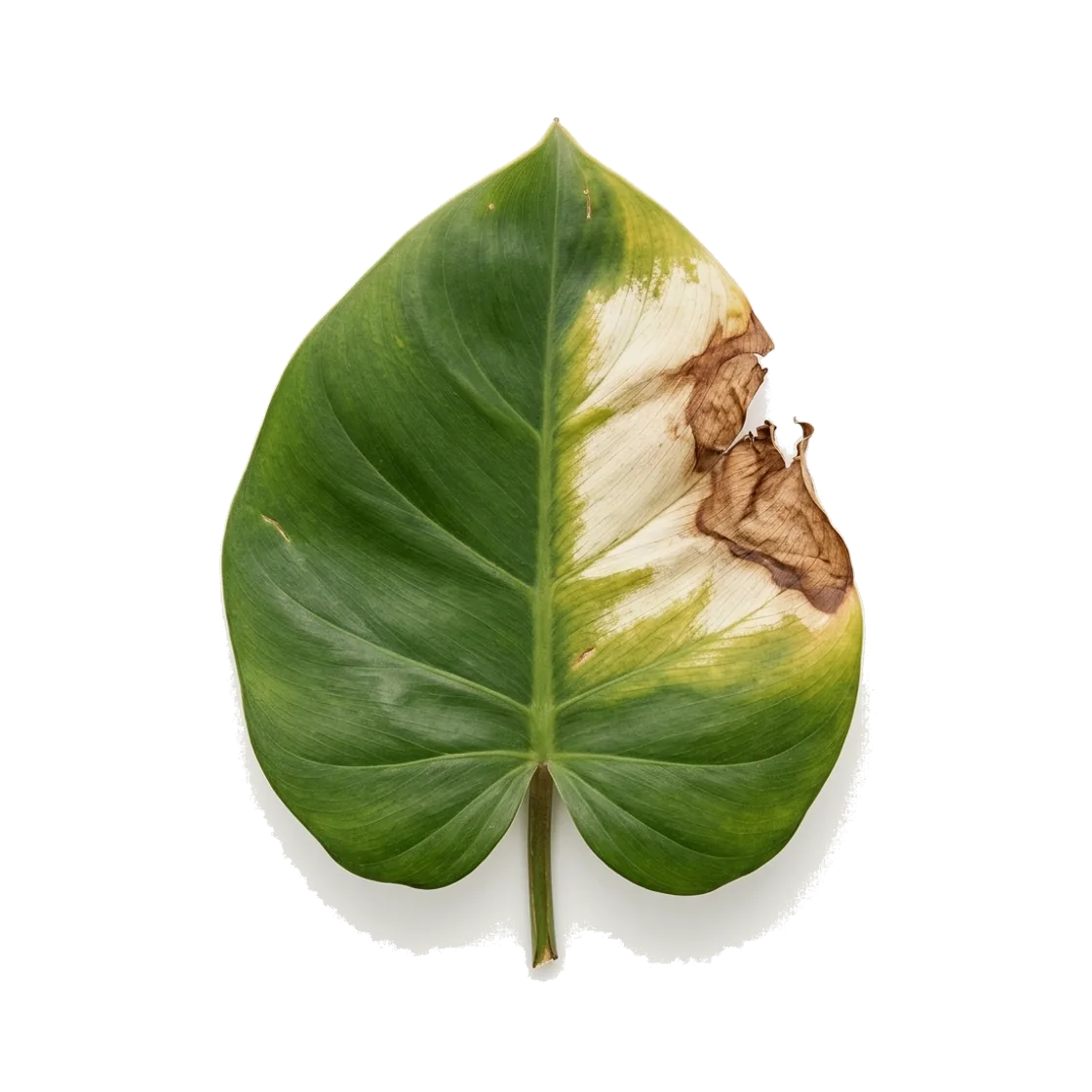
- Sunburn
- Mealybugs and scale



Frequently asked questions What people ask most.
Why is my moon cactus going soft?
Soft, translucent tissue usually means overwatering or rot starting at the base of the stock. Let the mix dry out fully and check that the pot drains freely; if the base is mushy and spreading, the plant rarely recovers.
Why is it losing its bright colour?
Fading colour normally points to too little light, since the head needs plenty of brightness to hold its pigment. Move it to a brighter spot with filtered sun and the tone often deepens again within weeks.
How long do grafted cacti live?
Most moon cacti live for a few years, which is normal for a grafted plant. When the coloured head shrivels or the stock declines, it has simply reached the end of its natural span.
Can I remove the coloured top and root it on its own?
No, the colourful head has almost no chlorophyll and cannot feed itself. It only survives grafted, so offsets must be grafted onto a fresh green stock to grow.
The green stock is sprouting side shoots. What should I do?
Cut the shoots off with a clean blade so the stock directs all its energy into the graft. Left in place, they outgrow the coloured head and weaken it.