Golden barrel cactus
Echinocactus grusonii
Learn how to care for the golden barrel cactus (Echinocactus grusonii): sunlight needs, sparse watering schedule, and ideal soil drainage tips.
- Light
- 6 hof direct sun
- Watering
- 2–3weeks between waterings
- Temperature
- 15–30 °Cideal temperature
- Toxicity
- Non-toxic
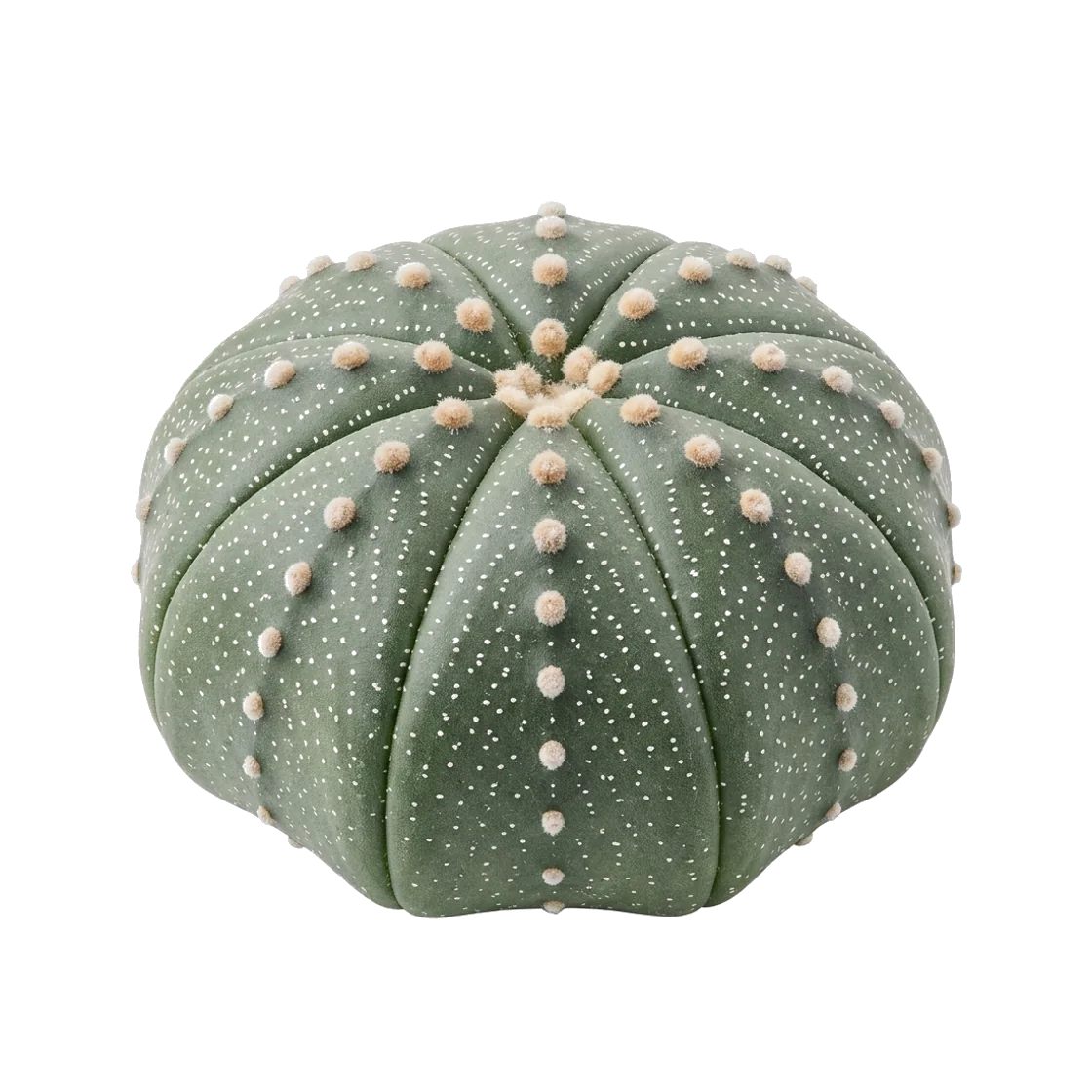
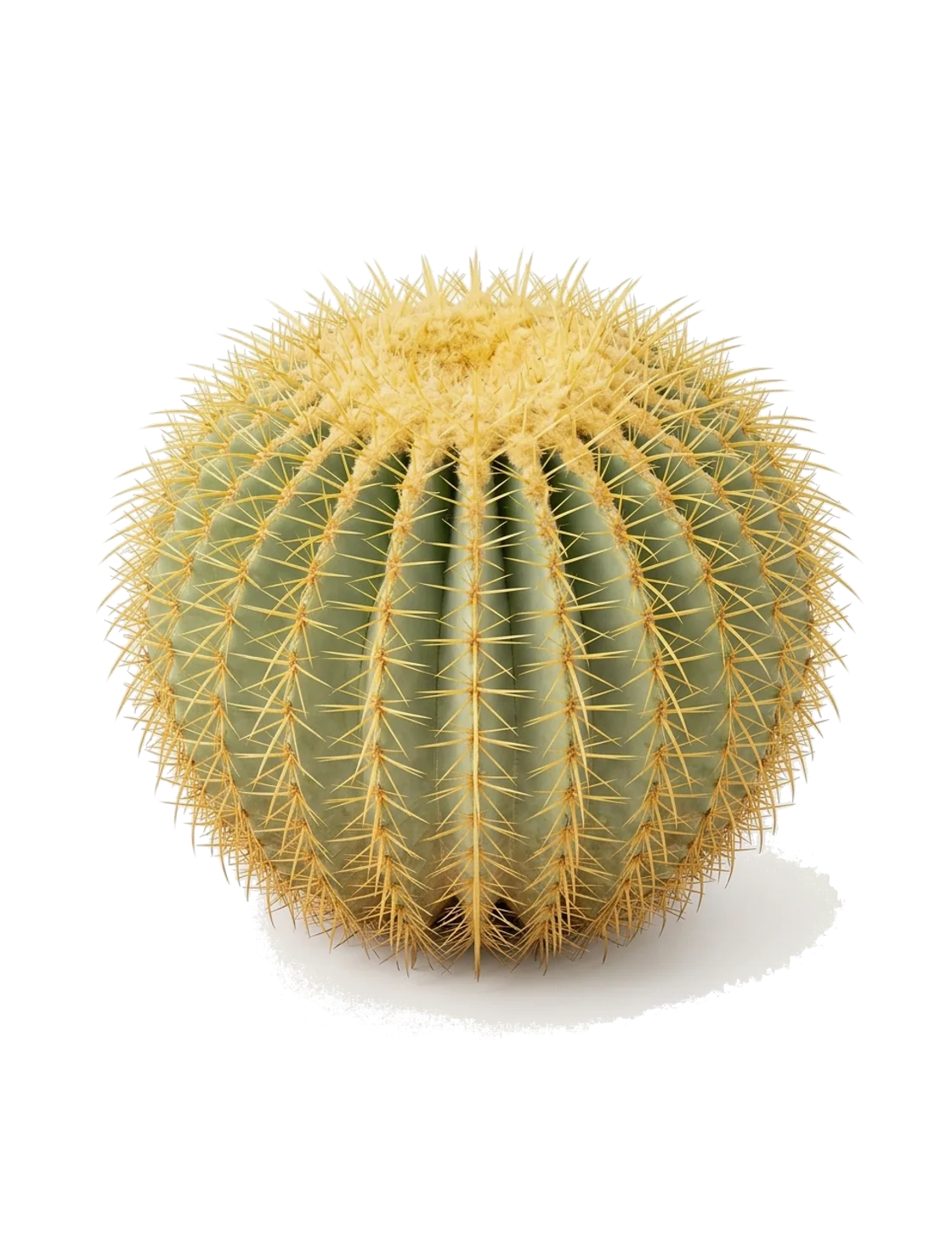
The golden barrel cactus (Echinocactus grusonii) is a celebrated desert specimen known for its pale green spherical body lined with striking yellow spines. Native to the arid canyons of central Mexico, this architectural plant grows slowly over decades, gradually transforming from a small ribbed globe into a prominent ribbed barrel of substantial proportions.
Mature specimens develop pronounced vertical ribs densely covered in clusters of sharp, curved spines that catch the light and provide shade to the succulent stem. In its native habitat, it endures long dry spells by storing moisture within its thick pulp, making it exceptionally drought-tolerant once established in home gardens or patio containers.
Cultivating this cactus is remarkably straightforward provided it receives ample direct sunlight and minimal moisture during the colder months. It thrives in well-aerated, gritty potting mixes and serves as an imposing focal point in xeriscapes, rockeries, or bright indoor sunny spots.
Did you know?Despite being widely propagated and sold in nurseries worldwide, wild populations of this cactus are critically endangered in their native habitat.
Care. What it needs, point by point.
- Watering
- 2–3 weeks between wateringsWater thoroughly only when the soil has dried out completely from top to bottom. During spring and summer, watering once every two to three weeks is typically sufficient, while in winter watering should cease almost entirely.
- Light
- 6 h of direct sunProvide at least six hours of full, direct sunlight every day to preserve its compact shape and golden coloration. In indoor settings, place it directly on an unobstructed south-facing windowsill.
- Temperature
- 15–30 °C ideal temperatureIt grows best between 15 °C and 30 °C during the active growing season. It can tolerate dry winter temperatures down to 5 °C, but prolonged freezing conditions should be avoided.
- Soil
- Plant in a gritty, fast-draining cactus and succulent mix amended with coarse sand, pumice, or perlite.
- Fertilizer
- Feed lightly once a month during late spring and early summer using a low-nitrogen cactus fertilizer.
- Pruning
- Pruning is not necessary for this species. Simply clear away old, dried flowers or debris from between the spines using a pair of tweezers.
- Propagation
- Propagation is performed primarily by sowing seeds in warm, sandy substrate in late spring. Seedlings develop slowly and must be handled with care until they establish their initial rib structure.
Where it grows. In the wild and in homes.
In the wild it grows in Mexico, in a desert or dry shrubland climate.
Range: Plants of the World Online, Royal Botanic Gardens, Kew
Is Golden barrel cactus toxic to cats and dogs?
The ASPCA doesn't list this species. If your pet has chewed it and seems unwell, call your vet.
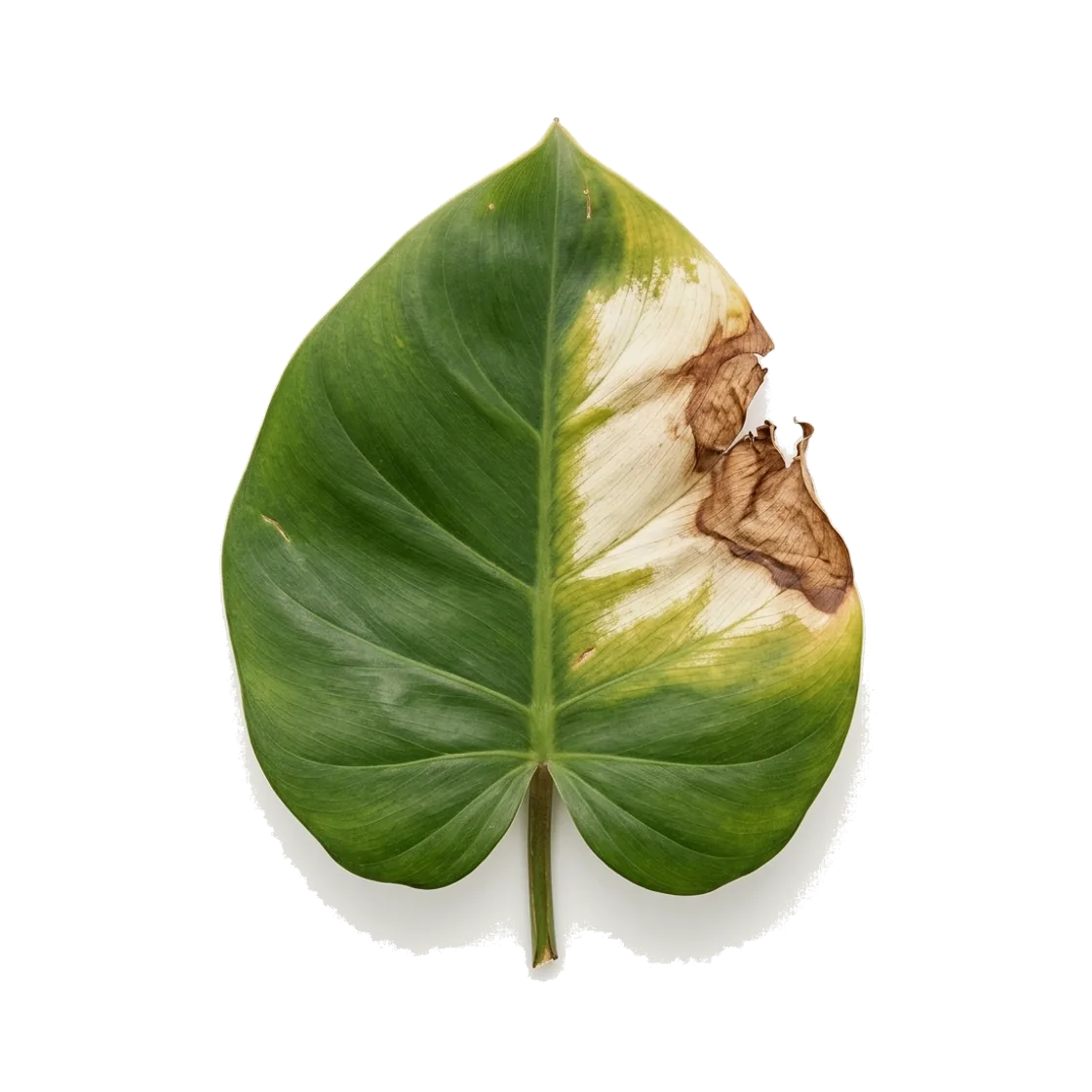
Common problems What tends to go wrong.
- Root rot
- Overwatering
- Mealybugs and scale
- Too little light
- Sunburn
- Cold damage





Frequently asked questions What people ask most.
Why is the base of my golden barrel cactus turning soft?
Soft tissue at the base usually indicates root rot caused by overwatering or dense, moisture-retentive soil. Stop watering immediately, inspect the root zone for decay, and allow the potting mix to dry out fully.
How long does it take for a golden barrel cactus to flower?
This slow-growing species rarely blooms before reaching fifteen to twenty years of age. Once fully mature, it produces bright yellow flowers around its crown during the summer months.
Why is my cactus stretching and losing its round shape?
This condition, known as etiolation, happens when the plant receives insufficient direct sunlight and stretches upward toward the light. Move the cactus gradually to a brighter, sunnier spot to encourage healthy growth.
How often does it need to be repotted?
Because it grows gradually, repotting is only necessary every three to four years or when it fills its pot. Wrap folded cardboard or a thick towel around the barrel to safely handle the plant without damaging the spines.