San Pedro cactus
Echinopsis pachanoi
Learn how to care for the San Pedro cactus (Echinopsis pachanoi): watering guidelines, sunlight needs, soil mix, and simple propagation tips.
- Light
- 6 hof direct sun
- Watering
- 10–14days between waterings
- Temperature
- 18–28 °Cideal temperature
- Toxicity
- Non-toxic
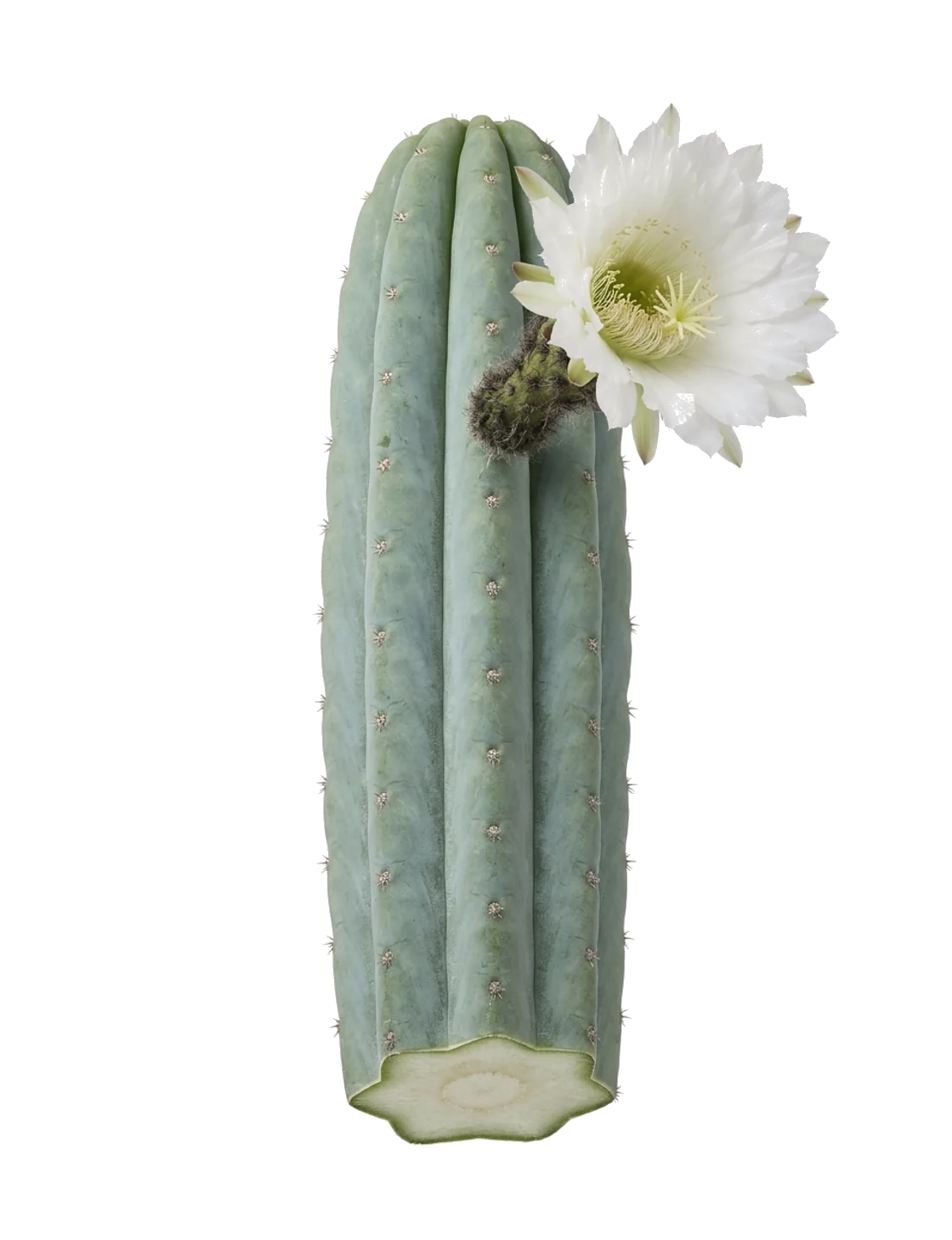
The San Pedro cactus, scientifically classified as Echinopsis pachanoi (syn. Trichocereus pachanoi), is a columnar succulent native to the Andean mountains of South America. It is recognized for its sturdy, bluish-green stems that branch freely from the base and can reach impressive heights in open ground. The stems feature prominent, rounded ribs bearing aeroles with small, often inconspicuous spines compared to other desert cacti.
Unlike many slow-growing desert species, the San Pedro is surprisingly vigorous when provided with ample sunlight, warmth, and adequate nutrition during the growing season. Mature specimens produce majestic, nocturnal white flowers in mid-to-late summer. These blooms open at dusk, exude a delicate sweet fragrance, and typically close by the following morning.
This species is remarkably adaptable and thrives in deep containers, on sunny patios, or in xeriscape garden beds. Caring for it is straightforward: provide excellent drainage, protect it from freezing wet conditions in winter, and adjust watering according to seasonal temperatures to keep it healthy for decades.
Did you know?Its huge nocturnal flowers can measure over eight inches across and are pollinated by moths and bats in the wild.
Care. What it needs, point by point.
- Watering
- 10–14 days between wateringsWater thoroughly every ten to fourteen days during spring and summer, ensuring the soil is completely dry before applying water again. Stop watering almost entirely during winter dormancy to protect the root system.
- Light
- 6 h of direct sunIt demands full direct sunlight for at least six hours a day to maintain a strong, thick column. Indoor specimens need your brightest south-facing windowsill to avoid stretching.
- Temperature
- 18–28 °C ideal temperatureMaintains optimal growth between 18 °C and 28 °C during spring and summer. It can tolerate winter lows down to 2 °C or 3 °C if the potting mix remains completely bone-dry.
- Soil
- Plant in a gritty cactus mix containing pumice, coarse sand, and perlite to guarantee rapid drainage.
- Fertilizer
- Feed with a low-nitrogen cactus fertilizer once a month from early spring through late summer.
- Pruning
- Routine pruning is unnecessary, except to remove damaged sections or take cuttings for propagation.
- Propagation
- Easily propagated by stem cuttings that are allowed to callous over in the shade for ten days before potting. It can also be grown from fresh seeds sown in a warm, bright propagation tray.
Where it grows. In the wild and in homes.
In the wild it grows in western South America, in a seasonally dry tropical climate.
People have also taken it to 5 more regions where it now grows on its own: South and Central America and the Caribbean, Africa, and Europe.
Range: Plants of the World Online, Royal Botanic Gardens, Kew
Is San Pedro cactus toxic to cats and dogs?
The ASPCA doesn't list this species. If your pet has chewed it and seems unwell, call your vet.
Gallery As the community sees it.
Photo · Forest & Kim Starr · CC BY 3.0
Common problems What tends to go wrong.
- Root rot
- Overwatering
- Too little light
- Mealybugs and scale
- Cold damage





Frequently asked questions What people ask most.
Why is the top of my San Pedro cactus becoming thin and pale?
This thinning is known as etiolation and is caused by insufficient light. Gradually introduce the cactus to stronger direct sunlight so new growth develops with its characteristic thickness.
What causes the base of the cactus to feel soft or turn brown?
A squishy base is typically a sign of root rot caused by overwatering or compacted soil. Unpot the cactus immediately, cut away any rotten tissue, let the cut heal, and repot in dry, gritty substrate.
When does a San Pedro cactus bloom?
Flowering occurs in mature plants during mid-to-late summer under optimal sunlight and warm temperatures. The massive white blossoms open after sunset and usually wilt under direct morning heat.
How do you take cuttings from this cactus?
Use a clean, sharp knife to slice off a stem section horizontally. Place the cutting in a dry, shaded location for about a week to let the cut end form a tough callous before potting it up.