Spiny pincushion cactus
Mammillaria spinosissima
Care guide for the spiny pincushion cactus (Mammillaria spinosissima): watering schedule, bright light needs, gritty soil mix, and winter resting tips.
- Light
- 6 hof direct sun
- Temperature
- 18–28 °Cideal temperature
- Toxicity
- Non-toxic
- Difficulty
- Easy
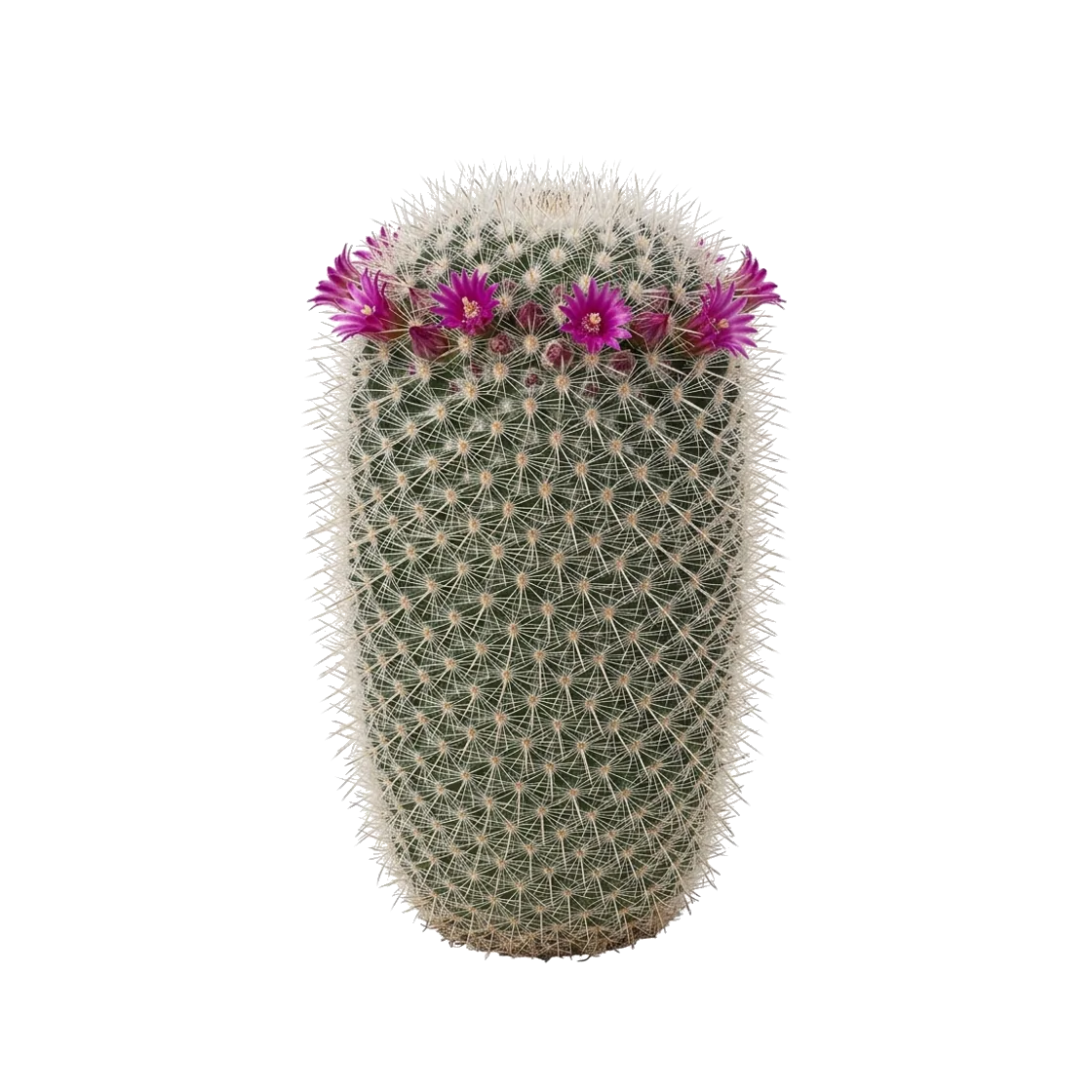
Mammillaria spinosissima, commonly known as the spiny pincushion cactus, is native to the central mountains of Mexico. It features an attractive cylindrical stem densely covered in fine, bristly spines that vary from golden yellow and reddish-copper to pure white depending on the cultivar. Over time, mature plants often produce basal offsets, developing into charming, dense clusters.
One of the greatest highlights of this species is its flowering cycle. In late winter to mid-spring, rings of vivid magenta or bright pink flowers emerge around the crown of the stem, forming a vibrant floral wreath. To initiate these blooms, the cactus requires a dry, cool winter dormancy period that mimics its natural seasonal rhythm.
Highly resilient and forgiving, this cactus is an excellent candidate for sunny windowsills, desert bowls, or outdoor rockeries in mild climates. Provided it receives abundant sunlight, a gritty, free-draining soil mix, and careful watering, it will thrive for decades with very little intervention.
Did you know?One of its best-known forms is nicknamed the 'Red-headed Irishman' due to its striking copper-red spines.
Care. What it needs, point by point.
- Watering
- Water thoroughly only after the soil has dried out completely from top to bottom during spring and summer. Withhold water entirely throughout the winter months to protect against root rot.
- Light
- 6 h of direct sunProvide at least six hours of direct sunlight each day to maintain a tight, compact shape and rich spine color. Indoors, position it directly on your brightest south-facing windowsill.
- Temperature
- 18–28 °C ideal temperatureIt thrives in temperatures between 18°C and 28°C during the active growing season. It tolerates winter drops down to 5°C, provided the potting mix remains bone dry.
- Soil
- Plant in a gritty cactus mix formulated with at least 60% inorganic materials like pumice, perlite, or volcanic gravel. Rapid drainage is essential to protect its root system.
- Fertilizer
- Feed with a diluted, low-nitrogen cactus fertilizer once a month from mid-spring through mid-summer. Cease feeding completely during autumn and winter.
- Pruning
- No pruning is necessary. Simply remove faded flowers or dried debris using tweezers to keep the plant clean and deter fungal issues.
- Propagation
- Propagate by carefully detaching offsets from the base of the mother plant in spring. Allow the cut surface to callus for several days before potting it in dry, gritty substrate.
Where it grows. In the wild and in homes.
In the wild it grows in Mexico, in a desert or dry shrubland climate.
Range: Plants of the World Online, Royal Botanic Gardens, Kew
Is Spiny pincushion cactus toxic to cats and dogs?
The ASPCA doesn't list this species. If your pet has chewed it and seems unwell, call your vet.
Gallery As the community sees it.
Photo · Peter A. Mansfeld · CC BY 3.0
Common problems What tends to go wrong.
- Root rot
- Mealybugs and scale
- Too little light
- Overwatering
- Cold damage





Frequently asked questions What people ask most.
Why is my cactus stretching and losing its round shape?
Stretching, or etiolation, happens when the plant does not receive enough direct sunlight. Gradually move the cactus to a brighter spot so new growth remains dense and compact.
How do I get my spiny pincushion cactus to bloom?
Encouraging blooms requires a proper winter rest period in a cool, bright location with zero water from late autumn to early spring. Resuming gentle watering as temperatures rise triggers bud formation around the crown.
Why is the base of the cactus turning soft and brown?
A soft base is almost always a sign of root and stem rot caused by overwatering or poorly draining soil. Withhold water immediately, inspect the roots, and consider propagating any healthy, firm top tissue if the base cannot be saved.
How often should it be repotted?
Repot every two to three years in early spring when roots fill the pot or offsets outgrow the container. Always choose a pot with drainage holes that is only slightly larger than the previous one.