Cotton lavender
Santolina chamaecyparissus
Cotton lavender: silvery Mediterranean shrub with yellow button flowers. Watering, sun, pruning and cuttings for dry, sunny gardens all year round.
- Light
- 6 hof direct sun
- Temperature
- 15–28 °Cideal temperature
- Toxicity
- Non-toxic
- Difficulty
- Easy
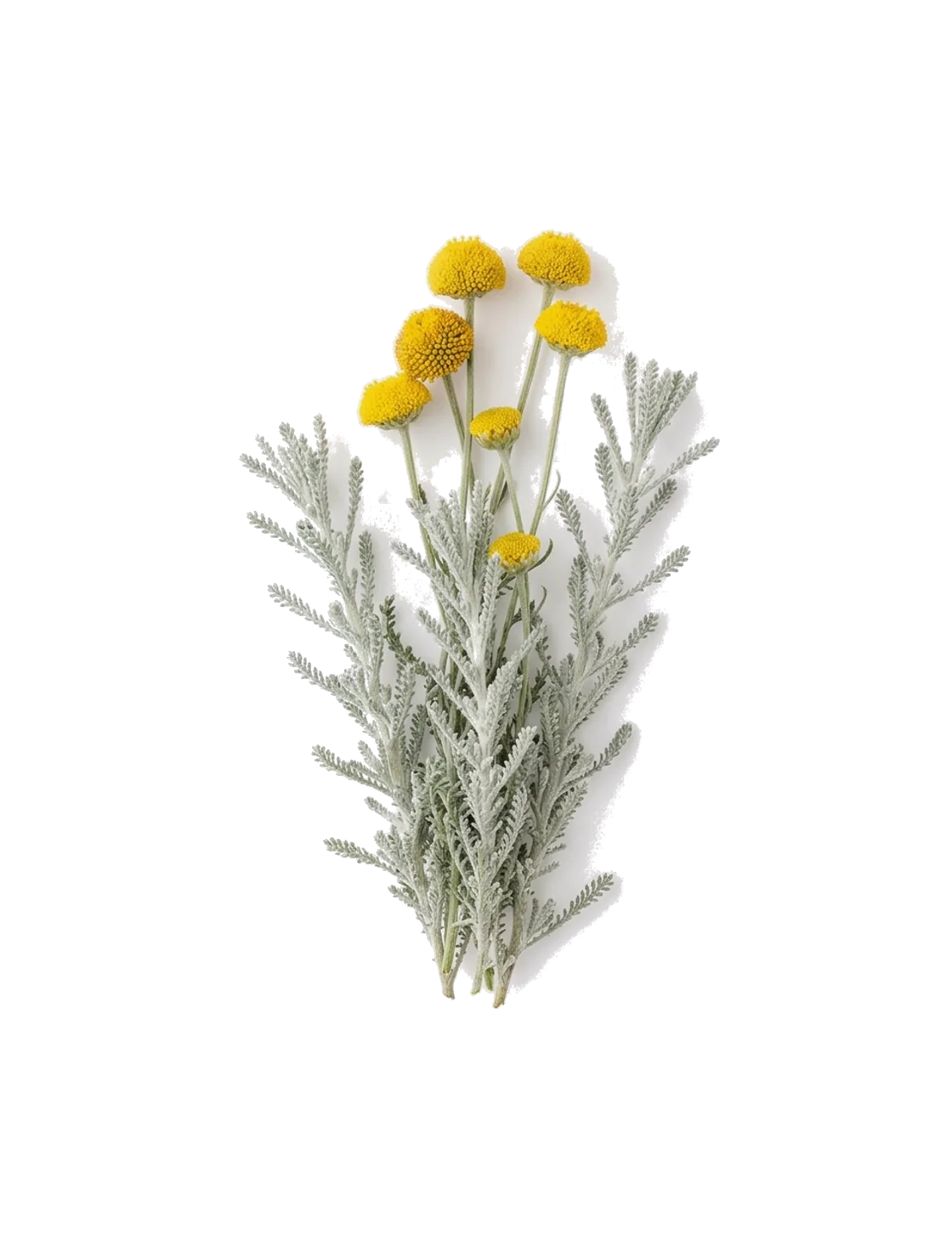
Cotton lavender (Santolina chamaecyparissus) is a perennial shrub grown for its silvery grey, finely divided foliage that looks like a miniature cypress. Native to the western Mediterranean, it forms dense rounded mounds that stay evergreen through the year and bring structure and contrast to borders, rock gardens and low-maintenance dry plantings.
In summer it bears masses of deep yellow button flowers held above the foliage, drawing bees and other pollinating insects to the garden. The leaves release a strong scent when brushed, so it works well along path edges and steps where people pass by. Once established it copes with drought, wind and poor soils, although a yearly trim after flowering keeps the mound compact and stops it from opening up in the middle.
It is easy to grow given full sun and sharply drained soil, even sandy or stony ground, since waterlogging is its main enemy. Established plants need very little watering and withstand moderate frosts down to about -10 °C. In pots it thrives on sunny terraces as long as the container drains freely and the compost dries out between waterings.
Did you know?Its finely divided grey leaves look like a miniature cypress, which is exactly what its species name means.
Care. What it needs, point by point.
- Watering
- Water young plants regularly during their first summer until they root deeply. Afterwards, water only during long dry spells and always let the soil dry out between waterings.
- Light
- 6 h of direct sunIt needs full sun for at least six hours a day to keep the foliage dense and silvery. In shade it stretches, loses colour and flowers poorly.
- Temperature
- 15–28 °C ideal temperatureIt grows best between 15 °C and 28 °C and tolerates moderate frosts down to about -10 °C. In very cold areas, protect potted plants from frozen, waterlogged compost.
- Soil
- It wants poor, sharply drained soil, even sandy or stony ground. Heavy clay that holds water in winter must be lightened with coarse sand or gravel.
- Fertilizer
- It barely needs feeding; a light dressing of compost in spring is plenty. Too much nitrogen produces soft growth that flops open.
- Pruning
- Trim lightly after flowering to remove spent blooms and keep the mound rounded. Cut back straggly stems in early spring, never into old bare wood.
- Propagation
- Take semi-ripe cuttings in late summer and root them in sandy compost with gentle humidity. New plants also establish quickly from rooted layers taken in spring.
Where it grows. In the wild and in homes.
In the wild it grows in southeastern Europe, in a temperate climate.
People have also taken it to 27 more regions where it now grows on its own: Europe, North America, South and Central America and the Caribbean, and Africa.
Range: Plants of the World Online, Royal Botanic Gardens, Kew
Is Cotton lavender toxic to cats and dogs?
The ASPCA doesn't list this species. If your pet has chewed it and seems unwell, call your vet.
Common problems What tends to go wrong.
- Root rot
- Overwatering
- Too little light
- Aphids




Frequently asked questions What people ask most.
Why is my cotton lavender opening up in the middle?
Mounds open up when stems grow too long and flop, usually from soft growth or missed trims. Shear the plant lightly after flowering and again in early spring to keep it dense. Replace very old woody specimens, since they rarely recover.
How often should I water cotton lavender?
Water newly planted shrubs through their first summer so roots establish well. After that, water only in prolonged drought; established plants prefer dry soil. If leaves turn brown and soft at the base, the soil is staying wet for too long.
Should I deadhead the yellow flowers?
Removing spent flower heads keeps the mound tidy and often encourages a second, lighter flush. It also stops self-seeding where you do not want seedlings. Leave a few heads if you like their winter shape or want seeds.
Can I grow cotton lavender in a pot?
Yes, it does well in pots on sunny terraces if the container has large drainage holes. Use a gritty, low-fertility mix and let it dry between waterings. Raise pots on feet in winter so rain drains away freely.