Watermelon
Citrullus lanatus
How to grow watermelon at home: full sun, steady watering, pollination and perfect ripeness for big sweet juicy fruits step by step. Full practical guide.
- Light
- 8 hof direct sun
- Temperature
- 22–30 °Cideal temperature
- Toxicity
- Non-toxic
- Difficulty
- Medium
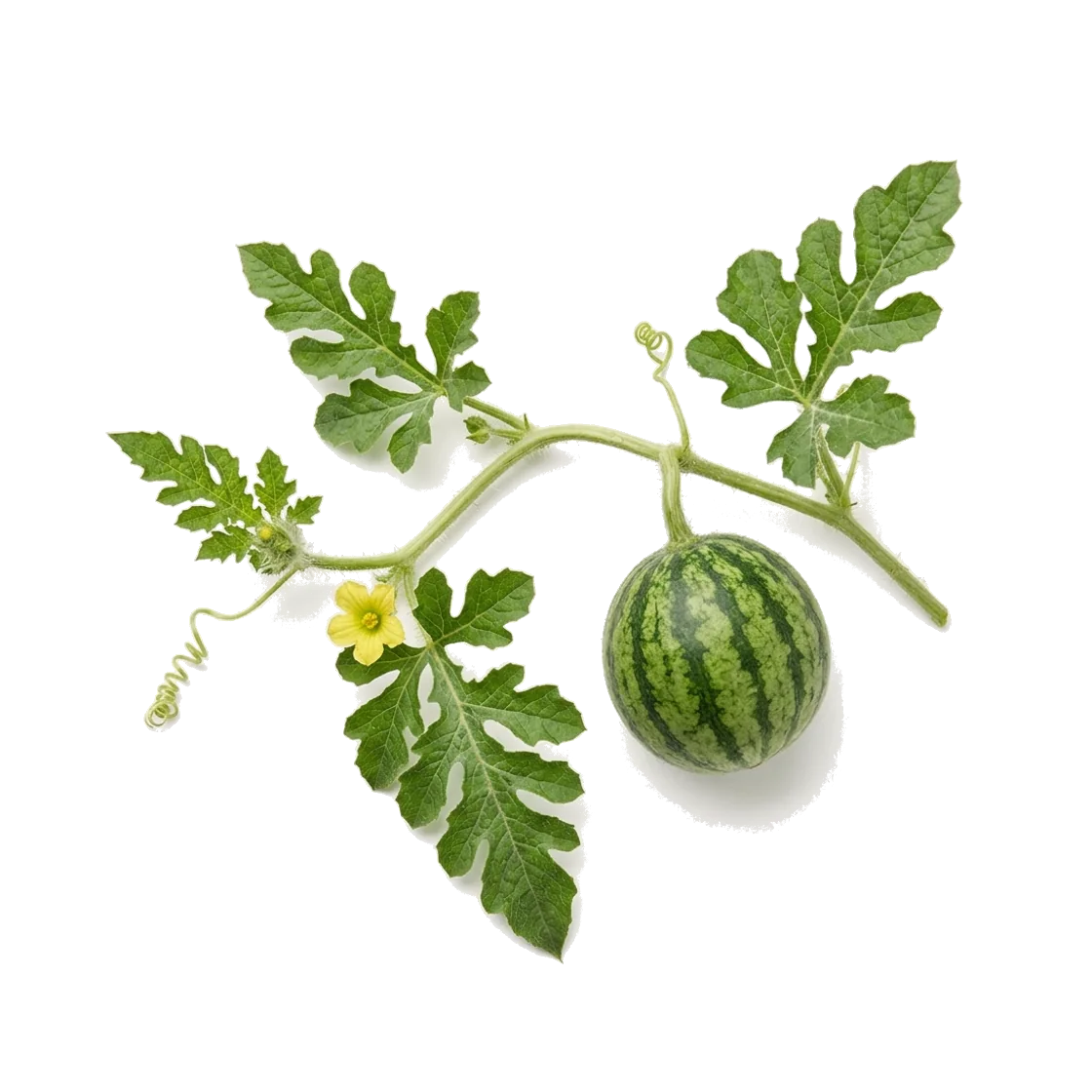
Watermelon (Citrullus lanatus) is the great summer fruit of the vegetable garden, with large, juicy, sweet flesh that is mostly water and brilliant red or yellow depending on the variety. It belongs to the Cucurbitaceae family and grows as vigorous trailing vines with lobed leaves, yellow flowers and fruits that can weigh several kilos. It is a sun-loving crop that rewards ample space with generous harvests at the height of summer.
It comes from warm regions of Africa, where wild and cultivated forms have been grown for thousands of years before spreading around the Mediterranean and the world. Modern types include seeded, seedless, early and long-keeping varieties, plus compact forms for smaller gardens. In home plots it is grown on mounds or ridges, letting vines sprawl or training them onto strong supports with slings for the fruits.
Success depends on heat, sun, steady water while fruits swell, and restraint at ripening so flavor concentrates. Fruits are picked when the nearest tendril dries, the rind loses its shine, and a tap gives a deep hollow sound. With two to four fruits per plant well ripened on the vine, flavor easily surpasses anything stored and transported.
Did you know?Watermelon is about 90 percent water by weight, and its rind turns from glossy to dull while the nearest tendril dries as it ripens.
Care. What it needs, point by point.
- Watering
- Water deeply and regularly while vines grow and fruits swell, keeping the soil evenly moist but never flooded. Once fruits near full size, reduce watering so sugars concentrate and flesh stays firm. Always water at the base and avoid wetting leaves and fruits.
- Light
- 8 h of direct sunIt needs full sun all day, at least eight hours, for sweet fruits. Shade gives long vines with small, watery melons.
- Temperature
- 22–30 °C ideal temperatureWatermelon needs heat: it grows best between 22 and 30 °C and germinates above 18 °C. Cold below 12 °C stops growth, so sow only when nights are reliably mild.
- Soil
- pH 6.0–7.0It wants deep, loose, sandy-loam soil rich in organic matter, with pH between 6.0 and 7.0. Raised mounds warm faster and drain better in heavy soils.
- Fertilizer
- 2 weeks between feedsWatermelon is a heavy feeder during growth and fruiting. Work generous compost into the planting hole and feed lightly every two weeks once fruits set, easing off at ripening.
- Pruning
- Pruning is light: pinch the main tip after the fourth or fifth leaf to encourage side shoots. Remove misshapen or excess fruitlets so each plant ripens two to four melons.
- Propagation
- Watermelon is grown from seed sown in warm soil or from nursery transplants with undisturbed roots. Sow 2 cm deep in mounds and keep two strong seedlings per mound.
Where it grows. In the wild and in homes.
In the wild it grows in northern Africa and northeast tropical Africa, in a seasonally dry tropical climate.
People have also taken it to 168 more regions where it now grows on its own: Africa, North America, South and Central America and the Caribbean, and temperate Asia.
Range: Plants of the World Online, Royal Botanic Gardens, Kew
Is Watermelon toxic to cats and dogs?
The ASPCA doesn't list this species. If your pet has chewed it and seems unwell, call your vet.
Common problems What tends to go wrong.
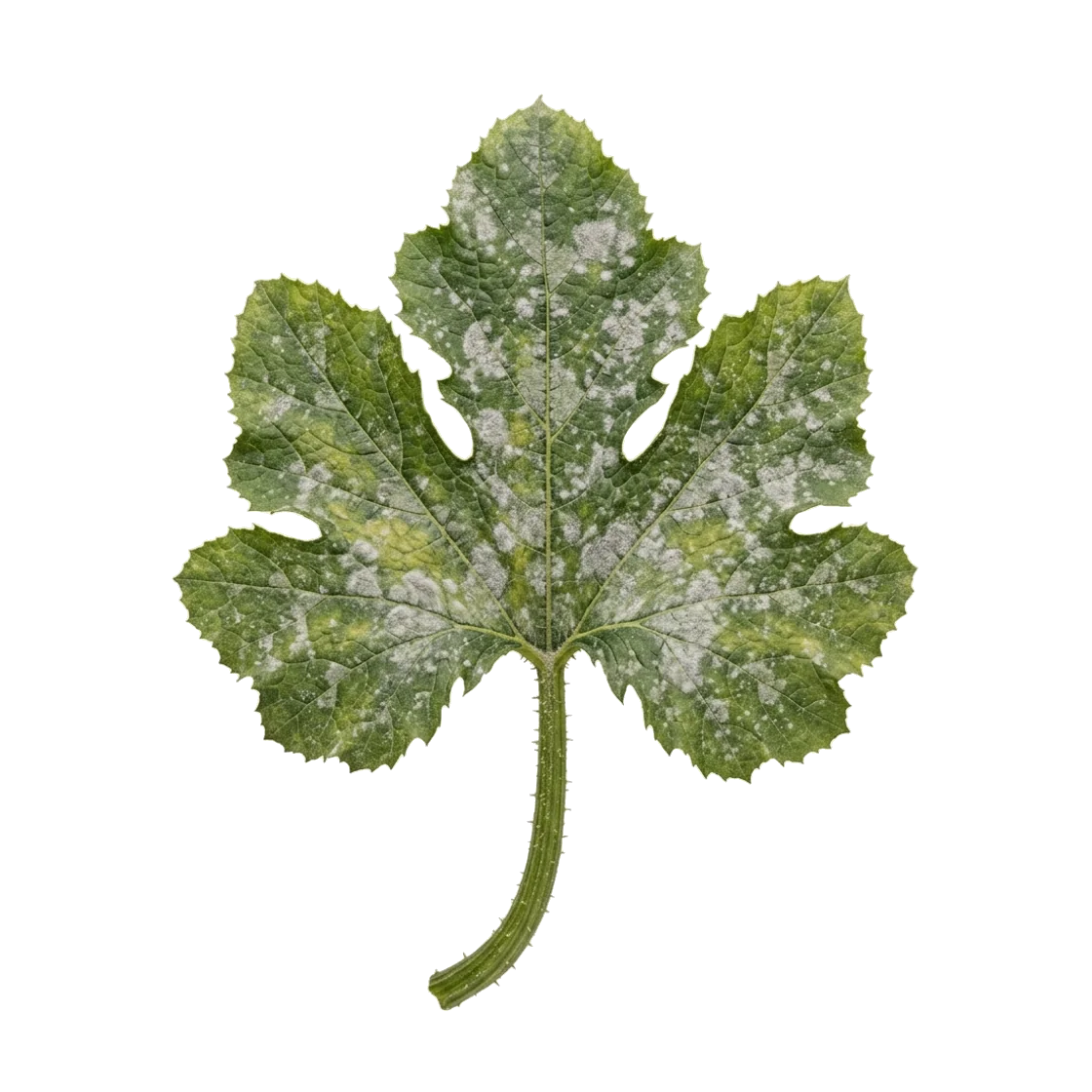
- Powdery mildew
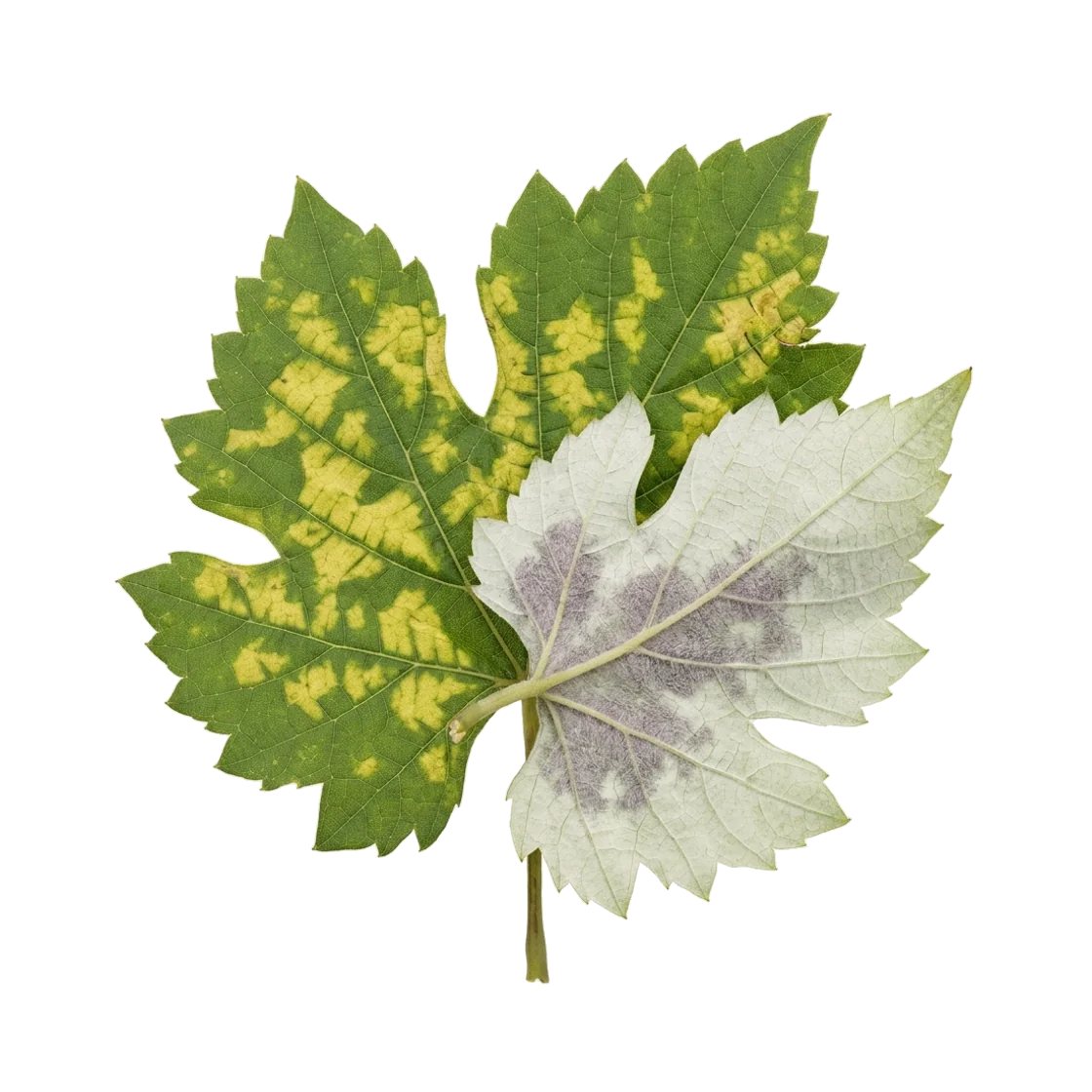
- Downy mildew
- Aphids
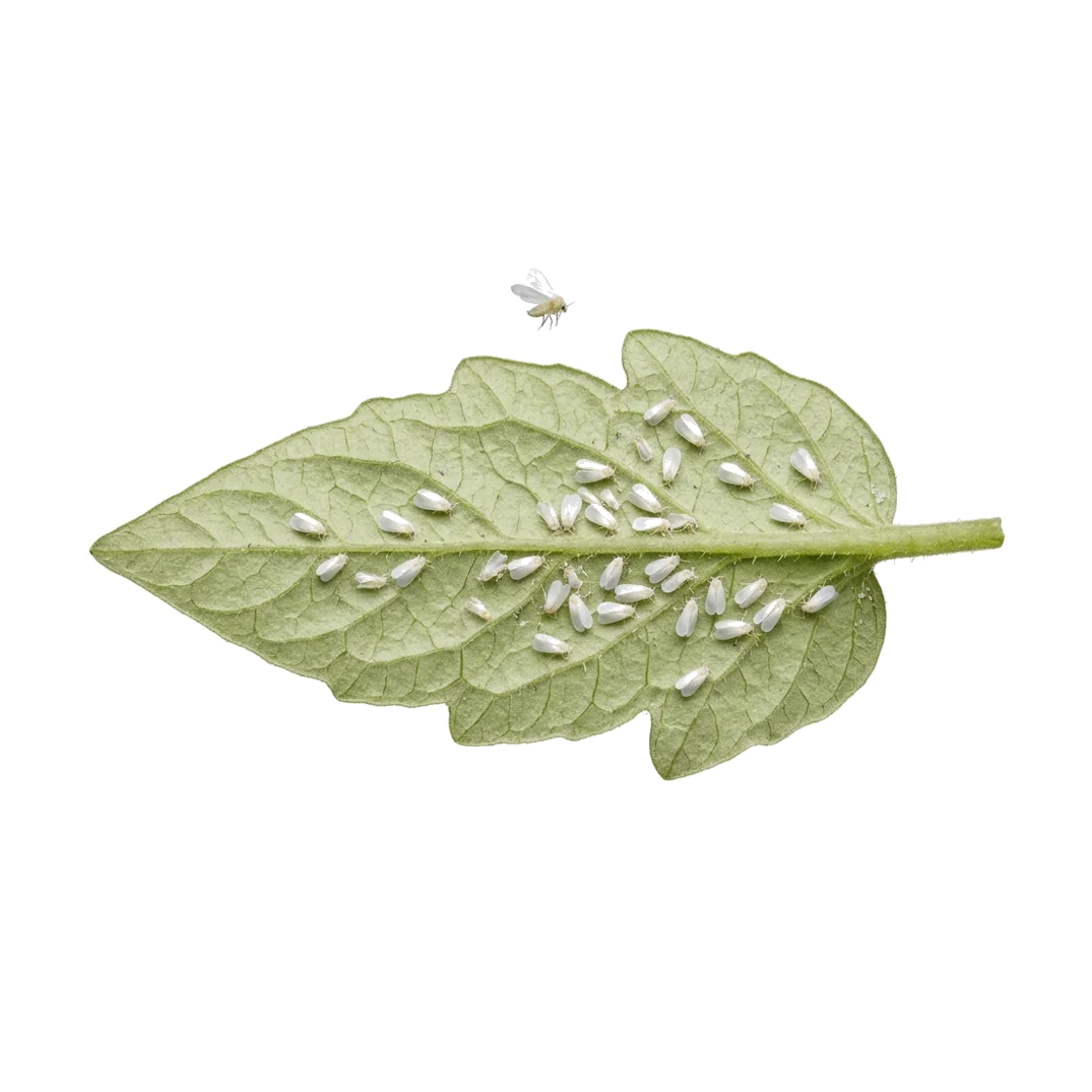
- Whitefly

Frequently asked questions What people ask most.
How often should I water watermelon?
Water deeply two or three times a week while vines grow and fruits swell, keeping moisture steady. When fruits approach full size, cut back so sugars concentrate and flesh does not turn watery.
How do I know when a watermelon is ripe?
Look for three signs together: the nearest tendril dry, the rind turning dull, and a deep hollow sound when tapped. The ground spot also shifts from white to creamy yellow at ripeness.
Why do watermelon flowers fall without fruit?
The first flowers are male and naturally fall; female flowers with a small swelling behind them need pollination. Encourage bees, avoid spraying in bloom, and plant at least two vines for better fruit set.
Why do watermelons crack or taste bland?
Cracking and bland flesh usually come from irregular watering or harvest before ripeness. Keep watering even, reduce it at the end, and pick only when all ripeness signs coincide.
Can I grow watermelon in a small garden?
Yes, with compact or mini varieties, one plant per large mound and vertical training on a sturdy trellis. Support each fruit with a sling and limit the plant to two or three melons.