Polka dot plant
Hypoestes phyllostachya
Polka dot plant (Hypoestes phyllostachya) care: watering, light and pinching tips for colourful spotted leaves in the home all year with ease.
- Light
- Indirect
- Watering
- 2–3days between waterings
- Temperature
- 18–27 °Cideal temperature
- Pets
- Non-toxic
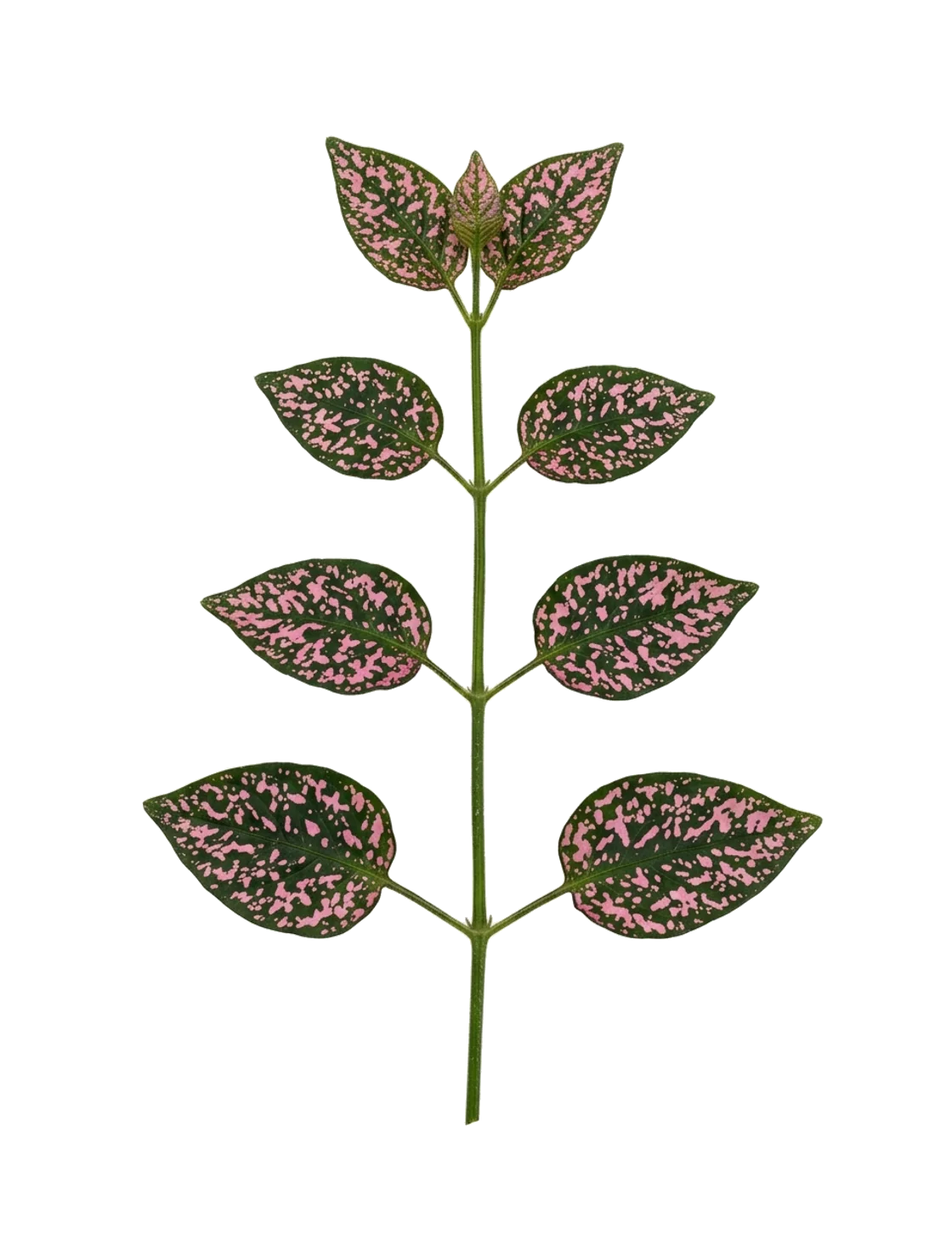
Polka dot plant (Hypoestes phyllostachya) is a small foliage plant famous for green leaves splashed with pink, white or red spots. It belongs to the Acanthaceae family and comes from Madagascar, where it grows as a perennial herb in lightly shaded forest clearings. In temperate climates it is grown as a houseplant or as a seasonal annual for summer bedding.
It needs bright, indirect light to keep the spots contrasting, because in dim light the leaves turn greener and the stems stretch. Water when the top layer of soil dries, keeping moisture even without waterlogging. It prefers warm rooms, between 18 and 27 °C, with good humidity and no cold.
It tends to grow leggy over time, so pinch the tips regularly to keep it bushy. Its tiny lilac flowers are unremarkable, and many growers remove them so the plant puts its energy into foliage. It is an affordable, fast-growing plant, ideal for adding colour to desks and bright shelves near a window.
Did you know?Varieties come with pink, red or white spots, and all descend from wild populations in Madagascar.
Care. What it needs, point by point.
- Watering
- 2–3 days between wateringsWater when the top layer of soil feels dry, keeping moisture even without waterlogging. In summer it may need water every two or three days, as it dries out fast. Water less often in winter, without letting it dry out completely.
- Light
- IndirectIt needs bright, indirect light to keep the spots on its leaves. Direct sun scorches the edges, while deep shade dulls the colours.
- Temperature
- 18–27 °C ideal temperatureIt grows well between 18 and 27 °C and suffers below 15 °C. Keep it away from cold drafts, exterior doors and heaters.
- Soil
- Use a loose, free-draining universal mix with some perlite. It needs no special blend, but appreciates organic matter.
- Fertilizer
- 2–4 weeks between feedsFeed every two to four weeks in spring and summer with diluted liquid fertilizer. It needs no feeding in autumn and winter.
- Pruning
- Pinch the stem tips regularly so it branches and stays compact. Also remove flower spikes and any damaged leaves.
- Propagation
- It propagates easily from stem cuttings placed in water or damp potting mix. They root within one or two weeks in gentle warmth.
Where it grows. In the wild and in homes.
In the wild it grows in the western Indian Ocean islands, in a wet tropical climate.
People have also taken it to 18 more regions where it now grows on its own: South and Central America and the Caribbean, tropical Asia, North America, and Australasia.
Range: Plants of the World Online, Royal Botanic Gardens, Kew
Is Polka dot plant toxic to cats and dogs?
Non-toxic to cats and dogs.

Cats
Non-toxic

Dogs
Non-toxic
Source · ASPCA Animal Poison Control
Common problems What tends to go wrong.
- Too little light
- Overwatering
- Dry air
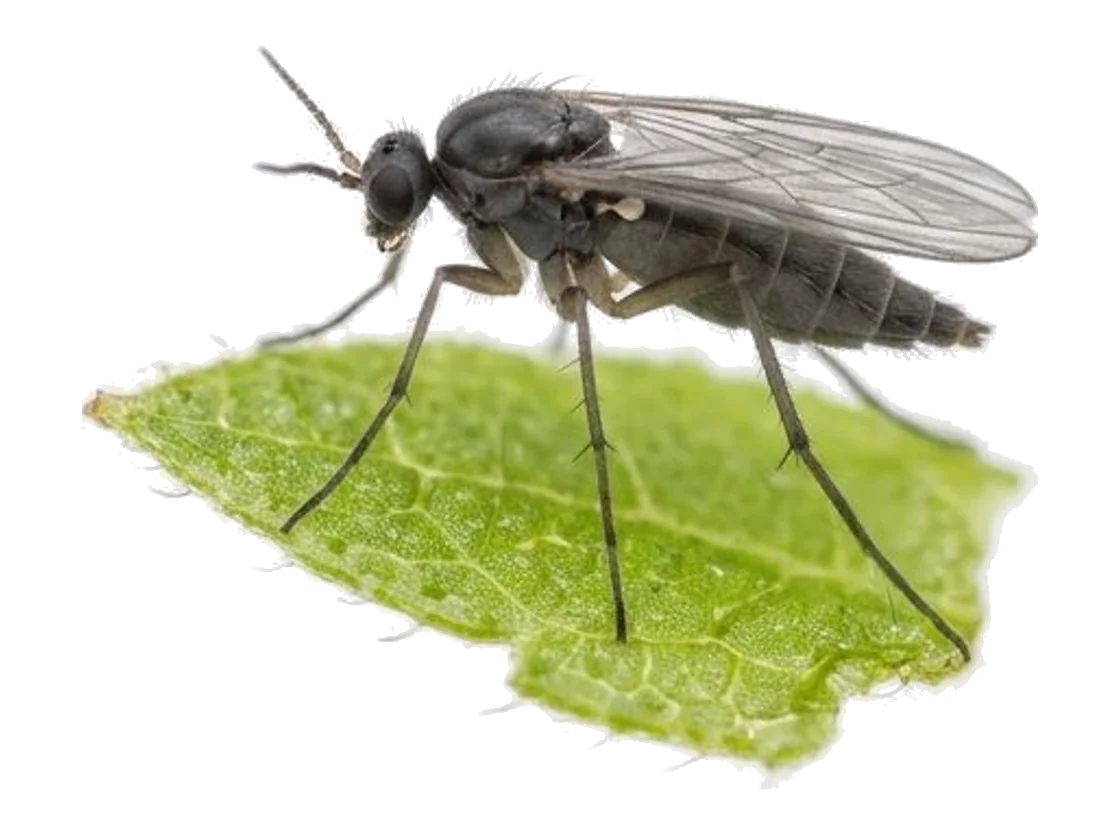
- Fungus gnats



Frequently asked questions What people ask most.
Why is my polka dot plant growing tall and sparse?
That is its natural tendency in dim light or when it is never pinched. Move it somewhere brighter, out of direct sun, and pinch the tips often. Regular pinching triggers side shoots and keeps it compact.
Why is it losing its coloured spots?
New leaves emerge greener when light is scarce, because the plant makes extra chlorophyll to compensate. Give it more indirect light and the following leaves will recover their spots. Leaves that are already green will not regain them.
It has collapsed suddenly: is it dead?
Probably not: polka dot plant flops dramatically when its soil dries out. Water thoroughly and it usually recovers within hours. To prevent it, check soil moisture every two or three days in summer.
Should I remove the flowers?
You do not have to, but it helps: the small lilac blooms use energy, and after flowering the plant declines and ages faster. Cutting the flower spikes extends the life of the decorative foliage. It is standard practice with this species.
Can it live outdoors?
Only in the warm months, in bright shade, with temperatures above 15 °C. Cold and direct sun damage it quickly. Bring it back inside before the chilly autumn nights arrive.