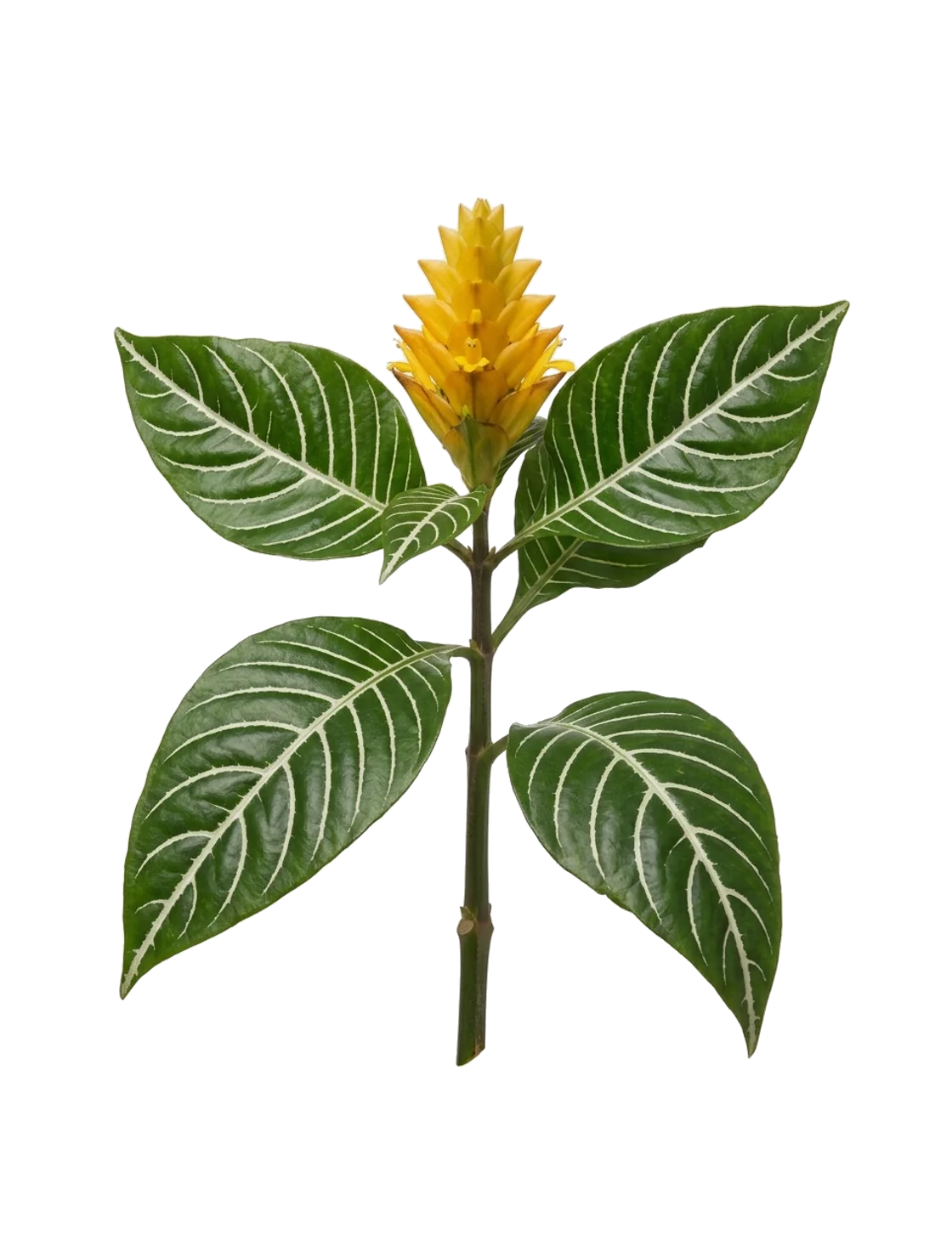
Zebra plant (Aphelandra squarrosa) is a tropical shrub with large, glossy, dark-green leaves striped with bold white veins. It belongs to the Acanthaceae family and comes from the Atlantic forest of Brazil, where it grows in the warm, humid understorey. Its main glory is the crown of yellow bracts that tops the plant in late summer.
At home it demands consistency: high humidity, regular watering and steady temperatures between 18 and 26 °C. Water when the surface of the soil begins to dry, never letting it dry out fully nor waterlogging the roots. It needs plentiful indirect light, because direct sun scorches the leaves while dim light prevents flowering and dulls the foliage.
After flowering, cut off the faded spike to encourage new side shoots. It drops its lower leaves after drought, cold or drafts, so give it a sheltered, stable corner. Although it has a fussy reputation, steady humidity and regular watering keep it glossy for years, rewarding patient growers.
Did you know?The true flowers, small and white, peep out between the yellow bracts and last only a few days.
Care. What it needs, point by point.
- Watering
- Water when the surface of the soil begins to dry, keeping moisture constant without waterlogging. Never let the soil dry out fully, as the plant responds by shedding leaves. In winter, water somewhat less, but avoid long dry spells.
- Light
- IndirectIt needs plentiful indirect light all year to grow and flower. Direct sun burns the leaves, and shade prevents flowering.
- Temperature
- 18–26 °C ideal temperatureIt prefers steady temperatures between 18 and 26 °C and cannot stand cold. Shield it from drafts and never expose it to less than 15 °C.
- Soil
- Use a loose, fertile mix with good drainage and rich in organic matter. A universal blend with perlite or fine bark works well.
- Fertilizer
- 2 weeks between feedsFeed every two weeks in spring and summer with liquid fertilizer for flowering plants. Stop feeding in autumn and winter.
- Pruning
- Cut the faded flower spike at its base to stimulate new shoots. Also remove damaged or yellowing lower leaves.
- Propagation
- Propagate from stem cuttings in spring, with bottom heat and a humid atmosphere. It is a slow process that calls for patience and consistency.
Is Zebra plant toxic to cats and dogs?
Non-toxic to cats and dogs.

Cats
Non-toxic

Dogs
Non-toxic
Source · ASPCA Animal Poison Control
Common problems What tends to go wrong.
- Dry air
- Overwatering
- Underwatering
- Mealybugs and scale



Frequently asked questions What people ask most.
Why will it not flower again?
It needs plenty of indirect light plus a cooler, slightly drier resting period in winter to set its spike. Without that winter rest, the plant grows but never blooms. Also ensure high humidity and regular feeding in spring and summer.
Why is it losing its lower leaves?
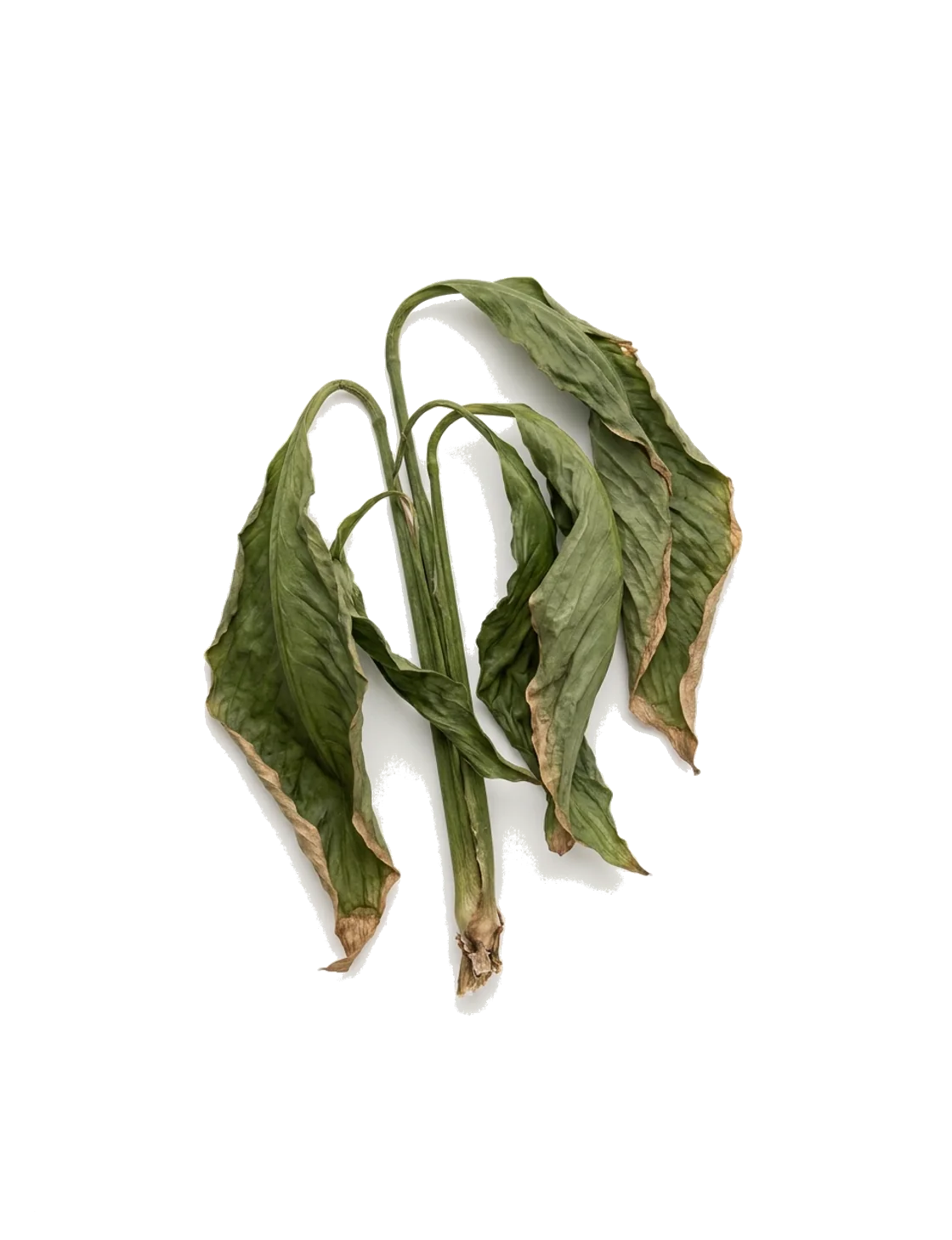
Lower leaf drop usually follows dry soil, cold or drafts. Check your watering and move the plant away from doors and windows that open often. Keep ambient humidity high with misting or a humidifier.
What should I do when the yellow flower fades?
Cut the spike at its base once the bracts turn brown and lose colour. This cut stimulates fresh side shoots. The mother plant keeps growing and may flower again the following season.
Why are the leaf edges turning brown?
Brown edges point to air that is too dry or to irregular watering. Raise ambient humidity and water steadily, without waterlogging. Keep it away from radiators and streams of hot air.
Is it hard to look after?
It has a demanding reputation because it forgives no neglect: it asks for constant humidity, regular watering and zero cold. Given a stable, bright spot and consistent watering, it stays healthy for years. It suits growers with a little experience.