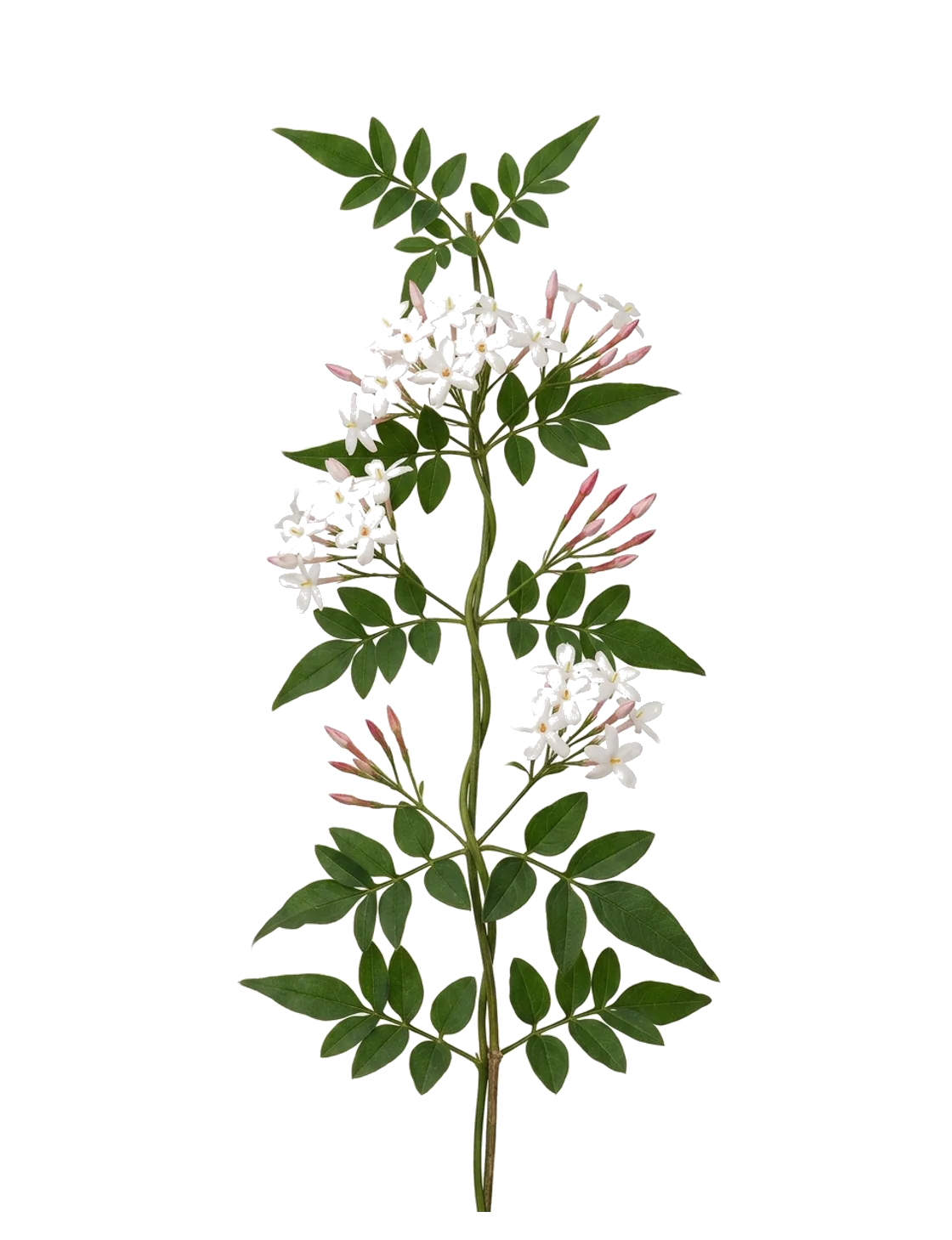
Common jasmine (Jasminum officinale), often known as poet's jasmine or true jasmine, is a vigorous semi-evergreen to deciduous climbing shrub renowned for its intensely sweet scent. Native to Central Asia, northern Iran, and the Himalayas, this hardy vine develops long, twining stems that effortlessly scramble over fences, trellises, pergolas, and garden walls.
Its pinnate foliage features pointed bright green leaflets that create an airy, graceful screen throughout the growing season. From late spring through early autumn, it produces clusters of tubular, star-shaped pure white blossoms that open continuously, releasing their iconic fragrance most strongly at twilight and during warm evenings.
This resilient climber adapts reliably to open garden beds as well as large containers on sunny balconies and patios. To reach its full potential, it requires a sturdy climbing support and an annual trim after winter to maintain its shape, prevent tangling, and stimulate profuse new flowering growth.
Did you know?Its blossoms are a cornerstone of traditional high-end perfumery and have been used to scent green and white tea for centuries. The essential oils peak during darkness, which is why commercial harvesting historically takes place at dawn.
Care. What it needs, point by point.
- Watering
- 2–3× a weekWater 2 to 3 times per week during warm spring and summer days, reducing watering substantially in the winter. Check the potting mix with your finger and add water only when the top two inches feel dry. Make sure the container drains freely to avoid waterlogged roots.
- Light
- Full sunRequires full sun to bright partial shade to produce flowers abundantly. While it will tolerate moderate shade, flower production drops significantly without direct sunlight.
- Temperature
- 15–25 °C ideal temperatureGrows best in temperatures between 15 °C and 25 °C during active growth. Established plants withstand light frosts down to -5 °C, but should be sheltered from harsh winter winds.
- Soil
- Thrives in fertile, organically rich, well-draining soil that does not hold excess standing water. In pots, use a quality potting mix amended with perlite or coarse horticultural sand.
- Fertilizer
- 2–3 weeks between feedsFeed with a balanced flowering plant fertilizer every two to three weeks from early spring to late summer. Cease all fertilization in late autumn and winter during natural rest.
- Pruning
- Prune in late winter or early spring before fresh spring buds begin to push out. Thin out crowded, dead, or crossing branches and shorten previous stems to encourage vigorous flowering side shoots.
- Propagation
- Easily propagated from semi-ripe wood cuttings taken in late summer and rooted in a warm, moist potting medium. Layering flexible low-growing stems directly into the ground during spring is another reliable method.
Where it grows. In the wild and in homes.
In the wild it grows in temperate Asia and tropical Asia, in a temperate climate.
People have also taken it to 16 more regions where it now grows on its own: Europe, South and Central America and the Caribbean, and Africa.
Range: Plants of the World Online, Royal Botanic Gardens, Kew
Is Common jasmine toxic to cats and dogs?
Non-toxic to cats and dogs.

Cats
Non-toxic

Dogs
Non-toxic
Source · ASPCA Animal Poison Control
Common problems What tends to go wrong.
- Aphids
- Spider mites
- Mealybugs and scale
- Powdery mildew
- Too little light





Frequently asked questions What people ask most.
Why is my common jasmine not blooming?
Lack of direct sunlight is the most frequent culprit, as jasmine needs at least five hours of sun daily to set flower buds. Excessive nitrogen fertilization can also promote lush foliage at the expense of blossom formation.
Why are my jasmine leaves turning yellow?
Yellowing foliage is most often caused by overwatering or soil that fails to drain efficiently. Let the topsoil dry out before watering again, and ensure container drainage holes remain completely clear.
When and how should I prune common jasmine?
Prune in late winter before fresh spring growth begins. Cut back the previous year's flowered stems by about a third and clear out tangled growth to allow sunlight into the center of the vine.
Can common jasmine be grown indoors?
It can be kept indoors only if placed right by a sunny south-facing window with cool temperatures and good airflow. Nevertheless, it performs significantly better outdoors where natural light and seasonal temperature shifts stimulate heavy blooming.