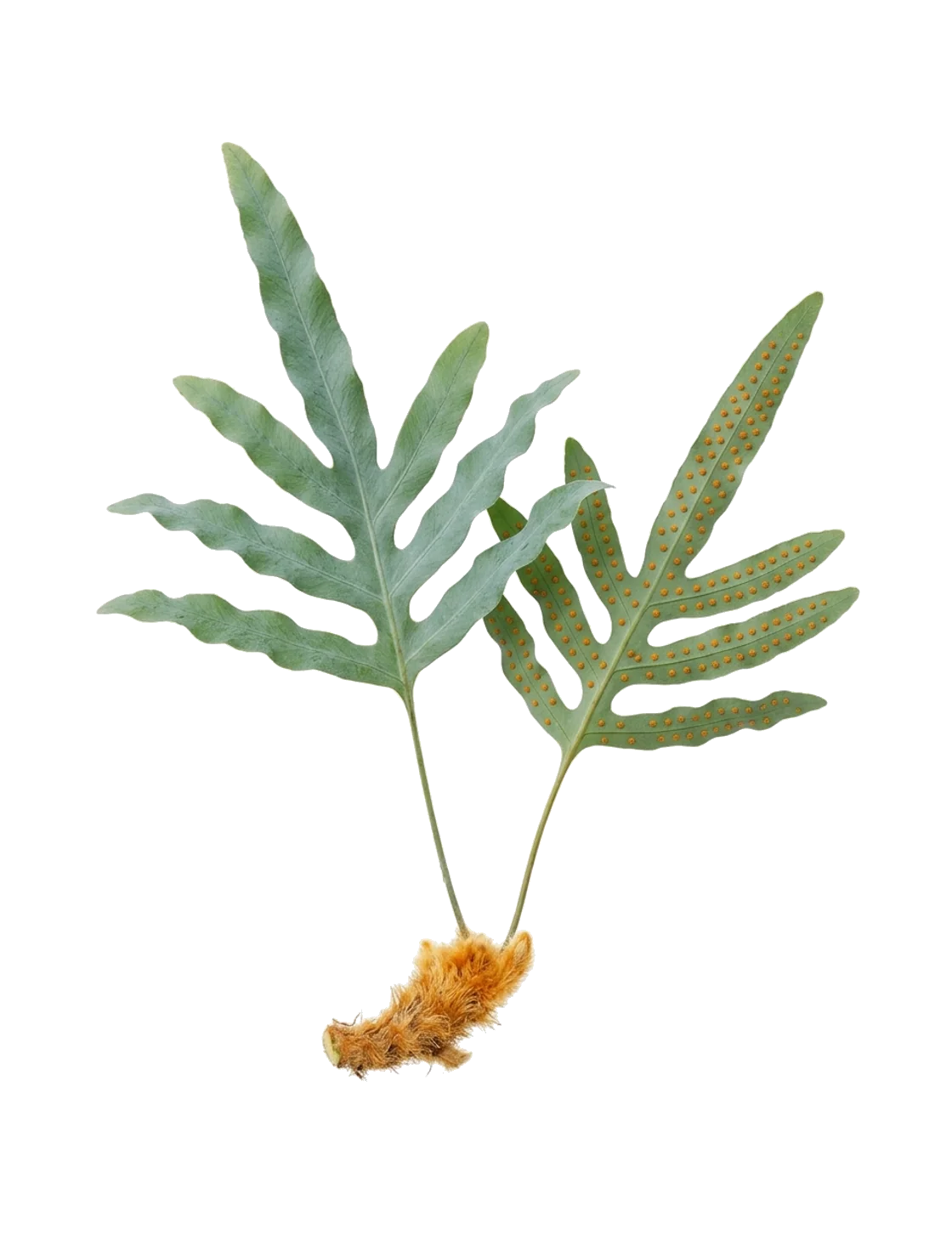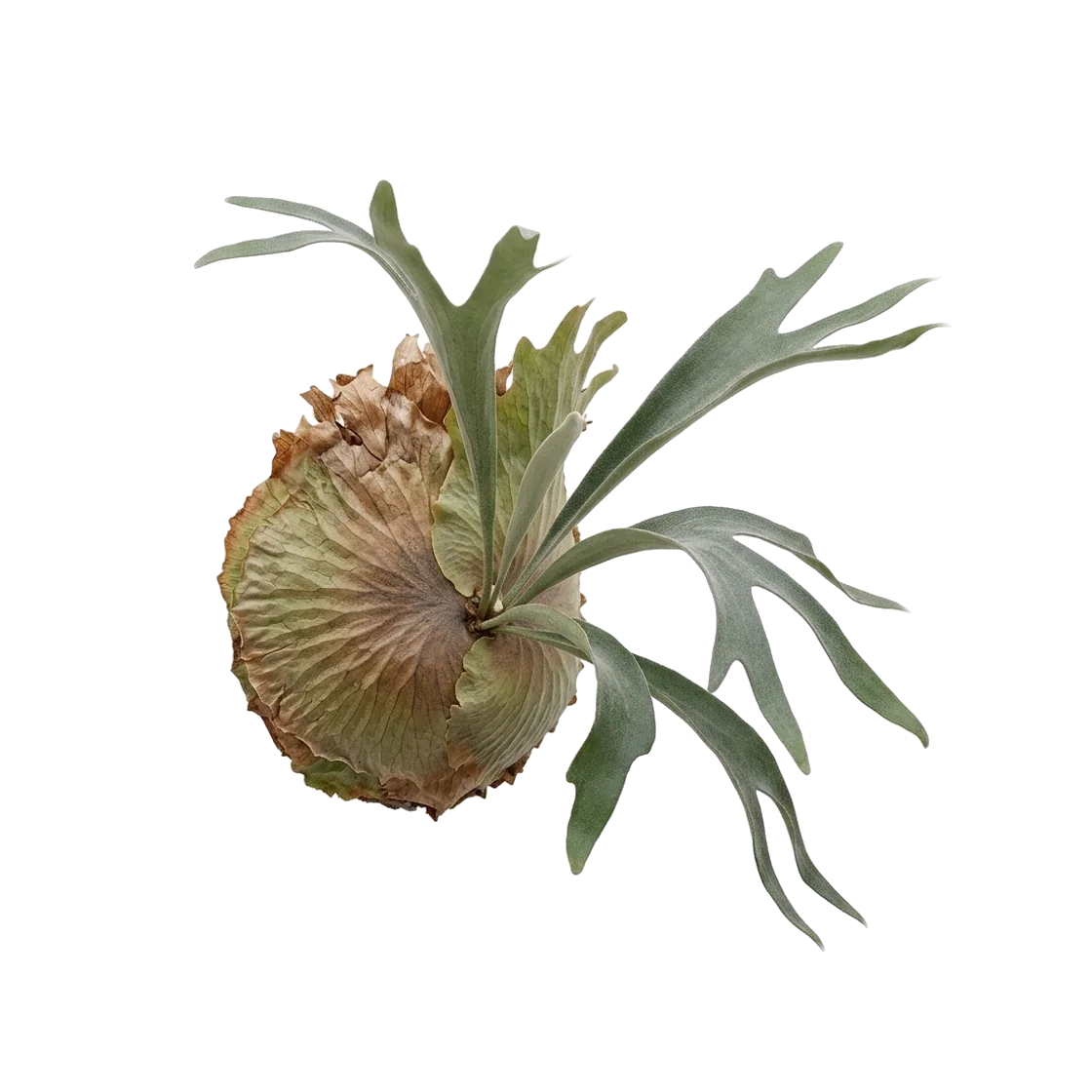
Staghorn fern (Platycerium bifurcatum) is a sculptural epiphytic fern that grows on trunks and branches instead of soil. It produces two kinds of fronds: rounded ones that cling to the mount and anchor the plant, and hanging forked ones that resemble antlers. It belongs to the Polypodiaceae family and comes from eastern Australia, where it lives on trees in humid forests.
At home it is grown mounted on a board, a log or a basket of moss, in bright but indirect light. Water by soaking the mount for a few minutes once the moss is nearly dry, letting it drain well before hanging it back. It needs high humidity and mild temperatures, between 16 and 27 °C, away from cold drafts.
The rounded basal fronds turn brown with age and should never be pulled off, as they protect the roots and absorb nutrients. Over time the plant produces lateral pups that let you expand your collection or share it. It makes a striking feature on bright living-room walls and sheltered patios, hung where it can be admired at eye level.
Did you know?The fertile fronds release spores from their undersides as a brown dust, and each plant can live for decades on the same mount.
Care. What it needs, point by point.
- Watering
- Water by soaking the whole mount for about ten minutes when the moss feels nearly dry. Let the water drain well before hanging the plant back to avoid sogginess at the base. In winter, water less often, but never let the moss spend weeks bone dry.
- Light
- IndirectIt needs bright, indirect light, such as beside a luminous window with a sheer curtain. Avoid direct sun, which scorches the fronds and leaves pale patches.
- Temperature
- 16–27 °C ideal temperatureIt thrives between 16 and 27 °C all year round. Keep it away from temperatures below 10 °C and from cold drafts.
- Soil
- It uses no soil: mount it on bark, an untreated wooden board or a basket of sphagnum moss. The mount should hold some moisture yet dry out between waterings.
- Fertilizer
- Feed once a month in spring and summer with half-strength liquid fertilizer added to the soaking water. Stop feeding in autumn and winter.
- Pruning
- It needs no pruning: leave the brown basal fronds in place, as they serve a protective role. Remove only fully dried fertile fronds, cutting at their base.
- Propagation
- Propagate by separating the pups that appear at the base once they carry several fronds of their own. Fix each pup onto a new mount with damp moss until it roots.
Where it grows. In the wild and in homes.
In the wild it grows in Malesia, Australia, and the southwestern Pacific.
People have also taken it to 6 more regions where it now grows on its own: Africa, South and Central America and the Caribbean, the Pacific, and Australasia.
Range: Plants of the World Online, Royal Botanic Gardens, Kew
Is Staghorn fern toxic to cats and dogs?
Non-toxic to cats and dogs.

Cats
Non-toxic

Dogs
Non-toxic
Source · ASPCA Animal Poison Control
Common problems What tends to go wrong.
- Mealybugs and scale
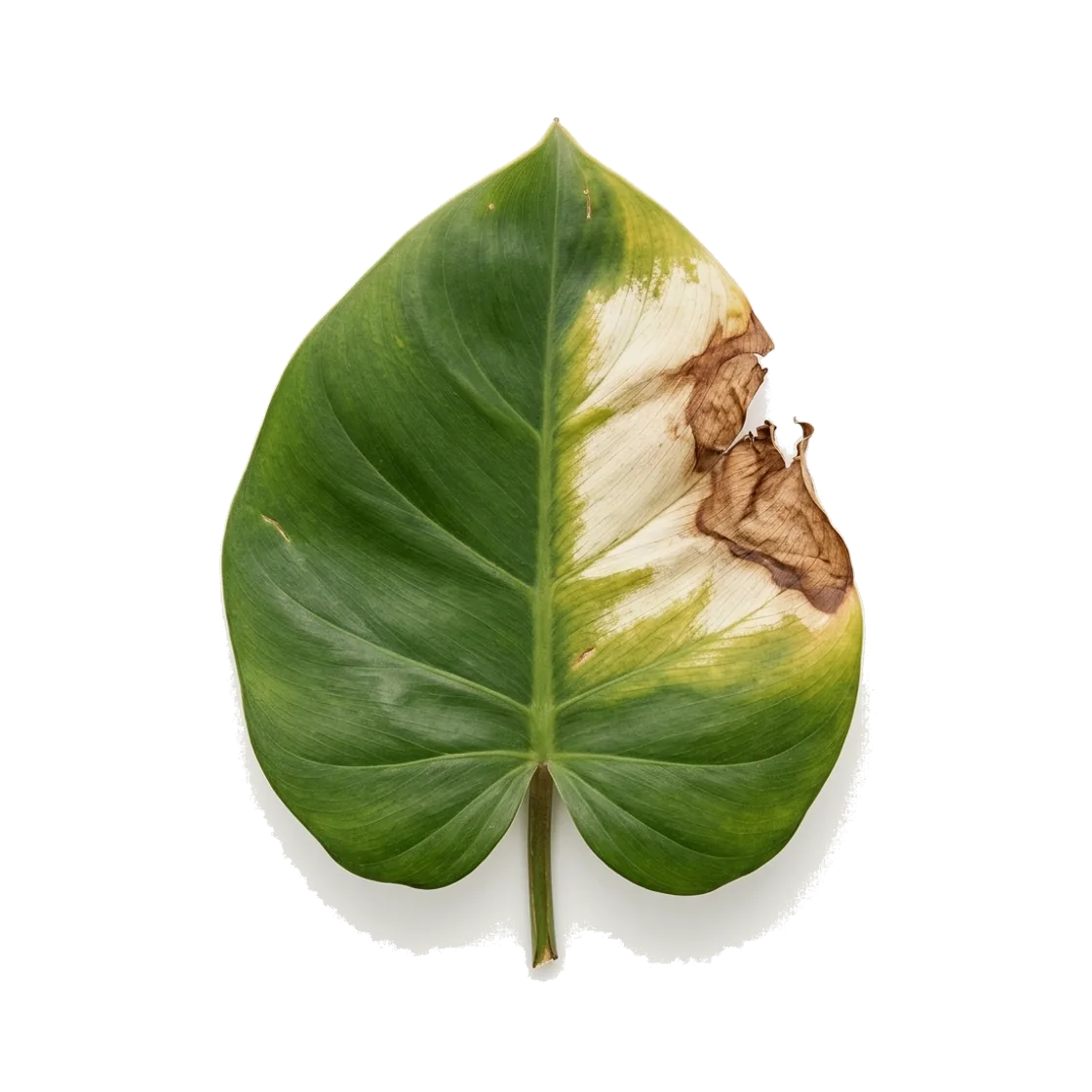
- Overwatering
- Sunburn
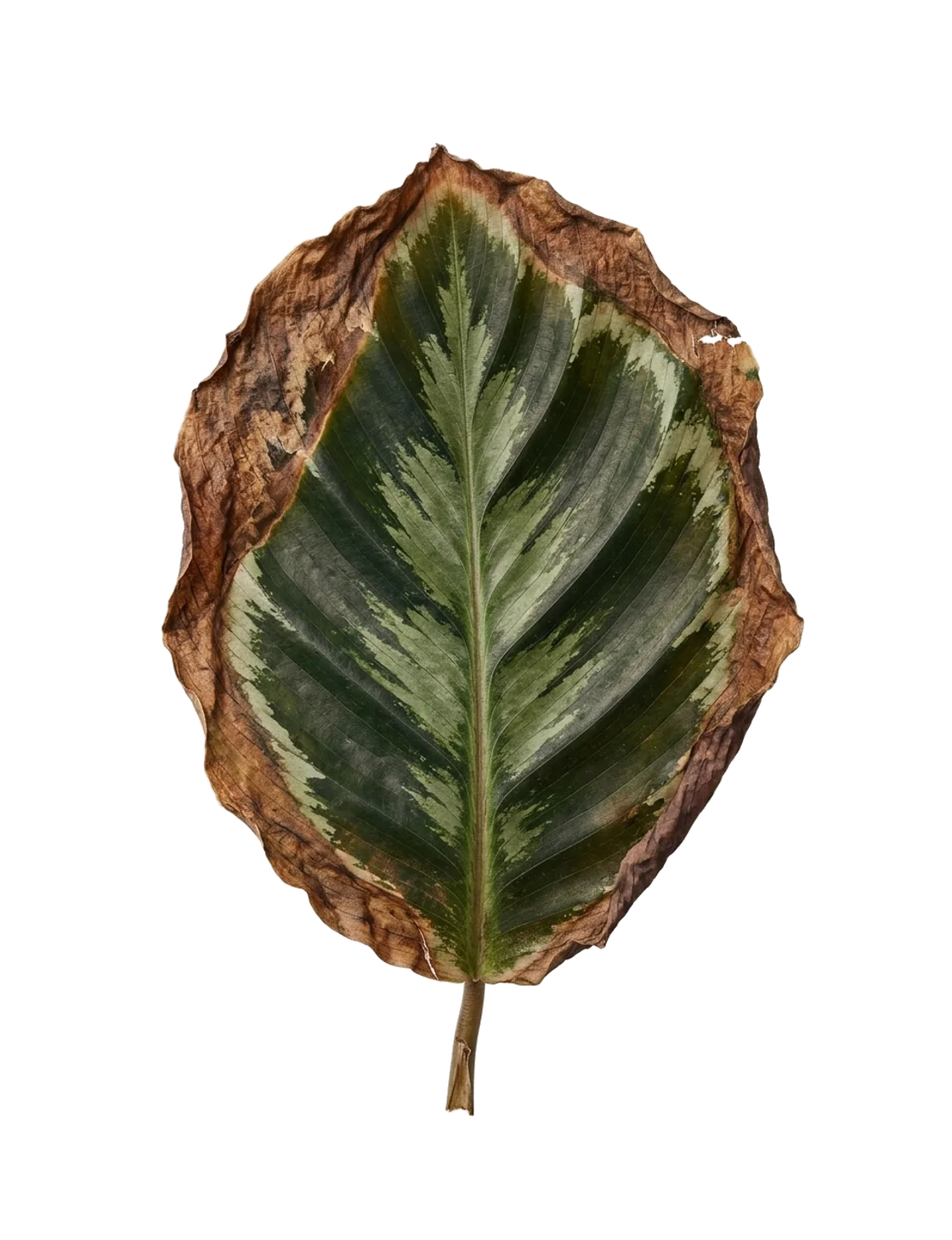
- Dry air


Frequently asked questions What people ask most.
Is it normal for the basal leaves to turn brown?
Yes, the rounded basal fronds dry out and darken naturally with age. Never pull them off: they shield the roots and the plant reabsorbs their nutrients. Only remove pieces that come away on their own.
How do I water it if it is mounted on a board?
Soak the whole mount in room-temperature water for about ten minutes, until the moss is thoroughly wet. Let the excess drain before hanging it back so it does not drip onto the wall. Repeat whenever the moss feels nearly dry to the touch.
How much light does it need?
It needs bright, indirect light, such as near an east-facing window or behind a sheer curtain. Direct sun scorches the fronds and leaves pale patches. In dim light it grows slowly and the new fronds emerge weak.
How do I separate the pups?
When a pup carries several fronds of its own plus some base tissue, cut it away with a clean knife, keeping some moss and roots. Fix it onto its new mount with string or staples without overtightening. Keep humidity high and watering gentle until it establishes.
Why are the frond tips drying out?
Dry tips usually point to air that is too dry or to irregular watering. Raise humidity with misting or a nearby humidifier. Also check that the moss never spends weeks completely dry.