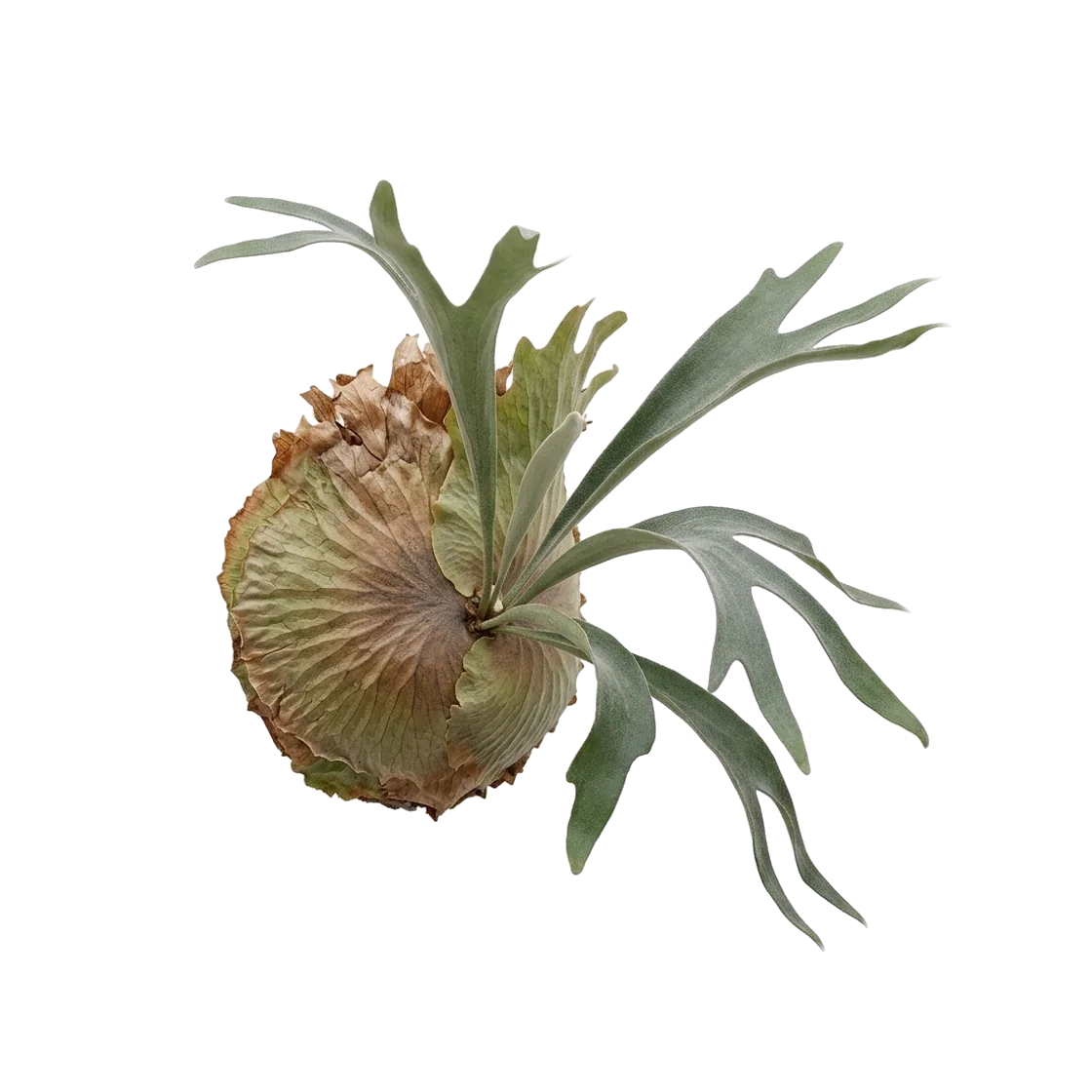
Blue star fern
Phlebodium aureum
Blue star fern (Phlebodium aureum) care: watering, light and rhizome tips for healthy blue-green fronds in the home all year round with ease.
- Temperature
- 16–26 °Cideal temperature
- Toxicity
- Non-toxic
- Difficulty
- Easy
- Type
- Helecho
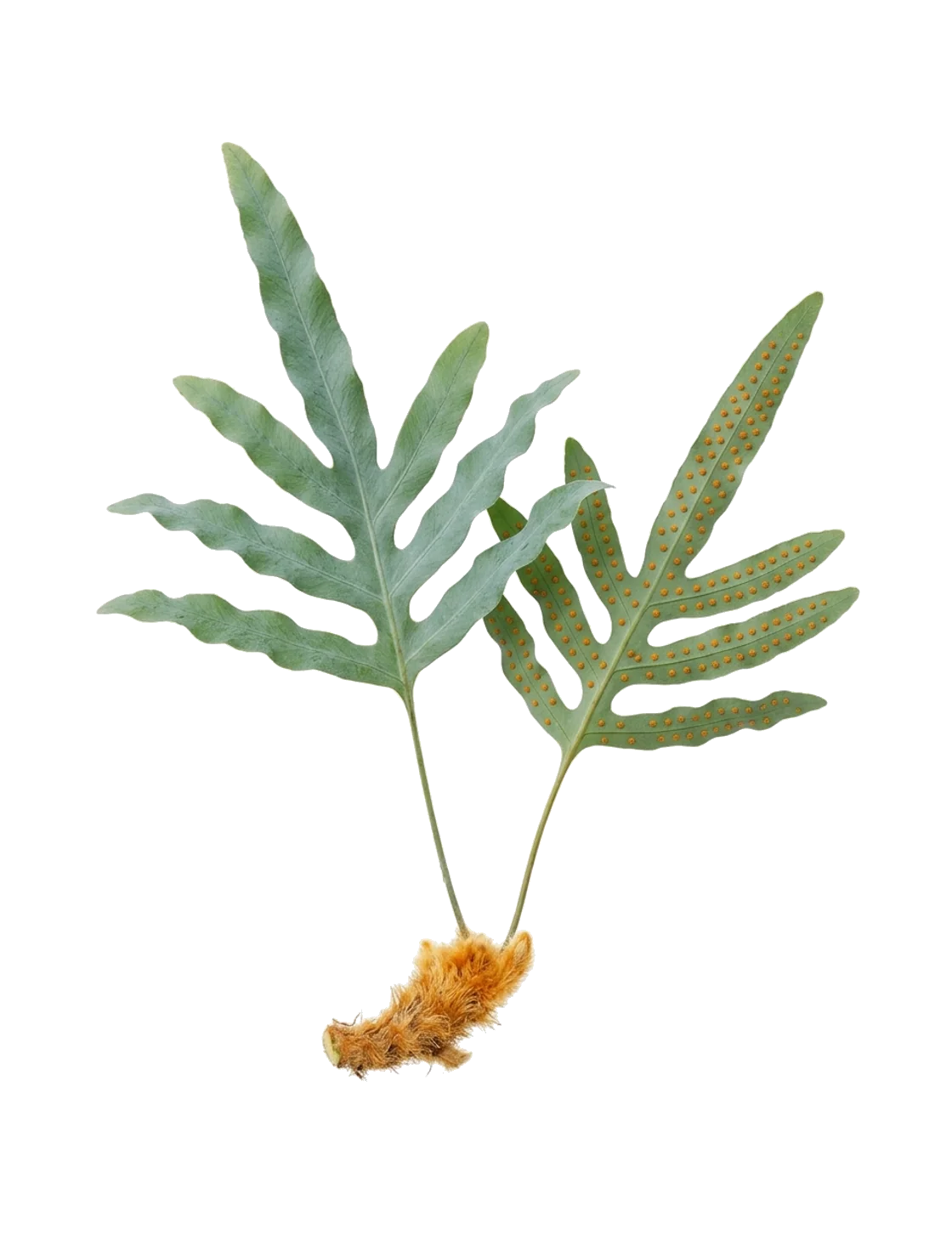
Blue star fern (Phlebodium aureum) is an epiphytic fern with broad, wavy fronds in a striking blue-green shade. Its leaves sprout from a thick, golden, furry rhizome that creeps over the soil and should never be buried. It belongs to the Polypodiaceae family and comes from the tropical forests of the Americas, from Florida to South America.
Indoors it asks for medium to bright light, always indirect, and a potting mix that dries slightly between waterings. Water when the top layer feels dry, taking care not to soak the rhizome, which would rot. It appreciates ambient humidity and steady temperatures between 16 and 26 °C, with no cold spells or direct heating.
It is one of the ferns most tolerant of dry indoor air, although the tips brown if humidity runs very low. It forgives an occasional missed watering better than other ferns, but not prolonged sogginess. With good light and repotting every two or three years, it forms wide, showy clumps that last a long time.
Did you know?The name aureum refers to its golden rhizome, and the fronds of adult plants can exceed 60 centimetres.
Care. What it needs, point by point.
- Watering
- Water when the top layer of soil feels dry, soaking thoroughly and letting it drain. Avoid wetting the rhizome directly and empty the saucer after each watering. In winter, space waterings out as growth slows down.
- Light
- It prefers medium to bright light, always indirect and never direct sun. It tolerates dimmer corners, but there it grows more slowly and with less colour.
- Temperature
- 16–26 °C ideal temperatureIt lives well between 16 and 26 °C with steady temperatures all year. Protect it from cold below 12 °C and from drafts.
- Soil
- It needs a loose mix rich in organic matter with good drainage, such as a fern blend with bark. The rhizome should rest on the surface, never buried.
- Fertilizer
- 3–4 weeks between feedsFeed every three or four weeks in spring and summer with a gentle liquid fertilizer. Do not feed in autumn and winter.
- Pruning
- Remove dried or damaged fronds by cutting at their base with clean scissors. Never tear the rhizome or its furry parts, which are living tissue.
- Propagation
- Propagate by dividing the rhizome in spring, leaving several fronds on each piece. Lay the sections on damp potting mix without burying them.
Where it grows. In the wild and in homes.
In the wild it grows in South and Central America and the Caribbean and North America.
People have also taken it to 8 more regions where it now grows on its own: Africa, tropical Asia, the Pacific, and Australasia.
Range: Plants of the World Online, Royal Botanic Gardens, Kew
Is Blue star fern toxic to cats and dogs?
The ASPCA doesn't list this species. If your pet has chewed it and seems unwell, call your vet.
Common problems What tends to go wrong.
- Overwatering
- Root rot
- Dry air
- Too little light




Frequently asked questions What people ask most.
Why are the edges of the leaves turning brown?
Brown edges usually point to air that is too dry or to irregular watering. Raise ambient humidity and water regularly, without waterlogging. Trim the dried parts with clean scissors, following the shape of the leaf.
What is that furry stem coming out of the soil?
It is the rhizome, the organ the fronds sprout from and which stores water and nutrients. It should sit on top of the soil, never buried, because burying it encourages rot. Do not mistake it for sick roots: its golden, furry look is normal.
Does it lose its blue colour in low light?
In dim light the new fronds emerge greener and less blue. Move the plant to a brighter spot, always out of direct sun. The bluish tone returns on new leaves, not on the ones already formed.
How often should I water it?
Water when the top layer of soil feels dry to the touch, normally about once a week indoors. Water less often in winter, when the plant grows more slowly. Always empty the saucer so the roots never sit in water.
Does it need frequent repotting?
Repotting every two or three years is enough, in spring, into a slightly larger pot. Use the moment to check the rhizome and remove any soft or damaged parts. Choose a loose mix rich in organic matter with good drainage.