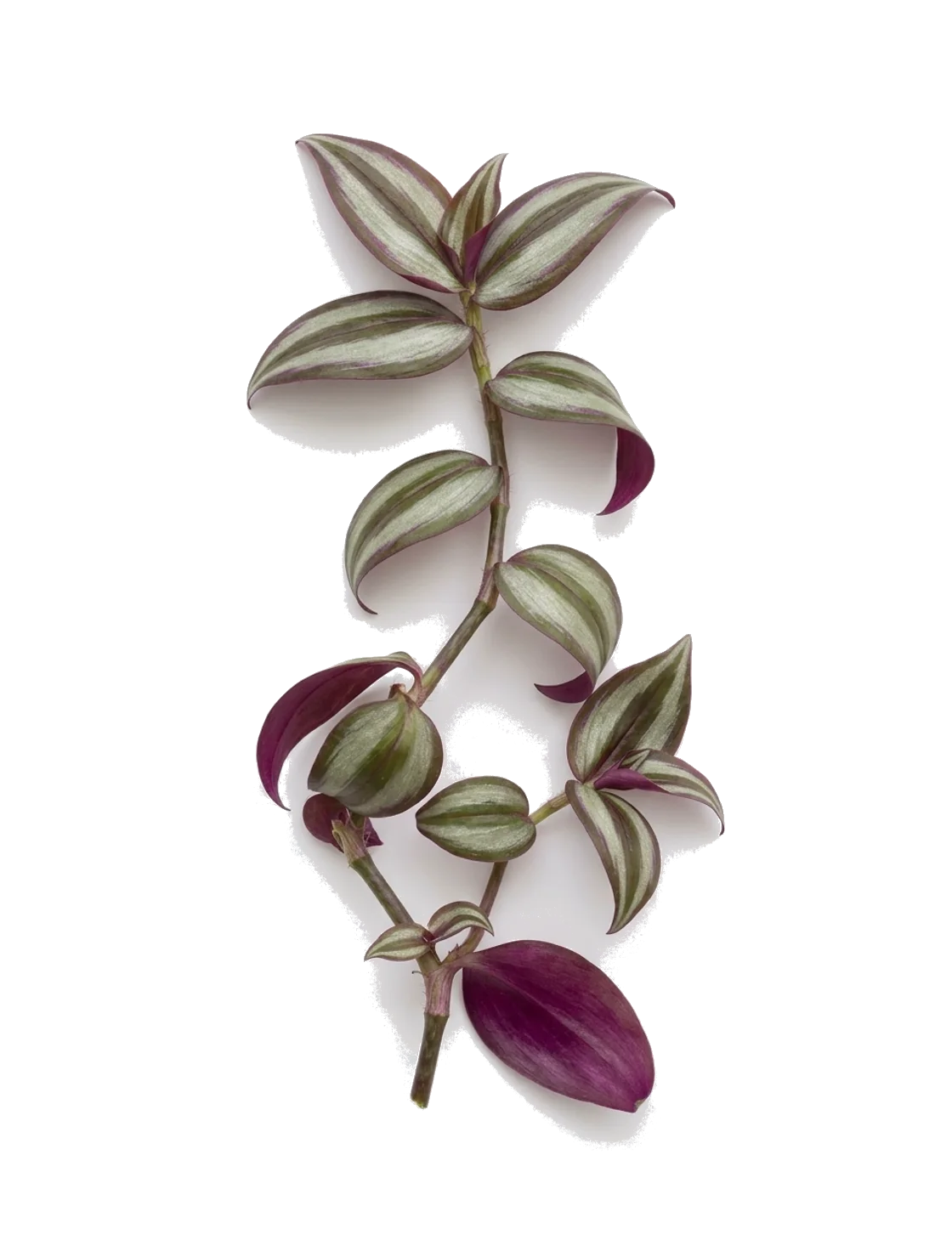
Purple heart
Tradescantia pallida
Complete care guide for purple heart (Tradescantia pallida). Discover watering, bright light needs, soil, and propagation to keep its vibrant purple hue.
- Light
- Full sun
- Watering
- 10–14days between waterings
- Temperature
- 18–28 °Cideal temperature
- Toxicity
- Non-toxic
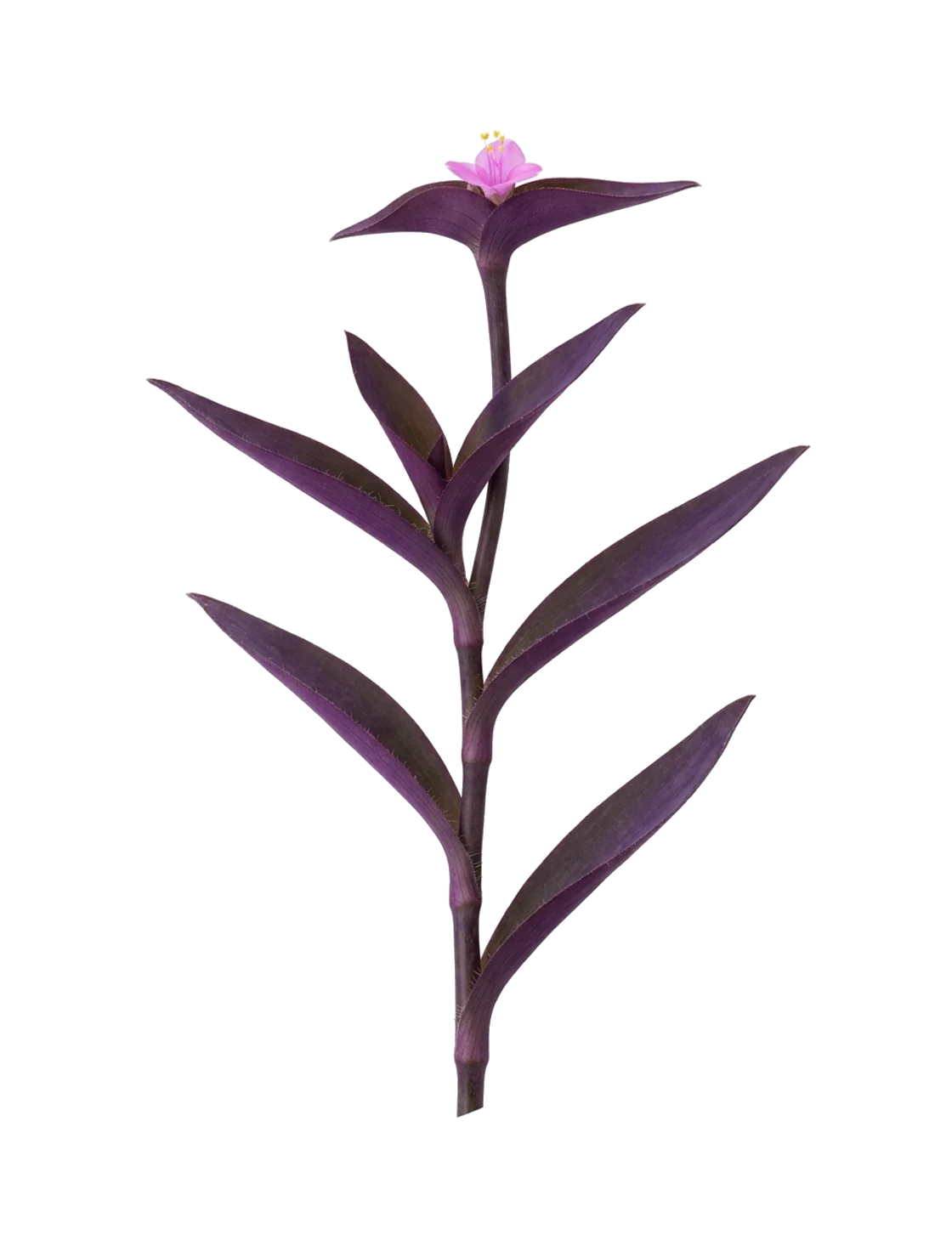
Purple heart (Tradescantia pallida) is a vigorous, trailing herbaceous perennial native to eastern Mexico. It is widely admired for its pointed, fleshy leaves that exhibit a deep purple to violet coloration, accented by delicate hairs along the margins. During warm seasons, small three-petaled pink flowers emerge at the stem tips, creating a striking contrast against the dark foliage.
This plant adapts exceptionally well to both indoor settings with abundant natural light and outdoor garden beds in warm climates. The vibrancy of its purple tone depends directly on sun exposure: full sun produces rich, dark violet leaves, whereas dim lighting causes the foliage to fade into dull olive green while stretching out.
Thanks to its trailing habit, it makes an outstanding choice for hanging baskets, patio containers, and ground cover in frost-free regions. Storing moisture in its thick stems, purple heart tolerates periods of drought with ease, making it a reliable and low-maintenance selection for beginner gardeners.
Did you know?Under strong sunlight, purple heart produces anthocyanin pigments that act as a natural sunscreen, giving the foliage its iconic violet shade.
Care. What it needs, point by point.
- Watering
- 10–14 days between wateringsWater thoroughly only when the top half of the soil has dried out completely. A weekly watering is usually sufficient in warm months, tapering off to every ten to fourteen days in winter.
- Light
- Full sunIt thrives in full sun to very bright indirect light to preserve its deep purple hue. In low-light conditions, the stems become leggy and the foliage turns green.
- Temperature
- 18–28 °C ideal temperatureThe optimal temperature range is between 18 °C and 28 °C. While it can tolerate brief drops down to 5 °C by dying back to the roots, it does not survive hard frosts.
- Soil
- Use a loose, well-draining potting mix incorporating perlite or coarse sand to prevent moisture retention around the roots.
- Fertilizer
- Feed once a month during spring and summer using a balanced liquid houseplant fertilizer diluted to half strength.
- Pruning
- Pinch back leggy stems regularly in spring and summer to promote bushier growth and remove spent stems.
- Propagation
- Purple heart roots effortlessly from stem cuttings placed directly into moist potting mix or a glass of water. Roots typically develop within one to two weeks during warm weather.
Where it grows. In the wild and in homes.
In the wild it grows in Mexico, in a seasonally dry tropical climate.
People have also taken it to 27 more regions where it now grows on its own: South and Central America and the Caribbean, Africa, North America, and tropical Asia.
Range: Plants of the World Online, Royal Botanic Gardens, Kew
Is Purple heart toxic to cats and dogs?
The ASPCA doesn't list this species. If your pet has chewed it and seems unwell, call your vet.
Common problems What tends to go wrong.
- Too little light
- Overwatering
- Root rot
- Cold damage




Frequently asked questions What people ask most.
Why is my purple heart turning green?
A fading purple color is a direct response to insufficient sunlight. Move the plant to a brighter spot or outdoors under direct sun, and its rich violet coloration will return quickly.
Why are the stems growing long and spindly?
This stretching occurs when the plant is searching for light in an overly shaded room. Prune the elongated stems to stimulate lateral shoots and relocate the pot to a sunnier position.
How do I revive a plant that looks bare at the base?
It is natural for older lower stems to shed their leaves over time. Simply snip healthy top cuttings and insert them back into the soil to refresh the pot and fill bare spots.
How often should purple heart be repotted?
Repot every one to two years during spring if the root system has outgrown the current container. Alternatively, trim overgrown stems and top-dress with fresh compost to maintain its shape.