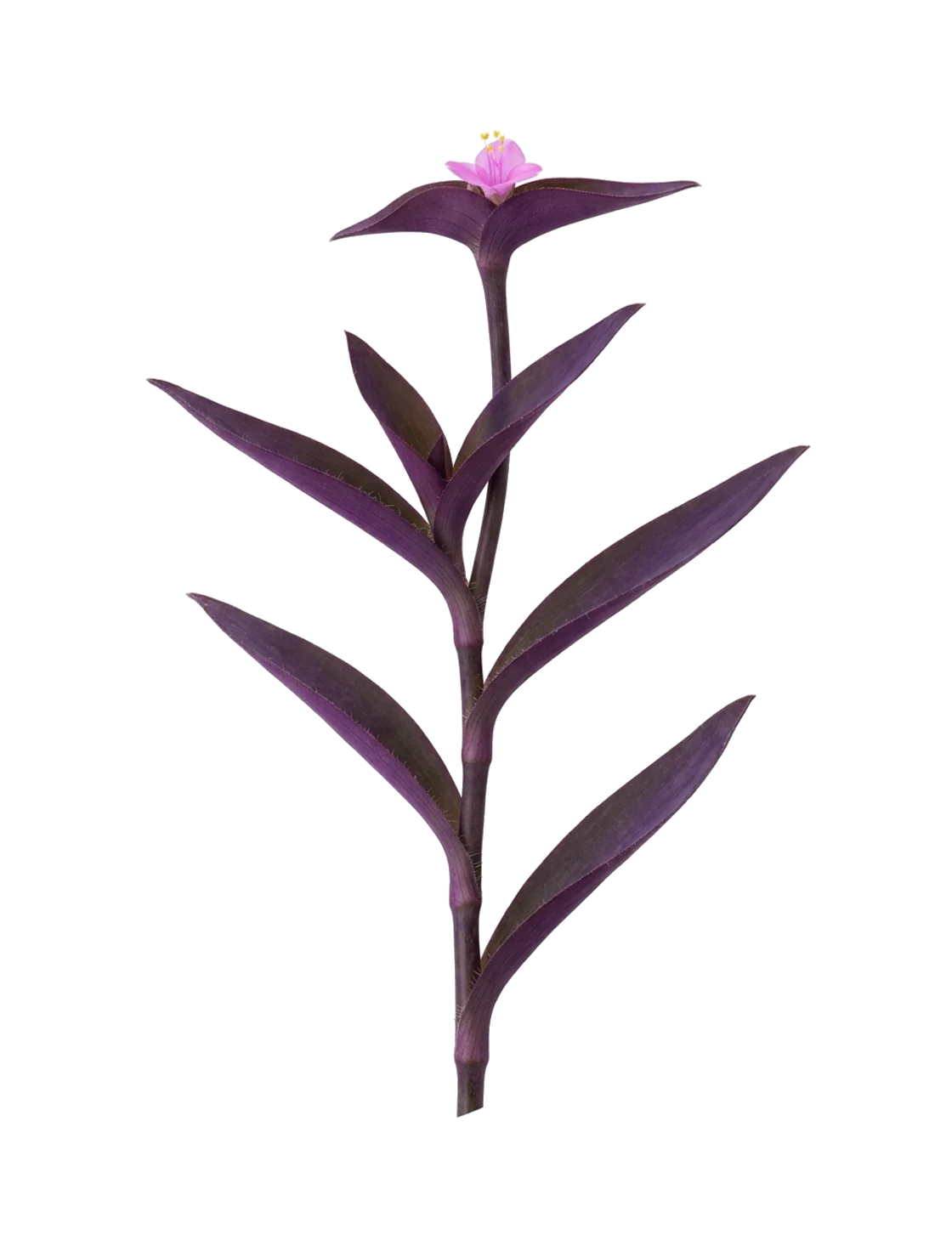
Inch plant
Tradescantia zebrina
Discover how to care for your inch plant (Tradescantia zebrina), from light and watering needs to pruning and easy propagation tips for lush indoor growth.
- Light
- Indirect
- Watering
- 1×a week
- Temperature
- 18–26 °Cideal temperature
- Toxicity
- Non-toxic
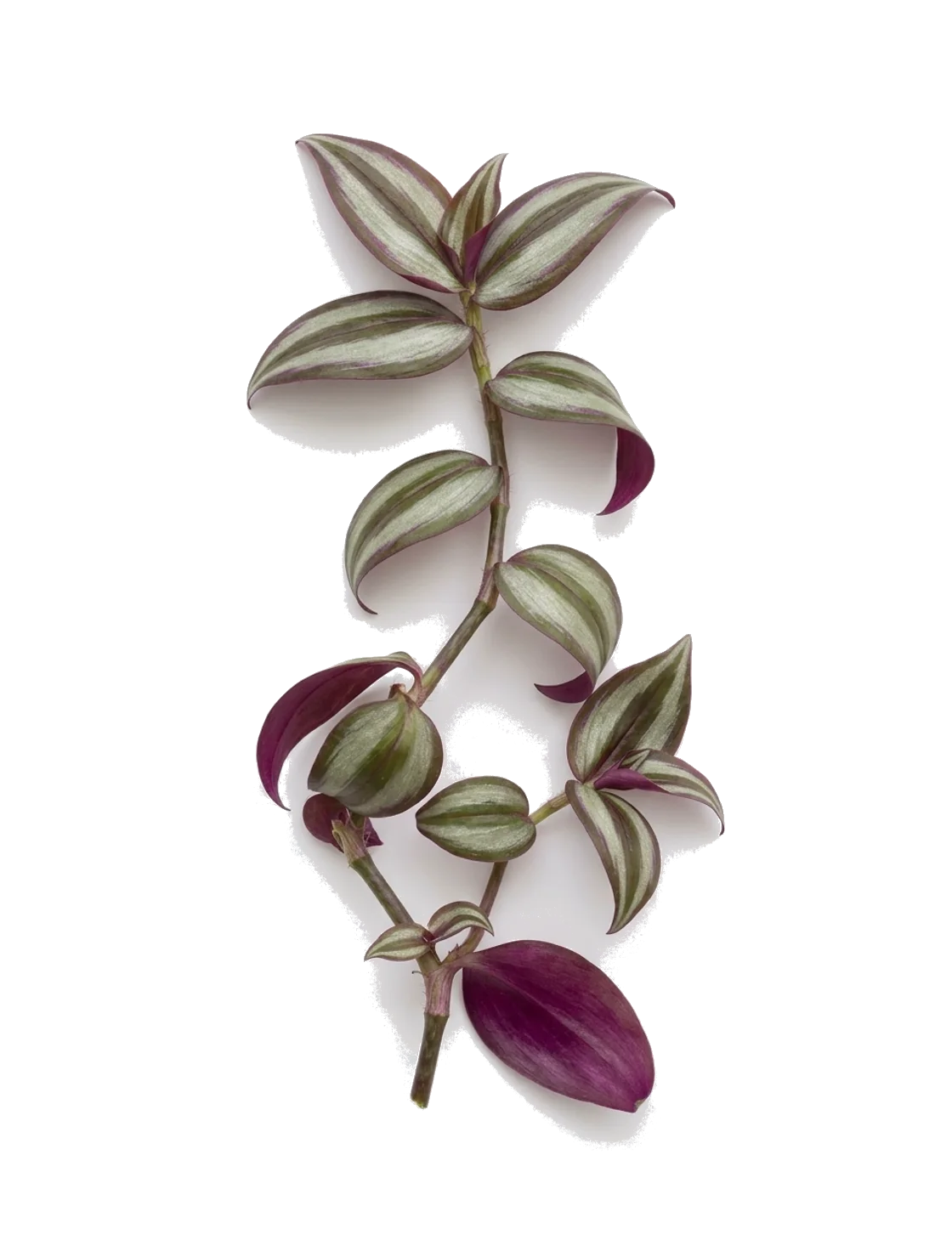
Tradescantia zebrina, commonly known as the inch plant or wandering dude, is a popular trailing perennial native to Mexico and Central America. It is celebrated for its distinctive foliage featuring metallic silver bands bordered by deep green, contrasted by a striking purple underside. When grown in hanging planters or on high shelves, its cascading stems create a lush, colorful focal point in bright indoor rooms.
This species is exceptionally fast-growing, adaptable, and forgiving, making it a staple choice for both beginner and seasoned plant enthusiasts. In mild, frost-free outdoor climates, it can also function as an attractive groundcover in partially shaded garden beds. The succulent stems produce adventitious roots readily at leaf nodes wherever they touch moist soil, allowing the plant to spread with ease.
As stems age, it is completely normal for them to drop their older leaves near the base and appear sparse over time. Periodic pruning encourages bushy, compact growth and provides plenty of cuttings that can be easily replanted. Given bright indirect light and moderate watering, this plant reliably maintains its vivid coloration and vigorous habit year after year.
Did you know?The common name inch plant comes from its reputation for growing roughly an inch per week under warm, favorable household conditions.
Care. What it needs, point by point.
- Watering
- 1× a weekWater whenever the top half of the potting mix feels dry, typically once a week in summer and every ten to fourteen days in winter. Always check soil moisture before watering to prevent root rot from standing moisture.
- Light
- IndirectPosition your plant in bright, indirect sunlight to maintain its vibrant purple and silver variegation. Direct midday sun should be avoided, as it can scorch the delicate foliage.
- Temperature
- 18–26 °C ideal temperatureMaintain temperatures between 18 °C and 26 °C for steady, healthy development. Protect the plant from cold drafts, as temperatures below 10 °C will cause significant foliage damage.
- Soil
- Use a well-draining potting soil amended with perlite or coarse sand to prevent water retention.
- Fertilizer
- Feed with a balanced liquid houseplant fertilizer once a month during spring and summer.
- Pruning
- Pinch stem tips regularly to stimulate dense branching and keep the foliage compact.
- Propagation
- Take four-inch stem cuttings just below a leaf node and place them in water or moist potting mix. Roots will typically form within a week, making propagation remarkably fast and reliable.
Where it grows. In the wild and in homes.
In the wild it grows in Central America, Mexico, and western South America, in a seasonally dry tropical climate.
People have also taken it to 57 more regions where it now grows on its own: South and Central America and the Caribbean, Africa, the Pacific, and tropical Asia.
Range: Plants of the World Online, Royal Botanic Gardens, Kew
Is Inch plant toxic to cats and dogs?
The ASPCA doesn't list this species. If your pet has chewed it and seems unwell, call your vet.
Common problems What tends to go wrong.
- Natural ageing
- Too little light
- Overwatering
- Root rot
- Cold damage




Frequently asked questions What people ask most.
Why is my inch plant losing its purple color?
Fading colors are almost always a sign of insufficient lighting. Move your plant to a brighter location with indirect light to restore its vibrant silver and purple hues.
Why are the stems bare near the base?
Stem bareness is a natural part of the aging process as trailing vines lengthen over time. Trim the leggy stems and insert the healthy top cuttings back into the pot to refresh the plant.
How often should I water my inch plant?
Water roughly once a week during the active growing season and reduce frequency during winter months. Always let the top couple of inches of soil dry out between waterings to safeguard root health.
Why are the leaf tips turning brown and crispy?
Crispy brown tips usually point to low indoor humidity or irregular watering habits. Grouping plants together or using a pebble tray can help improve surrounding moisture levels.