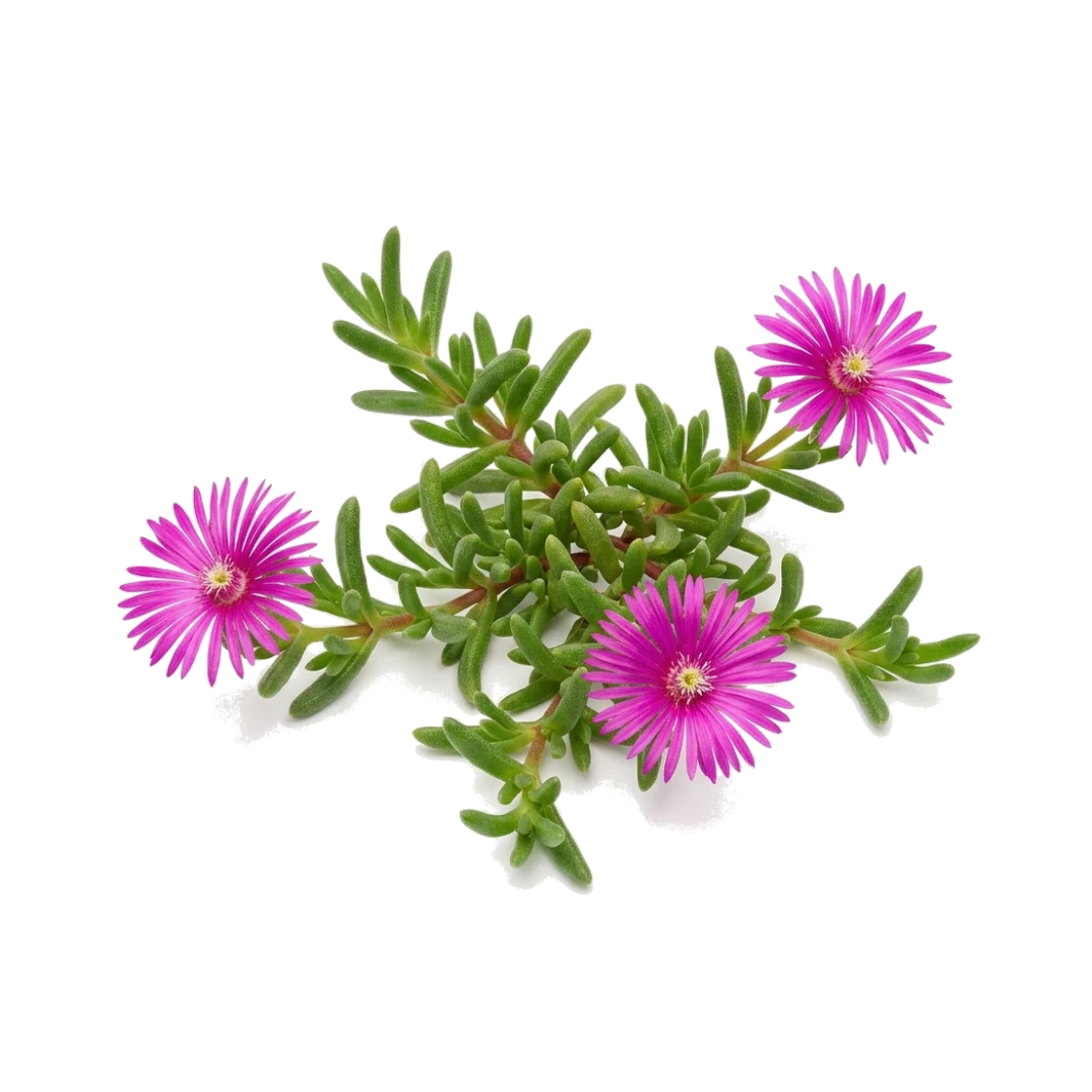
Ice plant
Delosperma cooperi
Ice plant: a glittering magenta carpet for dry slopes and rock gardens. Full sun, sparse watering and sharp drainage essentials for success.
- Light
- 6 hof direct sun
- Temperature
- 18–30 °Cideal temperature
- Toxicity
- Non-toxic
- Difficulty
- Easy
The ice plant (Delosperma cooperi) is a mat-forming succulent grown for its masses of shimmering magenta flowers that cover the plant in summer. Native to the high plateaus of South Africa, it spreads into a low carpet of fleshy green leaves that turns coppery in cold weather. It is a star of rock gardens, dry slopes and sunny walls.
The daisy-like blooms open only in bright sunshine and appear in such numbers that the foliage almost disappears for weeks. Once established, its deep roots find water far below the surface, so it survives heat and drought that defeat most ground covers. The mat roots as it spreads, knitting soil together on banks and steps.
Give it full sun and very sharp drainage, and it will thrive for years with almost no care. Water young plants until they root, then leave them to rainfall except in extreme drought. Never plant it in hollows where winter water gathers, since wet crowns rot fast.
Did you know?Its petals glitter in sunshine thanks to tiny bladder cells that store water and reflect the light.
Care. What it needs, point by point.
- Watering
- Water sparingly: soak young plants, then let the soil dry fully between waterings. Established mats live on rainfall and rot quickly in constantly damp soil.
- Light
- 6 h of direct sunIt flowers best in full sun, with at least six hours of direct light. Shade makes stems stretch and stops the glittering blooms from opening.
- Temperature
- 18–30 °C ideal temperatureIt grows best between 18 °C and 30 °C and tolerates frosts down to about -10 °C in dry soil. In wet winters, cover the crown or grow it on a slope.
- Soil
- It demands very well-drained, even poor or sandy soil. Heavy clay must be mounded up and mixed with plenty of gravel before planting.
- Fertilizer
- It barely needs feeding; a light dressing of compost in spring is enough. Too much fertilizer gives soft growth that rots easily.
- Pruning
- Trim faded flowers and straggly stems lightly to keep the mat dense. Plants need no real pruning; renew old woody patches with fresh cuttings.
- Propagation
- Take stem cuttings in summer and root them quickly in sandy soil with almost no water. Clumps also root where trailing stems touch the ground.
Where it grows. In the wild and in homes.
In the wild it grows in southern Africa, in a temperate climate.
People have also taken it to 4 more regions where it now grows on its own: Europe.
Range: Plants of the World Online, Royal Botanic Gardens, Kew
Is Ice plant toxic to cats and dogs?
The ASPCA doesn't list this species. If your pet has chewed it and seems unwell, call your vet.
Common problems What tends to go wrong.
- Root rot
- Overwatering
- Mealybugs and scale
- Aphids




Frequently asked questions What people ask most.
Why does my ice plant not flower?
Too much shade is the main cause, since blooms open only in strong sun. Move it to at least six hours of direct light and cut back feeding. Overwatered plants also grow leaves at the expense of flowers.
How often should I water an ice plant?
Water young plants until they root, then soak only when the soil is fully dry. Established mats usually live on rainfall alone. Soft, translucent leaves mean too much water, not too little.
Why is my ice plant turning mushy?
Mushy stems and leaves signal crown rot from wet soil, the most common killer of this plant. Stop watering, improve drainage and cut away rotted parts to healthy tissue. Replant cuttings in gritty soil if the whole mat has collapsed.
Can I grow it in a pot?
Yes, it makes a superb trailing plant for sunny pots and wall tops. Use a cactus or succulent mix with extra grit and a pot with large drainage holes. Water sparingly and keep it almost dry in winter.