
Tropical pitcher plant
Nepenthes alata
Tropical pitcher plant (Nepenthes alata) care: high humidity, soft water and bright filtered light for healthy hanging pitchers all year round.
- Light
- Shade
- Temperature
- 18–28 °Cideal temperature
- Toxicity
- Non-toxic
- Difficulty
- Hard
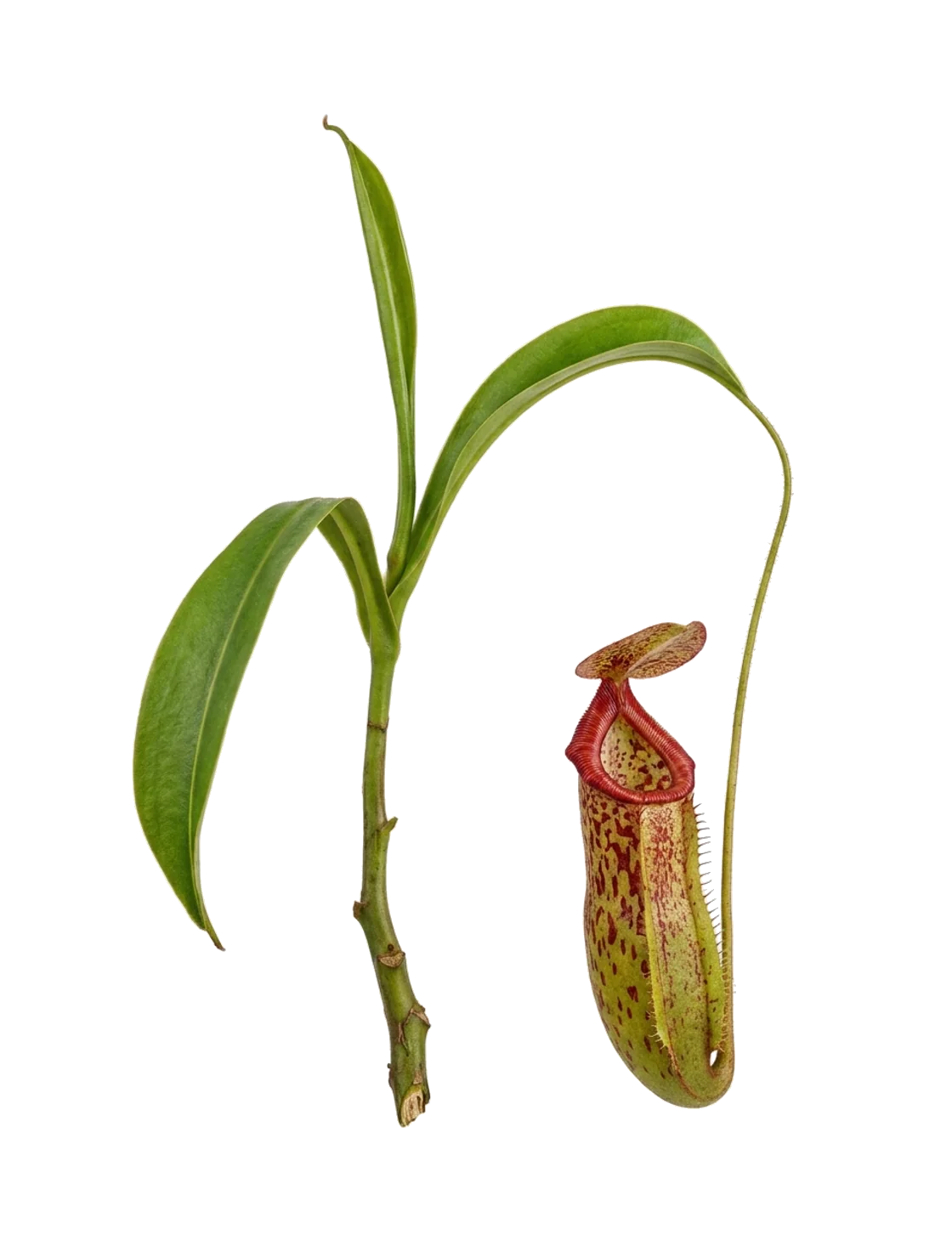
The tropical pitcher plant (Nepenthes alata) is a climbing carnivorous plant from the Philippines, where it grows on damp slopes and forest edges at intermediate altitudes. Its leaves end in a slender tendril carrying a hanging pitcher with a lid, filled with digestive fluid. Insects that fall inside cannot climb the slippery walls, and the plant absorbs nutrients from its prey, which compensates for the poor soils of its habitat.
At home it grows indoors in bright, humid conditions, ideally in hanging baskets so the pitchers dangle freely. It wants soft or rain water and a poor, airy mix of moss with perlite or bark, kept evenly moist but never waterlogged. Daytime temperatures between 20 and 30 °C with cooler nights suit it best, and it needs no fertiliser at all: it takes its nutrients from the prey it catches on its own.
Low air humidity is its weak point: in dry air it stops forming new pitchers and the tips of developing tendrils dry out. With humidity above roughly sixty percent, good filtered light and steady watering it produces pitchers through much of the year. Trim brown pitchers and overlong vines, since cut stems often branch, and propagate it from stem cuttings in warm, humid conditions. It is a continuous grower which, over the years, develops climbing stems several metres long.
Did you know?Each pitcher is actually the tip of a leaf transformed into a trap, and wild plants can climb several metres by wrapping their tendrils around nearby shrubs.
Care. What it needs, point by point.
- Watering
- Keep the mix always moist with soft or rain water, watering from above and emptying the saucer after a while. Never use tap water in hard-water areas and never let the moss dry out fully.
- Light
- ShadeIt needs abundant bright light without harsh midday sun to colour the pitchers. An east-facing window or a shaded greenhouse suits it well.
- Temperature
- 18–28 °C ideal temperatureIt grows best between 18 and 28 °C by day with somewhat cooler nights. Keep it above 13 °C in winter and away from radiators and cold draughts.
- Soil
- Use a poor, open mix of sphagnum moss with perlite or bark, with no fertiliser added. Repot every two or three years, when the moss starts to break down.
- Fertilizer
- Do not fertilise the mix: it burns the roots and the plant feeds itself from captured insects. A plant that catches nothing can take an occasional very diluted orchid spray on the leaves.
- Pruning
- No pruning is needed; cut off only fully dry pitchers and old leaves. Leave developing tendrils alone, even bare ones, since the pitcher may still be forming.
- Propagation
- Propagate in spring from stem cuttings with two or three leaves, rooted in damp moss under a humidity dome. It also grows from seed, though seedlings take years to form adult pitchers.
Where it grows. In the wild and in homes.
In the wild it grows in Malesia, in a wet tropical climate.
Range: Plants of the World Online, Royal Botanic Gardens, Kew
Is Tropical pitcher plant toxic to cats and dogs?
The ASPCA doesn't list this species. If your pet has chewed it and seems unwell, call your vet.
Common problems What tends to go wrong.
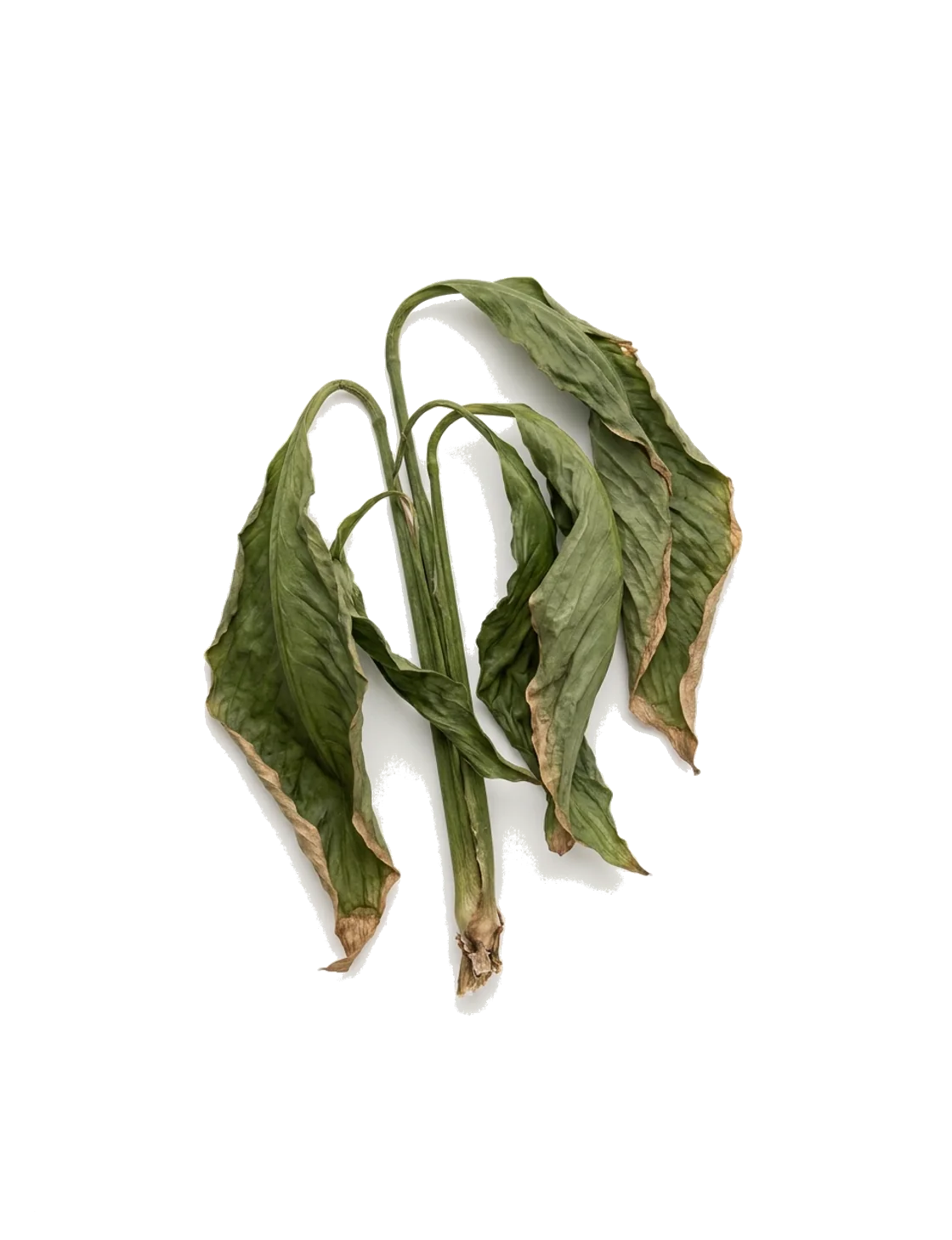
- Dry air
- Underwatering
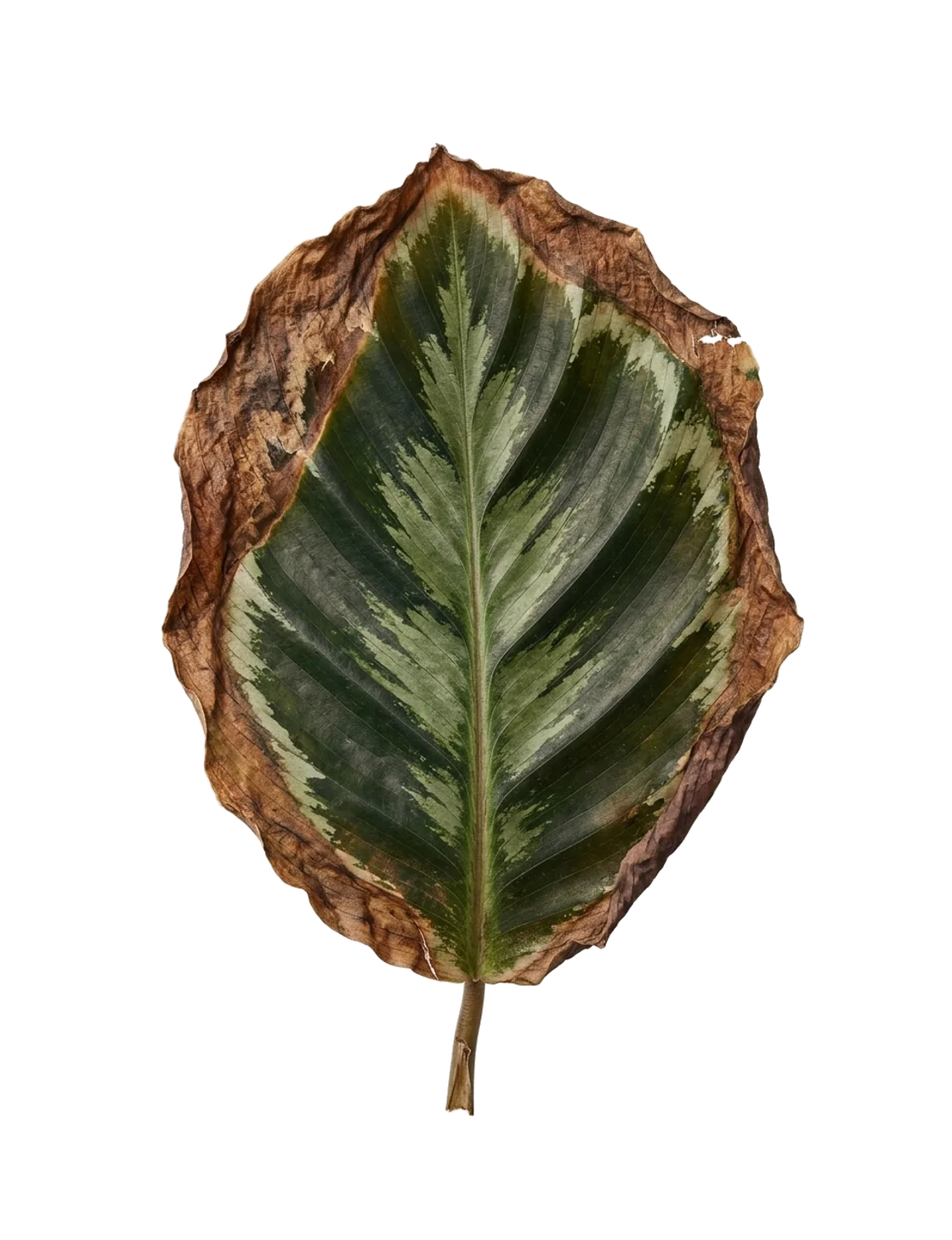
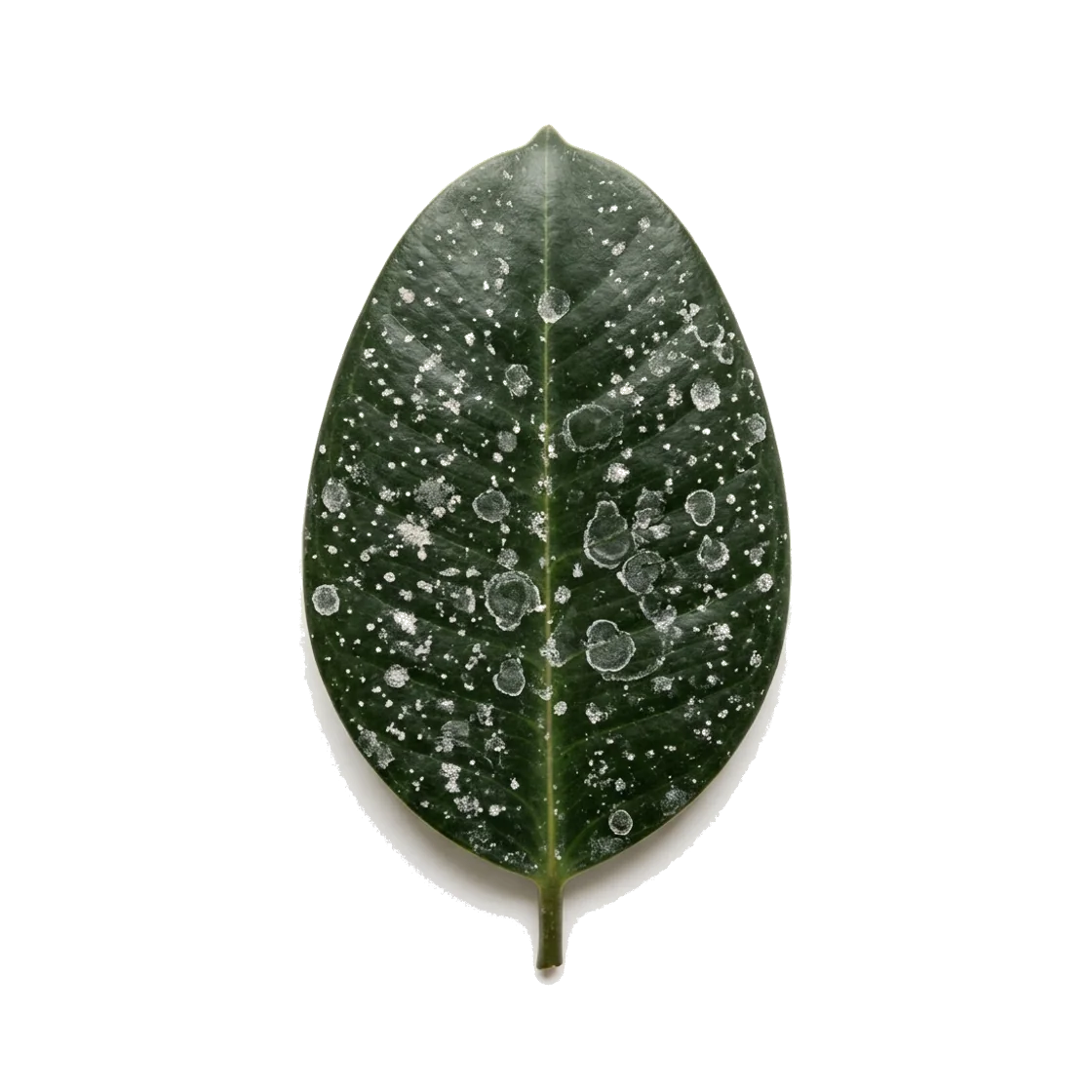
- Hard water
- Too little light

Frequently asked questions What people ask most.
Why is my plant not forming pitchers?
Dry air is the usual cause: the tendrils dry out before the pitcher can inflate. Raise the humidity with a humidifier or a bright bathroom spot, and new leaves should come with pitchers.
The old pitchers are drying up. Is that normal?
Yes, each pitcher lasts a few months and then browns from the top down. Cut off only fully dry pitchers and keep the leaf, which keeps feeding the plant.
Should I feed it insects myself?
There is no need indoors if it catches the odd fly on its own, and never offer it meat or human food. A plant that catches nothing can manage for months on light and water alone.
Can I fill the pitchers with water?
No extra water is needed: the plant fills its own pitchers with digestive fluid. Adding water only dilutes the fluid and can rot young pitchers.
Why are the leaves turning yellow?
Yellowing lower leaves often mean hard tap water or salts building up in the moss. Switch to rain or distilled water and repot into fresh moss if the mix has broken down.