
Southern magnolia
Magnolia grandiflora
Southern magnolia guide: planting, watering, pruning and care to enjoy its stately shape and large fragrant summer flowers in large gardens and patios.
- Light
- 6 hof direct sun
- Temperature
- 12–28 °Cideal temperature
- Toxicity
- Non-toxic
- Difficulty
- Easy
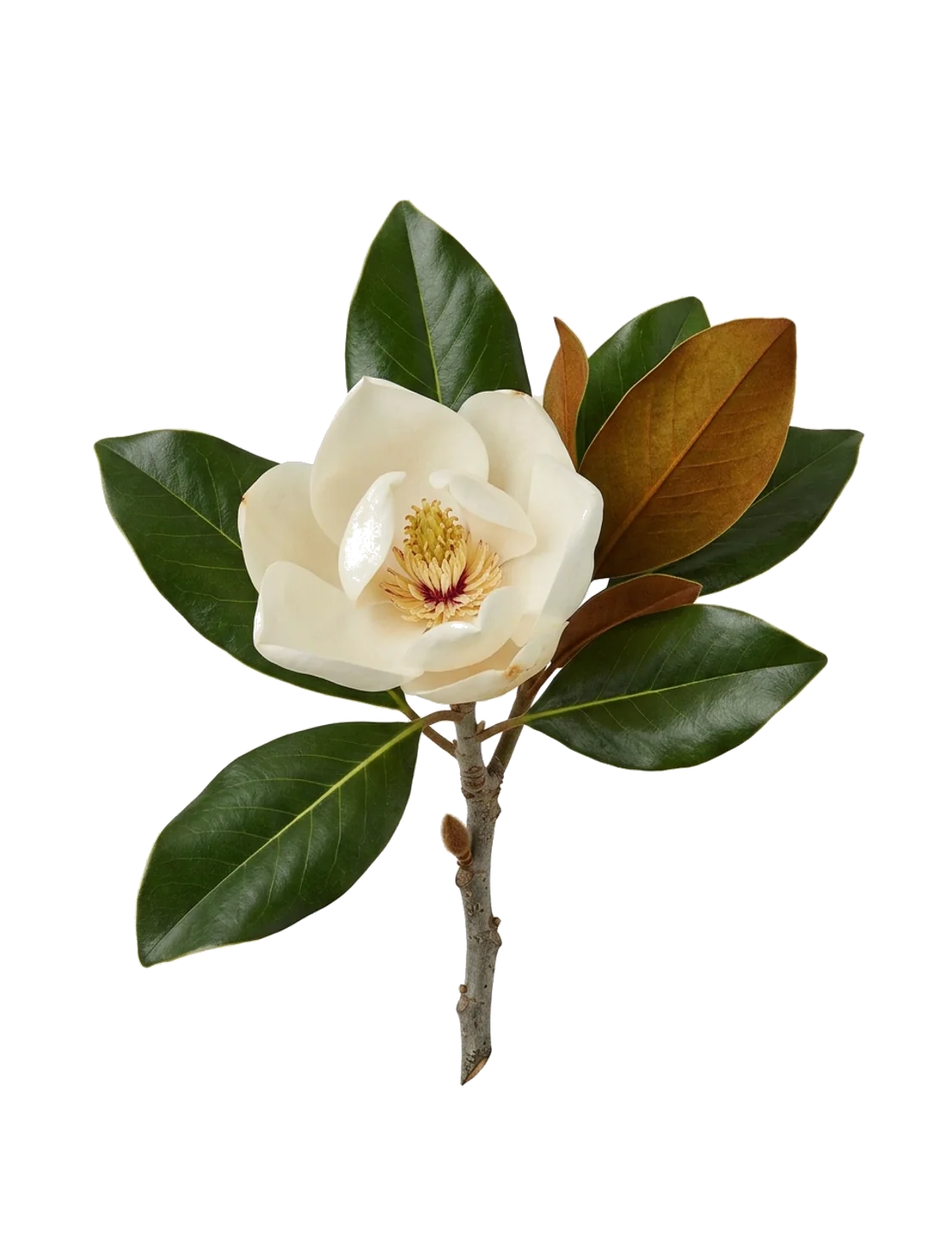
The southern magnolia (Magnolia grandiflora) is a broadleaf evergreen tree of the family Magnoliaceae, valued for its stately bearing and large fragrant summer flowers. Native to the southeastern United States, it forms a dense pyramidal crown with leathery glossy leaves, green above and often rusty felted beneath. The cup-shaped white flowers, up to 25 centimetres across, open from late spring into summer.
It is an outdoor tree for large gardens, parks and avenues that needs generous space for its wide roots and low branches. Trees are planted in spring or autumn with the root ball level with the soil and a thick mulch that keeps moisture in summer. Growth is slow at first and then steady, and established trees need little attention beyond watering in drought and light shaping. Fallen leaves and petals are part of its natural cycle under the crown.
Southern magnolias suit lawns, courtyards and coastal gardens where winters are mild. They combine with camellias and ferns in shade beneath the canopy and with summer bulbs at the sunny edge. Given sun, deep soil and room to spread, a tree becomes a landmark that flowers more heavily each year.
Did you know?Its large white flowers open over several weeks in summer and leave cone-like fruits that birds visit in autumn.
Care. What it needs, point by point.
- Watering
- Water deeply during the first two dry seasons while roots establish, letting the surface dry slightly between waterings. Mature trees withstand short droughts but grow better with steady moisture.
- Light
- 6 h of direct sunPlant in full sun or light shade with room for the broad crown. Flowering and the dense evergreen canopy are best with at least six hours of sun.
- Temperature
- 12–28 °C ideal temperatureIt grows best between 12 °C and 28 °C and tolerates winter frosts down to about -15 °C. Flower buds can suffer in very late frosts, so sheltered positions help.
- Soil
- Use deep, fertile, well-drained soil that is neutral to slightly acid. It dislikes chalky ground, compacted soil and places where water stands after rain.
- Fertilizer
- Feed young trees in spring with compost or a balanced slow-release fertilizer. Established trees in fertile soil need little extra feeding.
- Pruning
- Prune only to shape young trees and remove dead or crossing branches, in late spring after flowering. Avoid cutting large limbs, which heal slowly on magnolia wood.
- Propagation
- Nurseries propagate selected forms by layering or grafting, as seed-grown plants vary widely. Home gardeners get the best result by buying a named young tree.
Where it grows. In the wild and in homes.
In the wild it grows in the southeastern U.S. and the south-central U.S., in a subtropical climate.
People have also taken it to 14 more regions where it now grows on its own: North America, South and Central America and the Caribbean, tropical Asia, and Africa.
Range: Plants of the World Online, Royal Botanic Gardens, Kew
Is Southern magnolia toxic to cats and dogs?
The ASPCA doesn't list this species. If your pet has chewed it and seems unwell, call your vet.
Common problems What tends to go wrong.
- Mealybugs and scale
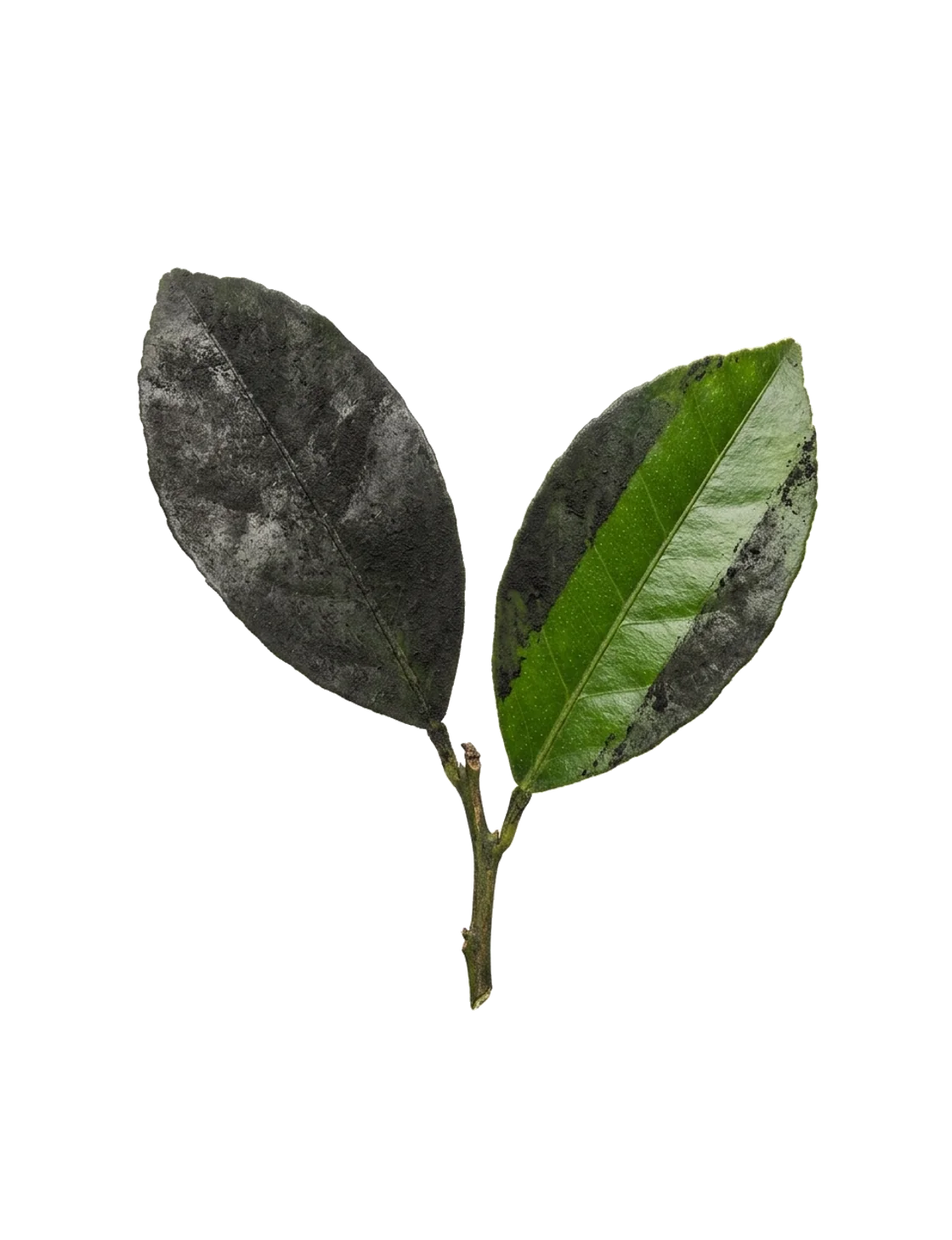
- Sooty mould
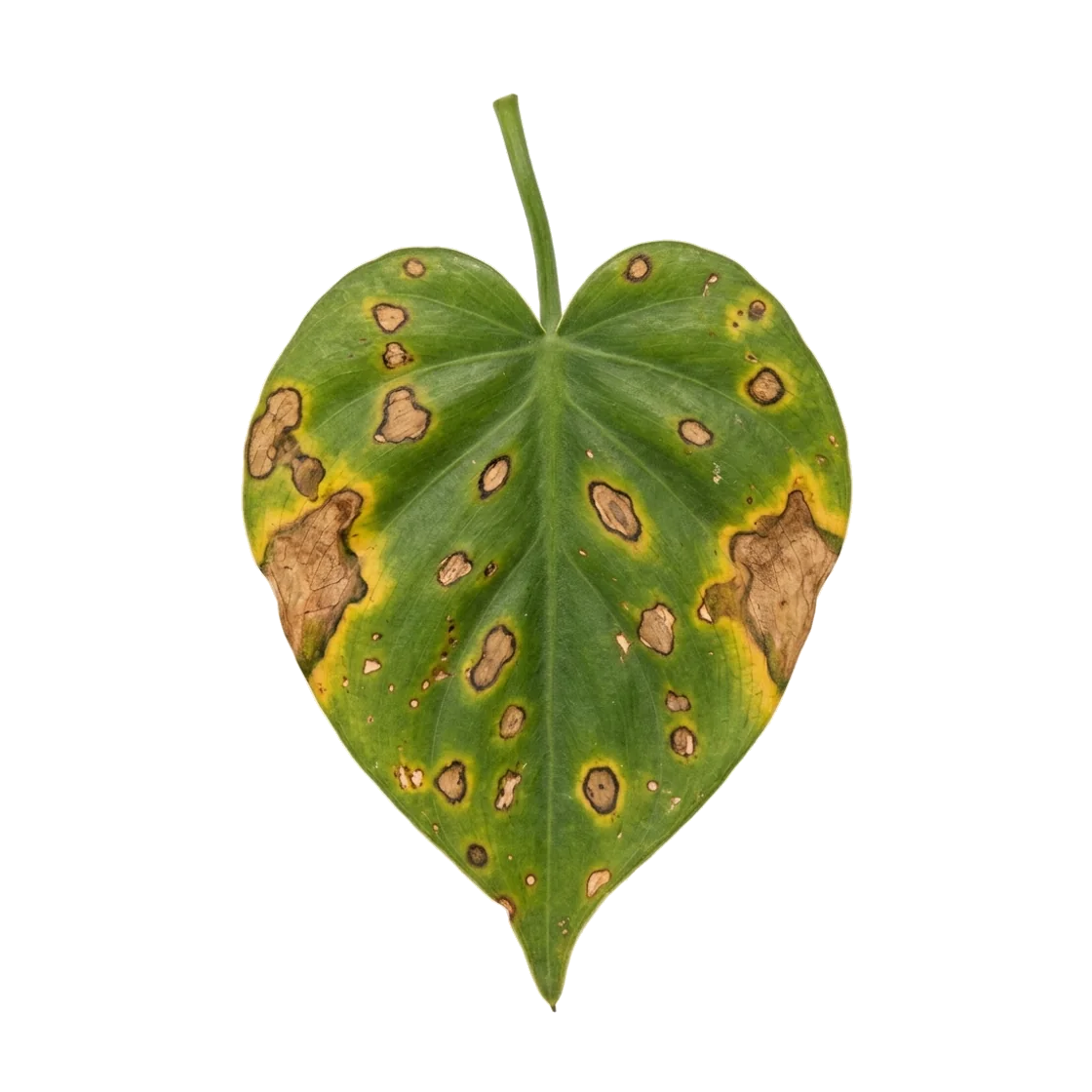
- Fungal or bacterial leaf spots
- Cold damage


Frequently asked questions What people ask most.
Why does my magnolia have yellow leaves?
Some yellowing and leaf drop in spring is normal, as the tree renews older foliage. Persistent yellowing across the crown often points to waterlogging, compacted soil or chalky ground. Improve drainage, mulch, and water deeply but less often.
How often should I water a southern magnolia?
Water newly planted trees deeply once or twice a week during the first two dry seasons. Mature trees usually manage on rainfall, with extra watering only in long heatwaves. Keep a mulch ring to hold soil moisture and protect surface roots.
When does the southern magnolia bloom?
It blooms from late spring into summer, with scattered flowers opening over several weeks. Young trees may flower lightly for the first years and improve with age. Sun, steady moisture and avoiding hard pruning encourage heavier bloom.
Can I grow a southern magnolia in a pot?
Only while young and only in a very large container with fertile drained compost. The species grows into a large tree, so plan to plant it out within a few years. Choose compact varieties if your garden is small.
How do I prune a southern magnolia?
Prune lightly in late spring, after the main flowering flush, to remove dead or crossing branches. Keep the natural pyramidal shape and avoid cutting thick limbs. Large wounds heal slowly, so prevention and small cuts are better.