
Myrtle-leaf milkwort
Polygala myrtifolia
Myrtle-leaf milkwort (Polygala myrtifolia): South African shrub with pea-like flowers, plus sun, frost protection, watering and pruning guide.
- Light
- 6 hof direct sun
- Temperature
- 16–26 °Cideal temperature
- Toxicity
- Non-toxic
- Difficulty
- Medium
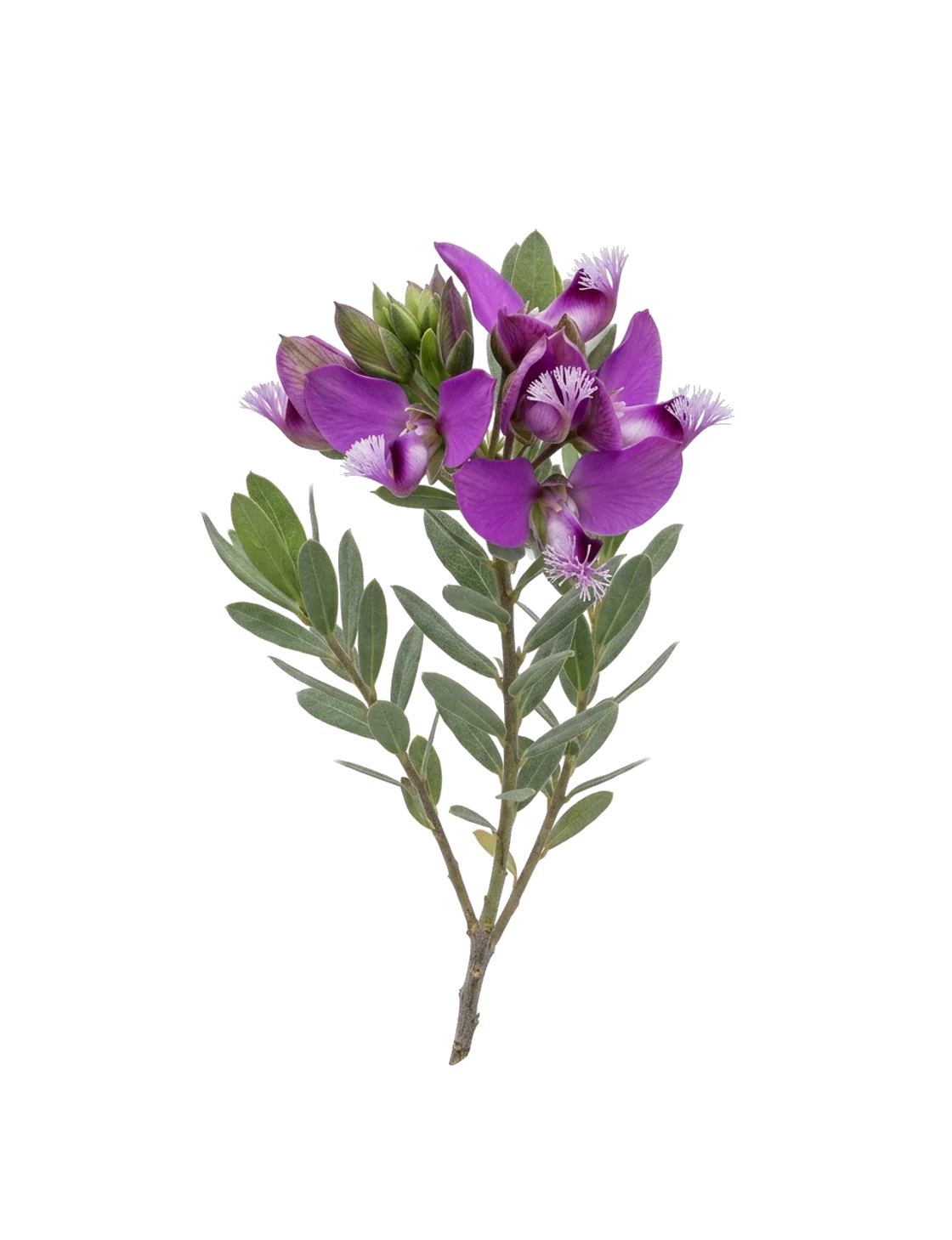
Myrtle-leaf milkwort (Polygala myrtifolia) is an evergreen shrub from South Africa prized for its pea-like flowers in purple, pink and white. The blossoms cluster at the shoot tips and appear in waves for most of the year in mild climates. It forms rounded bushes one and a half to two and a half metres tall, with small myrtle-like leaves that stay green through every season.
The flowers look like tiny butterflies: two large petal-like sepals frame a fringed central keel. They open over months rather than weeks, so the plant always carries some colour. Small oval seed capsules follow the blooms and release seeds that ants willingly carry away.
It is a generous plant for sunny terraces and coastal gardens without hard frosts, equally happy in the ground or in a large pot. Its two weaknesses are prolonged cold and waterlogged soil, which yellow and defoliate it fast. With sun, sharp drainage and a light trim after flowering, it blooms almost without rest.
Did you know?In mild coastal climates it can carry flowers in every month of the year, pausing only during the coldest weeks of winter.
Care. What it needs, point by point.
- Watering
- Water young plants regularly during the first summer, letting the surface dry slightly between waterings. Established shrubs tolerate short dry spells but flower better with steady moisture.
- Light
- 6 h of direct sunIt flowers best in full sun, with at least six hours of direct light. In partial shade blooming drops off and the habit turns open and leggy.
- Temperature
- 16–26 °C ideal temperatureIt grows best between 16 and 26 °C and tolerates brief dips to about -5 °C once established. Protect container plants and young specimens when harder frosts threaten.
- Soil
- It needs a light, well-drained, slightly acid to neutral soil. Chalky or waterlogged ground quickly yellows the foliage, so improve it with compost and sand.
- Fertilizer
- Apply a light dose of compost or fertilizer for flowering shrubs in spring. Avoid heavy nitrogen feeding, which pushes soft growth at the expense of flowers.
- Pruning
- Tip-prune lightly after each flowering flush to keep a compact shape and encourage more buds. Avoid hard cuts into old bare wood, which resprouts poorly.
- Propagation
- Semi-ripe cuttings taken in summer root well in a warm, humid propagator. Plants can also be raised from seed, but they take longer to flower.
Where it grows. In the wild and in homes.
In the wild it grows in southern Africa, in a subtropical climate.
People have also taken it to 10 more regions where it now grows on its own: Europe, Africa, Australasia, and North America.
Range: Plants of the World Online, Royal Botanic Gardens, Kew
Is Myrtle-leaf milkwort toxic to cats and dogs?
The ASPCA doesn't list this species. If your pet has chewed it and seems unwell, call your vet.
Common problems What tends to go wrong.
- Cold damage
- Overwatering
- Root rot
- Aphids




Frequently asked questions What people ask most.
Why is my polygala losing its leaves?
Cold and waterlogging are the two classic causes, often combined in winter. Check that the pot drains freely and move containers to a sheltered wall when frost threatens. Yellowed plants in heavy soil recover slowly once drainage and warmth return.
How often should I water it?
Keep young plants evenly moist through their first summer, watering when the surface starts to dry. Established shrubs need water only in dry spells, since constant sogginess harms them more than brief thirst. In winter, cut watering back sharply.
Why has my polygala stopped flowering?
Short days and cold naturally pause blooming in winter, which is no cause for alarm. In the growing season, shade and excess nitrogen are the usual brakes on flowers. Move the plant into full sun and switch to a fertilizer lower in nitrogen.
When and how should I prune it?
Trim the shoot tips lightly after each flowering wave to keep the bush compact. Remove spent flower clusters and any crossing stems at the same time. Never cut hard into leafless old wood, because those sections rarely resprout.
Can I grow it on a terrace in a cold area?
Yes, provided you grow it in a pot that can spend frosty nights under cover. Place it in the sunniest corner and bring it against a south wall or indoors to a bright frost-free spot in winter. Reduce watering and stop feeding until spring growth resumes.