
Moss rose
Portulaca grandiflora
Discover how to grow moss rose (Portulaca grandiflora): essential watering tips, full sun requirements, fast-draining soil, and vibrant blooms.
- Light
- 6–8 hof light a day
- Watering
- 1×a week
- Temperature
- 18–35 °Cideal temperature
- Toxicity
- Non-toxic
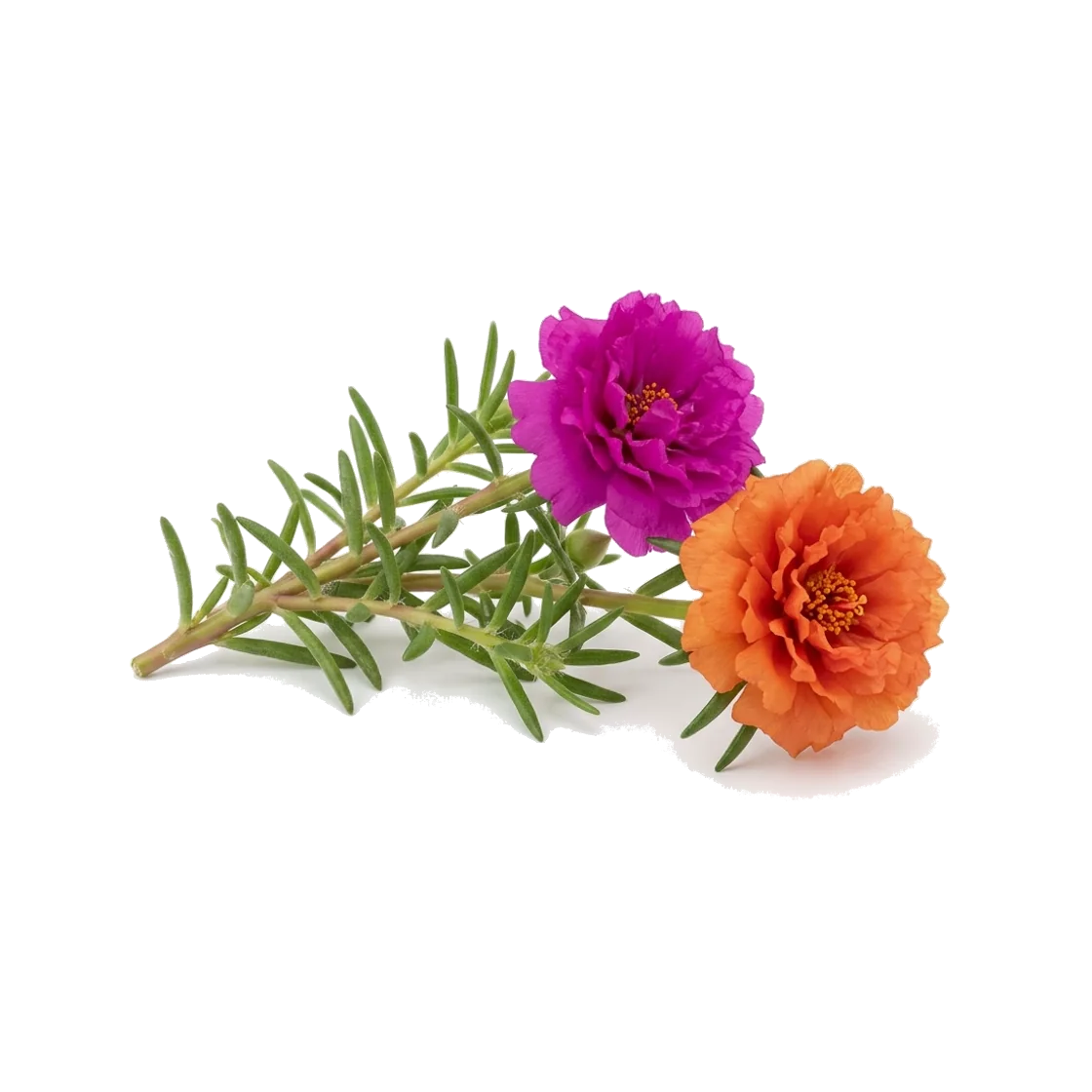
Moss rose (Portulaca grandiflora) is a beloved semi-succulent groundcover renowned for its astonishing resilience and prolific, heat-loving floral display. Its low-growing, sprawling fleshy stems spread outwards to form dense mats of needle-like, bright green cylindrical foliage that naturally stores moisture against harsh drought.
From late spring through early autumn, the plant covers itself in a vivid tapestry of cup-shaped, crinkled blossoms resembling miniature roses. The flowers showcase an intense color range spanning hot pink, crimson, golden yellow, orange, and pure white, with both single and double-petaled varieties available. It thrives effortlessly in punishing sunny spots where many other garden annuals would quickly wither and fail.
This drought-tolerant wonder is ideally suited for rock gardens, dry retaining walls, front borders, and sun-drenched hanging baskets or patio containers. While typically grown as a warm-season annual in cooler climates due to its frost tenderness, it frequently self-seeds and returns reliably year after year in well-drained garden beds.
Did you know?Its colorful blossoms only unfurl under direct sunlight and naturally close up at dusk or on overcast days.
Care. What it needs, point by point.
- Watering
- 1× a weekWater thoroughly only when the soil has completely dried out, as the succulent stems store ample reserves. In garden beds, watering once every week or two during summer is sufficient, while potted specimens dry out slightly faster.
- Light
- 6–8 h of light a dayMoss rose demands full, unfiltered sun for at least six to eight hours each day. In shaded conditions, stems stretch unnaturally and the blossoms will fail to open.
- Temperature
- 18–35 °C ideal temperatureThe plant flourishes in warm environments between 18 °C and 35 °C and easily handles intense summer heatwaves. It has zero frost tolerance and will deteriorate rapidly once temperatures fall below 5 °C.
- Soil
- A lean, sandy, or gritty soil mix with exceptional drainage is vital to prevent root rot. Standard cactus and succulent potting soil or garden soil amended with coarse sand works perfectly.
- Fertilizer
- Feed lightly once a month during active summer growth using a balanced, low-nitrogen liquid fertilizer. Heavy feeding leads to lush foliage growth at the direct expense of flower production.
- Pruning
- Pruning is minimal and mainly involves trimming back straggly or overgrown stems in midsummer to restore shape. Pinching growing tips early in the season encourages a denser, branching growth habit.
- Propagation
- Moss rose propagates effortlessly from seeds scattered directly on top of warm, moist soil in spring. Stem cuttings also root readily when inserted directly into moist sandy compost within just a few days.
Where it grows. In the wild and in homes.
In the wild it grows in southern South America, Brazil, and western South America, in a subtropical climate.
People have also taken it to 100 more regions where it now grows on its own: North America, Africa, Europe, and tropical Asia.
Range: Plants of the World Online, Royal Botanic Gardens, Kew
Is Moss rose toxic to cats and dogs?
The ASPCA doesn't list this species. If your pet has chewed it and seems unwell, call your vet.
Common problems What tends to go wrong.
- Root rot
- Overwatering
- Too little light
- Aphids
- Cold damage





Frequently asked questions What people ask most.
Why are my moss rose flowers not opening?
Moss rose blossoms are photosensitive and open exclusively when exposed to bright, direct sunlight. If skies are overcast or the plant is situated in partial shade, the buds will stay tightly shut.
Why are the stems turning mushy at the base?
Mushy lower stems are a classic sign of overwatering and waterlogged, poorly draining soil. Allow the root zone to dry out completely between waterings and make sure containers have clear drainage holes.
Can moss rose survive the winter outside?
In regions that experience freezing temperatures, moss rose will succumb to the first hard frost of winter. However, it readily drops seed pods that will germinate naturally the following spring once warm weather returns.
How do I encourage more flowers on my moss rose?
Ensure the plant receives maximum direct sunlight and avoid high-nitrogen fertilizers that push foliage instead of buds. Lightly pinching back leggy stems in midsummer will also stimulate fresh flowering growth.