
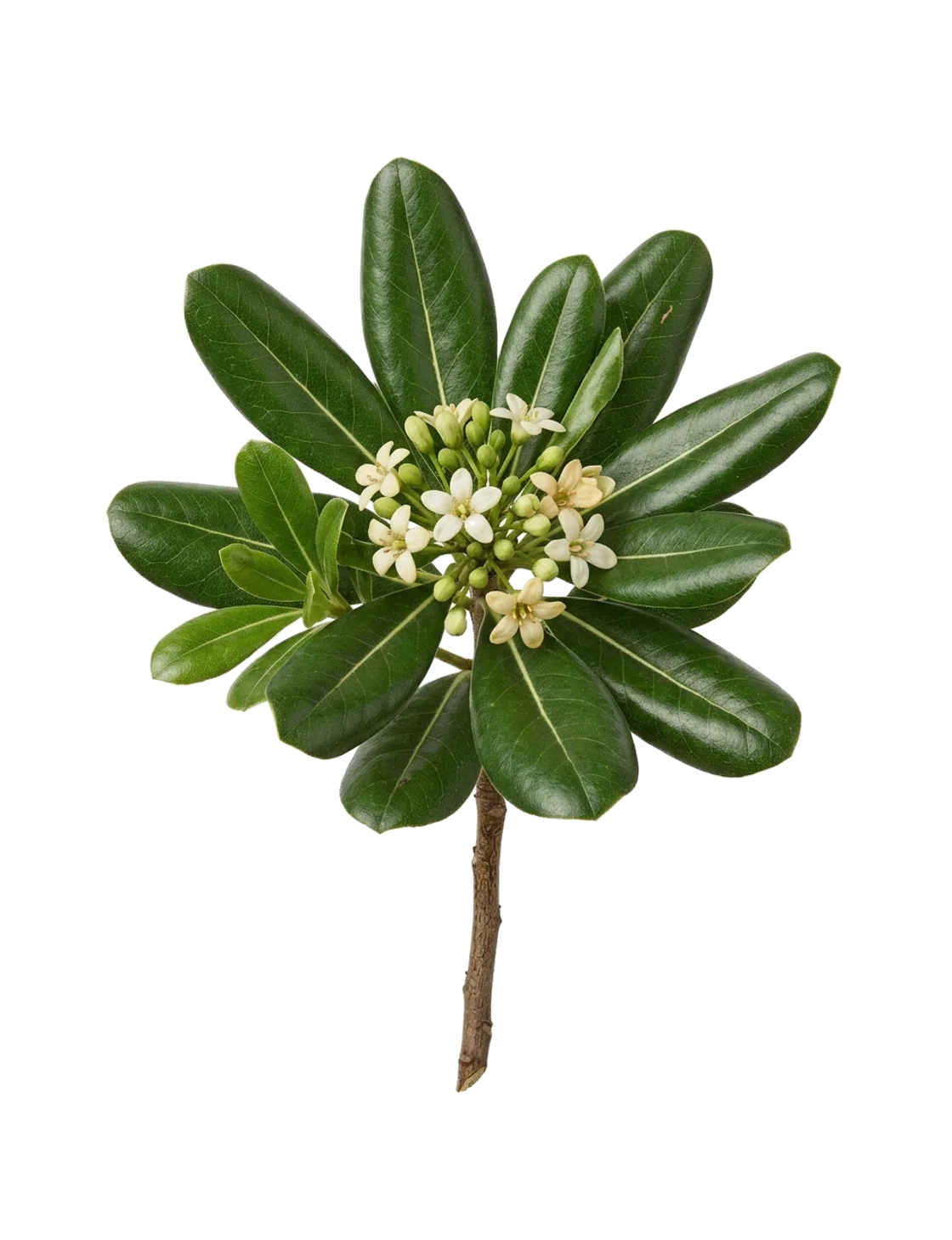
Japanese pittosporum (Pittosporum tobira) is a dense evergreen shrub widely planted in Mediterranean gardens for its glossy dark-green foliage and remarkable tolerance of sea wind and salt spray. Native to eastern Asia, it forms rounded bushes two to four metres tall that work well as hedges, screens or single specimens. Its flowers smell distinctly of orange blossom, which explains one of its Spanish names.
The leathery, blunt-tipped leaves cluster in whorls at the ends of the branches and keep their colour all year. In late spring the shrub covers itself with small creamy-white flowers whose sweet scent carries several metres on warm evenings. Rounded seed capsules follow the flowers and split open to reveal seeds coated in a sticky resinous pulp.
It is one of the safest choices for seaside gardens, roundabouts and low-maintenance hedges, since established plants cope with drought and poor soils. Growth is slow, pruning is well tolerated and problems are rare where drainage is good. Give it sun or light shade and a yearly trim after flowering, and it will look tidy for decades.
Did you know?Its small white flowers smell strongly of orange blossom, and its seeds travel coated in a sticky pulp that glues them to the ground.
Care. What it needs, point by point.
- Watering
- 1–2× a weekWater deeply once or twice a week during the first year, letting the surface dry out between waterings. Once established, it handles dry spells and only needs water when the soil feels dry several centimetres down.
- Light
- Full sunIt grows well in full sun and in light shade, although flowering is heaviest with plenty of light. In deeper shade the canopy turns thinner and looser.
- Temperature
- 15–25 °C ideal temperatureIt grows best between 15 and 25 °C and withstands light frosts down to around -8 °C once established. Harsh cold winds and long freezes can scorch the young leaf tips.
- Soil
- It prefers well-drained soils, from loamy to sandy, and copes with chalky ground. Avoid waterlogging, which rots the roots.
- Fertilizer
- Feed with a balanced fertilizer or compost in early spring as growth resumes. In pots, follow up with a light liquid feed in midsummer.
- Pruning
- Prune just after flowering to keep the shape without removing next year's buds. It tolerates hard cutting back, but light, regular trims give the best result.
- Propagation
- Take semi-ripe cuttings in summer, with bottom heat and a humid atmosphere. Rooting is slow and can take two to three months.
Where it grows. In the wild and in homes.
In the wild it grows in East Asia, in a subtropical climate.
People have also taken it to 23 more regions where it now grows on its own: Europe, Africa, North America, and temperate Asia.
Range: Plants of the World Online, Royal Botanic Gardens, Kew
Is Japanese pittosporum toxic to cats and dogs?
Non-toxic to cats and dogs.

Cats
Non-toxic

Dogs
Non-toxic
Source · ASPCA Animal Poison Control
Common problems What tends to go wrong.
- Mealybugs and scale
- Aphids
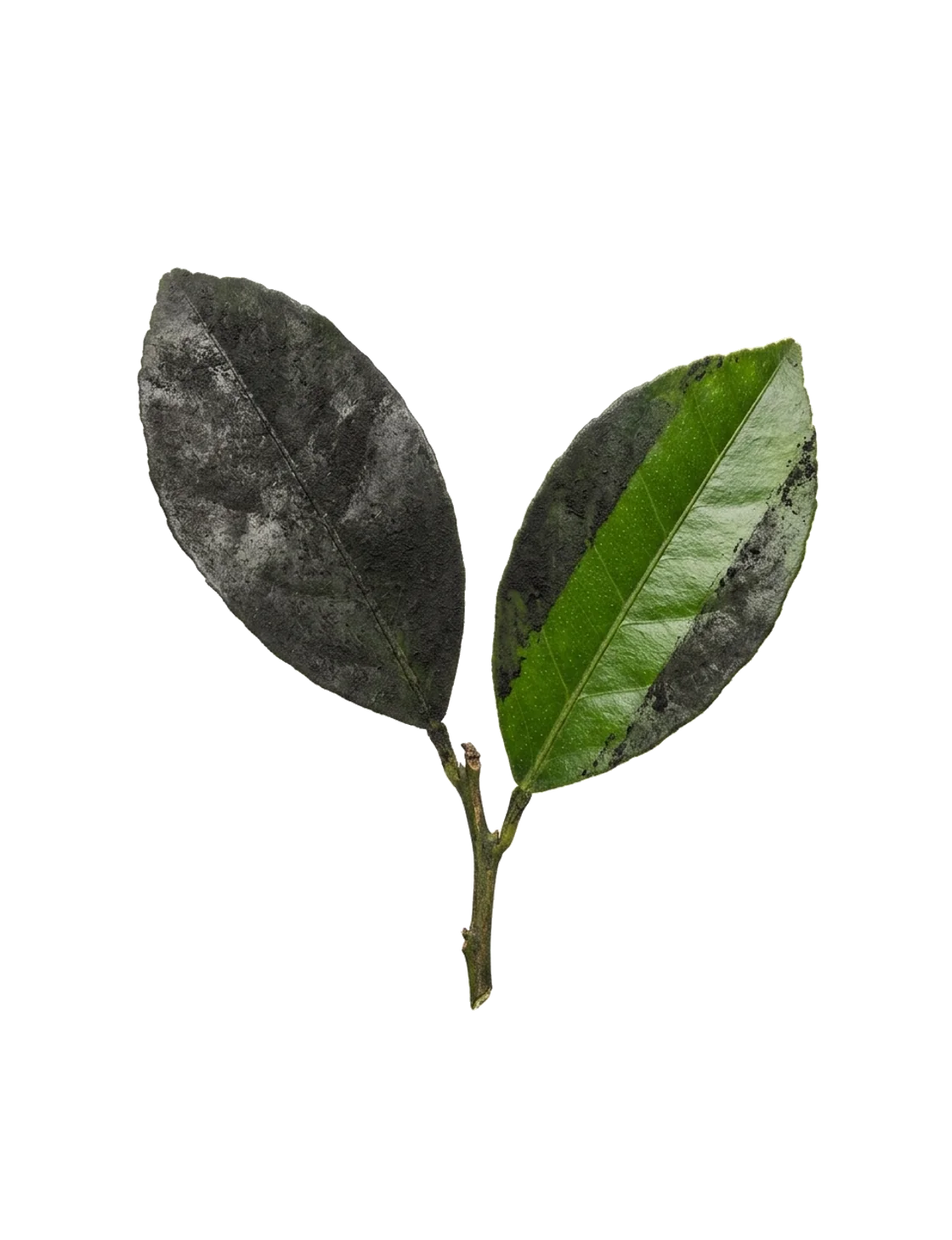
- Sooty mould
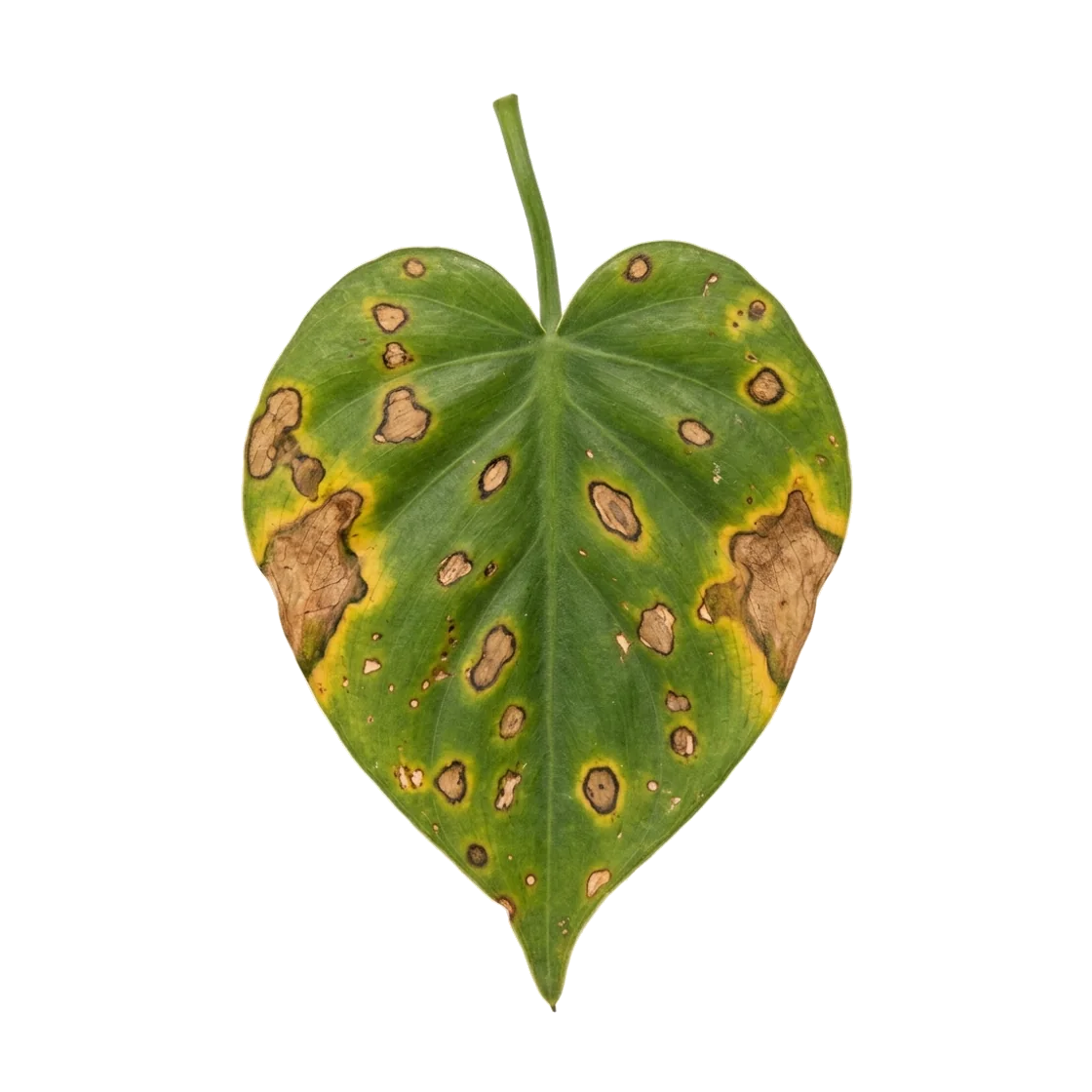
- Fungal or bacterial leaf spots


Frequently asked questions What people ask most.
Why are the leaves on my pittosporum turning yellow?
The most common cause is too much water or poor drainage, which suffocates the roots. Check that the pot or soil drains freely and let the surface dry before watering again. On very chalky soils iron chlorosis can also yellow the foliage, and adding organic matter helps.
How often should I water it?
During the first year, water deeply once or twice a week so the roots establish well. Afterwards, established shrubs only need watering in long dry spells. Always check the soil first: if it still feels damp a few centimetres down, wait.
When and how should I prune it?
Prune just after the spring flowering, shortening the shoots that spoil the shape. It accepts shears well, so hedges can be trimmed once a year. Avoid pruning in late autumn, because the tender regrowth suffers in winter cold.
Why is my pittosporum not flowering?
Young plants and deep shade are the usual explanations, since heavy shade strongly reduces blooming. A late prune can also remove the buds of the season. Move container plants into brighter light and prune right after flowering instead of in winter.
Is it suitable for a seaside hedge?
Yes, it is one of the best shrubs for coastal gardens because it tolerates salt spray and wind. Plant at one-metre spacing and trim yearly after flowering for a dense screen. Mulching the base helps young plants through the first summer.