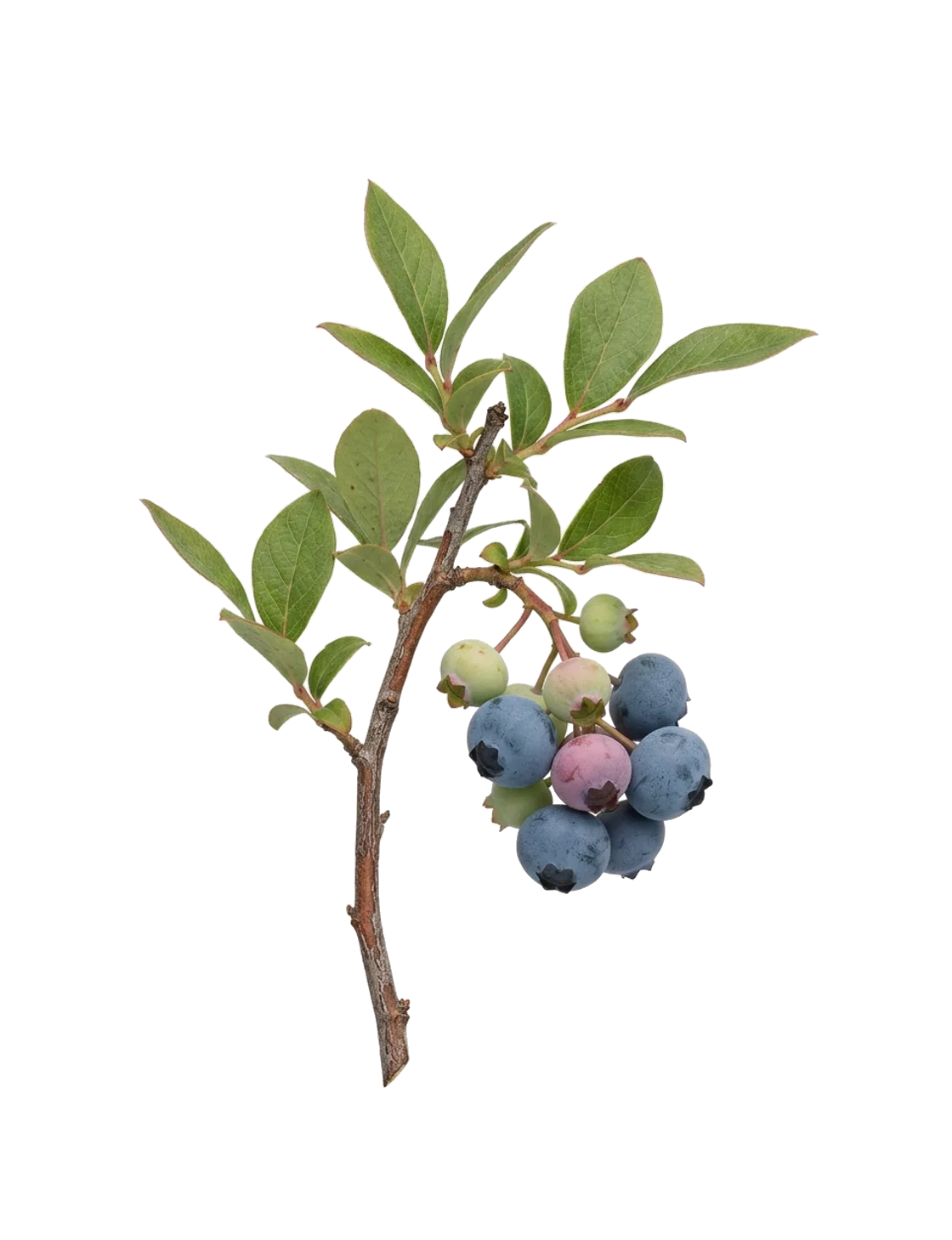
Highbush blueberry
Vaccinium corymbosum
Highbush blueberry care at home: acid soil, steady watering, full sun and yearly pruning for sweet, juicy and abundant berries every summer.
- Light
- Full sun
- Temperature
- 15–25 °Cideal temperature
- Toxicity
- Non-toxic
- Difficulty
- Medium
The highbush blueberry (Vaccinium corymbosum) is a deciduous shrub in the heather family, native to eastern North America, where it grows wild in moist woods and bogs. It has small oval leaves that turn red in autumn, clusters of white bell flowers in spring, and the familiar blue-black berries covered in a natural waxy bloom. It is the most widely cultivated blueberry in home and commercial gardens.
Its one great demand is acid soil: without a pH between 4.5 and 5.5 the leaves yellow and the bush barely grows. Planting two different varieties nearby improves pollination and gives larger, more abundant harvests. Once the soil is right, it is a hardy and long-lived bush that asks for little else.
Berries are picked fully blue, with a couple of days of patience after coloring so they sweeten on the bush. The shrub needs steady moisture because its roots run shallow, plus a yearly mulch of pine bark or needles. With acid soil, sun, and regular water, it produces generous harvests of sweet fruit for decades.
Did you know?Its tiny bell-shaped flowers turn into berries with a star-shaped crown where the blossom once was.
Care. What it needs, point by point.
- Watering
- Water often and evenly, since its shallow roots dry out fast: the substrate should stay lightly moist always. Use soft or rain water when possible, because hard water gradually raises the pH.
- Light
- Full sunIt needs full sun or very light shade to ripen sweet berries. In deep shade it grows leggy and the harvest stays small and sour.
- Temperature
- 15–25 °C ideal temperatureIt grows well between 15 and 25 °C and withstands hard winter cold well below 0 °C. Its flowers, however, are sensitive to late spring frosts, so shelter the bush when it blooms.
- Soil
- pH 4.5–5.5It demands acid soil or substrate with pH between 4.5 and 5.5, rich in organic matter and well drained. In chalky zones grow it in a pot with heather or chestnut soil mixed with pine bark.
- Fertilizer
- Feed in spring with fertilizer for acid-loving plants or composted pine needles, split into two doses. Never apply ash or lime, which raise the pH the blueberry cannot stand.
- Pruning
- Prune in late winter, removing old, weak, and crossing stems to keep five to seven vigorous canes. Renewal pruning keeps the bush young, since the best berries grow on two- and three-year-old wood.
- Propagation
- It is multiplied by softwood cuttings in summer under humidity, or by layering low branches. Seed sowing gives variable plants and takes many years to bear.
Where it grows. In the wild and in homes.
In the wild it grows in North America, in a temperate climate.
People have also taken it to 9 more regions where it now grows on its own: Europe and North America.
Range: Plants of the World Online, Royal Botanic Gardens, Kew
Is Highbush blueberry toxic to cats and dogs?
The ASPCA doesn't list this species. If your pet has chewed it and seems unwell, call your vet.
Common problems What tends to go wrong.
- Root rot
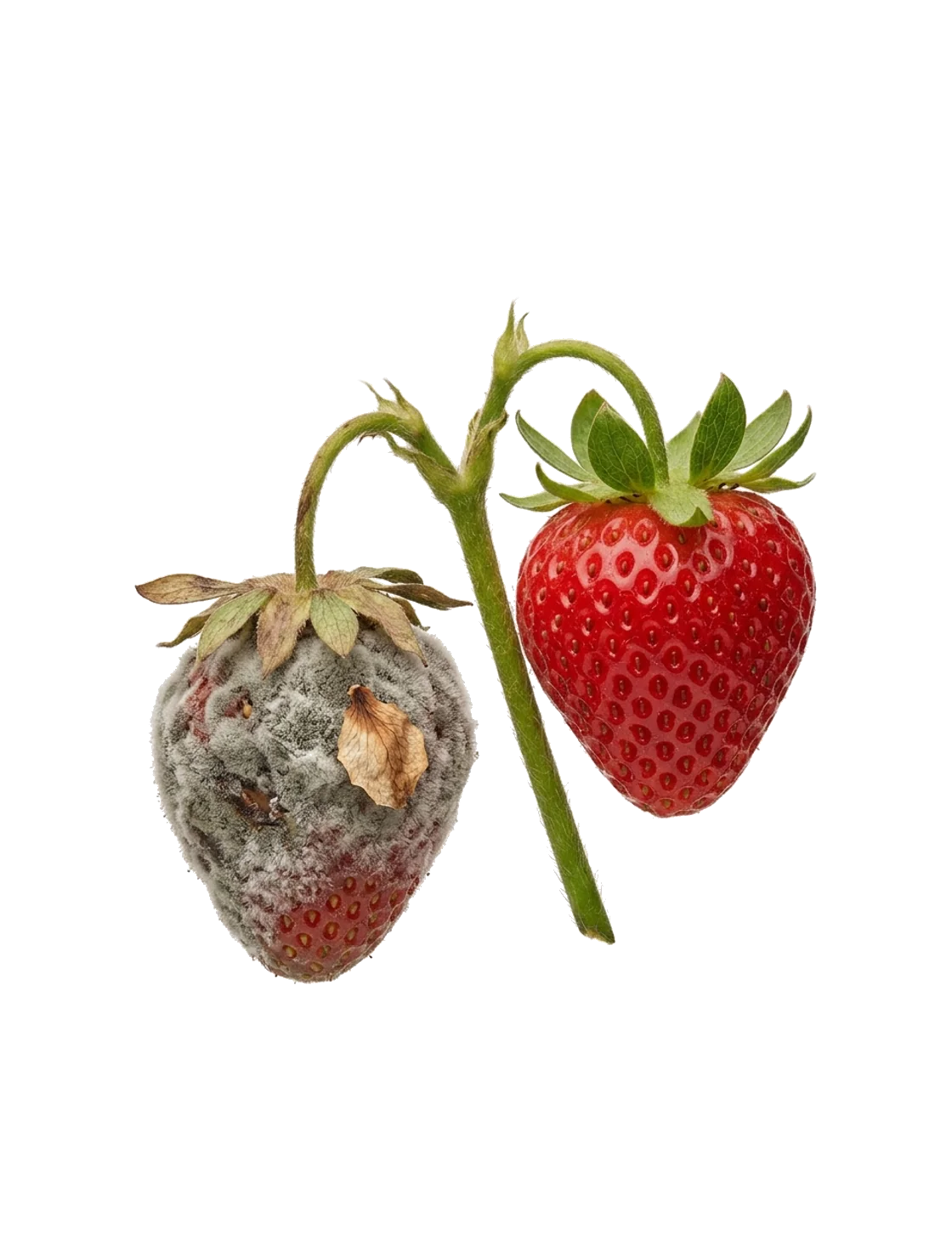
- Botrytis (grey mould)
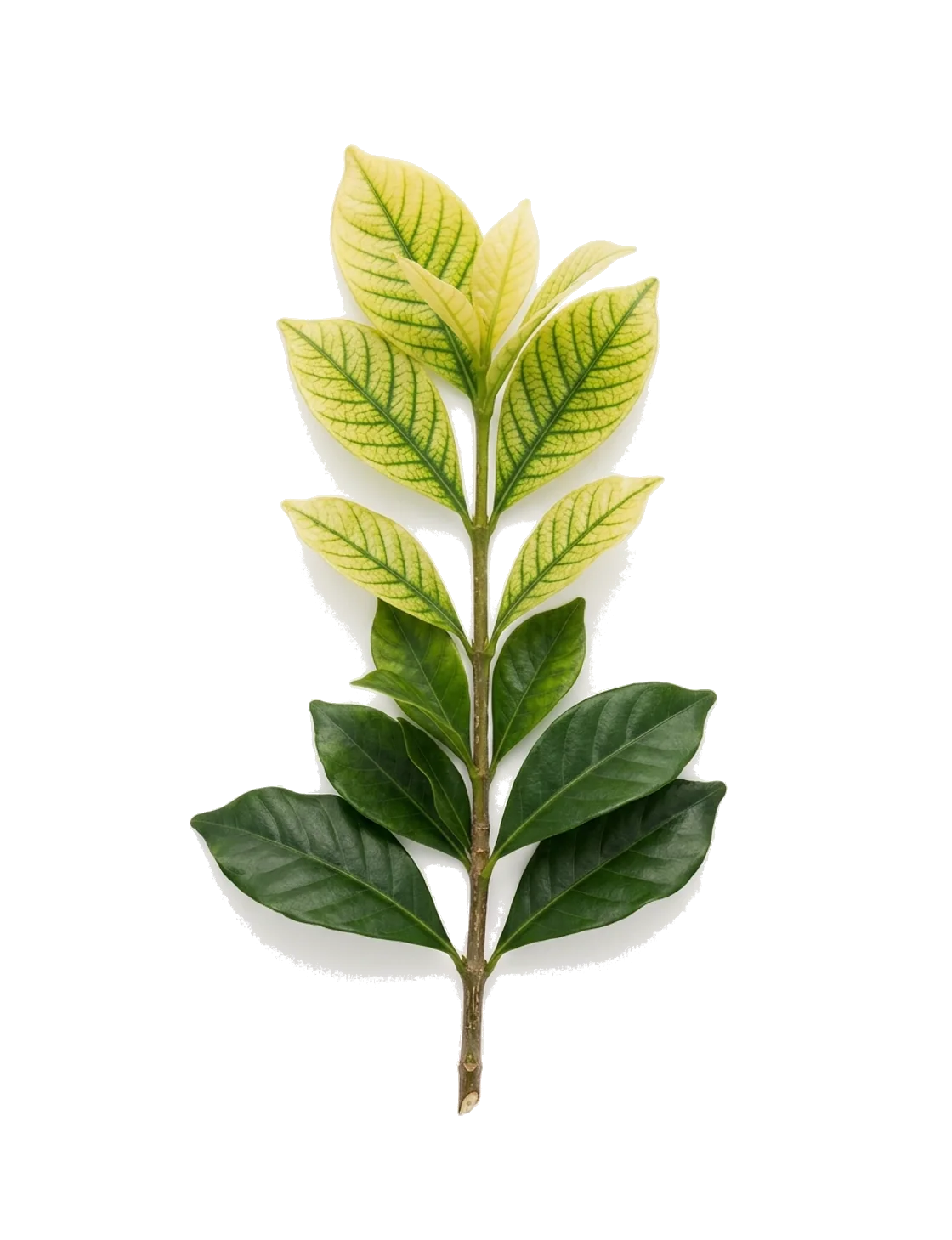
- Iron chlorosis
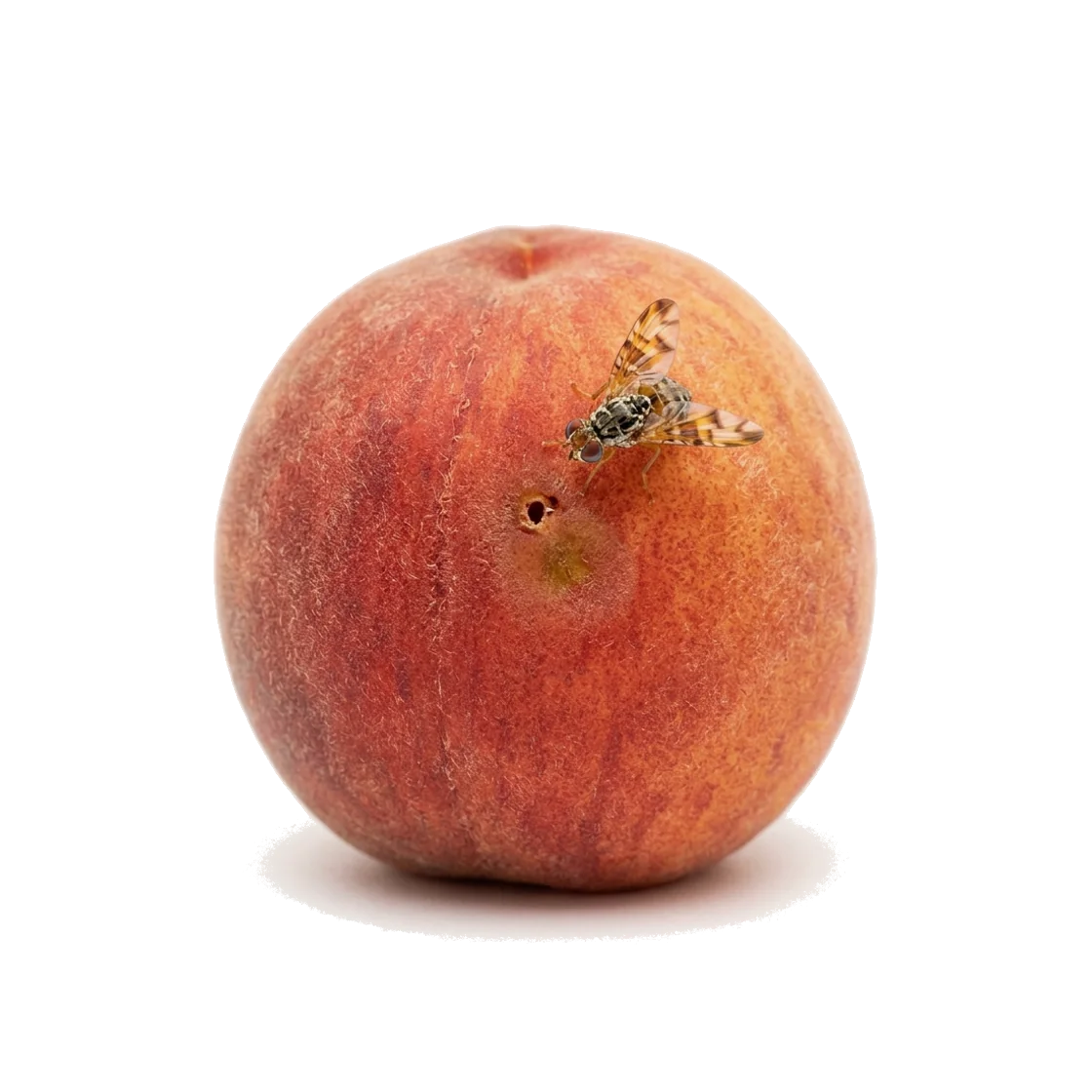
- Fruit fly

Frequently asked questions What people ask most.
Why do the leaves turn yellow or reddish?
Yellow leaves with green veins mean the soil is not acid enough and the roots cannot take up iron. Check the pH, water with soft water, and add sulfur or acid substrate to bring it down.
Can blueberries grow in chalky soil?
Only in a pot with acid substrate, since garden lime blocks their nutrition. Use a large container, heather soil with pine bark, and rain water whenever possible.
Does it need another plant to bear fruit?
It bears alone, but two different varieties nearby cross-pollinate and clearly increase size and yield. Bees do the work, so avoid spraying during flowering.
How often should blueberries be watered?
Keep the substrate lightly moist at all times, watering more often in summer heat and in pots. Mulch with pine bark to hold moisture and add a touch of acidity as it breaks down.