Guava
Psidium guajava
Guava (Psidium guajava): complete growing guide for gardens and pots with watering, pruning, feeding, sun needs and sweet, juicy harvest tips.
- Light
- 6 hof direct sun
- Watering
- 1–2×a week
- Temperature
- 20–30 °Cideal temperature
- Toxicity
- Non-toxic
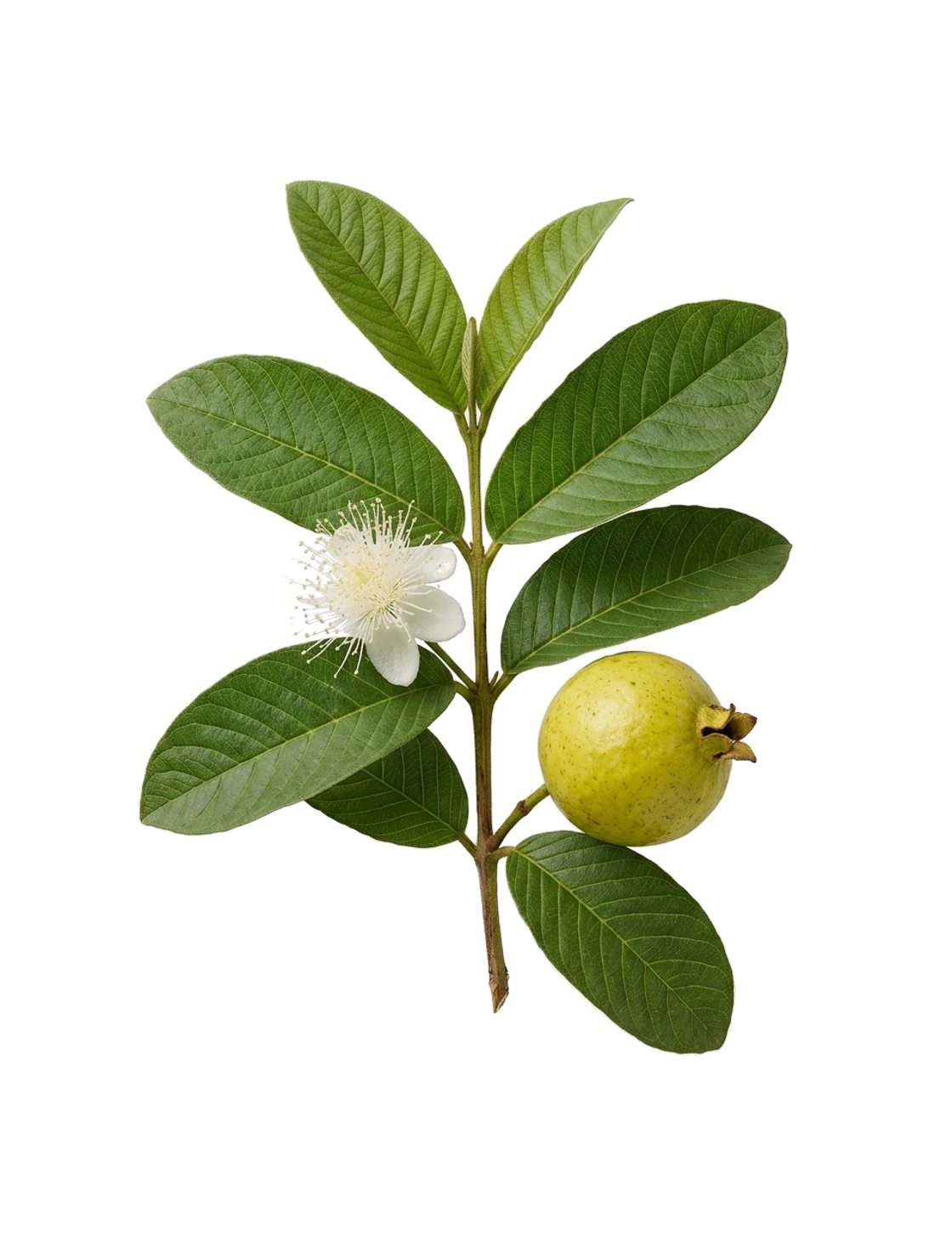
Guava (Psidium guajava) is an evergreen fruit tree in the myrtle family (Myrtaceae), valued for its fragrant, sweet-fleshed fruit and its toughness in warm climates. Native to tropical America, it grows wild from Mexico and the Caribbean to northern South America, where it forms open-crowned trees three to ten metres tall. Its smooth copper-toned bark, which peels in thin flakes, and its deep-green oval leaves with strongly marked veins give it a distinctive look all year.
It flowers from spring into summer, producing white blooms with a boss of slender stamens that develop into round, thin-skinned fruit with juicy pulp and many hard seeds. Harvest usually falls in late summer or autumn depending on the climate, and a well-kept adult tree crops for many years. Guava is self-fertile and needs full sun and warmth to ripen sweet fruit: in shade it grows but barely fruits.
Where frosts are absent it thrives in garden soil, and it also grows well in a large pot, where pruning keeps it compact. It accepts a range of soils as long as drainage is good, and once established it withstands dry spells, though it appreciates steady watering while fruit is forming. With sun, shelter from hard frost and a light yearly prune, it gives light shade, pretty blossom and a generous harvest.
Did you know?A single guava fruit holds several times the vitamin C of an orange, and its white, stamen-filled blossoms draw in crowds of bees.
Care. What it needs, point by point.
- Watering
- 1–2× a weekWater deeply and regularly through spring and summer, letting the top layer of soil dry out between waterings. In the ground, once or twice a week in hot weather is usually enough, while potted trees need water more often. Cut back in winter and never leave the roots waterlogged, which causes them to rot.
- Light
- 6 h of direct sunGive it full sun, with at least six hours of direct sun a day to flower and ripen fruit. In partial shade it grows leggy and crops poorly, so save the sunniest spot for it.
- Temperature
- 20–30 °C ideal temperatureIt grows best between 20 and 30 °C and does not tolerate hard frost, which damages shoots and fruit. It withstands brief light cold, but below about −2 °C protect it with a frost fleece or move the pot somewhere sheltered.
- Soil
- pH 5.5–7It tolerates poor, sandy soils but demands excellent drainage and a pH between 5.5 and 7. In pots, use a fertile mix with perlite or coarse sand and a drainage layer at the bottom.
- Fertilizer
- Apply compost or a balanced fertiliser in spring and again in early summer to support fruiting. Avoid excess nitrogen, which promotes leaves at the expense of fruit.
- Pruning
- Prune in late winter to keep an open, airy crown, removing dead, crossing branches and suckers from the base. Since it flowers on new wood, a light trim encourages productive shoots.
- Propagation
- Sowing seeds is easy with warmth (around 20–25 °C), but seedlings take years to fruit and may differ from the parent tree. For fruit of known quality, use air layering or grafting onto seedling rootstocks, which bring harvests forward and keep them uniform.
Where it grows. In the wild and in homes.
In the wild it grows in western South America, in a seasonally dry tropical climate.
People have also taken it to 116 more regions where it now grows on its own: South and Central America and the Caribbean, Africa, the Pacific, and tropical Asia.
Range: Plants of the World Online, Royal Botanic Gardens, Kew
Is Guava toxic to cats and dogs?
The ASPCA doesn't list this species. If your pet has chewed it and seems unwell, call your vet.
Common problems What tends to go wrong.
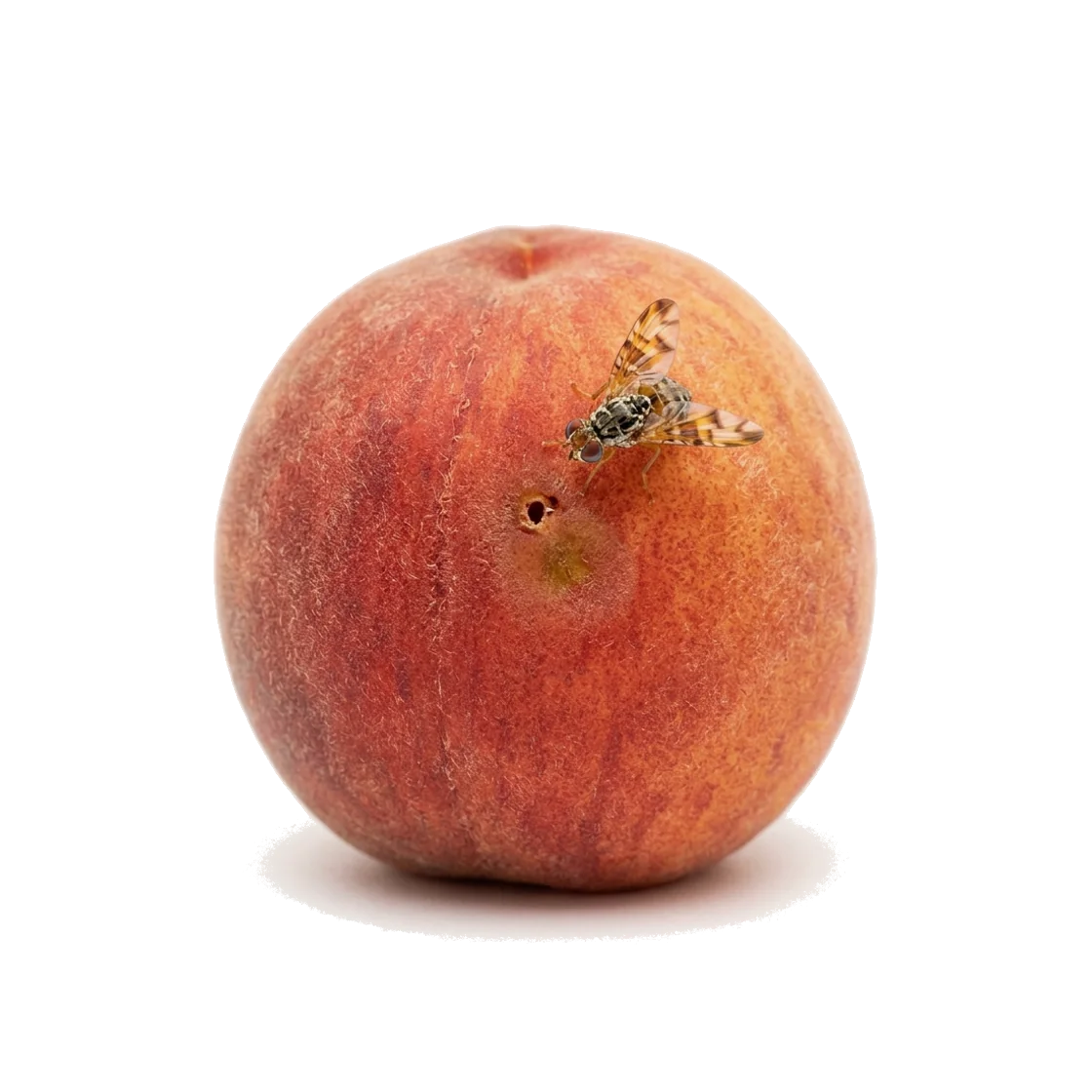
- Fruit fly
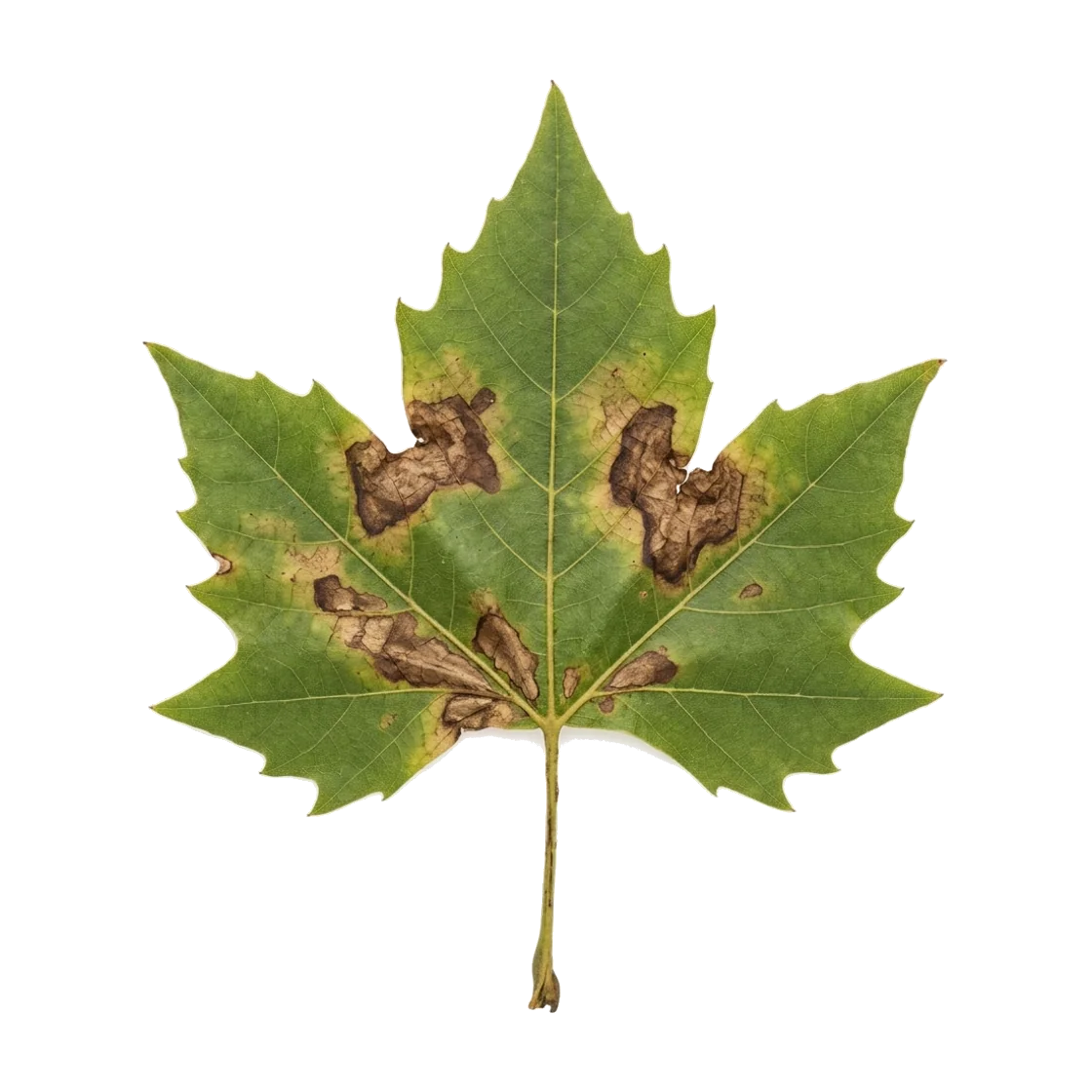
- Anthracnose
- Mealybugs and scale
- Aphids
- Cold damage



Frequently asked questions What people ask most.
How often should I water my guava tree?
In summer, water deeply once or twice a week in the ground, and up to three times in a pot, after checking that the top centimetres of soil feel dry. In winter, space waterings out and let the soil dry more between them. A bark mulch helps hold moisture without waterlogging.
Why are there maggots inside my guavas?
The usual cause is fruit fly, which lays eggs under the skin as the fruit starts to ripen. Pick fruit at the right moment, clear fallen fruit from the ground and set vinegar or yellow sticky traps from early summer. Bagging a few fruits in fine mesh is the most reliable method in small gardens.
Why are the leaves turning yellow?
The most common cause is overwatering or poor drainage, which suffocates the roots and yellows the lower leaves first. Cold weather or a lack of nutrients after a heavy crop can also be responsible. Fix the watering, improve drainage and feed in spring if the tree looks weak.
Can I grow a guava tree from a seed in the fruit?
Yes: rinse the seeds, dry them for a day and sow shallowly in warm, moist soil, where they sprout in two to four weeks. Be patient, as seedlings take several years to fruit and may differ from the original. For a named variety, buy a grafted plant.
Why is my guava tree not fruiting?
The most frequent reasons are too little sun, a tree that is still young, or cold damage to the flowers. Give it full sun, avoid heavy spring pruning that removes new wood, and protect blossom from late frosts. With enough warmth, most trees start cropping between three and five years of age.