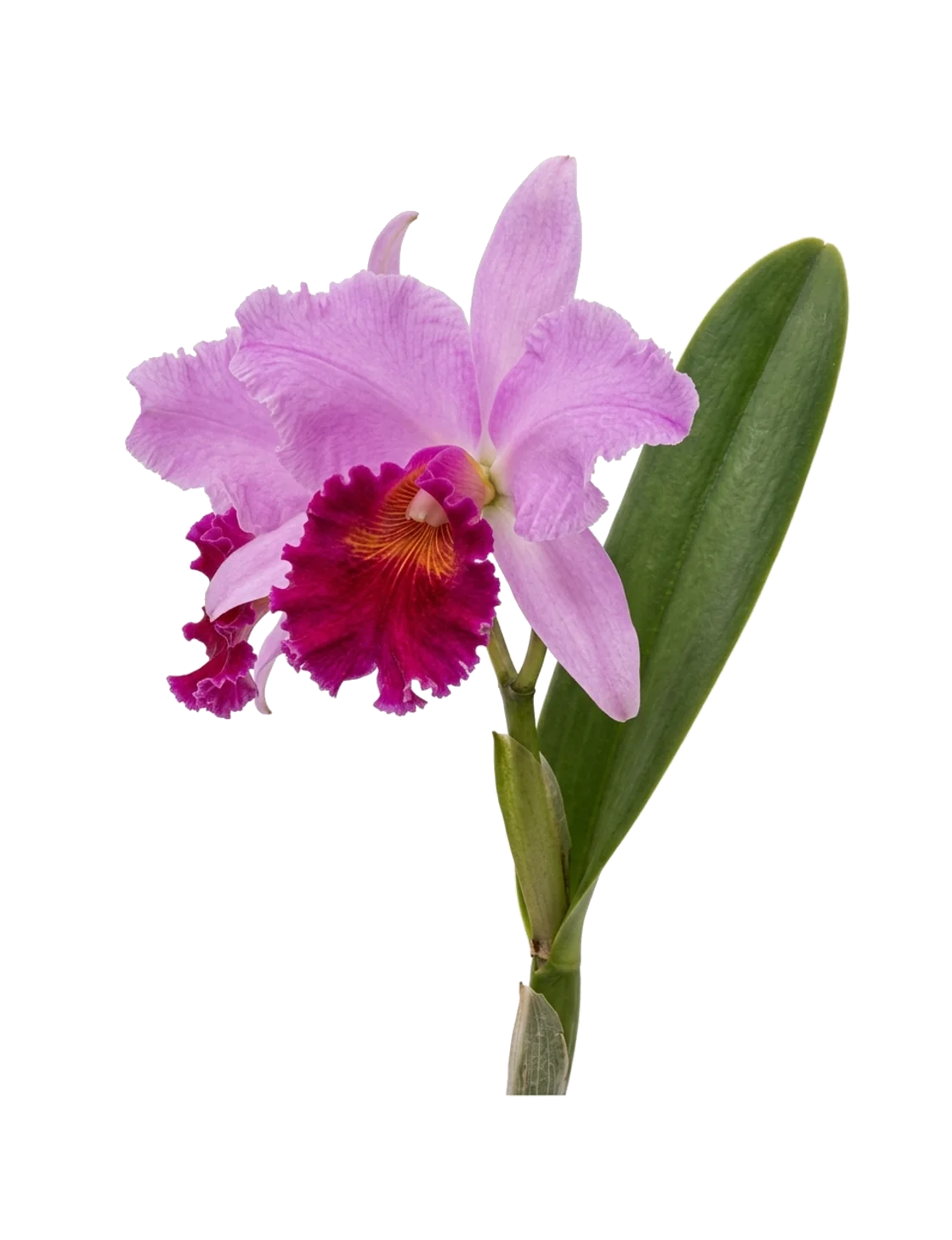
The crimson cattleya (Cattleya labiata) is an epiphytic orchid from northeastern Brazil, where it grows on trees and rocks in a seasonal climate. It forms fleshy pseudobulbs with one or two leathery leaves and large lilac-pink flowers with a showy crimson and yellow lip. It is the species that gave its name to the whole cattleya group, the classic large-flowered orchids.
At home it wants the brightest spot, with gentle morning sun and good air movement. While actively growing, soak the bark thoroughly and then let the roots dry before watering again. When the new pseudobulb matures in autumn, space waterings out to support its rest and the emergence of the bloom from its sheath.
Each pseudobulb blooms only once, but the plant produces new growths every year that carry the next flowering. Over time it builds dense, spectacular specimens that can live for decades. It is an orchid that rewards consistency: healthy silvery roots between waterings are the best sign that all is well.
Did you know?It was the first tropical orchid to flower in England, back in 1818, and its name has labelled the whole group of large-flowered orchids ever since.
Care. What it needs, point by point.
- Watering
- Water thoroughly by soaking once the roots look silvery and the bark is dry. In active growth it may need water every few days, and far less once the pseudobulb has matured. Never leave water standing in the crown or the saucer.
- Light
- It demands very strong light, more than most indoor orchids. A few hours of gentle morning sun suit it; dark green leaves with no flowers signal too little light.
- Temperature
- 18–28 °C ideal temperatureIt grows well between 18 and 28 °C by day, with somewhat cooler nights. A day-to-night difference of a few degrees helps it bloom.
- Soil
- Grow it in coarse pine bark in a slotted pot or basket, always with generous airflow. Repot as new roots emerge, every two or three years.
- Fertilizer
- Feed every week or two while growing with diluted orchid fertiliser. Cut back or stop feeding during the resting phase.
- Pruning
- It needs no pruning; just remove spent flowers and dry sheaths. Divide the plant only if it holds at least six healthy pseudobulbs.
- Propagation
- Propagate by division when repotting, with at least three or four pseudobulbs per part. Each division should carry one active growth with roots.
Where it grows. In the wild and in homes.
In the wild it grows in Brazil, in a seasonally dry tropical climate.
Range: Plants of the World Online, Royal Botanic Gardens, Kew
Is Crimson cattleya toxic to cats and dogs?
Non-toxic to cats and dogs.

Cats
Non-toxic

Dogs
Non-toxic
Source · ASPCA Animal Poison Control
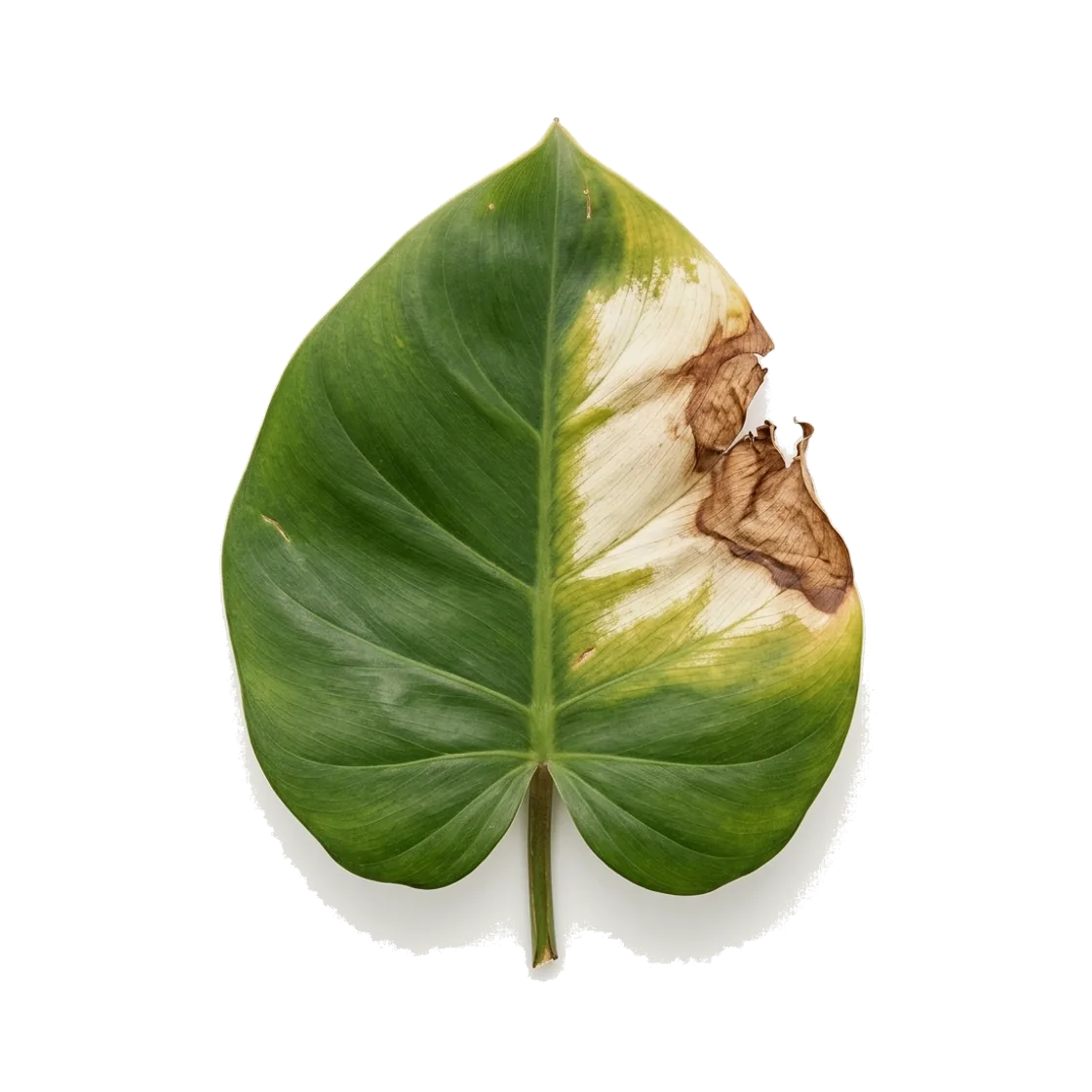
Common problems What tends to go wrong.
- Overwatering
- Root rot
- Mealybugs and scale
- Sunburn



Frequently asked questions What people ask most.
Why is my cattleya not flowering?
Weak light is the most common cause: without very bright light the growths stay soft and no buds form. Move it to the brightest possible spot with some morning sun and feed regularly while it grows.
How do I know when to water it?
Watch the roots through the pot: silvery-white roots mean it is time to water, green ones mean wait. Soak the bark well and let it drain fully, never leaving the plant sitting in water.
The sheath turns brown and papery. Is that normal?
Yes, the sheath that wraps the developing buds often dries and browns before the flowers open. Leave it alone unless it traps water, and the buds will push through on their own.
It has dark spots on the leaves. What can I do?
Small dark spots often come from water sitting on the leaves overnight or from sunburn after misting. Water in the morning, keep air moving and avoid wetting the foliage late in the day.
When should I repot it?
Repot every two or three years, just as new roots start to grow, when the bark has broken down. Keep the plant in a snug pot, since cattleyas bloom best when the roots fill the container.